
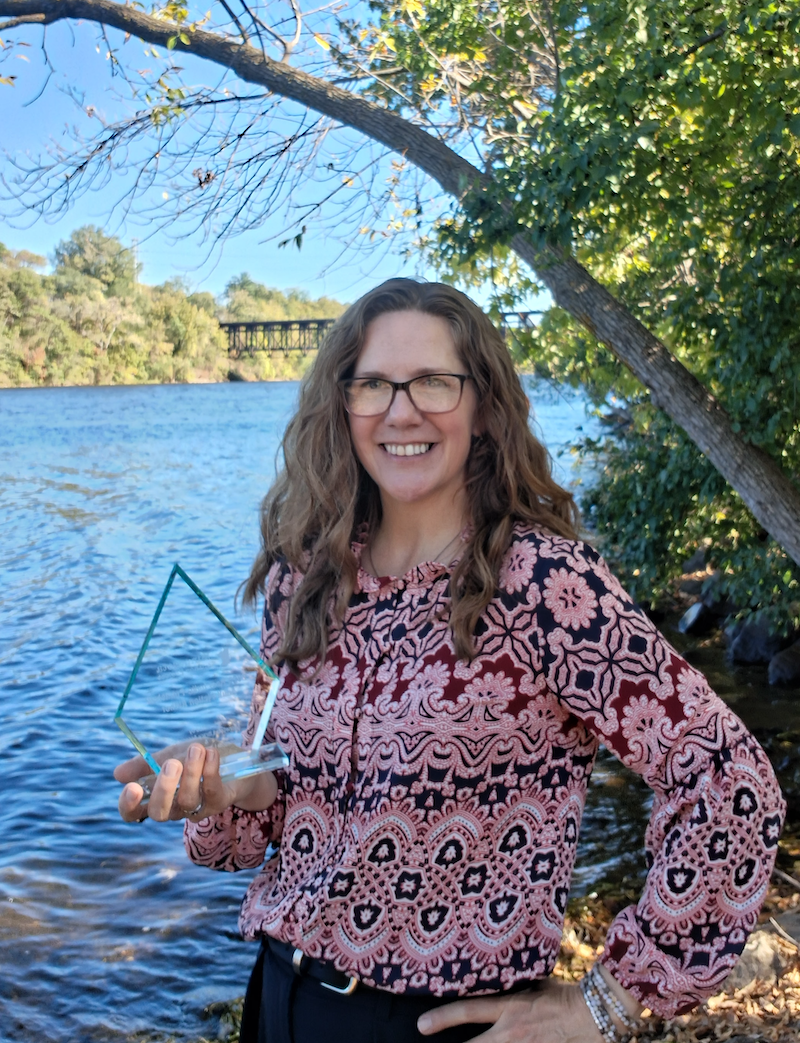
On October 10th, 2025, Alida was presented the Minnesota Author Project 2025 Adult Fiction Award at the Minnesota Library Association Conference in St. Cloud, Minnesota.
Librarians across the state voted for Murder in Skoghall, and Alida could not be more honored by, or proud of, this recognition.
With sincere thanks:
“Librarians serve readers with personal, unbiased recommendations, and this award means so much to me.
Before I was a writer, I was a reader. Libraries are a tremendous asset to every community. I can’t imagine life as a reader – let alone as a writer – without them.”
-Alida Winternheimer
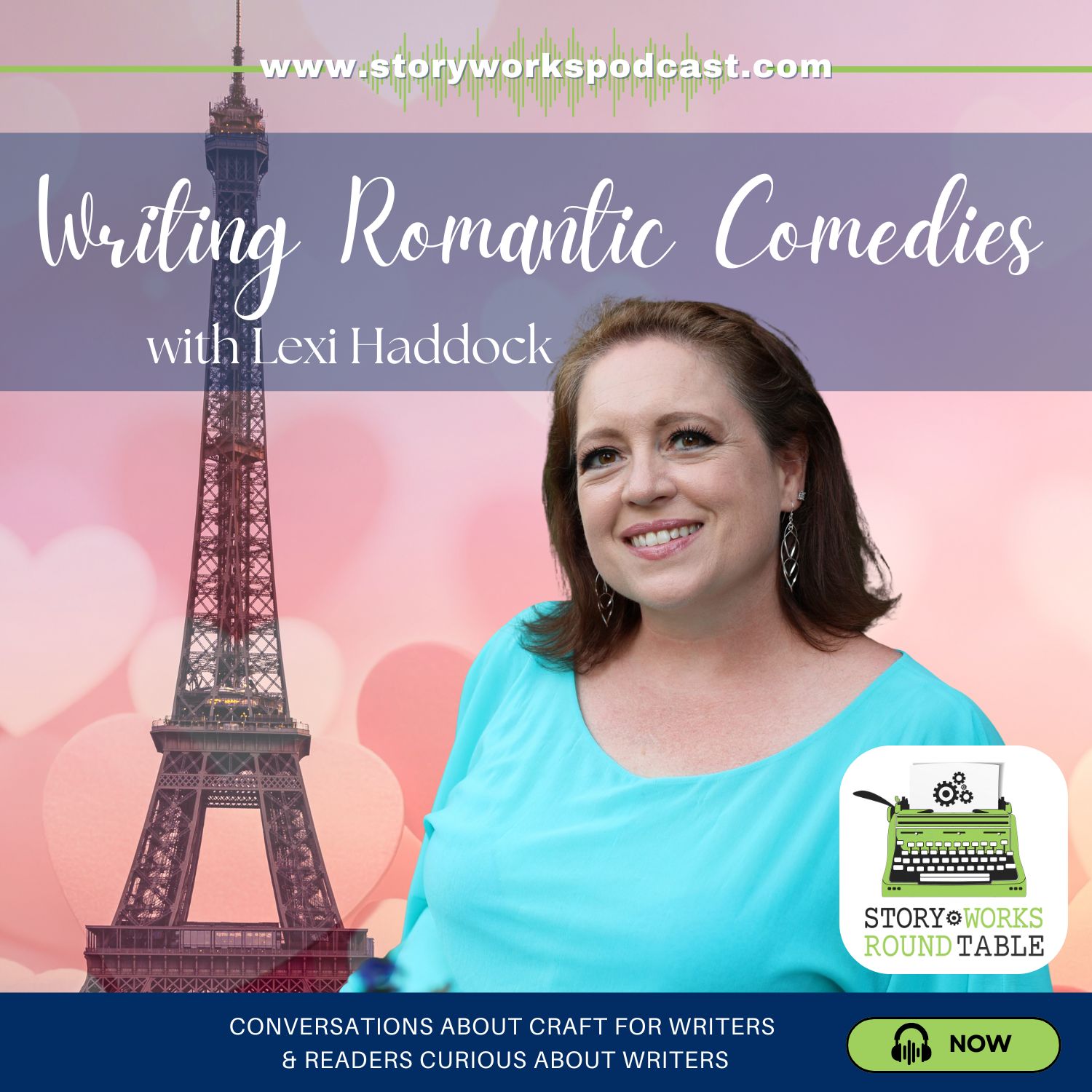
In this episode of Story Works Round Table, Alida Winternheimer and Kathryn Arnold welcome Lexi Haddock to dive into the enchanting world of romance writing. Lexi shares her journey from reading thrillers to crafting heartwarming romantic comedies. Discover the inspiration behind her stories, the challenges of genre expectations, and the joy of creating characters that resonate with readers. Join us for a delightful conversation filled with insights on writing, friendship, and the magic of Paris!
“Rom coms are the antidote to when life gets heavy.” – Lexi Haddock
AUDIO
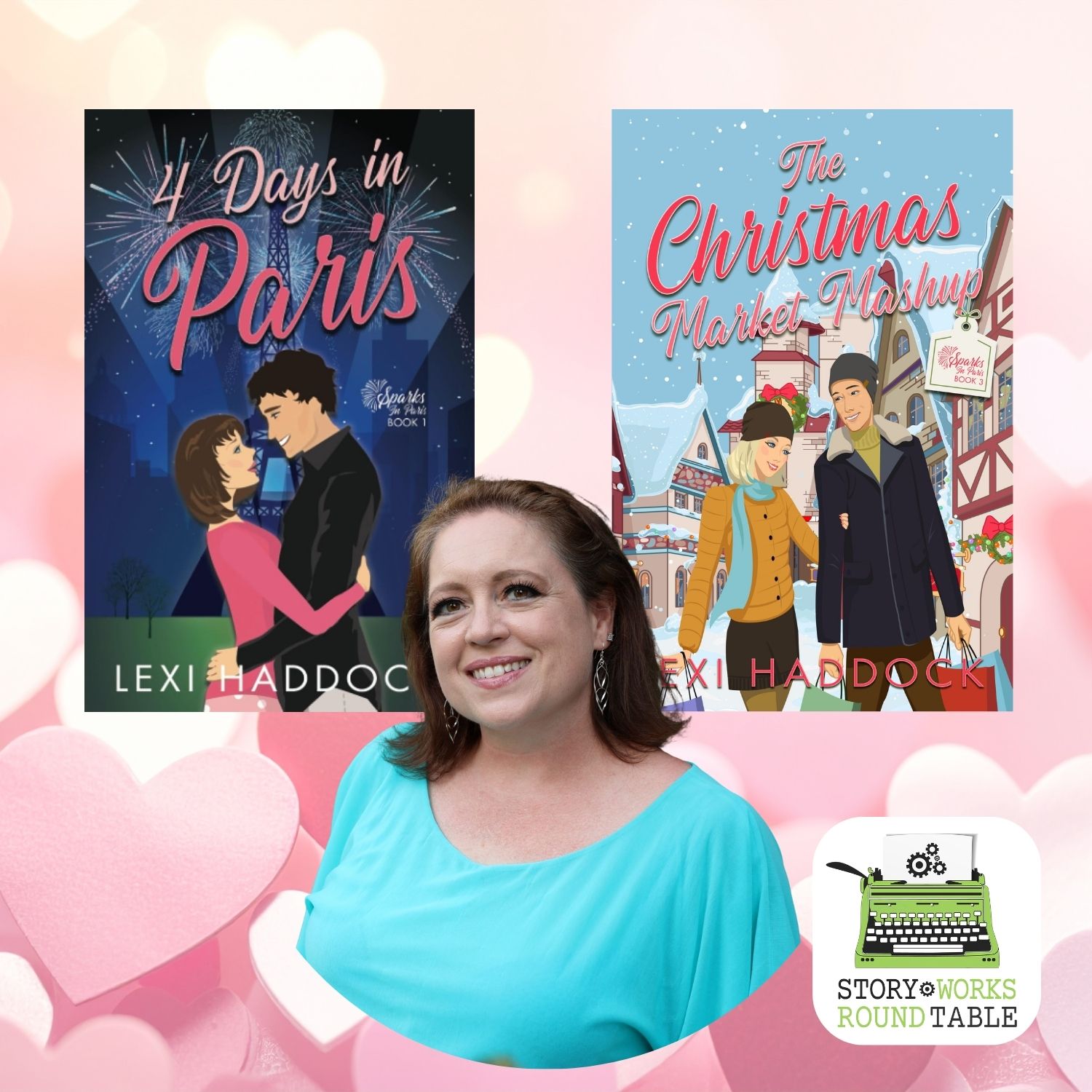
Lexi Haddock is a romance novelist and travel enthusiast best known for her Sparks in Paris series, including 4 Days in Paris and The Paris Predicament. Based in Columbia, South Carolina, she lives with her three children and splits her time between writing and blogging about her adventures in France. Her debut novel charmed readers with its nostalgic European romance, and the second book, The Paris Predicament, won the 2024 Indies Today Best Romance award. You can follow her travel-inspired writing journey on social media at @lexihaddock_author.
TRANSCRIPT
This transcript is AI generated. If you notice any inconsistencies or errors, blame the bot.
Alida Winternheimer: Hello, and welcome to this week’s Story Works Round Table. Today, Katherine and I are delighted to be joined by Lexi Haddock. Lexi is an author of Closed Door, sweet, but not necessarily fully clean romance books. Perfect for those who love travel, adventure, stories of friendship, and, of course, romance. She resides in Columbia, South Carolina, with her three kids. So welcome, Lexi.
Lexi Haddock: Thank you so much. I’m so excited. This is my first official author podcast. We love that.
Alida Winternheimer: Cool. I’m excited you’re here because it’s been a long time since we’ve talked romance, hasn’t it, Katherine?
Lexi Haddock: Yeah. Yay. So fun.
Alida Winternheimer: M. Yeah. So why romance? What attracted you to this genre or inspired you to write your books?
Lexi Haddock: You know, it’s really funny because, my favorite genre to read is really thriller and suspense and horror. Like, I grew up reading, you know, scary books and James Patterson and just like, murder mystery and all the things. But I also always had a soft spot for romance. So when I was really little, I remember. Well, not really little, because I was not reading Danielle Skill when I was really little. But I remember at some point in time when I was a teenager, I remember telling my mom I wanted to be like Danielle Steele. And she just kind of rolled her eyes and was like, okay. But no, I had no intention of ever writing romance. And I was working on an historical fiction book set in World War II in France, and it was really heavy. And Covid happened, and I was like, I can’t. I can’t. The world is so heavy right now. I can absolutely not just be reading all these books about. About war and, doing my research and everything. And then around that same time, I also separated from my now ex husband. And so it was, you know, pandemic, divorce, all the things. So I started reading romantic comedies. And I was just delighted by these. Silly, easy, fun, just. I mean, I’d be sitting there just reading and giggling away, and people like, what are you reading? So I was like, this is what I should do. And I had this story of the most romantic thing that had ever happened to me in my entire life was when I was living in Paris in 1999 and on New Year’s Eve met this guy, and I decided to write a book about that. Unfortunately, the end. Well, the ending of the book is not the real world story, but that’s okay. Life went on to do better things for me, but that’s how that came to be. Wow.
Alida Winternheimer: I love that. I think rom coms are the antidote to when life gets heavy.
Lexi Haddock: Absolutely.
Alida Winternheimer: You know?
Lexi Haddock: Yes. And it’s funny because I was like, I’m just gonna write this one story and be done with it, and then I’ll go back to my more serious novels. And then I was like, oh, no, there’s other. These other characters, they wanna have their turn. So then I published the second one from the point of view of one of the. There’s three main friends. And now I’m working on the third one. And actually, you know how your story pulls you where the characters tell you what’s gon happen. A very, very secondary character from book two was like, I need a story. And so she’s the character, she’s the lead in book three. So it’s just fun and I’m just, I’m having a blast with it. And it doesn’t hurt that they’re all set in France. So, you know, obviously I have to travel to go do my research.
Alida Winternheimer: Yeah, obviously.
Kathryn Arnold: Oh, the hardship.
Lexi Haddock: It’s so hard. I mean, this is just the hardest job.
Alida Winternheimer: Yes, well, so, okay, the first book is Four Days in Paris. Why don’t you, give us the premise so people listening, have a little context for the conversation.
Lexi Haddock: So this is one of those based on real events, but not all. Not a true story, if you will. So I, I based it on. On a young version of me. I was living in Paris and working for an architect in 19. and so Callie is my kind of little character and I made some of the best friends over there. So it was really. It’s not just a romantic comedy. It’s really a love story, a friendship love story. Like these three girls who have just become so connected. Two of them are American, one is French, but it’s also a love story with Paris. And the Eiffel Tower is actually a main character, as bizarre as that sounds. Callie talks to the Eiffel Tower and, you know, it’s just kind of a fun little quirky thing that she does. And, and, and. And. And people have loved that when they’ve read the book, they’re like, they’ve. It’s really unusual, but there’s a lot. And you know, it’s ranking in best travel guides because there’s so, so much, so much detail about Paris in there that like it. It’s. Apparently it’s getting bought when people are also looking at travel guides. So I really, it was really, really, really important to me to write a book about how much I loved those people and that place and that time in my life. Even if the story went off to things that never Happened.
Alida Winternheimer: That’s fun. So I have to, ask. Have you had readers tell you? Okay, I took your book to Paris, and I went to these places that Callie knows.
Lexi Haddock: Oh, my gosh. Nobody has. But I should totally set that up as a challenge. Be like, take your. Take my book with you to Paris and take pictures.
Alida Winternheimer: Yes. That’d be so fun.
Lexi Haddock: I know.
Alida Winternheimer: Standing.
Kathryn Arnold: I love that you made it a love story. Not just a romantic love story between, you know, a male and female lead, I’m assuming.
Lexi Haddock: Yes.
Kathryn Arnold: but also friends and also a city, because there is so much in romance that is loving. Kind of just like who you are and where you are and what you’re becoming.
Lexi Haddock: Well, yeah. And the main. The main characters, they’re. They’re young women. I think they’re 22, 23 years old at the time. And, you know, your girlfriends are always important to you, but that. That stage of life, especially when you just graduated college or you’re, you know, just out of the house. And we were living abroad in a place, you know, 5,000 miles away in an ocean in between our families. So our friends really did become our families. We celebrated birthdays together. We celebrated Thanksgiving and Christmas and Hanukkah and New Year’s and all the things. And so in the book, basically, the premise, why it’s Four Days in Paris is because she meets her. Her closest friend’s, brothers. Her half brother comes into town for New Year’s Eve because he doesn’t live in Paris. And, and Callie and Julian meet. It just, like, hit it off. And it’s this love story, and they spend all night walking around Paris together. And people. This is where people might think I might have used. Because, Ethan Hawke did a movie that was very similar. He meets a woman, and they spend all day walking around Paris, and then she gets on the train and leaves. But that part of the story is the truth. We actually did, like, walk all night long. And when I went back to Paris for my research, I actually dragged my sister and made her walk the whole route with me so that I could make sure all the key points were in there and that it was feasible for me to write it in the time frame that I was remembering in my head, because it was New Year’s Eve, we’d had consumed quite a bit to drink, so there were some missing pieces in the memory. But, you know, so they get to spend four days together before she’s supposed to move back to the United States. So that’s the premise.
Alida Winternheimer: Well, so given that you’ve okay, you’ve read a lot of romance, but you had never written one before. You hadn’t intended to write one before. So did you bump up against genre tropes and expectations that, you know, your book maybe doesn’t quite fit with? And did you have to navigate those or did you just kind of set that aside, write the story you wanted to write and then see how it landed?
Lexi Haddock: Oh boy. So this. I realized how little I knew about craft when I started trying to write a novel. I’ve written a lot of nonfiction books under a different name, different person, hality personality. And and this was my first novel and it was like learning a new language. There were so many things I was not. I’ve never taken any creative writing classes, which is really weird for somebody who always wanted to be a novelist. But that’s not where I went in college. And I didn’t know what tropes were. Despite now every time I watch a romantic comedy, somebody always said the word trope at some point in time. And then I see it in books and things. But I didn’t really know what tropes were. I didn’t know what beats were. I didn’t know that was a very formula, formulaic process of writing the stories. I didn’t know that a romance had to have a happy ending. Like all these rules about the genre and then you get into the rules between levels of heat. Right. And that’s actually a mistake that I made in the first book because I wanted to cross promote with some of my girlfriends who were writing clean, sweet books and they couldn’t share my book with their audience because there’s cursing and drinking in it. Even though there’s no sex on the page. They, they have very, very clean readership and a lot of Christian readers and they don’t like, that’s a, no, no, no cussing, no drinking, no smoking, no drugs, obviously, and all those kinds of things. So that wound up being very challenging. And after that I did a really deep dive into what it looks like. And that’s why I disclaim on the books that they’re. You’re not going to get sex on the page. Mostly because I’m too uncomfortable at the idea of my mom and sisters and, and two because, Well, I don’t know what two was. But the. But there’s just not going to be. They need to know that there’s going to be some things that some people may take issue with, but it’s light. It’s light. And there’s only a couple curse words in there from time to time. And it’s usually, you know, meant for a, a comedic moment, which not everybody thinks that cursing is funny, but you.
Alida Winternheimer: Know, plenty of us do.
Lexi Haddock: You know, I think it is, but.
Kathryn Arnold: You know, I think it’s interesting. Do you think this is a genre thing that only romance has to contend with or do you think this is going to become more widespread where people are kind of almost like raiding their books? Right. Like this is like you would see on TV where you’re like TV y7 oh, okay, my kids can watch that. Do you think there’s going to be more of this as a trend or do you think this is strictly a romance thing? Like romance readers are just very particular about what want to see.
Lexi Haddock: I think it’s, I think right now it’s strictly a romance thing. Although as genres are starting to blend, like now we’re seeing the romanticy and even some with ya. Like there’s ya that’s got people under 18 as the main characters that are clean and that are not clean, you know, so I don’t know if there will ever come to be a system of ranking, but I do know in. And I’m not in the other genres, so I’m definitely not an expert there. But I think the thing in romance is that the readers are just so voracious and they’re so like dedicated to what they want and don’t want and don’t want to waste their time with the book that they either buy or start reading. And they’re like, oh, I didn’t want to that because in the readership in romance is very, it’s a very clear divide. People who want steamy stuff and people who don’t. And then you know, there’s people in the middle that don’t really care. But there are so many. It’s so like lying down. And you’ll see it on reviews. You’ll see people that were like, you know, I bought this book and it was zero spice level and it bored me to tears or whatever or so. So I think that’s more of the reason why romance writers feel very compelled to give it a spice and heat level because they don’t want people to read it based on the description or based on the COVID and then, and then get bad reviews because people didn’t like spice level.
Kathryn Arnold: Yeah.
Alida Winternheimer: Yeah. Do you find your books appeal more to or appeal also to a wider audience, like women’s fiction or contemporary fiction readers? You know, romance is Such a niche genre with so many sub genres under it. And they are those voracious readers, as you said. But I think your story could have a broader appeal to it, you know, because of the friendships, because of the setting, because of the time frame it’s in as well.
Lexi Haddock: Yeah, I think it does. I think it really appeals to people who like, Who like movie, books about expats and travel and even nostalgia, because they’re all set at the turn of the century, 99, early 2000s. So, you know, we get a lot of Gen Xers who love. Like I said, I do so much research because I can’t remember everything back there. I’m like, wait a minute. When did we start using cell phones? Wait, were we texting back then? No, we didn’t text. We just had those little phones. So I’ll do the research about, like, when. And I. With the, mp3 player came out in the second book. There’s a. There’s a funny story. She’s on the treadmill and has a. Has, a cassette player, and it slides off and breaks, and the love interest buys her an MP3 player, and she’s like, when the world is this. Like. So, you know, people love those fun, like, recollections back to that too. But, yeah, I mean, I think it’s, I think it’s definitely appealing to people across genre. As you said, contemporary women’s fiction. Somebody tried to tell me it was historical fiction because it was set. And I’m like, no, no, no, no, no, no, no. We are not yet in the historical era. In 1999. Yes.
Alida Winternheimer: Yeah, we had a guest on, Grishma Shah who said, so she teaches college, so she’s got students who weren’t alive or were very, very young, when 911 happened. And her book involves 911 at a point, and they were telling her it was historical, like, okay, get over yourselves. It’s like antiques. It’s got to be a hundred years old. Otherwise it’s just vintage.
Lexi Haddock: Oh, my gosh. But there are some days when I’m like, there is no way it’s been 25 years since 2000. I mean, I know the year is 2025, but it’s just not possible.
Alida Winternheimer: No, it is wild. yes, funny. It is funny. What, What challenges did you face while you were writing this? Let’s get into something crafty or processy, you know, whatever you like.
Lexi Haddock: The hard. Honestly, the hardest part for me was I felt so restricted by the fact that it was based on real People and real events. And I did not want to push it too far on some of the characters and things. So I couldn’t have the freedom of just anything happening and them saying anything or doing anything. Because I was really worried that one of my, my two friends that I was writing about would be like, oh, my gosh, you made me look like such a terrible person or like such a weak or whatever. So it was hard writing the characters in a way that made them, you know, dynamic enough, but also not one that they would be unhappy as being represented by. And then also trying to keep the lines between what actually happened, what didn’t happen. So it was just, it was, it was constraining in that way. But then also just for me, craft wise, learning how to write, a scene structure and, you know, making sure that everything fit in there. I don’t. I think I did a lot of improvement between book one and book two on just writing in general, because there’s still. There’s still so much to learn. It’s just wild. But I like to use a lot of tools like fictionary and prowritingaid and things like that. That gave me a lot of great feedback. but yeah, it was, it was hard learning learning how to write a book. It’s more than just a story, you know.
Kathryn Arnold: So did book two follow more of a fiction arc and less of a, like, strict, like the inspiration? Did that move away from the real life inspiration, or did book two still continue with things that actually happened?
Lexi Haddock: Oh, no, book two is completely made up now. it follow. So there’s three gals in book one. It’s Callie, who’s the main character. She’s American Lila, who’s, her best American friend. They meet in Paris, and then Emily, who’s a French lady. So book two follows Lila’s point of view. And it actually starts out, on her wedding day and she gets her. Her fiance never shows up. And so it picks up. It’s in dc. It starts in DC and then she goes back to Paris, to heal her wounds and all those kinds of things. And it’s completely made up. The only thing about that that’s real is that, she does a similar job, working for, well, something that was like Wateraid or USAID or one of those companies back, before, you know, before. But.
Kathryn Arnold: So was it different, craft wise, then book one to book two, did you feel like it was easier to write the fiction one was the inspiration enough on the first one that it was. I mean, they’re both fiction. I know that. But I mean like, was it easier to make it all up or what was the difference there? And how did that change the way that you wrote?
Lexi Haddock: It was so much easier to write for me in terms of storyline because when you’re not constricted by anything, you might think, okay, this is gonna happen and then this is gonna happen. I mean, I wound up doing a love triangle. I hadn’t thought I was gonna do that. I didn’t know when they were gonna go back. The time frame was. And I actually wound up making it not a happily ever after, but a happily for now which is also accepted. They just have to still be together when the romance book ends. But some people were so upset because they, they were like, ah, we need to know what’s gonna happen. Like I don’t like that it do. Do they wind up together forever? So, you know, it matters. It matters to some of these readers. But. No, it’s so the, but the story arc of a romantic comedy is it’s just so easy to follow. You know, there’s some sort of meet cute, the rise of their relationship, rise of tension, rise, whatever. Then we get to some kind of conflict and then it’s usually a pretty, you know, there’s generally some misunderstanding. She sees him out with another girl that she thinks is his is a girlfriend, but it’s really a sister or you know, there’s some argument or misunderstanding, whatever. And then it’s usually a pretty quick. Then there’s some kind of like grand gesture or you know, like I won’t spoil my grand gestures, but then they wind up together and then it’s over. And so that part is really not challenging at all to follow that now in terms of like how well I’m writing or how well I’m doing scenes. I think one of the best, best parts of this whole writing process is that while there is a very. For like while you’re supposed to follow the three act structure or the scenes or whatever like that, like I just, I just write whatever length chapter I feel like it needs to be and try to end the chapter with enough of a hook that people want to keep reading the next chapter. So I don’t allow myself to get too caught up in the. Oh my gosh, what did I do? This, you know, conflict, goal resolution in every. Or goal conflict, whatever it is in, in every chapter. No, and I don’t care because the story is moving and people enjoy it.
Alida Winternheimer: Yes, totally. Yeah, I think people can take some of these pieces of advice that have been floating around out there as gospel when like, they don’t need to. You know.
Lexi Haddock: As a writing coach though, I hope that didn’t just like totally kill some of your spirit when I was like, I don’t care what the rules are.
Kathryn Arnold: Another thing.
Alida Winternheimer: Yeah. Yes. I mean, I do not teach what you just described there because stories make demands on us and they need to be told the way they’re told. And as long as they remain compelling, with enough narrative momentum to move us and our readers to the climax, then we’re doing our jobs.
Lexi Haddock: You know, like, to me, I don’t think there’s now maybe in some genres it’s different, but I think in romance and thriller and suspense and the types of books that I like the most, like, it’s normal to have pretty short chapters. That was always one of my favorite things with James Patterson is his chapters are like three to five pages long. And for me I m have a lot of problems with paying attention for long period of time. And that, that works really well for me. And I think, keeps people in the story more. When it’s just really short scenes or every chapter is a scene. It’s not, you know, the whole, the whole thing. But sometimes I’ll have like 7, 8, 10 page chapter. Just depends on what’s happening, right?
Alida Winternheimer: Yeah. So did your friends, did you get their seal of approval after they saw the book?
Lexi Haddock: Oh, my friends, You know what they say, your friends and family generally don’t read your books. And even though the book was about them, my friend that the second book is based on just told me the other day. She was like, I finally started reading your book. And I was like, well, okay. I mean, I just wrote it about.
Alida Winternheimer: You.
Lexi Haddock: But it’s okay. She’s had quite a bit on her plate and it’s not her genre too. Right. So. And also, you know, I think when you come out of an experience like the one that we had, she may not want her memories tainted by the story that I’ve written. Because, you know, we’re getting to the age now that it’s like, wait a minute, did I live through that? Did I read that in a book? Did I watch that on a movie? I don’t remember anymore. So, you know, there’s some of that. But they’re very proud of me and very, you know, very touched by the fact that I did write about that time, in life. And I actually saw my French friend, the one that Emily is based on. I saw her in France. when I went back that summer to finish the book and that’s the last time I’ve seen her, she was very excited about her. I need to send her a copy actually. But, yeah, so it’s fun. And I had some little cameo appearances from other friends. Ah. From that time frame as well. But yeah.
Alida Winternheimer: Yeah. So what about, you said it was hard to write, you know, feeling kind of restricted by fact, writing the first book and then what. What choices did you make? And what about that, was hard?
Lexi Haddock: That’s a great question.
Alida Winternheimer: Yeah.
Lexi Haddock: So it was more along the lines of trying to be true to the people in the book and not wanting to go too far out of bounds with what had happened during that time frame. and I don’t know that it was even any hard decisions about it. It just was an internal thing where it was like, ooh, do I really want. Because I had some ideas of some scenes that I really wanted to have and things like that, where my imagination was going and I was like, you know what I don’t want, I don’t want Tia to read this book one day and think that that’s what I thought of her at that time frame. So if they have this falling out or this argument or whatever. So I had to keep it kind of, you know, tame a little bit because I didn’t want to disappoint them in that way. But then when we get to the second book, it’s like, okay, none of this stuff ever happened. We never went on from this place. We don’t know these people that are with us. Like, it’s just a lot freer to go off with that. But on another of side note, like, it’s. It’s kind of why I have thought about, wanting to maybe write some kind of fantasy. Not like the deep fantasy, but like just having a. Not, not real world, even dystopian or something. Because man, it’s hard work when you’ve got to fact check all the things and make sure that things are written right and that, that, you know, that, that. So I totally understand why people enjoy just kept living in a completely fake world world because then whatever. Like if I want to have a dragon that appears in chapter two, who’s gonna stop me if it’s a fake world?
Alida Winternheimer: Yeah, I hate to, hate to, you know, down your up here, but it’s still hard work. It’s still, oh, I’m dying.
Lexi Haddock: Oh, no, no, no, no, no, no. I know writing the world Building is hard. That’s why I don’t do it. I’m just saying that, like, you know.
Kathryn Arnold: You gotta fact check your own rules.
Lexi Haddock: Right? Right, right. It’s just different.
Alida Winternheimer: Different. It is different. Yes, it is. Yeah. No, I started Skog hall, the first one, because I had just come out of my mfa. My head was very full, Tons of research, very, you know, I was like, I want to have fun. I’m gonna write a ghost story. So I based my protagonist on me. Just as a springboard. Right. She’s totally different, but we have some things in common. I said it in a fictional version of a place I visited. A lot. Like, I know it well. It’s close to home. I can visit if I want to. Super easy ghost all that stuff. Okay. But then I get to book two, and now there’s a county sheriff and I’m doing deep research and I’m looking for people to interview. I’m m. Like, damn it. I was just writing a ghost story.
Lexi Haddock: There goes the easy. Yes, I would love to write a ghost story or scary story. Maybe not ghosts, but just maybe a little bit of. Of magical elements to it or something. Because those are just. I love reading that stuff. That’s why I’m like, why are you. I have like a list of ideas. None of them have anything to do with romantic comedy. So when I start putting all out of these darker star stories, I really hope that my fan base follows me. And you know what? I think I’m gonna make the tr. The transition by writing one set in France so that, you know, keeps that France vibe. Because I had the greatest idea when I was. Oh. I had the greatest idea when I was, over visiting a couple summers ago and we went to the beach and this incident happened with these teens. And I was just like, oh my gosh, I’m gonna write this book about this couple that has this incident and these things happen and blah, blah, blah. And I was like, it’s gonna be such a great, like, suspense mystery thingy. So it’s in there.
Alida Winternheimer: Sounds good. I wanna read that one. I love how Lexi.
Kathryn Arnold: I write romance, but I also want to write this other thing and then this other thing and this other thing. It’s the writer’s brain and the writer’s problem.
Lexi Haddock: Right. I love it.
Kathryn Arnold: So fantastic.
Lexi Haddock: I’ve actually started writing a book about a serial killer couple. And, my fiance is so funny because he’s like. And this book brought to you by Lexi Haddock, the author of Four Days in Paris.
Alida Winternheimer: Yeah. So which begs the question, do you feel like the romance genre restricts the writer in ways that are positive, in ways that are negative? You know, we’ve talked a bit about how the readers have expectations, and you’ve got a label, what category you’re in and everything.
Lexi Haddock: So, you know, it’s. It’s an interesting question. I think that, if you become a sensation in the genre, like, some of my favorites that I love to read. Emma St. Clair, Jenny Proctor, Oh, gosh, I could name off a couple other people, but they’re like, well known, Ali Hazel, well known and kind of like the romantic comedy genre. I think if they were to come out with a. With an. A completely different book, it would take their readers a little off guard and be like, wait a minute, what’s happening here? But when you look at somebody like. And I’ll just use some really big names because I figure if they can do it, why can’t I? Like, Colleen Hoover, Kristin, Oh, my gosh, the Nightingale. Why did I just. Kristin Hannah and some others like that, like, they have not. They have not put themselves in a box. They write some that are romance. They write some that are historical fiction with romance in it. well, that’s Kristin Hannah anyway. But, then some of my favorite books by Colleen Hoover are her, like, suspense books. You know, So I think that if you just come out the gate with some great books and maybe every book is different, then nobody. Nobody’s gonna have you just, like, pinholed. But that’s why I think it’s important to. If you. If you have a plan of doing that, that you cultivate that, kind of like women’s fiction vibe and not just the. So. And for me, what I’m actually trying to do is I’m trying to build a, more like a traveler adventure vibe. So, you know, you can. You can have those things in there. And. And I also probably need to start, you know, upping the age of my characters so that it’s. It’s more. Because, you know, I’m obviously not 23 years old anymore, but. But it sure is fun to write about those days.
Kathryn Arnold: Absolutely. So you mentioned Kristen Hannah, and I’ve read enough of her books that I can speak to this. I haven’t read some of the other, But I feel like what you’re looking for then is, like you said, it’s like a vibe. You’ve got that travel adventure vibe. Like, every time I read a Kristin Hannah book, I come out with an appreciation for relationships and the themes that she has around relationships and the interplay of people together. Right. Like there’s always something very meaningful there. So I think that’s very wise of you to recognize. It’s like what, what am I building out outside of romance?
Lexi Haddock: Right.
Kathryn Arnold: That’s going to bring my readers along. And I think that travel adventure thing, I would totally follow that. You know, I’d go from romance to thriller if I was, you know.
Lexi Haddock: Yeah.
Kathryn Arnold: But I’m, you know, I read a lot and a lot of different things and I don’t think that there’s, you know, I think there’s a lot of people who read a lot. You just have to find the people that like your voice and your themes and your messaging and your.
Lexi Haddock: Absolutely.
Kathryn Arnold: Style of adventure travel or something. That’s really cool.
Lexi Haddock: I m mean, you always have your die hard true fans. Right. Like with, with James Patterson for a while, with Danielle Steele for a while. With with several of those. Dean Co. I mean, I mean look at that. Even the diversity between those three things. And then Patricia Cornwell, like those were the authors that I was reading all of the time. And then other books here and there. Like I think people who love to read, love to read. And as long as you deliver them a good story and they know that they’re going to get a really good story from your writing, I think that they’ll, they’ll be willing to follow you. But it’s super interesting now because, there’s so many good books out there. We’re just publishing and publishing and publishing. And I think people tend, this is where I think that the genre matters is that I think people are getting served up, books because of algorithms based on their reading trends. And they don’t necessarily know who the author is. They just know that another romantic comedy showed up in their, in their list of books that they might enjoy. So I think it’s even harder for us to really work, work to build that cult following if we want those kind of readers who are going to buy everything that we do. And in order for me to do that, I’ve got to publish more than one book every three to five years. So. But the third one’s coming, by the way. It’s coming out. I wanted to publish it before December because it’s a, it’s a holiday rom com. But at this point in time I’ll be lucky if I get it published in December. So but it’s, it’s it’s taken a little Bit of a different turn this time. We’re not in Paris, even though it’s still in the Sparks in Paris series. We’re in Strasbourg, which is on the east coast of and they go to the holiday market there, which is hands down one of the. It is the oldest Christmas market in Europe and just incredible. So my goal is to make everybody want to go there. Although I went back this last year and apparently everybody’s gotten the memo because it was so crowded. Oh my gosh.
Alida Winternheimer: Oh wow. Yeah. Okay, so this is not specifically craft, but just listening to what you were saying, it got me thinking about. Well, yeah, in a way the online shopping experience and the E reader experience does us as authors and literary artists a disservice. You know, if I’m reading a paperback, it’s sitting around my house and I’m looking at the COVID the title, the author’s name. And if I’m reading something on my E reader or you know, it’s the same with music streaming, something that’s coming through a playlist, I might not even have a clue right. Who the artist is, you know, and I can’t describe the COVID art and I don’t have like a visual associated with what I’m reading in that sense. And then it’s that much harder to create the recognition and the following because they might like the story, but if they don’t know who you are or how to spot you in the marketplace.
Lexi Haddock: But at the same time it also helps us because if things are just delivered to people based on their algorithm of what they like to do. this is one of the reasons why I really like, and I know this is more of a marketing thing more than questions craft, but it’s really why I like to have my, my novels in particular on Kindle Unlimited because then it’s getting suggested to the people that read. I mean all your books on Amazon are getting suggested to people like that. But for the people who read on Kindle Unlimited then it’s, it’s a no brainer, like, oh, this looks fun, you know, check out that book and read that one. So they may not remember unless they But if they love the story, if they really love the book, book, they’ll follow me as an author on Amazon. And then, you know, they do get more of a personalized relationship because they get emails from Amazon when I publish a new book or. Yeah, but, but it is for, for authors who are, are trying to make a name for themselves, it is really, really, really important that you do all the things like having some kind of a lead magnet in your book, having some way for them to follow you, either get on your email list or follow you on social media or something so that you can develop that. Because the relationships are what take you, them from just being a casual reader of your book to, you know, the die hard that when they’re almost 50 years old, are still talking about the books that they read when they were 13, 14, 20, whatever, you know.
Alida Winternheimer: Yeah. So now I’m curious about your writing process because I know, I know you’re a fantastic businesswoman with a ton of marketing experience. So how much time do you spend writing and how much time do you devote to marketing your books specifically and yourself as an author so that you can cultivate that relationship with readers and that awareness and get more books out to them?
Lexi Haddock: Oh my gosh, I am the worst at all of these things. I teach all of these things to other people, I help other people do it, but when it comes to my stuff, I break all the rules. for example, I only, have about 10 chapters written of this book that’s supposed to come out in December and it’s August, so that I would never, I would never tell somebody to not already be through like editing at this point in time, you know. And so the, the cultivating of, with readers is basically not happening at all. Which breaks my heart because it is so much fun when big things are happening, but when I am building the relationships with them, it’s usually on Instagram. And I just love posting things about Paris and my trips and, and all those. But oh gosh, if I was doing what I teach people to do, it would be a totally different experience. But I also know because I run a full time business, I’m in it, in the thick of it, just like other authors who are trying to build an author business on the side. And I see the end game. So I know this is what I’m doing. Little by little, consistent actions, not letting people forget who I am, even if I’m not posting every single day, taking advantage of the things that I can do, and then just trying to hopefully at least once a year publish a good book. And I, and I run campaigns to the other books so that people don’t forget about me. So, I’ve really enjoyed using like paid promo campaigns where I can just send, they send out a free download day and that’s been really effective. And, and then I, oh, here’s my favorite one. I, my favorite little tip. I Live in a. In a. In Columbia, South Carolina. And we have a very small airport. And so when you come in the airport, there’s this long. There’s this long hallway that you go before it splits off. And they have a free library right there. It’s like four wooden shelves on the wall. And every time I fly out, I take four copies of Four Days in Paris and I put it in there, and every time I come back, they’re all gone. And one day I was sitting there and I was so nervous because I didn’t want to say anything, but I was sitting there at my gate and I saw a woman standing there reading my book. So I took a sneaky picture of it, but I was afraid to say anything to her. But I was like, at some point in time, you know, I’ll, take it up a little bit more and do some more fun things. I would love. I’m sorry, I’m just rambling and rambling, but I have, I would love to go on a, on a US Book tour. Like just plan a grassroots book tour. Because I’m a military brat and I have, I know people. I have a huge family. I have friends all over the US like, just be like, hey, I want to come around and do a book tour. But I got three teenagers and a business to run, so that’s probably not going to happen anytime soon. But who knows? Who knows?
Alida Winternheimer: But the day is coming.
Lexi Haddock: Yes, exactly.
Alida Winternheimer: Yeah. Well, I’m actually comforted to hear what you said because it, you know, it’s a good reminder for all of us who are writing and putting books out into the world and trying to do this business, business part of what we do. And then I for one, can get down on myself feeling like I’m not doing enough of that and I’d rather be writing. And so my takeaway is just keep doing consistent action, however small that may be. And, you know, even if it’s not daily.
Lexi Haddock: Yeah.
Alida Winternheimer: As long as I’m showing up for my books, for my readers, I am, still marketing. Right?
Lexi Haddock: Exactly. And we’ve all, we have all heard the expression that there’s no such thing as an overnight success. Like something tips the needle at some point in time, making them famous overnight, if you will. But they’ve been working for 10, 15 years. Do y’ all know who Leanne Morgan is?
Lexi Haddock: She’s a comedian. She is blowing up right now. And this is a very relevant story. This is why I’m telling it. She is in her late 50s. She’s an onstage comedian. But she just has a new Netflix show that just came out. I think it’s called Leanne or something. It’s hilarious. She has this wacky, like, super southern accent that from her little area, and it’s her real accent. She was just on Oprah’s book club or Oprah’s podcast. And the reason I share this is because she talks about how she started doing stand up in, in women’s houses when she had little itty bitty babies and she was selling, I don’t remember what it was, was Tupperware or jewelry or something, and people were like, oh, my gosh, she’s so funny. So they would want to book parties just because she was so funny. But little by little by little, I mean, that was 30 years ago. And then all of a sudden this year she’s got a Netflix, a, Netflix special there. She’s booked out at every place because that time and that effort and that. Working on her craft, working on her delivery, getting better and better, taking every shot, every possibility open to her. And that’s something I just really want to tell people too, is that, like, there are millions of people publishing books. Millions. and how are you going to stand out? And if you’re not willing to do something a little bit outside of your comfort zone, if you’re not willing to go, on podcasts, if you’re not willing to go to set up a table at an event, if you’re not willing to go to conferences and engage with people and meet people, how in the world is anybody going to know who you are and want to buy your books? So consider that piece of it, too, that the. You getting out there. And yeah, everybody’s an introvert. I know, I get it. But figure it out. I. You can do it. I promise you. The water’s warm. Come on in.
Alida Winternheimer: Definitely. Wow. What have we not touched on about romance and your writing journey that would be fun to talk about.
Lexi Haddock: Let’s see. well, I could tell you the story about how I accidentally, wrote something about my current boyfriend in the book, and he got very angry when he read it. Almost ended our relationship. But, we won’t go into the details of that. I think it is funny, though, with romance writers like, what’s real, what’s not real? I would say almost every funny event that happens in the book is probably something that actually happened to me or someone that I know. because life is just funny. It just. Just funny things happen, you know? So, yeah, let’s see. What else? I don’t know what else. What else should we talk about? It’s fun. Writing is fun. And I know what I want to say about this and that is that if you are like me, this is just a word of encouragement to people who maybe found themselves writing romance and wanted to be writing other things. Like at first I was kind of down on myself because I, I, you know, again, I wanted to write a book that was like the Nightingale, like that level of impact. Right. Just that in it, you know, story just like gut wrenching. And I was a little like kind of disappointed in myself that all I wrote was a romantic comedy. And then I was like, hold on, sister. Remember your origination story? You were so sad, you were so depressed and what did you do? You read rom coms and they brought you joy and happiness and fulfillment. So all of us have stories that help people in ways we never even imagined. And that’s made me feel, I don’t know if better is the right word, but you know, realizing that again. I’m also working to build my craft in a story structure that I’m not meaning to hurt anybody’s feelings here, but it is, it’s a good way to start, it’s a good way to start character development and because there’s not high, high, high expectations that these are going to be the deepest characters you’ve ever met in your life, you know, so it’s a good, it’s a good place for me to start art. And I’m loving it. So I love it for romance writers, whatever their reason to write on.
Alida Winternheimer: Yeah.
Lexi Haddock: Did that sound like a really jerk thing to say? Because if it didn’t, edit it out. Because I do not want to poo poo on any romance writers. No, no.
Alida Winternheimer: Well, I think it goes back to what we were saying at the very beginning that rom coms are this antidote to life. And I think even if it’s not somebody’s favorite genre, we all have those things we turn to when we m. Need that fix. Right.
Lexi Haddock: It’s like the box of chocolate and wine that you need sometimes in life, you know, without the calories.
Alida Winternheimer: Yeah, exactly. Well, and it’s such a beloved genre by readers.
Lexi Haddock: Yeah.
Alida Winternheimer: that’s why you can put out four copies of your book and come back, back, you know, at the end of the weekend and they’ve all been picked up. That’s fantastic.
Lexi Haddock: Yeah. Now hopefully they’ll start telling their friends about it and so on and so forth, but.
Alida Winternheimer: Starting a movement. Yeah. Well, thank you so much for joining us today, Lexi. Where can our listeners find you?
Lexi Haddock: So probably the best place is Instagram. If you head over to Lexi. That’s L, E, X. I understood. Underscore, haddock. H A, D, D, O, C, K. you’ll find me over there. And that has all, like, links to my website. And I usually do a post when I’m looking for beta or, not beta readers. Arc readers. So that’ll be coming up soon for the. For the holiday book. And. Yeah, come, come, come. Have fun, with me.
Alida Winternheimer: Awesome.
Lexi Haddock: Thank you so much. This has been a blast.
Alida Winternheimer: Our pleasure. All right.
About Your Hosts
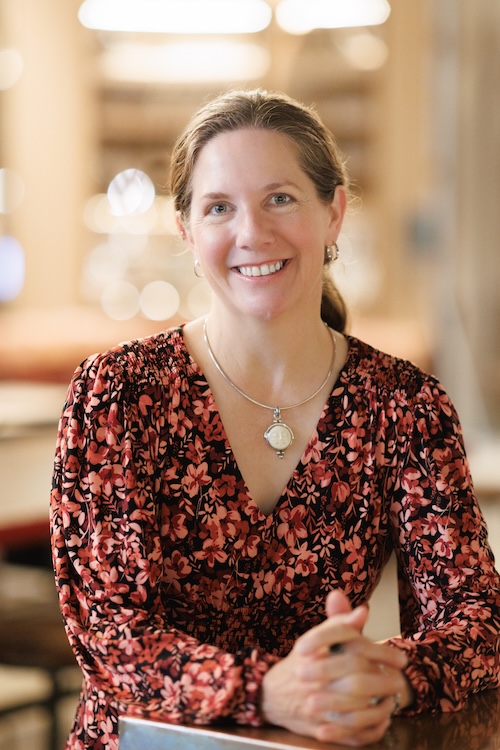
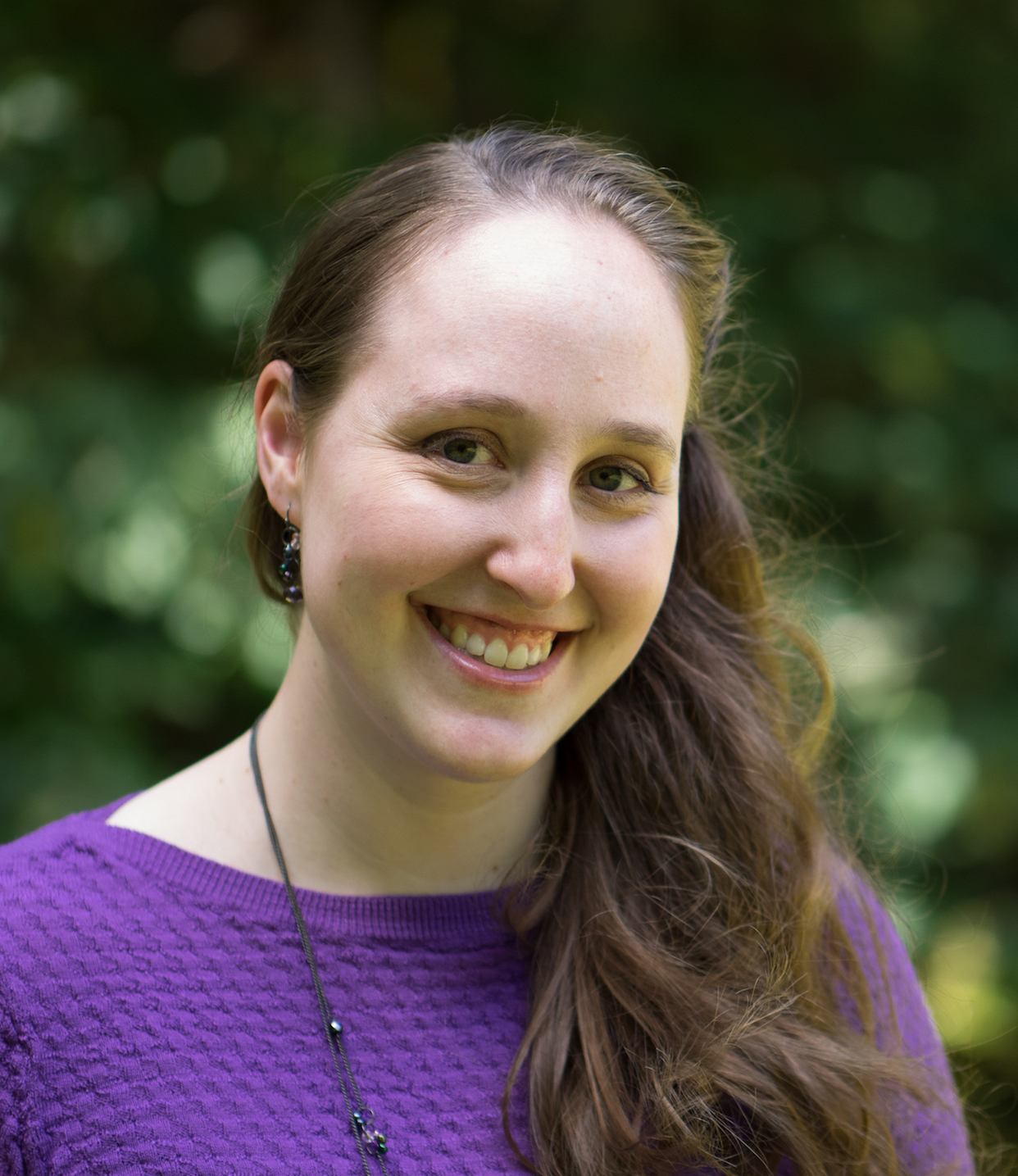
Kathryn Arnold writes fantasy and anything else that sparks her creativity from her home in Kingston, Washington. She currently earns her living as an insurance underwriting assistant, where she also creates marketing and web copy. When not writing, she plays (and teaches) piano and keyboard in a band (or two), and is working on starting a ministry team with her husband. You can find Kathryn at www.skyfirewords.com.