
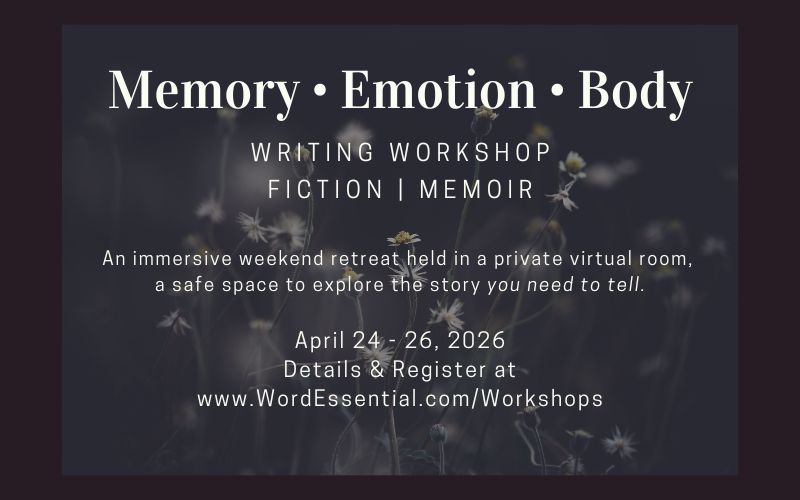
Memory • Emotion • Body
Writing begins with ourselves,
our unique memories, emotions, and embodied experiences.
In this immersive weekend workshop and retreat, we will work with our memory, emotion, and body to explore what it means to bring the power of our unique experience to life in our writing. Held in a private, virtual room, this retreat is a safe space to explore the story you need to tell.
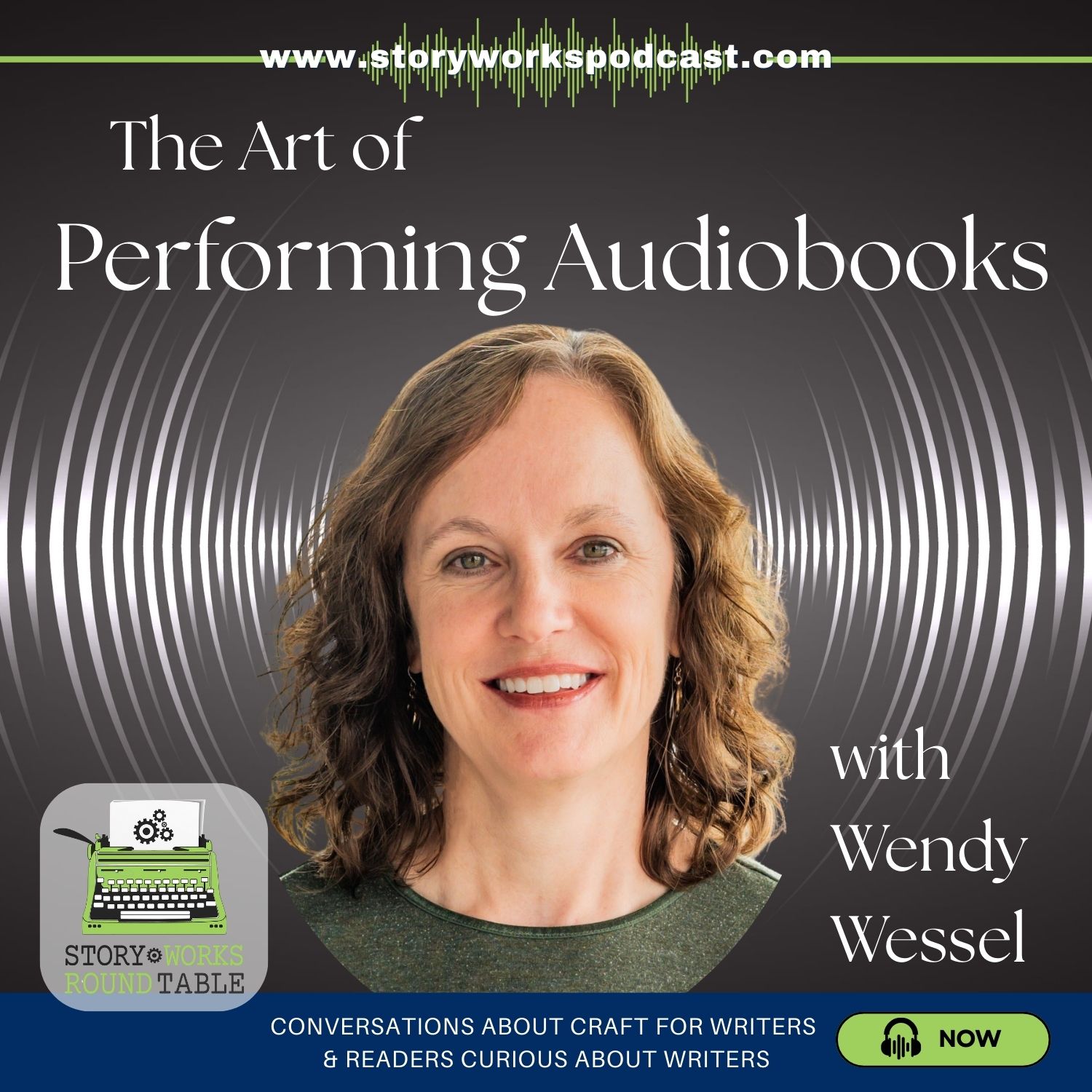
In this week’s episode of the Story Works Round Table, Wendy Wessel, a talented voiceover artist based in Minneapolis, joined Alida Winternheimer at the Round Table. With a rich background in education and a passion for storytelling, Wendy shares her journey into the world of audiobooks. We explore the essential qualities of a great vocal performance, the emotional depth needed for effective narration, and the technical skills required to bring characters to life. Discover how Wendy immerses herself in each story and the challenges she faces in the production process. Tune in for an insightful conversation about the art and craft of voice acting!
AUDIO
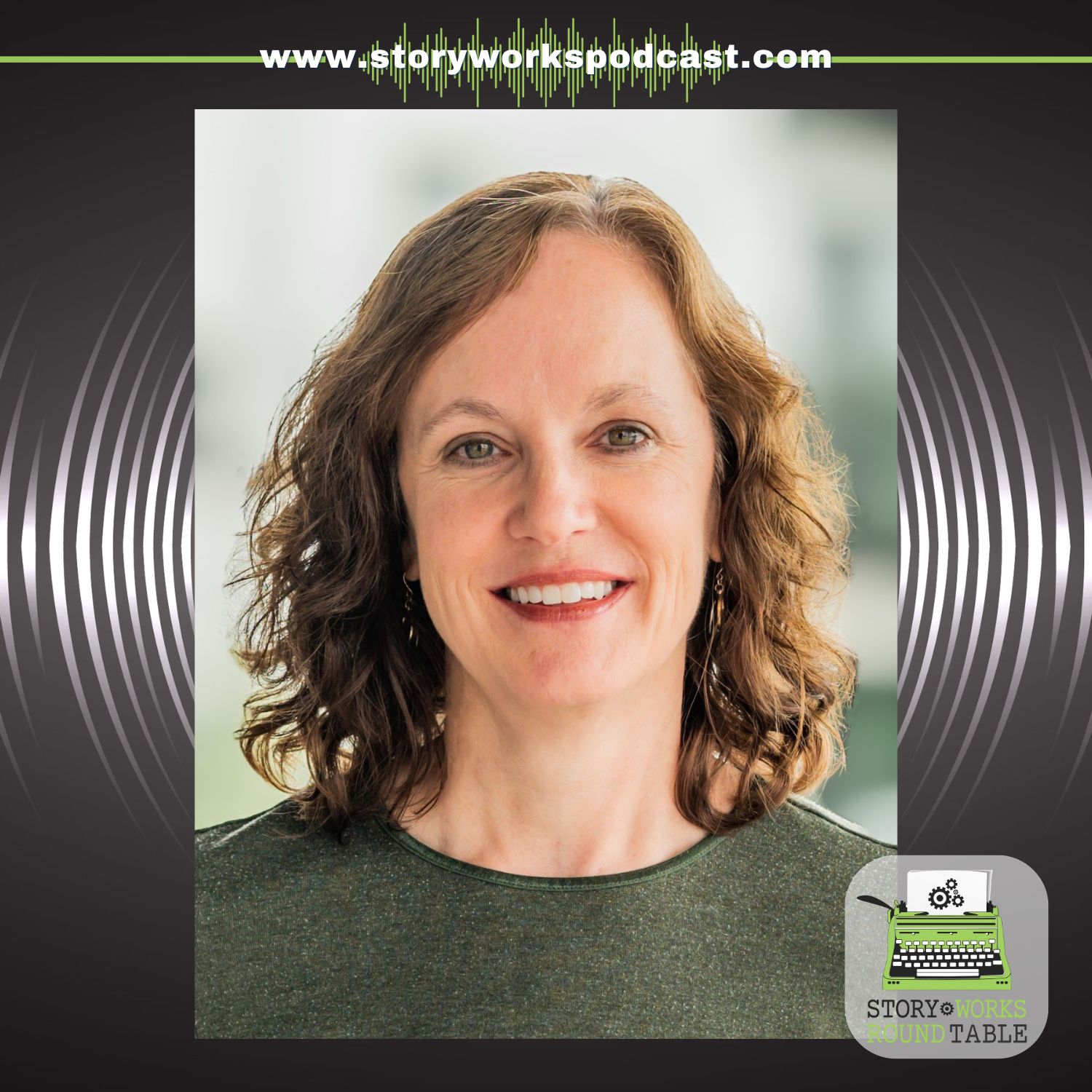
Wendy Wessel is a Minneapolis-based voice-over artist who has always loved reading and storytelling. She has a Masters degree in Education, and through her teaching experience, she knows how to use her voice to engage listeners, communicate clear messages, and motivate others.
TRANSCRIPT
This transcript is AI generated. If you notice any inconsistencies or errors, blame the bot.
Alida Winternheimer: Welcome to this week’s StoryWorks Roundtable. I am m delighted to be joined by Wendy Wessel, a Minneapolis based voiceover artist who has always loved reading and storytelling. Wendy has a master’s degree in education and is a teacher. She uses her voice to engage listeners, communicate clear messages, and motivate others. Welcome, Wendy. I’m glad you’re here to talk audiobooks with us.
Wendy Wessel: Thank you so much. This is really exciting. I’ve become a fan of your podcast.
Alida Winternheimer: Oh, thank you.
Wendy Wessel: Yes. I, I. My expertise, if you call it that in writing is, is more technical, so I can easily digest something and spit it out in an organized educational way. But wow, writing fiction, that’s a mystery to me. So I love listening to authors write or talk craft and how they write. And it’s just amazing how you can just create worlds and people and weave everything together. So I really enjoy it.
Alida Winternheimer: Oh, thank you. Yeah. So just from what you just said, I love your voice.
Wendy Wessel: Oh, thank you.
Alida Winternheimer: It’s pleasant, it’s musical, it’s engaging. So. Right. Yeah. Before. Okay, before I even ask you how you got started in this, what qualities do people need or ideally want to have in their vocal performance when reading speaking? I mean, this doesn’t just apply to audiobooks and voice actor work, but just generally what makes a voice good and enjoyable?
Wendy Wessel: I love that question. I think, something that engages you. So there’s got to be some emotion in it. If we compare it to maybe some AI voices that maybe don’t have, like the human voice can be really engaging. And if you, if you have the emotion and, and expression in what you’re talking about, as far as voiceovers go, really the industry right now is wide open. It used to be more of, you know, an announcer type voice. And if you had that voice, you’d probably be a person where people would often say, hey, you should go into voiceover. That’s a great voice, or go into radio. That’s not the way it is anymore. the more, more and more auditions I see are looking for a very diverse, diverse range, of voices. Sometimes I’ve seen one that, okay, maybe want a little bit of a lisp or, you know, different accents or raspiness or more. And, and they’ll give, you know, actors names or something to compare it to. But, really, if, if you’re interested in voiceover and want to get into it, there’s something for everyone. And that’s, that’s the really neat thing about this. Just a lot of diversity out there.
Alida Winternheimer: Interesting. Yeah. I love that you brought up emotion right away as the first quality. Years ago, when I was, in one of my master’s degree programs, we read this epic poem that. It was contemporary living author, but written about this horse that had been a circus performer. So factual horse that had been in the circus and then was drafted into the Civil War. And whenever a cannon went off, the horse would start performing. It would rear up and kind of dance on two legs and step around, because in the circus, it had been trained to perform when there was like, a boom sound. I don’t know if they used, like, a miniature explosive or a drum or whatever in the circus, but it was this amazing poem. And then the author came to class as a special guest for discussion, and she read her poem to us. And I was so excited because I’m not a poetry lover, but this poem transported me to the Civil War battlefield. I had this picture of the horse in my mind, and she read it, and she read it in this very kind of stilted, poet voice, where each line was measured and all the punctu. And I was just like, oh, my God, that just ruined the poem for me.
Wendy Wessel: I thought you were gonna say the opposite. Like, it was just this great performance.
Alida Winternheimer: No, no. And, you know, what was lacking was the emotion. M. And I don’t know what headspace she was in when she wrote the poem, but for me, there was an emotional connection with what the poem was describing, what it was really bringing to life for me. And her vocal performance, which lacked all of the life that I had felt was present in the poem, just. Deadened it for me.
Wendy Wessel: Oh, that’s sad.
Alida Winternheimer: It was a long anecdote. But.
Wendy Wessel: But all these years later, you still remember that.
Alida Winternheimer: So.
Wendy Wessel: Yeah, it made an impression.
Alida Winternheimer: Yeah. Yeah, it really did. so how did you get started in voice work? Ah.
Wendy Wessel: well, I think I could answer that in two parts. There’s. There’s the why and the how. The why part, really goes way back. I. I just remember as a little child, loving to read. And I don’t remember a time when I couldn’t read. And I have lived in Minnesota since I was about seven years old. But before that, I lived in Indiana, and we lived way out in the country. And so I just remember getting in the car, and we would go, on this long drive. What seemed long to me to get into the tiny town in our little, tiny library we had. And I was just mesmerized with seeing all the books in that little room. And I would take as many as I was allowed to check out and I’d have them read before I got home. So I just loved escaping into books. And as an adult now, I read about 30 books a year, all different types. And, I love reading aloud. So I’m also a high school teacher. I’ve been a first grade teacher. I’ve taught grades from first grade all the way up to the 10th grade. And I’m a reading intervention teacher. So I’ve always loved, the expression and bringing a book alive, I guess, for an audience, reading to people and making that story feel real. so I think mostly I just love a good story. A story is just. It’s a place where you can get lost in your emotions or maybe connect to what you’ve been feeling. It can make you think about things differently. I think stories can help you, learn more about the human experience. Right? Get perspectives that you didn’t have before, get ideas and basically make you think and feel. So I love a good story, whether it’s, in a book form or in a movie or someone’s just talking and telling their own personal story. I’ve always learned so much from that. So I think that, that’s at the heart of what I like to do. And whether it’s an audiobook or if I were doing a commercial or some other video narration, that’s all storytelling, right? You’re getting a message across to people. I don’t know. This is something in the reading teacher world. I don’t know if it’s in the author world. But, Dr. Rudine Sims, Bishop compared books to windows, mirrors and sliding glass doors. And so a book can be a window, right? Because you can get this little view into some other place different from where you are at the time or some other life. it can be a sliding glass door. If you are really immersing yourself in the book and you’re using your imagination and it’s like you’re there. It’s like you’re a part of the story. And then windows in the right light can become a mirror and can reflect back to you, your own life or your own experiences. And so, that’s. I just. I just love good story and books. Books are my thing. Yeah.
Alida Winternheimer: Yeah. I love that window. Sliding glass door and mirror. That’s perfect.
Wendy Wessel:: Yeah.
Alida Winternheimer: Yeah. That’s really beautiful. Huh? So.
Wendy Wessel: So that’s the why, I guess. But you asked how. Right?
Alida Winternheimer: Well, both by and how. Yeah.
Wendy Wessel: So, I would say around 2021, I think I happened to see a community, community ed class offering to learn about voiceover. I thought, oh, that’d be fun. I’m a kind of person that just, I need to keep my brain challenged and I get bored easily and I’m always looking for something new to learn. So I thought I’ll give it a try. And it’s just a zoom course for an hour. So I did that and I thought, oh, that was, that was fun. And I kept thinking about it and several months later another one, another opportunity came up. Well, I’ll do another one. So I did another one and with the same organization and of course I learned about other courses that they offer. And all of this happened over maybe a year and a half, two years. And I decided I’m really interested in this and I think I could do it. And I’m coming up on retirement really in a few years from teaching and yeah, that’d be great to be able to do this. So I took their 16 week master course and had a personal coach who’s a voice actor in California and learned a lot about the industry and learned about how to use my voice, learned about auditioning and those kinds of things. so that took several months. And then after that I had to create a home studio because in this day and age I can’t just walk into someone else’s studio and perform, do my thing and walk away and they take care of it all. That was quite a learning curve. so I had to. I’m in my studio right now. It’s a little, it used to be a walk in closet but my kids are grown and so I could take one of them over and it’s about 3ft by 6ft if that. It’s very small and it’s treated so that the sound is good and, and so I had to create a studio, I had to get equipment and really the biggest learning curve was learning how to be an audio engineer. I knew nothing about any of that. so that was tough and that has taken a long time and I can do a lot now, but there’s a lot more I could learn. So it took a while. It took about a year of auditioning and just working with the software that I have and figuring out how to edit my sound and, and make it the best it can be. So that was a while. And then after that, I did some more auditioning. I’ve got, I’ve just have this year since this, since June, I have about 50 hours of more Training and practice sessions I’m doing with a different organization. So constantly trying to improve and learning the craft, just like writers do. I’m sure you’re. You’re always talking about classes you’re doing and, and teaching, Right?
Alida Winternheimer: Right, yes. right. Yeah. Wow. And it’s also like writing or being an author in that you sit down to write because you love the stories and you love writing and creating and sharing those stories. But then you have to become a publisher as well. And so you’re learning so many other skills, and many of them are technical and business oriented. And even if someone goes the traditional publishing route, you still end up having to do a lot of marketing and other things for yourself, so.
Wendy Wessel: Very true. Yes. It is a business. Yes. And some of the parts I like and some I don’t, but you have to do them.
Alida Winternheimer: Yeah. I think it’s hard to just be an artist today. It’s like the world doesn’t really support that. You have to be an artist and to some degree, an entrepreneur.
Wendy Wessel: Yeah, true, true.
Alida Winternheimer: Yeah. So, okay, what sort of skills go into the art and craft of being a voice actor?
Wendy Wessel: So many. I would probably split it up into. There’s like the general performance kind of skills and then there’s the technical process. that’s how I would split it up in my mind. So the general performance part. let’s talk about audiobooks specifically. So an audiobook project and narration is a really big, very long, time consuming project. And the job is to make the story come alive. Right. And so as a narrator, first I have to really immerse myself in that book and do multiple readings, uncover the layers and discover things. You know, when you read things multiple times, you discover, more about it. I think of it as zooming in and then zooming out. So I zoom out. I need that big picture. Right. I need to understand how everything works together and builds off of each other. And then often zooming in and really getting the details of a scene or of a chapter or of, of a character. So it’s gaining empathy for the characters, trying to get the little clues that you authors give so well throughout the book and put all those together. And so I can understand who these, these people are and what motivates them and what, what is their background. And, and that then in turn helps me know how to voice them. not that an audiobook has to be, you know, very dramatic voices and cartoonish, but, but you have to be able to differentiate as a listener who’s talking.
Alida Winternheimer: Right.
Wendy Wessel: And to be able to hear a difference in the voices of the people in the book if there’s dialogue. And so. And that brings, again that brings the emotion in the book. Right. So I have to imagine that I’m there. I have to imagine what these people would look like and, and if they were real. And sometimes I might compare them to a person I know and that’s maybe where I get a little inspiration. but then I have to differentiate the voices enough so that a listener hearing this for the first time is going to know what’s going on and who is who. So that could happen with pitch, of course. it could happen with pacing. Some people might talk more quickly or slowly than others. It might be a voice texture. Someone could have a really gravelly voice, very, very whispery voice. And so you could have different tones and textures to the voice or nasally, maybe accents or dialects, which I’m not an expert at yet. That is not my thing at this point. that would take a lot of practice. And so you have this cadence as, as that character speaks.
Alida Winternheimer: Right.
Wendy Wessel: sometimes it’s a placement in the mouth and I have to take notes about where my tongue is when I’m voicing that person or how my mouth is formed. Or sometimes it’s your whole body. Often it’s your whole body. Like what is my posture like, and try to connect that to the person and so that it’s actually really physical activity. It gets really warm in this booth.
Alida Winternheimer: I bet.
Wendy Wessel: Yeah. Yeah. Especially since there’s no air and windows in here. It’s. It’s pretty warm. So I would say that that kind of describes the the performance part of it. Yeah.
Alida Winternheimer: Yeah, yeah. That’s fascinating. You know, I’ve heard over the years I’ve heard things here and there about creating audiobooks and I m knew that the process was lengthy and involved, but I think the people I’ve heard in the past talk about it have emphasized the production part. Like for every hour you read, you’re going to spend three hours creating something more. More. More.
Wendy Wessel: I would say more.
Alida Winternheimer: Right? Yes. But I’ve never heard anyone talk about the performative as. And I love what you said about reading the book multiple times and getting to know every character and feeling like you’re present in the scene. I mean that really spotlights that this is an art and a craft and it’s not just oration, it’s not just reading aloud.
Wendy Wessel: Yes. If done well, I agree. That’s that’s the, that’s the ticket, I think. Yeah. And the, the time amount. really a good, a good audiobook narrator could probably do six hours to every finished hour of the book. I’m not that low yet. That would take a lot more practice and I’m really a perfectionist. So, yes, it could be six to ten hours for every. So if you have a four hour finished book when it’s all done, I mean, it could take 24 to 40 hours behind the scenes. So it really does take a lot of time and effort.
Alida Winternheimer: M wow. Yeah, that makes sense. So when you’re thinking about all of these different elements that go into a character’s voice, like pitch, pacing, texture, cadence, you know, even the shape of your mouth as you’re forming words, how do you decide what qualities to give to a particular character? And have you ever then had an author disagree with your choices and had to revise your, your voice for a character?
Wendy Wessel: Sure. Because this is just going to be my interpretation. Right. And I mean with, I would imagine not being a writer, I would imagine as an author, like the book is your baby, like you spent how much time develop it? Right. And honing everything. so you probably have, I would guess, an image or maybe a sound in your mind of how that person might be sounding. but what I would do as part of my process is I’ll play around with it. Sometimes it’s just a feel. I just. If I read the book enough and I’m constantly taking notes on different characters and pretty soon I maybe have enough information to put something together and I’ll try some things out with my, my microphone. And then what I would do is record those samples. So if I were doing an audiobook for you, I guess this would lead more to the technical process. Right. So I’ve done my research. I’m learning a lot from m reading, but I’m also getting information from the author. So I usually send. I have a Google form I’ll send out, asking some questions and trying to get some more details from the author, like what were you thinking for the tone of the book? Or what can you tell me about these characters? And maybe there’s some backstories that you have in your mind that weren’t really written in the book, but you’re thinking of. I’ll think about age and gender and all those types of things. And then once I have that information, I have the manuscript. I’m going through everything. I’m taking a bunch of notes. I’m Annotating, as I read through and then creating those voices. And then what’s pretty standard in audiobook production is that I would do a 15 minute or so they call it a 15 minute checkpoint, but around that time. And I would just read a part of the book that we would agree on ahead of time, and treat it as if it was the final production. And, to give the author an idea of what this might sound like. And then me personally, I would add on samples of all the different character voices as I’m thinking of them, and then that would go to the author to be approved or which is totally fine, sent back with, let’s make some changes here to this. And so we would go do that back and forth until we’ve agreed on at this point how some of these things are going to sound and you’ve signed off on how this 15 minute sample is. And then my job is to go back and take all that and produce the book, which is that long, long process.
Alida Winternheimer: Yeah, yeah. so when you do that 15 minute and. Well, so what is the process for authors who are thinking about hiring a voice actor? You know, somebody reaches out and says, hey, I’m interested. What can they expect up, front in terms of getting to know you and your work? And what happens when you’ve got like a deposit? And what, what does the process look like for working with an author?
Wendy Wessel: Yes, well, different narrators will do this differently. many of them that I know of, will ask for a deposit or 50% down or something after that 15 minutes is approved. just as an investment and agreement between both of you. You’re both invested, you’re both going to follow through on a commitment. and then now I lost my train of thought. What was the rest of your question?
Alida Winternheimer: Oh, just the process. What does it look like to work together?
Wendy Wessel: Yeah, so I will do a lot of emailing back and forth with the author. a lot of it is up front. A lot of it goes into the preparation part. And if someone was going to look for someone to narrate their book, the really, the only way that I have done it personally is through acx. And that’s the system that publishes everything on Amazon and Audible. There are other ways to do that. Right. Some narrators work with, production companies, with publishing companies, with all kinds of different ways that could be done. So I just know about the ACX way. So if an author wanted to do that, their book would have to be on Amazon, including the Kindle ebook version. And if that’s all set, they would make a profile on ACX and then they would post their book, claim the rights to their book. You know, one thing I should go back is that the author does need to be the rights holder. So that’s making sure they also have the rights to the audio depending on how you’ve published your book. And so if that were the case that they could claim their book, that, that’s their book on Amazon and post a, an audition. And there’s lots of narrators on, on ACX and we look at auditions all the time and, and you’ll get to stop the auditions whenever you want and listen, listen to everything and, and decide what the best sound is for you and choose somebody and then that contract is done through, through acx, through the system. there’s options to do a per finished hour payment. So. Okay, I think my book is going to be about five hours. I’ll pay this much per finished hour. And so that’s one way to do it. Another way is to do a royalty share agreement. And that would be nothing up front. So the narrator is producing the book with the hopes that sales will be really good. So as a narrator, I would, I would be very hesitant to accept those unless it’s you know, some, a well known author or a book series that has been doing, well, something where I know I’m going to get some, something for all those hours.
Alida Winternheimer: Right.
Wendy Wessel: Yeah, experience. But you can also do a combination, a royalty share plus which would be a smaller amount per finished hour plus a royalty share. So that’s a good compromise between the two. but everything would be taken care of through the acx, ah, system online. And then I would upload the chapters as they are done. I upload a chapter at a time so they do it. And after everything’s done you would, as the author would listen and make the final approval for everything. And then ACX does some technical checks and. Uh-huh. It gets up.
Alida Winternheimer: Okay, so what is the going rate these days or kind of the median rate? I’m sure there’s a wide range for different voice actors. But what’s the per finished hour kind of going rate today?
Wendy Wessel: Yeah, ah, about 200, per finished hour, maybe 250. and that’s going by the rate guides that are out there. and that’s kind of what I’m hearing from other people as well.
Alida Winternheimer: Okay.
Wendy Wessel: Or finished hour.
Alida Winternheimer: Yeah. Okay. Yeah. If someone’s got a novel that’s going to be, you know, like a 10 or 16 hour read. Yeah, yeah.
Wendy Wessel: So it would be spendy, which I, which I understand. And that’s why I always like to explain how many hours I’m spending in the studio producing it. Because like you said, I think people just don’t realize how much work it takes.
Alida Winternheimer: Right.
Wendy Wessel: Like you’re just reading the book, right?
Alida Winternheimer: Yeah, yeah.
Wendy Wessel:: Ah, no, and, and book recording, like when I’m in, into production of the main part of the book, really my sessions can only be a couple hours at a time because my voice, it’s too much for your voice to go hours and hours. Right. And you need to really have consistency. That’s super important in an audiobook. So I need my voice to sound the same every time I record because the listener is probably going to be listening to it all at once and they would detect that if it was different. So recording during the same time of day is really good. if you get a cold or something, that’s going to delay. Right. Because your voice changes. And so same time of day, same environment and, and keeping those sessions limited. And then I, you know, it’s, it’s a lot of listening. So I will record a chapter and often it’s not all. You can’t really record one chapter very often perfectly with no mistakes. Or maybe I’m saying all the words right. But maybe I’m hearing myself say a phrase like, oh, I didn’t like how that came out. So I’m going to go back and change that. And so it’s a lot of stop, start, stop, start and fixing things and listening again. And so I might go back. Maybe I’ve finished a chapter finally and then I’ll go back and first listen for errors. So I’ll watch the manuscript and maybe I said a word incorrectly or left a word out. I’ll check for consistent volume, to make sure that’s staying really steady. Especially a lot of people listening to audiobooks might, have their earbuds in. Right. You don’t want to be blasted in one part and it’s hard to hear in another. And fooling with the volume. I’m going to listen again for noises. Little mouse, mouse mouth clicks or mouse clicks. I guess that would be a problem too. mouth clicks or some noise in the environment, that I didn’t notice. What’s happened before is I’ve re. Listened. I’m like, what is that sound in the background? Oh, there was an airplane going by outside and I didn’t Notice it. I’m so in the zone of reading. I have to rerecord that part. so there’s a lot of going back and listening and checking and making sure it’s smooth. Are the, are the spaces between sentences or between paragraphs? Is it, is that sounding right? Am I going too quickly? M M. Yeah. So it’s a lot.
Alida Winternheimer: Yeah.
Wendy Wessel: Over and over. Wow.
Alida Winternheimer: It’s much more technical than I think most people realize. At least realize without attempting it for yourself. And it is like writing. You know, you get something down on the page, but then you’ve got to go back and look at it and revise it. And over the course of a novel, you’re making certain, certain that your narrative voice is consistent and your characters don’t have any changes and that, you know, the tone, the pace, the tension, everything is working as you want it to. so how much time you mentioned, you know, you can only read for a couple of hours and you’ve got to do it at the same time of day and you can’t have a cold and such. So what is the turnaround on, you know, say 2,000 words like a chapter? A nice kind of, five to seven page chapter? I’m trying to think. Yeah, I think, that would be about five to seven pages. Like you’re. Or just, you know, let’s make it a little more bite sized for people to wrap their heads around.
Wendy Wessel: Right.
Alida Winternheimer: You know, what does that look like?
Wendy Wessel: So really for a chapter, I would easily record a chapter in a day, in that two hour session. It doesn’t mean I would necessarily have all of my editing and mastering done of the audio files. But if I think I have a really good recording down, the bass is very good and I’m happy with how it sounds. I can always go back later and do the finalizing and the audio mastering and that kind of thing. So. But yes, I typically could easily do a chapter, maybe two chapters depending on my flow, how I’m feeling and how long the chapters are, of course. And it’s going to be different for every narrator, but that’s just me.
Alida Winternheimer: Yeah. So, how much editing takes care of things like little noises or removing. Removing unintentional mouth sounds or you know, the variety of problems versus. Nope, I’ve got to go re record my reading of that passage. Like how much can you rely on technology versus performance?
Wendy Wessel: It’s really, I think, an experience thing and I’m getting better and better at it. So the more that I improve my craft and get training, the better I can keep my voice consistent and fresh and clean. I have to stay super, super hydrated. I have to hydrate a lot the day before and the day of. And just water, water, water. And that helps take care of a lot of those mouth sounds. And so I’m trying to get better at that. Especially when I’m doing a project. Of course I’m going to be. But in general I’m trying to do that more. so that takes care of a lot of it. And I think just experience when you get better at voiceover. there are some plugins and things you can put in your daw. Your software to take care of some of the extra little things that happen. there’s lots of. There’s so many things I could add to that I use pro tools for mine. And it’s, it’s complicated and so there’s so much that I haven’t even touched in it. I’m sure that is, is possible. And like I said, I’m, I’m. It’s a very big learning curve, so. And it costs money to add those things too. So. But yes, there’s definitely technical aids that you can get that can do that. you’d have to be careful sometimes, depending on how you set them or which ones you use, you don’t want it to take out every time it’s hearing a click.
Alida Winternheimer: Right.
Wendy Wessel: Because sometimes that might be an appropriate sound. It, might be a T or a C in a word. so kind of like AI like you can train it to do something, but it’s not going to be perfect. And you still have to make sure it’s doing what you want it to do.
Alida Winternheimer: Right. Yeah. I imagine if you relied too much on editing tools, you could remove some of the humanness or add a different edge to your voice that you don’t intend to because of what it’s doing, you know, instead of. Instead of things being performed.
Wendy Wessel: That is insightful. Yes. You can definitely over process an audio and you can tell by listening to it. Yeah. So you really have to get good at the reading part. so you don’t have to fix as much afterward.
Alida Winternheimer: Yeah. So are you just naturally gifted in this way for someone to be a really strong voice artist? How much is training? How much is talent?
Wendy Wessel: Oh, I, I don’t think I’m naturally gifted in it. I think everybody starts with a sound. Right. You hear different voices all the time. But really, if you work at it, you really can learn to control it and to pay attention. I think the biggest key that I’ve figured out is to be a really good listener. My listening skills have improved so much since I started this journey, because you tune into everything. So I’m listening to a commercial on the radio, and I’m thinking about how they did this, and, oh, I don’t think I would have done that. Same choice. Or, oh, I liked how that sounded. Or they’ve got a really good tone to their voice, and so you notice all these things. And I can listen to my own work and evaluate, it while I’m listening and hear things that when I first started, my coach would be saying, well, I’m hearing this. And I’d be like, what? What? I don’t. Okay, I trust you. But I don’t. I don’t hear it. Or they’ll have me listen to a recording of something and ask me if I hear something in it. And no, I don’t. So it’s really. I don’t. I didn’t have that ear yet. Right. So, that comes with time, and I’m sure it’ll keep improving for me as well. So it’s really a lot. Really a lot of listening. More than. It’s just counterintuitive. You think, oh, it’s speaking. Right. I’m going to improve my speaking. But I think you improve your speaking by improving your listening.
Alida Winternheimer: Yeah, I love that. That’s great. yes. You know, I’m relating it back to the writing process and thinking, yeah, you need to be observant and you need to be a listener if you want well, developed characters who are distinct from each other, you know, so everything you said about learning these vocal qualities and picking up the nuances and the little details and really training your ear to hear things, I think writers, Can. Take that as well. That word. Word to the wise.
Wendy Wessel: I was just thinking that what you just said makes sense because if you’re a writer, you should be reading. Right. and it goes together. So if I’m a speaker, I should be. If I’m a narrator, I should be listening to audiobooks. And I didn’t used to listen to audiobooks because I’m a very fast reader. And so I never. I never enjoyed it. But once I got into voiceover, I thought, okay, I’ve got to listen to audiobooks if I want to produce them. And, that has really helped, too, to be able to just witness someone, ah, really good narrators. And working on their craft and just learning from that. Yeah.
Alida Winternheimer: Yeah. Is there anything, like an aha moment where you were listening to somebody else’s work and you’re like, oh, that thing they just did. You know, I’m just curious if you.
Wendy Wessel: Yeah. sometimes I, will try to emulate a voice, a sound that I’m like, wow, that’s interesting sounding voice that you used for that character. And would I be able to do that? And so I, you know, play around with it. And sometimes I can’t because my voice won’t do it, but sometimes I can get there. And so, yeah, so I’m always thinking about the how, like, how. How are they. How are you getting that sound? Because it doesn’t sound like your narrator sound. there was a book that I did, last spring that had 39 different speakers in it. And sometimes it would just be a quick one line. It’s not big main characters, but that was overwhelming. how do I differentiate 39 people? And there weren’t that many that I had to do because some of them were just a little line. But. But many of them came back throughout the book. and so that’s another thing. To stay consistent with those voices, I have, lots of notes about each one. But then when I settle on what the sound is going to be, I’ll record it. And so in my system, I have a recording of all the character voices. And so when I’m, oh, this one’s coming up in this chapter again. And I’ll think, oh, how did I do that? I don’t remember. That was back in chapter two. So I have to go listen to it and look at my notes again and how I was doing it. And. Okay, that’s. And try to get in the zone again for the next time the voice comes up.
Alida Winternheimer: interesting. So is your speaking voice similar, slash, the same as your narrative voice, or do you change your sound for each thing you read, depending on what that is and the tone it has?
Wendy Wessel: Good question. for me, it’s usually pretty close to my speaking voice, only because the narrator is the majority of the book.
Alida Winternheimer: Right.
Wendy Wessel: And so to be able to sustain something that’s not your true voice would be pretty hard. So, I might have maybe just a softer sound, or maybe I’ll raise the pitch just a little bit. Or like, I just finished a, ah, children’s book, that will be going up on audible soon. And then you want a really different sound for a children’s book, like, right, like, so you’re talking to kids and you might sound more like this. And so then I would alter it a little bit. But for a regular fiction, Ah, A novel, I would probably, probably use pretty close to my regular voice for the narrator.
Alida Winternheimer: So what about performing in your regular narrative voice for something, say that is, a dark mystery versus something that is a rom com or how much conscious effort or how much, you know, what do you put into that part of shaping the voice?
Wendy Wessel: Well, sure. Then I think it would just come down to like the, the, like the tone of the book. Right. So if you’re, if it’s, if it’s a rom com, it’s probably going to be a lot lighter and airier and I maybe would speak a little more casually sometimes or a little brighter. versus if I’m reading a mystery and then I might change, change it a little bit. But I’m still using my voice, just with a little different tone and a different feeling.
Alida Winternheimer: Wow. So what, what would you say to authors who are listening to this and maybe they started the podcast thinking, oh yeah, I’m gonna get some tips and then I’m gonna go turn my novel into an audiobook or my how, to book into an audiobook. And now at this point in the conversation they’re thinking, holy cow, there’s no way I could do this. I’m gonna need, you know, five years of training to do something passable. What, what would you say to people who are thinking about diying their audiobook?
Wendy Wessel: Yes. Well, I would for sure advise them to think about the time commitment. It can be done. if you have access to maybe a professional studio, maybe you know someone who has one or you have an in somewhere or maybe you know, a sound engineer, that could take care of that technical part of it. If you just wanted to read your book. I think it’s probably more common for people who are maybe writing a memoir or biography. Autobiography to want to voice their own story. Of course. And I’ve listened to a lot of those and they can work well. if you have the time and you’re ready to devote yourself to it and you have the support for the technical piece. for sure. yeah, so I think it’s, it’s personal choice, but it’s not super easy to just jump in and do.
Alida Winternheimer: Yeah, it doesn’t sound super easy. Even if it were non fiction. Even if it were memoir. You know, if you were. So suppose you do have access to a studio.
Alida Winternheimer: Maybe you’ve Got a publisher, they’re sending you to a studio to read your own memoir. So somebody else is doing all of the editing and production. What would be a good ballpark for a beginner in terms of time, like for every finished hour of the book? My reading time. Because you’ve got some do overs, you’ve got some scratchy voices, you’ve got, you know, all of those things.
Wendy Wessel: Yeah.
Alida Winternheimer: I’m just curious.
Wendy Wessel: Oh, that’s a tough one. It depend on so many different factors. I’m not sure, like I said, how much time it would take me. and I think an author who was going to do this would likely do a lot of practice. Right. And they’d be prepared by the time they went in there. And you know the book well because you wrote it. so if you’re really prepared like you, you could probably do that in a similar time, I guess than a professional. As a professional narrator, with a lot of practice, it’s possible. It’s really hard to answer. I’m not sure how much time. I wish I could give you even a ballpark, but, I don’t know anyone who’s actually done that personally, so. That’s a great question.
Alida Winternheimer: Well, I think you gave a great answer because, you know, it might be easy to think, well, I wrote it, therefore I know it. I know the feelings in every scene. I know. Right. It’s going to be my voice, of course. So I can just go in and read. Yeah. And kind of forget. Or not be aware because you haven’t done it before, that you aren’t reading it, you’re performing it.
Wendy Wessel: Right. And it, is a performance art. And I think if you have a lot of dialogue in your story that gets challenging and it slows it down. Especially if you have two very different voices. So, if I’m in my studio, like I can record a line from a character that sounds very, you know, here’s one character and then I need to pause my recording. So I’ve got to set myself up for the next character and come in. But it’s hard to just do that for me without pausing. So, probably a great professional narrator who’s done this for decades probably could do that. I’m not there yet, so I do. I’m going to have to pause and get myself set for the next voice to keep it consistent. So even if you do know the story well, there’s the technical piece. If you’ve got a lot of dialogue back and forth happening.
Alida Winternheimer: Yeah. Oh, that’s so interesting. And most novels do have quite a bit of dialogue in them.
Wendy Wessel: Right. But like you said, it might be different for a, well, for a non fiction book. And so. And that’s a very different type of recording. I did a children’s informational book about energy, a kid’s book. And so then it’s well then there was the issue of knowing it’s a children’s book. And so it would be slower and there would be more pauses and so the pace definitely would be different. but then keeping your voice very consistent. And so yeah, that’s going to be a very different sound than. Fiction.
Alida Winternheimer: Yeah. So if you’ve got to pause to switch voices, then, you know, let’s say you’ve got an argument scene. So the pace of the scene is going to be quick. Words might be spat out of someone’s mouth if it’s a heated discussion or something. Right. So you’re doing these voices back and forth and you want a certain pace and intensity, but then you also need to pause because of that switch from character to character. So how do you handle dealing with all of those different elements of a story while you’re recording? You know, I can imagine you might lose some of the emotional intensity of a rapid fire exchange and dialogue while you’re doing that switching process.
Wendy Wessel: True, yeah. it’s very challenging. So the best way to do it is to just go through it right. And like as if it were a live argument and try your best to get the voices right and then listen to it again. And then I would say, okay, this one, this line didn’t come through as well. Maybe I’ll just rerecord that line and I can fit that in. if I’m really having trouble with it, I might do a couple of, a couple of lines and then pause. So I might just break it up a little bit more than normal. it’s easy to put space in, it’s easy to take spaces out. so I can manipulate the recording a little bit as far as the silent parts to make that timing better. yeah, but it’s, that’s a challenge.
Alida Winternheimer: Yeah. So what about enunciation, pronunciation? You know, in English we allied a lot of words. And I know when I’m editing the podcast if there’s something I want to clip out or put in, I get into trouble if I haven’t left a space. So is that something you had to teach yourself to think of words as units or sentences or where those spaces might Go. How do you work with your body, your voice, your manner of speaking, knowing that there’s this process, this production process to come.
Wendy Wessel: Yes. phrasing is really important, whether it’s an audiobook or a commercial. definitely phrasing is key. And so, and the phrasing’s connected to the meaning. Right. And so I have to figure that out ahead of time. Do a lot of practice and then sometimes you get in a flow and if you if we’re talking about a characters speaking, I guess that would be different than narration. But if I’m feeling the character, I can kind of imagine how they would sound and I’m making it realistic. Right. If I’m doing a narration part of the narrator, I, would leave, I do leave space at times knowing that there’s going to be a break here. I can always shrink it again later if I have to pause and think that’s okay. So it’s a, it’s kind of like working with clay. Like I can keep manipulating it and not, not over processing it like we talked about before. That ruins it. But as far as the spacing and the silences, definitely can be easily edited.
Alida Winternheimer: Yeah. Interesting. There’s so much to think about, you know, and I think much of what you’ve said in this conversation hasn’t been thought about before by those of us on the other side of the headphones. Right. Just enjoying audiobooks.
Wendy Wessel: It wasn’t thought about by me either a couple of years ago. So I understand. Yes.
Alida Winternheimer: Yeah. Wow. So what else? Is there anything we haven’t touched on that you would like to say about what you do or voice acting? Audiobooks generally.
Wendy Wessel: I, you know that we had mentioned AI before and that is really becoming a thing right now in every area of our lives. Right. So it’s. And in audiobooks also, actually ACX offers to authors to have you here. You can do your book with AI we’ll will help you with that. And, and it’s cheaper and it’s faster and there are definitely advantages. I can see for an author, unfortunately it, the downsides are it just doesn’t have that human element. AI doesn’t have life experience. So there can be things that it’s getting better, but there, there can be things that get lost in interpretation. for example, maybe a character is thinking in their head and then in the next line they’re speaking. And so that’s going to sound different if I were narrating it. And AI is probably going to read it all the Same because the sentence looks the same on the page. And so I think those are just considerations. it definitely is making a dent in the industry, but I don’t think it will take over. I think, think people want to hear a human and I think they can tell when it, when it’s a human or when it’s AI and to have that real emotion and that lived experience doesn’t sound robotic. that people appreciate that. That’s what I’m hoping.
Alida Winternheimer: Right. Right now. I agree. I definitely appreciate it. You know, I understand. I’ve heard authors say, well, AI can be a stepping stone because you have AI read your book and then you can put the audiobook out there. And audiobooks are a big market. And then your book earns you a bunch of money. And then you go turn around and you know, pay that money to a voice actor to redo a new edition of your audiobook. I don’t know if it actually works that way. I can imagine that if you launch your audiobook with AI it like you’re making an assumption it’s going to perform well. And then if you redo the book, you’re making an assumption that the market is going to still want that new, improved version of your book. So I don’t know if that, if that thought, process is, has worked out for anyone. I don’t know. That was interesting thinking. I, I’ve, I’ve seen on social media and other communities and I’ve kind of gone.
Wendy Wessel: Yeah, it seemed, it sounds like just a, a temporary band aid until you can have the time and the money to do it. Right. I mean, that’s the way it was. I, I’ve not heard of that process before. That was just my first thought. Interesting.
Alida Winternheimer: Yeah. And I don’t know if it has worked out for anyone who’s done that. but I could see it backfiring, you m. Know, so. And oh, a writer I know had a, book set in 1999 and New Year’s Eve was in the book. And so there’s a line that they were going to party like it’s 1999. And she did let Amazon, turn her book into an audiobook with AI Kind of as an experiment to see how it worked and what it was like. And this is my understanding, repeating this anecdotally. So I won’t name, I won’t name the writer. Just, ah, just a little hearsay. But the comment that was interesting was that she said, you know, AI was okay, lots of mispronunciations and this and the other. But it couldn’t read party like it’s 1999 the way a human would, because it has now, as you said, lived experience. It didn’t understand that that was a cultural reference. Reference to Prince’s song. Right. They couldn’t understand that there’s music behind that, phrase. And when a reader hears we’re gonna party like it’s 1999, they’ve got musical phrasing in their head, accompanying the print on the page. AI could never understand that.
Wendy Wessel: Perfect example. I like that. Yes. And cultural references, that’s not something that AIs would have lived through. Yes, Good point.
Alida Winternheimer: Yes. Yeah. Wow. So what else? What haven’t we touched on anything? I feel like I had a question, like a final wrap up question for you. And then I got thinking about Prince in 1999. So Wendy, would you like to give us an example of Your work. Maybe read something you’ve narrated.
Wendy Wessel: Sure. this is from Running Free. It’s a fictionalized memoir by Amy Cullen. And this is a section that. See, I set this up here. So there’s a wildfire, and Amy is in charge of 200 horses at a dude ranch in Colorado, and they have to evacuate. And so she’s trying to get all this figured out and is calling an old who used to be the, the manager of all the horses. I’m using the wrong lingo here, but, and. And trying to get some advice. All right. I, sat with his words, allowing them to warm my heart and seep into my veins. Russell’s belief in me was probably the only thing in the moment that prevented me from freaking out. Russell, you’re too good to me, and you give me way too much credit at the same time. I appreciate your honesty. I guess I was hoping you’d have some crazy experience and could tell me exactly what to do, but. What is it, Emmy? I fidgeted in the driver’s seat as I drove. Well, I know you’re enjoying the retired life and all, but is there any chance you’d be willing to drive down the road and help load a couple hundred. Couple hundred horses into trailers if we go under pre evacuation? I held my breath. Russell laughed. Thank you, Emmy, for making me feel useful. I thought you’d never ask. Now, hopefully it doesn’t come to that. Sounds like the wind could shift and give the horses a break from the smoke. But if things don’t go your way, you just give me the word and I’m there. I hung up the phone and pulled into my driveway. With the truck now in park, I looked out the back window of my Ford pickup. That warm feeling of reassurance from Russell disappeared, replaced by a pit in my stomach that dropped through the floor. What I saw was nothing short of terrifying. The billowing black smoke appeared to have grown even more dense, and the sky was now glowing red. This was my first time witnessing a natural disaster, and it was horrifying.
Alida Winternheimer: Wow. Amazing.
Wendy Wessel: That wasn’t, fine tuned, but there you go. There’s a. There’s a rough sample.
Alida Winternheimer: Well, that was great. so you wrestle. He’s not a Minnesotan, right?
Wendy Wessel: No.
Alida Winternheimer: So when you’re thinking about characters, voices, do you go so far as to find out what state these characters live in and what their accent and dialect might be?
Wendy Wessel: yes, for sure. And there’s always clues that authors are giving and. Which is why I have to read the whole book. Like, I couldn’t just pick up a book and read and know all that. So that’s why I’m taking notes as I go, and I’ll get a little clue here and there, like, oh, this. Okay, maybe I could add this sound. And so, yeah, it’s definitely just paying attention to all those details and maybe throwing in a few of my own. How I envision it.
Alida Winternheimer: Oh, fascinating. Thank you. I love that I have. I have new, heightened respect. I always had respect for. For what, narrators and voice actors do. I knew. I knew there was a lot more involved than I was aware of, and now I’m much more aware. So thank you for bringing that to me and to all of our listeners and sitting down with me to talk about the art and craft of what you do.
Wendy Wessel: Thank you so much. It’s been lovely talking with you, and I love hearing about the writing craft as well, so we can learn from each other. So thank you for the opportunity.
Alida Winternheimer: Definitely. Where can people find you?
Wendy Wessel: They can find me on my website. Wendy Wessel W E S S E L Wendy Wessel V the VO for voiceover.
Alida Winternheimer: Excellent. Thank you, Wendy.
Wendy Wessel: Thank you.
About Your Hosts
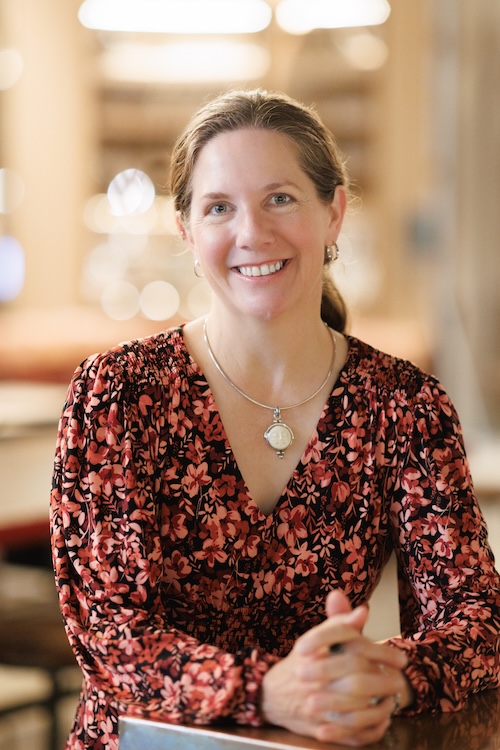
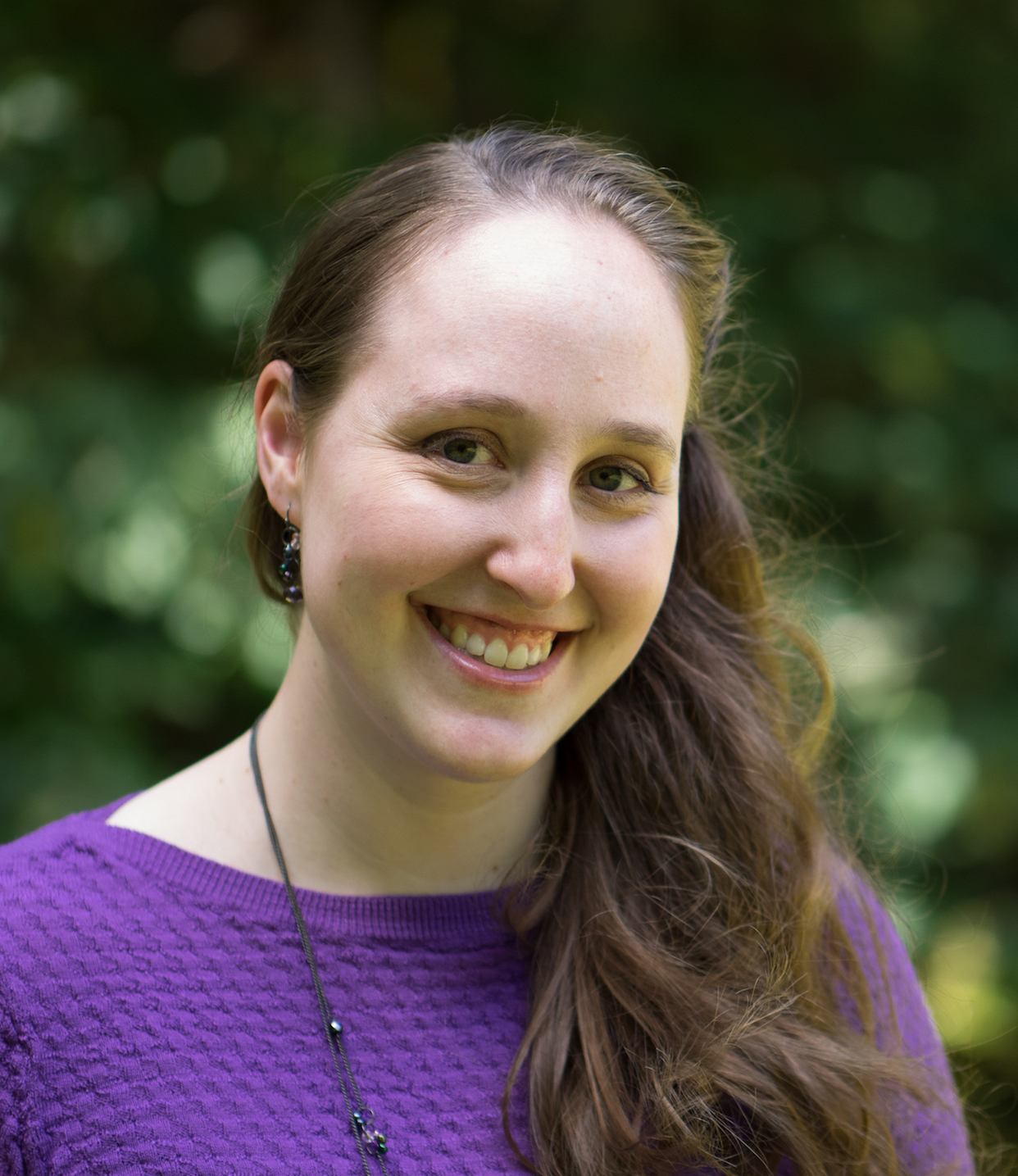
Kathryn Arnold writes fantasy and anything else that sparks her creativity from her home in Kingston, Washington. She currently earns her living as an insurance underwriting assistant, where she also creates marketing and web copy. When not writing, she plays (and teaches) piano and keyboard in a band (or two), and is working on starting a ministry team with her husband. You can find Kathryn at www.skyfirewords.com.