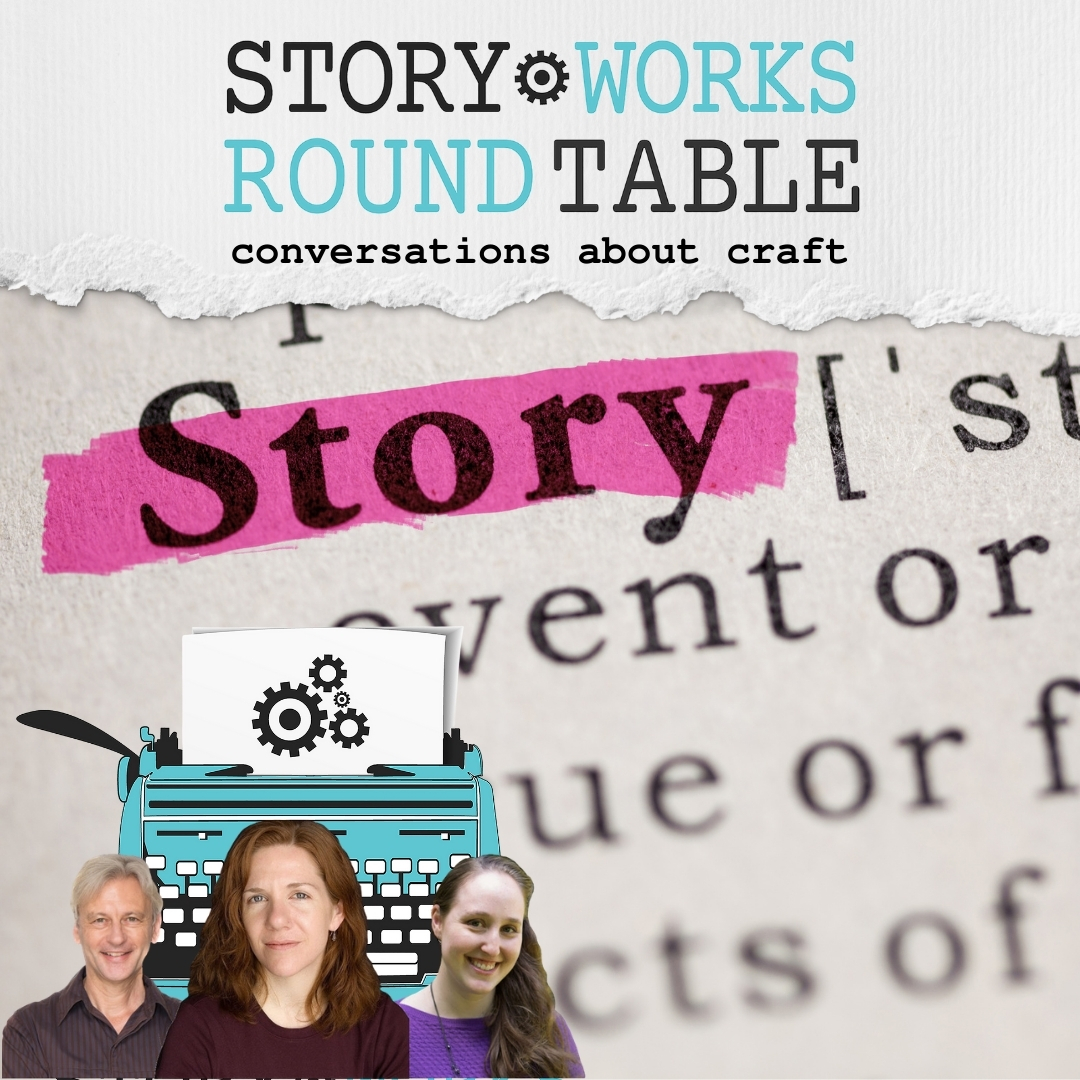

We discuss story craft in Junot Diaz’s short story “Fiesta, 1980” at this week’s writers book club on the Story Works Round Table podcast.
This week on the Story Works Round Table, Alida and Kathryn discuss bookending a story, drawing on our recent discussion of Ethan Frome. Edith Wharton masterfully uses prologues and epilogues to frame the story and provide meaning. We analyze how the framing devices are essential to understanding the themes and events. Then explore examples of other books that also use framing devices well to provide narrative distance and allow readers to understand the story’s significance.
What is narrative drive? And why is it so important to your story? How can you craft drive with characters choices, cause, and effect? What happens when your character comes alive? How does it affect your plot, their agency, and the surprising inevitability of your story? And finally what are some ways you can develop these narrative drive skills?
What drew Emma to historical fiction, and what is it’s allure? How important is your motivation for writing, and what you are trying to communicate to your reader? How does theme drive your story? Emma explains some ways she uses structural tools to make her writing better. And finally, we talk about the trap of authenticity in our writing.
Why do first encounter stories fascinate us? What sort of problems are typical in first encounter fiction? How does it make us deal with our own humanity? And how can you use first encounters outside of its typical alien invasion genre?
What is the difference between hard and soft magic systems? How does it apply to science fiction as well as fantasy? What are some pros and cons of the spectrum? How do you avoid deus ex machina with all powerful magic systems? How do you incorporate consequence into your systems? And where do we fall on the sliding scale?
What is the difference between working in a community and in isolation as a writer? How does it change your work and your mindset? Do we prefer traditional or digital communities? And what are the pros and cons of digital versus face to face? How does a writing community help you grow? And how can it hurt your efforts? As with everything, be careful to balance your life with your community and your writing so that you don’t suffer from overwhelm! And don’t forget, the Story Works community is available to you!
This week, Alida and Robert continue their conversation about the writing process, creativity, first drafts, where ideas come from, and how revision really works. The inspiration for our conversation is George Saunders' essay "What Writers Really Do When They Write."...
This week, Alida and Robert discuss a craft essay by George Saunders, titled "What Writers Really Do When They Write." It's all about the writing process, and we get a lot of value out of this essay. We highly recommend it to anyone writing a story. Get the essay at...
How do you balance real people, events, and places within your fictional narrative? Should you use major historical figures as protagonists? Or should they just pass by as setting or scenery? Have you asked yourself what you are aiming for in terms of your historical fiction? And why do you want to use a real figure or real event instead of complete fiction? And how important is that authors note?
Want to know what it takes to write a good opening? How do you hook your reader and get them invested in your story? How do you create character empathy and what are the action steps that you need to take in order to write a great opening?