
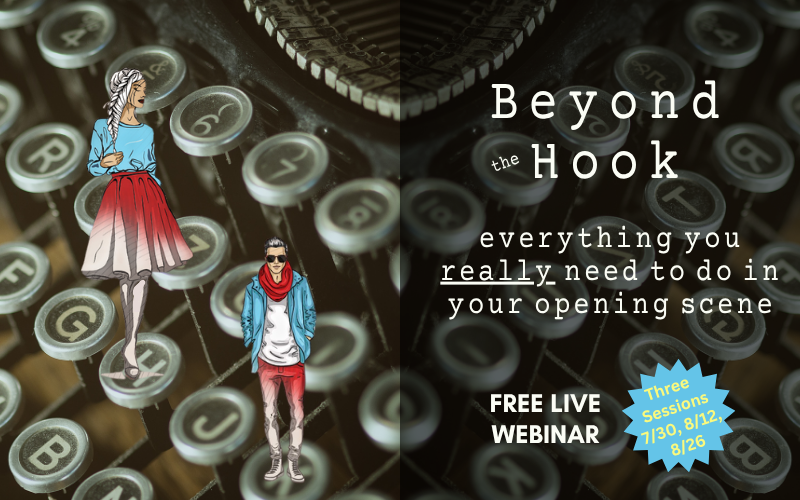
Beyond the Hook: a free, live webinar
- Everything you really need in your opening scene.
- FREE 1-hour webinar.
- Live session.
- Learn what it takes to get your readers from opening hook to committed to your book.
- One session, three dates to choose from.
July 30, August 12, August 26
2:00 – 3:00 p.m. E / 11:00 a.m. – noon P
Register for the webinar here & get updates about workshops (not a newsletter). Your email is safe. Your time is respected.
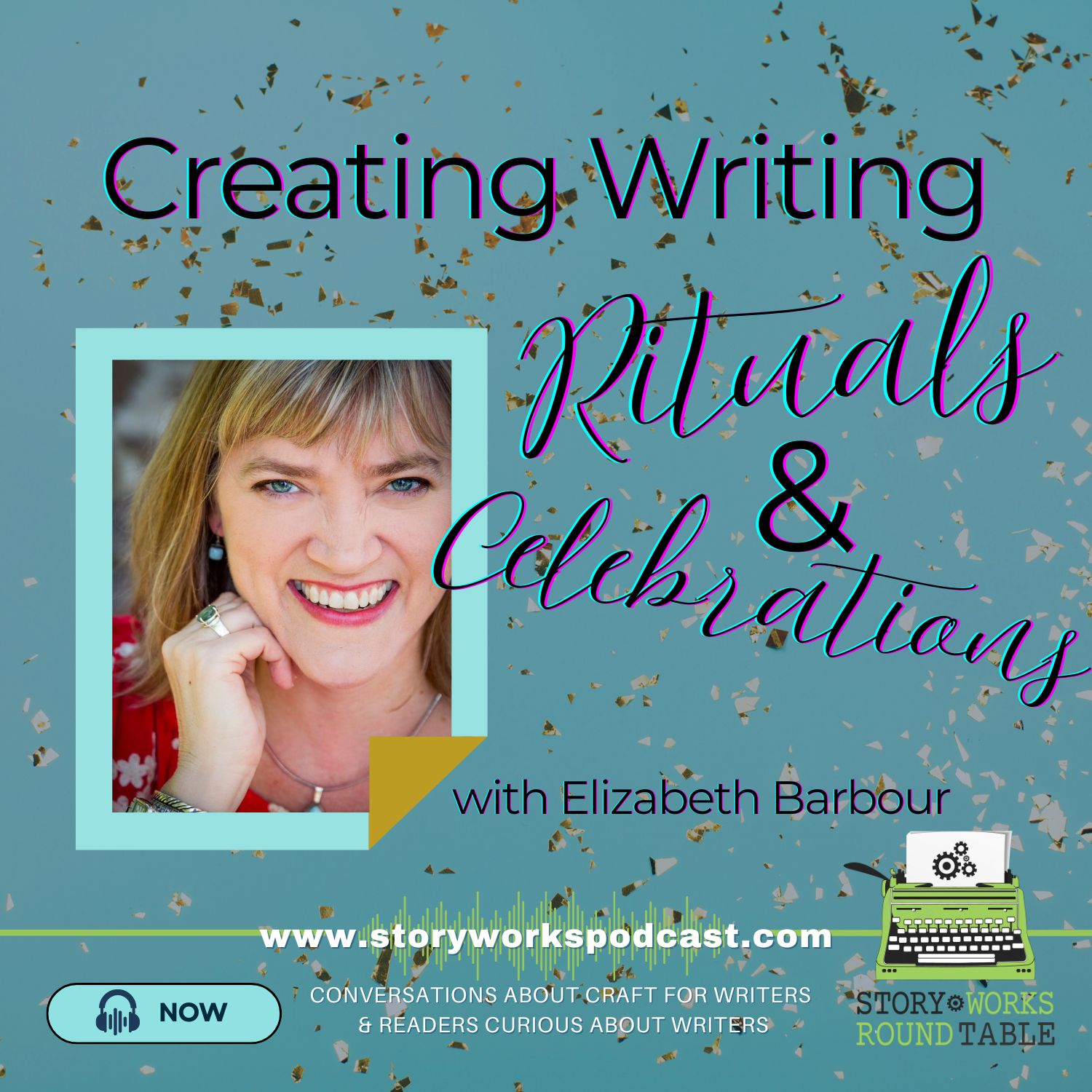
In this enlightening episode, Alida and Kathryn welcome Elizabeth Barbour, a life and business coach, shamanic practitioner, and joyful ritualist, who shares her journey of transforming chaos into clarity through sacred celebrations. Elizabeth discusses her award-winning book, ‘Sacred Celebrations,’ and how rituals can be woven into our writing practices and everyday lives. Discover the significance of creating personal rituals and how they can help us navigate life’s milestones, both joyful and challenging. Join us as we explore the power of storytelling, the importance of witnessing, and the art of celebrating our achievements.
“You don’t have to do it one particular way. There’s no right or wrong way really to honor or celebrate either a joyful thing or a sad thing.” – Elizabeth Barbour
AUDIO
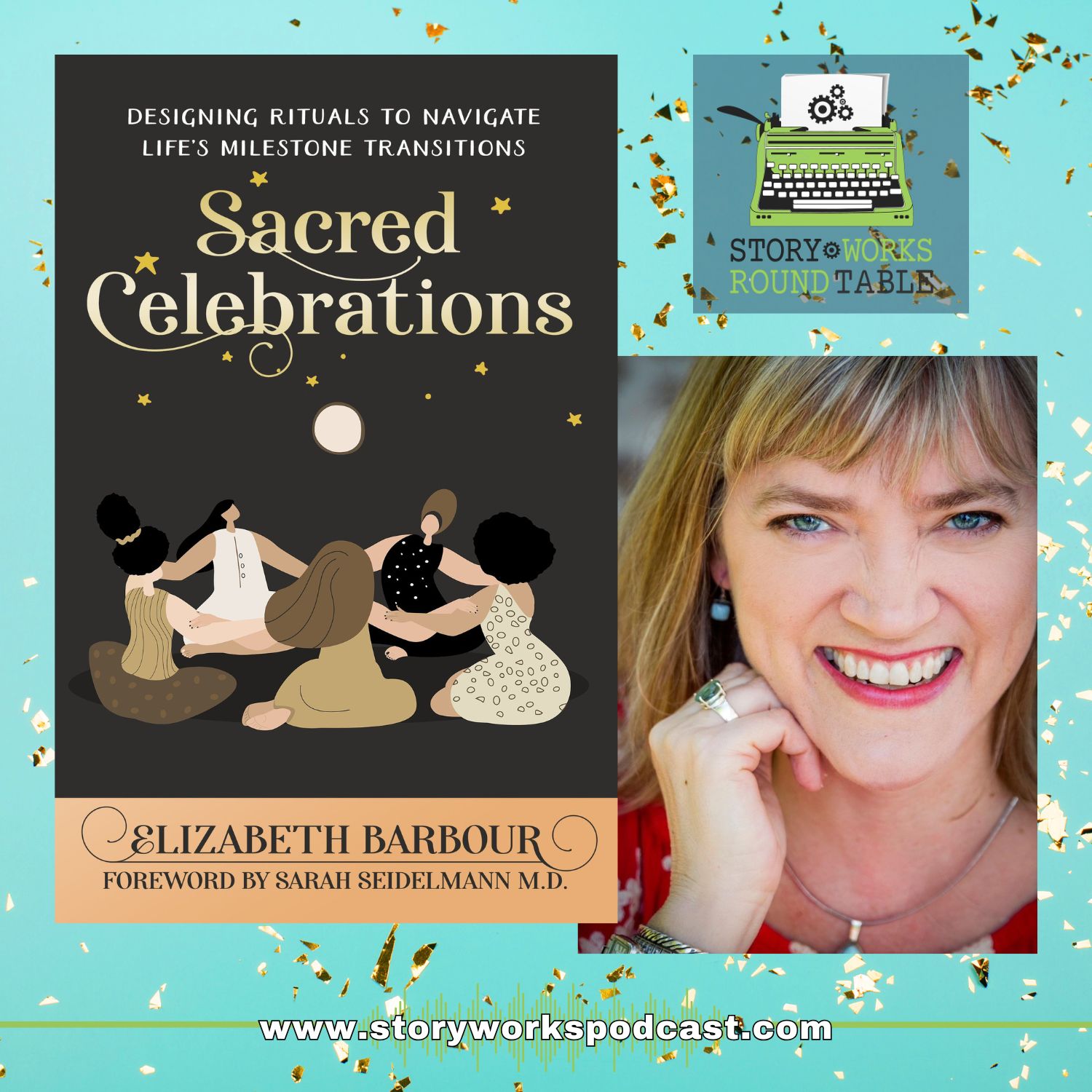
Elizabeth Barbour is a life and business coach, shamanic practitioner, and joyful ritualist who helps women turn life’s chaos into clarity. For 25 years, she’s been blending wisdom and woo to help people heal, grow, and celebrate the heck out of life’s big moments (and messy ones too). She’s the author of Smart Self-Care for Busy Women and the award-winning Sacred Celebrations: Designing Rituals to Navigate Life’s Milestone Transitions and she is currently writing a new book about adoption reunions (she’s an adoptee and adoptive mama). When she’s not coaching or designing rituals, she’s probably making gemstone jewelry or singing karaoke (badly) with her teenaged daughter Riley. She lives in the majestic mountains of Asheville, NC.
TRANSCRIPT
This transcript is AI generated. If you notice any inconsistencies or errors, blame the bot.
Alida Winternheimer: Hello and welcome to this week’s Story Works roundtable. Today, Catherine and I are thrilled to be joined by Elizabeth Barber. Elizabeth is a life and business coach, shamanic practitioner and joyful ritualist who helps women turn life’s chaos into clarity. For 25 years, she’s been blending wisdom and woo to help people heal, grow and celebrate the heck out of life’s big moments. The messy ones too. She’s the author of the award winning Sacred Celebrations, Designing rituals to navigate Life’s Milestone Transitions. And she is currently writing a new book about adoption reunions. She’s an adoptee and adoptive mama. She lives in the majestic mountains of Asheville, North Carolina. Welcome, Elizabeth. I’m so happy you are joining us today.
Elizabeth Barbour: Thank you both so much. I’m delighted to be here.
Alida Winternheimer: And we wanted to talk about sacred celebrations and writing and how we can use, ceremonies and celebrations in our writing practice and everyday lives. So yeah, start us off. How did you come to write a book about sacred celebrations? Give us the backstory there.
Elizabeth Barbour: Sure. it started when my mom, my adopteive mom died in 2016. she died actually on September 11, 2016. And when she passed away, I facilitated what I ended up calling and it’s actually how I opened the book. I ended up facilitating something I called the White Rose ceremony.
Alida Winternheimer: Me.
Elizabeth Barbour: And it wasn’t a proper funeral or even memorial because that happened three weeks later in Florida where I buried her next to my dad. And that was with family and you know, graveside and you know, the whole nine yards. But this White Rose ceremony was a ritual where I invited about 30 or 35 of my friends. At the time I was living in Houston, Texas. And my girlfriends just wanted to show up and support me. And I remember saying, oh, I’m not going to do anything. Hearing a mom didn’t really know anybody here. She was living in Houston because I was caring for her. But that wasn’t her home. Her home was Florida. And my friend said, no, no, but people want to show up for you. So what we did was I created this, this ceremony where I had women come to my home. I gave everybody white roses. We walked out of my home, down by the little creek near my house, we went to a bridge. I shared my mom’s life story and talked about our relationship and the challenges. It was not a very easy relationship at all. And, but also how it ended with forgiveness and love. And during that whole experience, I wasn’t just talking about my mom, but I was talking about women and mothers and grandmothers and aunties and, you know, all of the different ways that women connect. And I was inviting the participants to talk with other people in small groups about their favorite memories of growing up with their moms, remembering stories about their grandmothers, things like that. So, all of that to say after that experience. And I had so many people who participated say, wow, that was the most incredible memorial celebration thing we’ve ever been to. Like, that’s amazing. And I was talking to someone a couple weeks later and I was writing a book, but it wasn’t this book. And she said, what are you really passionate about? And I said, I’m really passionate about rituals. And so that night I went home and I made a list of 25 rituals that I had already experienced in my life at the time. And I was like, I think I’ve got a book here. I think I’m writing the wrong book.
Alida Winternheimer: And.
Elizabeth Barbour: And so then that’s when I started writing.
Alida Winternheimer: Wow. Yeah. I love how you created your own ceremony for that passing. I think so many of us kind of feel locked into the tradition or what we think something should look like, or what we think is expected of us, and then we don’t feel free maybe to create the experience that would really be uplifting for ourselves or that would, open us to other possibilities, you know.
Elizabeth Barbour: And that’s exactly why I wrote the book, Elia, because I wanted people to know that you don’t have to do it one particular way. There’s no right or wrong way really to honor or celebrate either a joyful thing or a sad thing. and that when we can create our own rituals. So that’s where my book, I think is different than some other ritual books that are out there. Some are very prescriptive. You know, you need to have this item and this element and this, and mix it all together under the full moon and whatever. and you know, I’m all for that. And I also think it’s like, what do you want and what do you need? You know, if there’s. Let’s, let’s continue talking about sort of grief and loss rituals because they’re, you know, universal, right? We’re all going to face them at some point. You know, let’s say you have children involved, maybe they’ve lost a parent or a sibling or a grandparent and they want to have their stuffed animals involved. Well, do that, you know, a traditional service perhaps, and a religious institution might not be so welcoming of that. But if there’s kids who are grieving, make it accessible for them and, and introduce elements that allow everybody to connect to the experience. you know, when I was writing this book, and I’ll just hold it up because it’s, like, right here. There it is. as I was writing the book, I remember interviewing one woman, and she said her grandmother had died, and she had 15 first cousins. And so when they went to the burial, they had been invited. I can’t remember which family member, but said, we want you all to bring a token that connects you to your grandmother. And then we’re all going toa share our stories about it, and we’ren toa bury these tokens with her. And I thought, what an incredible way to make it so personal and so unique to each person, because each One of those 15 grandkids had a different relationship with their grandma.
Alida Winternheimer: Yeah. Yeah. That’s beautiful. when you. So your book contains rituals for various activities, events. Tell us a little bit about the book. Give us kind of, the synopsis of what’s contained in the book and how readers can use and enjoy it.
Elizabeth Barbour: So it’s part memoir. It definitely shares a lot of personal rituals from my life. It’s part how to. You know, here are all the ingredients that you can think about for creating your own ritual. Maybe it’s a baby blessing, maybe it’s a div ritual. Maybe it’s a house blessing if you’re moving in or out of a home. so I give suggestions. You know, do you want, I don’t know, do you want candles? Do you want music? Do you want different foods? You know, whatever. So I’ll give suggestions, but I don’t say you have to do it this way. It’s sort of like, here’s all the options and decide what works for you. and then as part storytelling, I interviewed a lot of people for this book. I don’t even know how many, honestly. 50, 75. and I share a lot of their stories because I think a lot of times we might know that we want to create a ritual or a ceremony, some kind of a sacred celebration, but we don’t really know what to do. And sometimes just hearing somebody else’s story gives, us some ideas. Oh, I’d like to do that. Or I’d like to do something similar to that. like, so I write. I’ll give an example. So in my book, we have a chapter on divorce. and I wrote about my divorce from my first Husband. And part of it involved me lighting fires and beating the crap out of my furniture with a tennis racket. So it was very, you know, sort of very emotional. I was trying to clear the energy there. but then when I had my book launch party, when the book came out, a woman attended, and she pulled me aside. She said, I gott tell you about my divorce ritual. I said, okay, what did you do? And she said, my bridesmaids and I all put on our dresses. She said, so I put on my wedding dress, and they put on their bridesmaid dresses. We went back to the church where we got married, and we all walked out backwards. That’s really cool.
Alida Winternheimer: That is cool.
Elizabeth Barbour: I mean, it was so cool. and, you know, and there’s like 10,000 variations on how you can do a divorce ritual, but, yeah, so the storytelling part for me is one of the favorite parts of the book. so it is divided into three sections. The beginning is just sort of an introduction of rituals and what are they and why do they matter and how do they change our lives? the second section, which is really the meat of it, is all the big life transitions. You know, birth, death, divorce, loss of, you know, maybe loss of a job, retirement, empty nester. I’ve got a health section about doing rituals when you’re facing health issues, you know, that kind of stuff. and then the third section is really about the more everyday rituals. gratitude, mourn rituals, grace with family, you know, things like holidays. You know, how do we even celebrate holidays? And can we do it in an intentional way? That’s not necessarily the cookie cutter way that everybody else does it, but it for you.
Alida Winternheimer: Yeah.
Kathryn Arnold: So when I think of the word ritual, I definitely think of something that’s repeatable. Maybe something that you look forward to or that you’ve created for yourself to kind of like, have thatuse. Like tradition and ritual feel very, like, intertwined to me. Like, this is the traditional way that we do. Like, you said Christmas or something like that, Right. And so it becomes a ritual that, like, maybe your kids look forward to or you look forward to every year that, like, centers that holiday for you or whatnot. Is that fair to say? Because it feels like partly you’re saying it’s a ritual in the repeatable sense. And then, like, obviously, hopefully, you don’t get divorced multiple times and have to repeat your same divorce rchel. So, like, can you explain the difference between those two rituals?
Elizabeth Barbour: That’s a great question, Ktherine. For me, I actually think of it as a both and I think of ritual as, sacred space. M. It’s a sacred container. Whether that sacred container is five minutes while you’re drinking your morning tea on your back patio and you’re listening to the birds and looking at the deer in your backyard, or whether it’s a, you know, three hour wedding ritual that has lots of rituals within it. Right. You know, the saying of the vows and singing of songs and maybe dancing and all of that. There’s lots of little rituals within that bigger ceremony and celebration. but, but to your point though, about rituals being repeatable, I think for the everyday ones or the weekly ones or the quarterly ones or whatever. you know, I’m dating someone now and we do a monthly, relationship ritual where we do a check in. It’s like a partner check in and there’s five questions. He found it from some app. and so like every, every month, on the first of the month, we just run through the questions together. Takes us, you know, 10 minutes. But it’s like our little relationship ritual to kind of get the pl check on where we are. So. Hm. Yeah. So I think it’s both. I think it can be both.
Alida Winternheimer: M. So what makes something. We do a ritual instead of just a habit or even a, practice? You know, your, your book has the word sacred in the title. Am ritual, of course, is a word with a different nuance to it than something like practice. And lots of people are focusing on habit. That’s been a big deal for a few years at least now. So what makes something a ritual in particular?
Elizabeth Barbour: Yeah, I think that’s a great question. Yeah. Because people say, oh, well, I’m in the habit of doing this. you know, a habit is something to me, like, you know, brushing your teeth. Right. You know, you’re going to do it every day. Now if you wanted to make brushing your teeth a ritual, you could, and I would say, I mean, that’s a great example. Let’s use something so mundane. Is that right? you could light a candle and you could have a favorite song that you play. So maybe in the morning when you’re brushing your teeth, you play, you know, a little bit of, you know, Michael Frni. You know, it’s a good day to have a good day, you know, and then maybe at night, you know, you play something different like a lullaby or something that lulls you a dis sleep. So if you, if you add a touch of magic or mystery, something to help make it more sacred, that to me is what makes it a ritual. Where it’s a routine is where it’s just sort of something you do on autopilot. You’re not really thinking about it. and that’s where it talk to people a lot about, you know, your cup of tea and your coffee in the morning. It’s a routine when you’re running out the door to work, you get up, you get breakfast, you grab your coffee, you get in the car, you put it in your little mug or whatever and you carry it with you out the door. But it becomes a ritual when you take an extra five minutes, or 15 if you’re lucky enough, to have the extra time, and you sit in your favorite chair. Maybe you read a little bit of inspirational, whatever. You know, it could be your bible, it could be, you know, Wayne Dyer, you know, it’s like Buddha, like, whatever, you know, whoever it is that inspires you. and so it’s those extra elements, I think, that make it more ritualistic. Does that make sense? M.
Alida Winternheimer: Yeah, it does. Yeah. How can we use this idea of ritual? As writers, you know, I’m thinking, okay, we’ve got the habit of get your butt in the chair. We’ve got that attitude. And then we’ve got the attitude of, I have a writing practice, I do my morning pages. But let’s move on to ritual. Let’s elevate this.
Elizabeth Barbour: I love that. Well, and just even the energy when you said that you’re like, you, I gotta put my butt in the chair. Like that’s that very like, masculine. I gotta make it happen. I should do this. Yes. Versus what if, you know, okay, I’m going. It’s my writing time. Let’s say I have two hours. I’m going to set the space to invite myself to show up on the page. So I’m going to, you know, close my door. I’m going to turn off all of my notifications on my computer and my phone, maybe even put my phone in the other room. I’m going to get my favorite candle. I’mnna light it. maybe you have, I don’t know, I’m a crystal person. I have rocks and gems all over my house. So I sometimes I have a favorite one that I like to hold on to while I’m writing. other times I might just get something different. I’m like, oh, I want this amethyst today. so I think it’s really, it’s setting the stage. It’s kind of like maybe a good comparison would Be. It’s like inviting people over to dinner for a dinner party if you invite your friends over. But your kitchen table, your dining room table, is just how it always is. You’re not really ready for your company. But if in knowing that your company is coming, you’re going to put a fresh vase of flowers, and you’re going to get out the placemats, and you’re going to get out your nice china because you probably don’t use it very often anymore. Because we don’t do that anymore.
Kathryn Arnold: Right?
Elizabeth Barbour: Like, we’re such a casual society, but, you know, like, get out grandma’s china and put it on the table. And baby, get cloth napkins, and you set the table. So then when your guests arrive, they go, look at this. And they’re ready for the dinner party. And they’re in the mode, and they’re in that space. So I think the same can be true with our writing practices, that when we have just those little prompts that help us to create the space, then it allows us to open up the flow. Now, does it mean that you’re never going toa have writers bl Black? No. I mean, you can. You can still sit in your pretty space with your candle and be like, shit, where are the words right now? But I do think that when we. When we make it ritualistic, it feels more like an invitation, and we’re more in the flow and less feeling like, oh, I gotta get my butt in the chair. I gotta get out my thousand words today. Or, you know, whatever it is that we set for ourself.
Kathryn Arnold: Well, and you use the word sacred with ritual a lot, and I like that. That changes the attitude, I feel like, from habitual required work to changing it to a sacred place, sacred spot, to, you know, have that. That feeling change for you.
Elizabeth Barbour: Well, and thanks for that reflection, Katherine, because when I think about it as a writer, and I can’t even believe I’m saying that now, like, I’m finally claiming the fact that I’m a writer. So many. For so many years, I was like, I’m not a writer. I’m a coach and I’m a speaker, but I’m not a writer. And I’m like, I’ve written a couple books now, and I’m working on my third, and I’m a writer. but as writers, we have such a privilege to be able to do this work, right? Like, to share our stories that connect with readers and to have this opportunity, whether it’s we’re writing nonfiction or fiction or you know, whatever’it’s a privilege and it’s a joy. and I mean, I’m even saying that as much to remind myself about that. I’mnn go back and listen to this later because a lot of times’me writing is like pulling toet. I’m like o. Writing is so hard, but when I’m in the flow and when it’s good, it’s magic.
Alida Winternheimer: Yeah. Isn’t it? Yeah. And I’m thinking about what you said about the dinner party, having friends over and setting that space and creating the mood. And you know, we think about the muse or channeling stories, or the way we talk about our characters as real people. Right. So whether you like the idea of the muse as a separate being, as like a Greek goddess, or the idea of connecting to your subconscious or wherever you fall on that notion of it, when we sit down to write, we are ultimately inviting something to come to and through us as part of that creative process. And so setting up the space and having a little ritual I think creates a shift in our mindset. right. It cues us. So there’s that very conscious kind of mundane act of telling the brain we’re going into this mode. But there’s also that sacred aspect of putting the mundane aside and preparing for our creative flow.
Elizabeth Barbour: Yes, you said that way more eloquently than I did. Than you. Yes, preparing for the creative flow. And you know, the other thing I want to point out too is that, you know, we all don’t sit in front of a computer to write. You know, sometimes you might curl up in a chair with actually pen and paper. Imagine that. Like some of us still write by hand. one of the ways that I really prefer to write is actually through dictation and walking and so going out on the hiking trail and getting out in the woods and having my phone with me and just dictating while I’m walking. sometimes that’s where I get my best inspiration and ideas. So ritual can look a lot of different ways depending on how you’re going to show up that day.
Alida Winternheimer: Yeah, I love that. so your rituals and you told us kind of the origin story with your mother, and writing the book and interviewing people. I’m curious how much of this, your knowledge and your experience comes through your training as a shamanic practitioner versus living life. Just something you’ve always been drawn to and connected with.
Elizabeth Barbour: I didn’t begin my training as a shamanic practitioner until 2018 and I started my business back in 2000. and so I would say I’ve been doing rituals my whole life and not really knowing. I don’t think I really understood that they were ritual or that they were sacred in any way. And then when I, you know, had been working with my own shamanic practitioner, who actually was the one who helped my mom with her transition, and so she taught me some rituals to help me sort of be my mom’s death doula. And I write about that in the book as well. and so I didn’t really learn that until later. so I don’t know. Part.
Kathryn Arnold: Part of it is training.
Elizabeth Barbour: I mean, certainly I learned a lot through her, and now I do through my work with my clients. but I think a lot of it just kind of came intuitively and naturally. It’s just something I think, because I’m really interested in the cycles of life. You know, I’m interested in the daily cycles, the monthly cycles that we go through, the quarterly cycles, the seasons. just saw the changes and. And I was raised in a household, I think, because. So this is an interesting little sidebar, but perhaps it’s related. So my mom, my adopteive mom grew up in an orphanage. And so she grew up with unbelievable neglect and abuse. And when she became a mom to me, she adopted me. She was in her mid-30s. I think she was 36. she wanted to be the best mom that she could be. So she made every birthday, every holiday, every vacation was just amazing. And I remember when she was dying and we spent so much time together, you know, she was in and out of the hospital and eventually in hospice care. And I remember one day she said to me, she said, you know, we were lucky if we got a cupcake on our birthday. And so she. Her absence of, ritual and celebration is exactly what prompted her to raise me with an abundance of it. So I really feel like I should give her some credit too, to just understanding the importance of that gift, that. Of that connection.
Alida Winternheimer: Yeah. Wow, that’s really interesting, that lineage you just described and where you’re at today with this book and what we’re talking about. I think that’s so cool. yeah, I think so many of us feel like we don’t know what to do. We don’t have the knowledge, or we aren’t empowered to know what to do. And we might feel silly about things like, oh, I’m making my morning coffee a ritual. Right. So we look outside of ourselves for permission. There are these sort of ordained rituals, like the Holidays, like the weddings? Like the deaths. Yeah. So what advice or guidance would you give us to create these rituals to help us be writers, to be better writers, and to honor our writing and let the creativity flow?
Elizabeth Barbour: Well, I think it starts with asking yourself, what do you need to feel like you are in the flow and like you’re in that sacred space? Because that’s different for all of us. For some people it could be sitting in a coffee shop. For other people it’s going to be sitting by a dock or sitting on a dock by a lake. and for others it could be, being in a writing community with other people. Like, I can’t write by myself, but gosh, if I’m with my writing mastermind buddies and we’re, you know, doing parallel work together, then I’m going to be able to do that. So I think it starts with identifying, you know, what is it that I need? M. And then it’s really, it’s very much personal preference is what, what is it that inspires you? are you needing to move your body before you write? Are you needing to, dim the lights? It’s like, what is it that you’re, how do you get your brain online for writing? You know, what, what’s the invitation for that and what does that look like for you? you know, for some people, a ritual could be as simple as, you know, having a jar of writing prompts. so I ll give an example. I was on a call with my publisher the other day and I had shown up on that call. It was a group call, there were a couple dozen people there. And I thought, okay, you know, I know what I’m going to work on today. Which part of my work I’m going to. Which part of my book I’m going to work on. And instead they gave us a writing prompt that was around the topic of what feels dangerous to write about right now. And I was like, oh my gosh, that’s an interesting problem. And I ended up writing for the entire hour, just about that. And so, you know, even just a ritual of a writing prompt, it could be something you give for yourself, it could be something else gives you, you know, it could be a book that you do. I mean, I don’t know, you know, go to your bookcase and Open to page 52 and find a sentence or find a word and let that be your prompt and then jump off from there, you know, like, the sky’s the limit.
Kathryn Arnold: Yeah, definitely. I want to. You in your bio, it talks about how you teach people or empower people to celebrate. Right. You had the woo in there. I like that caught my attention immediately. But I feel like I can do all rightt with the daily rituals. I have my, you know, little things that, that really help bring me in. But I am terrible at celebrating things, like, especially around myself. Like, I’m really bad at creating something that gives me that like, sense of accomplishment or sense of achievement because I feel like, I don’t know, maybe it’s a. I feel like I don’t deserve it or I feel like it’s just too mundane to celebrate. so can you talk a little bit to that. That helping people to celebrate things or create rituals to celebrate their achievements.
Elizabeth Barbour: I am so glad that you brought that up, Ktherine, because I hear that so often from people. They’re like, I suck at celebrating and I just don’t take the time to. And I just move on to the next thing. M. That’s, that’s conditioning from our culture. You know, if you look at the culture we’re living in, it’s go, go, go. Do, do, do. Make things happen. Work, work, work. Hard, hard, hard work. More, more. Next, next, next. It’s like, o, ro’on the treadmill. But if you step off of that and slow down a little bit, it’s really important to. I feel like celebrating is nurturing yourself. It’s honoring yourself and saying, wow, look at what I just accomplish. And literally, even if it’s like I put 500 words on the page today, that’s worth a little celebration. That’s worth doing a happy dance or a bite of chocolate or, you know, a call to your best friend or whatever. but I do think you’re right. I think we tend to avoid celebration because we’re always focused on the next thing. And what I write about in the Sacred Celebrations book is this importance of presence when we do ritual. It allows us to get present and allows us to get aligned and to get congruent with who we are, why we’re here, what we’re doing, what we’re focused on. all the other stuff is just chatter. It’s just noise. And so the ritual allows us to get centered in that. So that’s where the celebration is so important. and you mentioned earlier that you.
Kathryn Arnold: Have kiddos seven and four.
Elizabeth Barbour: Okay, perfect. Okay, so I’m going toa use you as a little example here. So I want you to think about when your kids are either of them going to school or preschool or anything.
Kathryn Arnold: We homeschool yeah.
Elizabeth Barbour: Okay. Homeschool. Okay. So how do you have them celebrate when they’ve accomplished something?
Kathryn Arnold: See, now this is the problem. I’m not good at celebrating, I guess. But probably I would say they earn a treat. Rightkay. Whether that looks like something fun they’ve been wanting to do or something that they want to eat, or we bake something together, something like that.
Elizabeth Barbour: See, so you are good at celebration, you know, like I just want to reflect that back to you. That’s great. Like celebration doesn’t have to be complicated to be affectedive. And I think we get lost in that. We think it needs to be this big and grand thing. No, it doesn’t. It’s like, oh, well, they get a little treat. They get to choose something that they want to do or a special food that they want to eat. Great. Children are so good at being celebrators. So my invitation to you, and really to anybody who’s listening, if you have kiddos, ask them, when you celebrate, like, what do you like to do? What’s your favorite thing to do to celebrate something? If you’re happy about something, something good happened. You have a birthday or we have a holiday, or you achieve something, or maybe you scored a goal in that soccer game or you know, whatever it is. How do you best like to celebrate and just see what the kids have to say? They are so good at it. And as adults, I think we lose our way. Because we’re so busy doing all the things, you know, doing the dishes and doing the grocery shopping and paying the bills and oh yeah, I got a client over here. I got it. And I got this meeting over here and oh yeah, o carpool. I’m late, running out the door. Dep pick the kids. You know, for those of us who have to do carpe.
Alida Winternheimer: Can I share something? I have thought umpteen times over the years, what would it be like to have somebody say good girl to me every day? You know, my job, when, when my daughter was little or my dog or my cat, you know, I’m like, my dog poops in the grass and I say good girl. And then I’m like, why am I praising that? You know, it’s like, what would it be like if I did the dishes and somebody said oh, good job, good girl. Like wow, imagine our self esteem in this country if we could celebrate ourselves or each other. Just that, that little bit. Right?
Elizabeth Barbour: Well, and that’s such a great point, Elia. It’s really the both. And you know, in the absence of other people to do it for us, we really do need to do it for ourselves. And sometimes we need to ask someone. You know, maybe you ask a partner or a best friend or a work colleague to be like, you know what? I’m just, I’m not feeling real motivated lately. Can you help pet me up a little bit? Like, I. I have a girlfriend who was going through a tough time a few years ago, and so she and another one who is also. They were both going through a tough time at the same time. So they agreed that for a couple of weeks they would each text each other in the morning with three gratitudes. U. you could do the same thing with your celebrations. You know, like maybe you and your best friend or you and your sister or you and your neighbor. You know, it doesn’t really matter who it is, but it’s just someone else who’s needing that little extra, you know, extra love. and say, hey, okay, Every day I’m going toa tell you all the things that I accomplished. I’m going toa tell you three things that I accomplished or one thing that I accomplished. And I just want you to write me back and, you know, give me all the emojis, all the little celebrations, all the hearts, all the, you know, w. You know, whatever. I love that.
Alida Winternheimer: It’s a new, a new mission for us and all of our writing partners to start a text chain. You know, one I wrote today. Confetti and fireworks.
Kathryn Arnold: How much more would you want to sit down and write though? If you got to text somebody and just get like, you know, the crazy gifts or the, you know, fun little emojis like that? It does, it motivates you differently.
Elizabeth Barbour: Well, it does. And isn’t it that dopamine hit, right? It’s like, you know, your body’s like, woo. That’s great. I want more of that. I mean, you know, chocolate always works too, but I think happy emojis from your fellow writers is much more, you know, constructive. I think.
Kathryn Arnold: It’S the acknowledgement, right? It’s the celebration, like you said, it’s, it’s, it’s allowing yourself to feel like you accomplished something.
Elizabeth Barbour: Well, and it’s also the witnessing and we haven’t talked about that concept yet, but that is one of my favorite. Do you guys know the poet David White? Oh, you’all need to know him. David White and is spelled W H Y T E. He’s from the UK and he just wrote, writes this most gorgeous poetry. But he has a Poem on friendship. And in it there is. It’s kind of like the final paragraph. And he talks about. And of. I’m not goingna quote him properly, but he talks about the most essential ingredient in a true friendship is witnessing one another. And you have to go look at that poem. I think it’s just Friendship by David White. but. And that’s where I think celebrations and rituals are so valuable. When we can just show up and witness one another, you know, in good times and in bad times. But because we’re not designed to be solo.
Elizabeth Barbour: Ah. We’re designed to be in partnership in families with children, with aunties, with grandparents, with neighbors, like all things. you know, we’ve really seen that here. I live in Asheville, North Carolina and so when Hurricane Helene came back in the fall, I mean, we saw community like you have never experienced it in your life. And it was just the witnessing one another through the trauma and the tragedy. That’s what really got people through it.
Elizabeth Barbour: And not. Not that I want to like bring the energy down, but, you know, it’s the. It’s the both in. Right. It’s like, you know, yay, we all want to celebrate when someone gets married and yay. We want to witness you when you’ve just been diagnosed with cancer. Know, or your mother’s just died or, you know, whatever. So it’s the both end. And that’s why, you know, people are like, oh, sa secret celebrations is all about fun stuff. I’m like, no, it’s not all about fun stuff. That’s about the hard stuff too. But it’s the sacredness of the witnessing and honoring the transition. And that’s the piece that’s important.
Alida Winternheimer: Right? Yeah. I’ve got one friend in particular who is an exemplar of what you’re talking about. She is so brilliant at just connecting and cheering and recognizing and seeing. And she has elevated me in that regard, especially in our relationship with each other. Right. Because you give what you get. And just listening to this conversation, I’m thinking, wow, right? This is inspiring me to go do more of that in my other relationships and to not wait for the big things. Right. Don’t just witness and celebrate when somebody has an event or a loss. Do it every day. And that’ what we’re talking about with like the writing chain emojis, just witnessing and recognizing and celebrating all of it. Because that’s what keeps us going. Right?
Elizabeth Barbour: It is absolutely. M. Wow.
Alida Winternheimer: What else, as we wind down, would you like to share with us. Elizabeth.
Elizabeth Barbour: I haven’t talked about the next book that I’m working on and I’d love to just mention that because’m I’m knee deep in it right now. I’m about a year into the process. I’m as I think you mentioned in my bio, I am an adopte, an adopted person and I’m also an adoptive mom and I’m, we’re in reunion in all the places. So I’ve known my birth family for 26 years and I found my birth mom, my birth dad and 11 brothers and sisters. And then we met my daughter. So my daughter’s adoption was initially open. Her birth mom was in touch with us for about two years, but then she has since pulled away from contact. I think it’s been too hard for her lately. but we found her birth dad thanks to Ancestry5, years ago he didn’t know that he had fathered a child. And so we’ve been in reunion with him and his family for five years, which has been wonderful. And so I’ve really been looking and digging into just you know, how, how do we form relationships with people that are strangers but they’re not because there are blood relatives? and so my, this vision for this book is about teaching people. It’s going to be in a similar format to Sacred Celebrations. It’ll be part memoir, part storytelling and then part how to, you know, what are the some tools that you can have to have healthy long term relationships in adoption reunion, you know, when family members come and find each other after years apart. but you know, now that we’re sitting here talking about ritual too, I’ve certainly been thinking a lot about that as I’ve been writing that book is, you know, what are the rituals that we engage in when we’re in reunion? and just in relationship really in general, you know, what are the relationships or what are the rituals that can help our relationships to stay healthy and interesting and revitalized? so that’s, that’s kind of where I’m digging in these days. So. Wow.
Alida Winternheimer: Yeah. What a fascinating journey. Yeah. And I’m sure Rituals and Celebrations has so much to do with pre connnecting with people and then, you know, finding those connecting points so you can grow and sustain a relationship after years of not knowing each other.
Elizabeth Barbour: Yes, yes, absolutely. Well, and I’m just even thinking about, since we’re on a podcast about writing and I’ve never thought about this until just now, but like the role that writing has played in my adoption reunion. So for example, I journaled for the entire first year of my reunion with my birth family. I wrote every single time we had contact, every time we would talk or exchange letters or meet in person. And I just wroteote wrote because I knew I needed to capture my feelings and be sort of in that present moment. but then my birth mother just passed away two years ago and I was with my siblings and we were cleaning out her home and I found so many letters that I had written to her and that she had saved. She saved all those letters from me. And the most special letter that I found was actually a letter that my mom, my adoptive mom, had written and given to my birth mother when we very first met. And I remember her giving it to me. She said, I wrote this letter for Kathy. Please give it to her when you meet her. And I did. But I had never read the letter because it was private. You know, mom had written it to my birth mom. And of course, you know, Kathy had saved that letter too. And you know, I’m reading this and I’m sobbing and I’m calling my sister and I’m like, oh my God. I this letter, you know’beauty you know, my mother was basically thank my birth mother saying, you know, she’s an incredible kid and thank you for bringing her into the world and we’ve loved her dearly. And but so just thinking about all of the writing that has transpired over the, you know, quarter century that I have have known them and how that ritual of writing, has been really helpful in building the relationship. So I’m goingna add that into my book. I’m so glad we just could. Thank you.
Alida Winternheimer: Yes. Wow. Yeah. Letter writing is a ritual all in its own. And especially since so few people do it or do it, often, you know, and I think letters, physical letters, are a special gift. I certainly saved the letters I receive and over the years this email has taken over. Know when’the last time you got a letter, not like a holiday cart, but an actual letter from someone and how meaningful is it? You know, taking the time?
Elizabeth Barbour: Yeah.
Alida Winternheimer: Yeah.
Elizabeth Barbour: Well, that’s just it. It’s taking the time. It’s the presence. It’s knowing that someone sat down and carved out 15 or 20 minutes just thinking about you and putting their thoughts on paper and sharing it with you. quick, funny, stor. So one of my best friends from graduate school lives here in Ashvae with me and she, like me, is one who keeps all her old letters. So she has started on special occasions when we have birthdays or Christmas together, she will give me an old birthday card that I gave her from 30 years ago when we were back in graduate school.
Alida Winternheimer: Wow.
Elizabeth Barbour: It is so fun. So I. It’s like this time travel because I’m like, oh my gosh, you know, what was I telling you about back when we were in our young, you know, teens and twenties? Yeah. It’s really fun.
Alida Winternheimer: Yes. Yeah. Wow. That’s awesome.
Elizabeth Barbour: Yeah. Fun little ritual that she started. So. Yeah.
Alida Winternheimer: Well, this has been so much fun talking to you and I hope everybody listening is now inspired to create rituals and celebrations in their lives large and small. Yeah. So where can listeners find you?
Elizabeth Barbour: they can find me at my website, ElizabethBarber.com and remember it spelled O U R on then C B A R B O U R. And then I’m also on Facebook, you can find me Elizabeth Barber there. I on Instagram, same thing, LinkedIn. So any of the ways if they want to contact me, just leave me a little note and say you heard me here.
Alida Winternheimer: Perfect. And of course we’ll have a link in the show notes. So if anyone missed that or can’t jot it down quickly, head over to storyworkspodcast.com and we will get you to Elizabeth.
Elizabeth Barbour: Thank you so much. Thank you both so much. Now I have more questions for you, but we’ll have to do that another time.
Alida Winternheimer: Excellent. You can come back and interview us.
Elizabeth Barbour: Sound good?
About Your Hosts
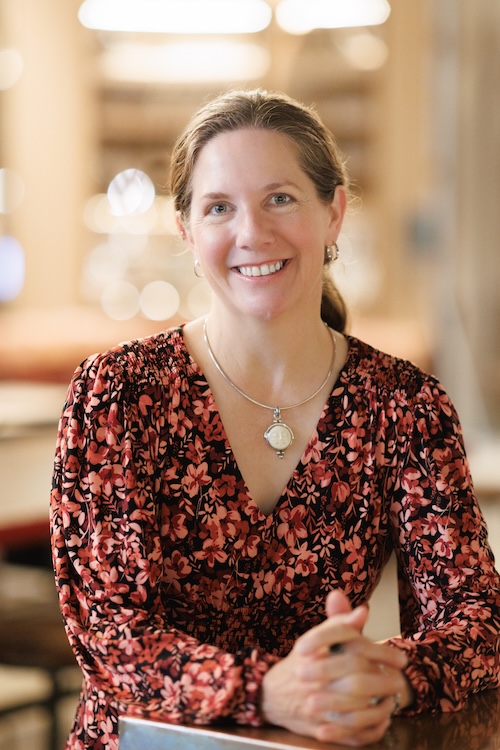
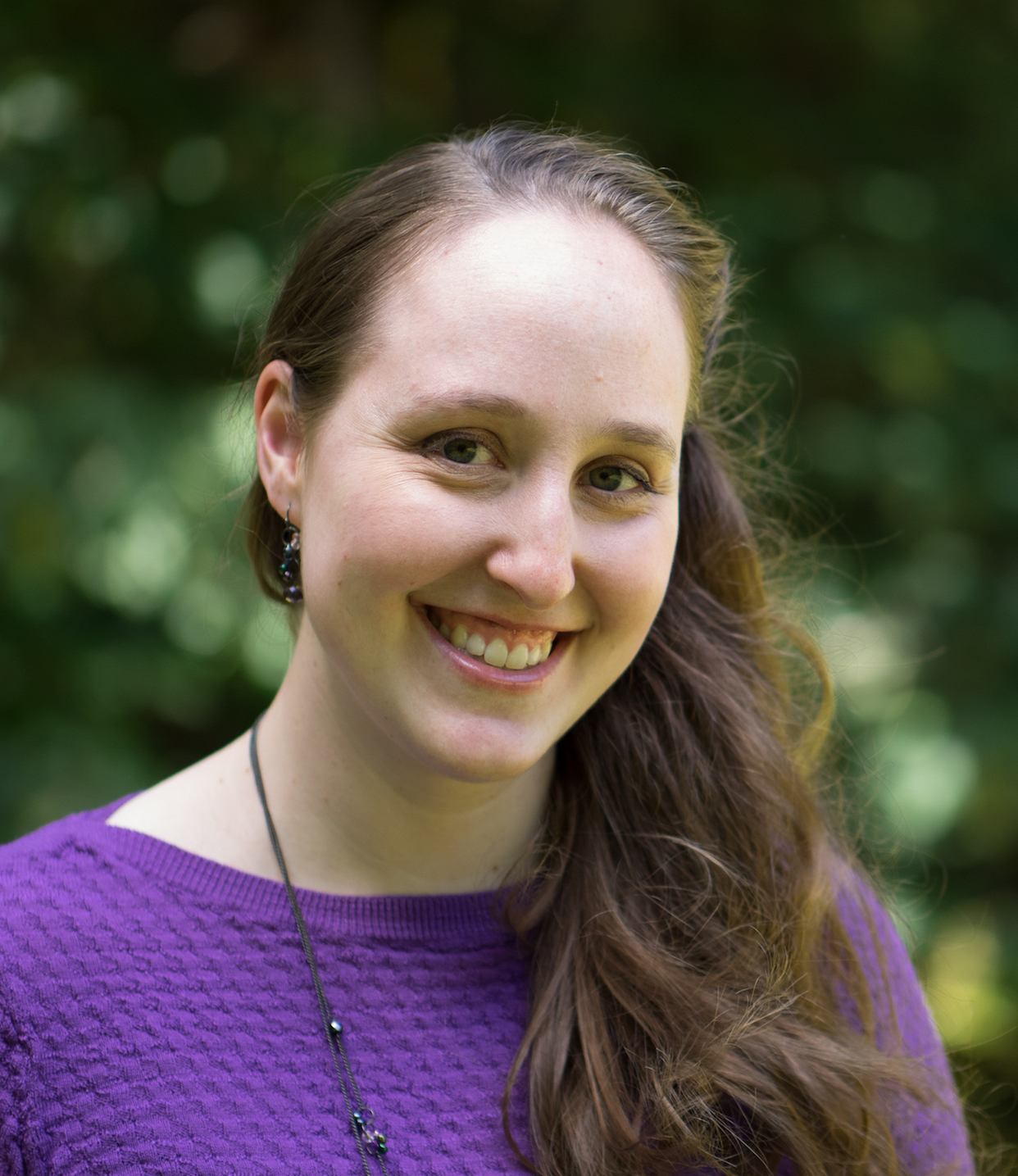
Kathryn Arnold writes fantasy and anything else that sparks her creativity from her home in Kingston, Washington. She currently earns her living as an insurance underwriting assistant, where she also creates marketing and web copy. When not writing, she plays (and teaches) piano and keyboard in a band (or two), and is working on starting a ministry team with her husband. You can find Kathryn at www.skyfirewords.com.