
Register Now for Fall Workshops!
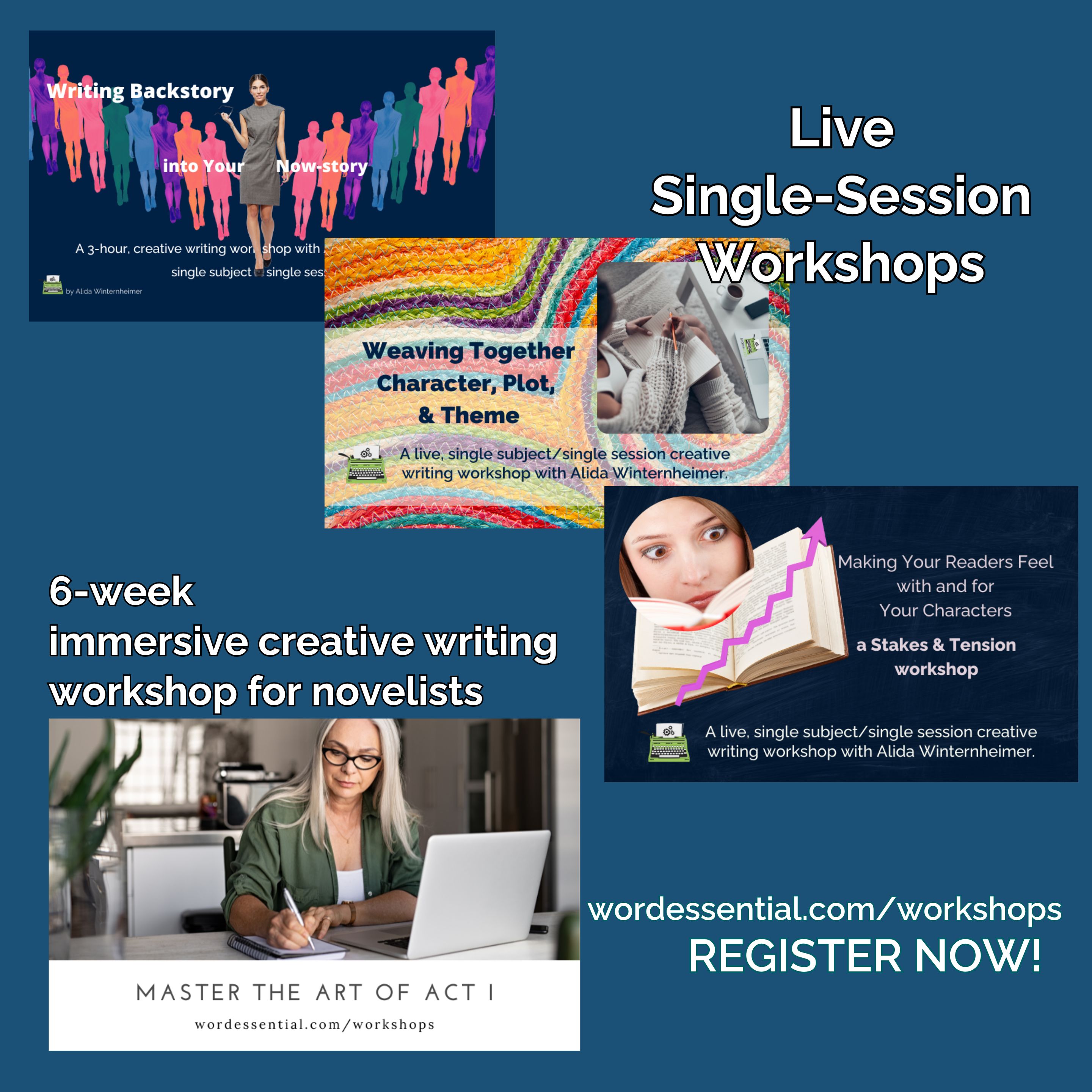
I’ve got a full slate of workshops available this Fall. Whether you want to dive into specific craft topics (Backstory, Stakes & Tension, Weaving Character, Plot & Theme) or tackle your entire first Act (Write Great Openings), I’ve got opportunities for you.
Regardless of the workshop you choose you know you will get:
- A LIVE Classroom
- A small class size with personal attention
- Lessons, Discussion, and Exercises to help you put action to your education
- Answers to your Questions
I hope to see you in my classroom!
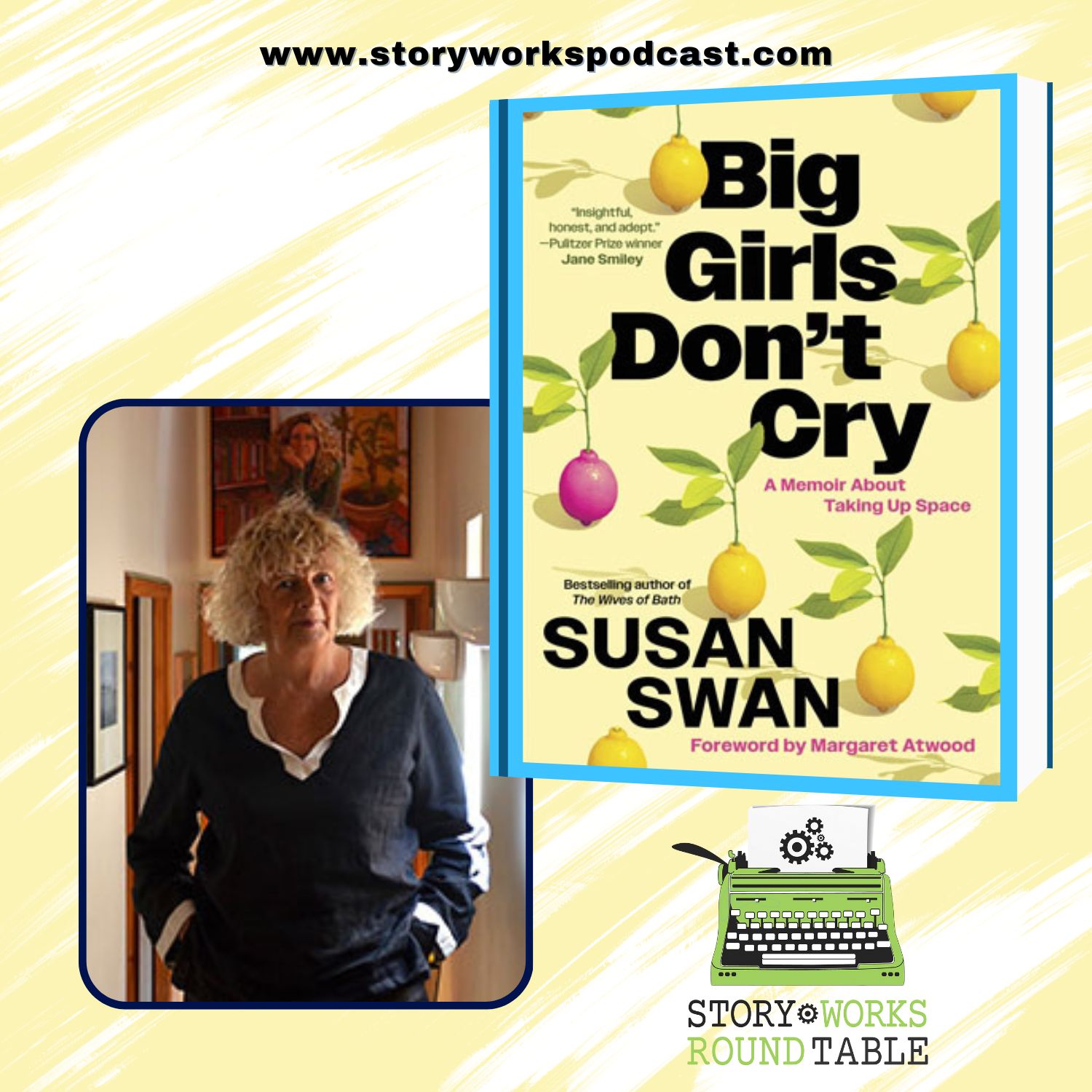
In this week’s Story Works Round Table, Alida welcomes Susan Swan, an acclaimed novelist and professor emerita at York University, to join us and discuss her new memoir, Big Girls Don’t Cry. As Susan reads an excerpt from her book, she invites us into her world of growing up as a tall girl in a society that often discourages women from taking up space. We delve into themes of body image, the societal expectations placed on women, and the journey of finding one’s voice and identity. Join us for a thought-provoking conversation on the importance of asserting oneself in a world that often tries to diminish women’s presence.
Jane Smiley Q&A on Lithub: https://lithub.com/standing-tall-on-the-value-and-importance-of-women-who-take-up-space/
AUDIO
Susan Swan is a novelist and nonfiction writer, a professor emerita, and a recipient of the Order of Canada. Her books include The Wives of Bath, The Biggest Modern Woman of the World, What Casanova Told Me, The Western Light, and Stupid Boys Are Good to Relax With. She is also cofounder of the Carol Shields Prize for Fiction, the largest literary prize for women and nonbinary writers in Canada and the United States.
TRANSCRIPT
This transcript is AI generated. If you notice any inconsistencies or errors, blame the bot.
Alida Winternheimer: Hello and welcome to this week’s StoryWorks roundtable. Today I am currently flying solo, but Catherine might be popping in at any moment. So either way, we are absolutely thrilled to be joined by Susan Swan. Susan is a novelist and nonfiction writer and a professor emerita at York University. Her books, the Wives of Bath, the Biggest Modern Woman in the World, what Casanova Told Me the Western Light and Stupid Boys are good to relax with. She is also co founder of the Carol Shields Prize for Fiction, the largest literary prize for women and non binary writers in Canada and the United States, recently awarded the Order of Canada. Susan lives in Toronto. So welcome.
Susan Swan: Thank you. It’s very nice to be here.
Alida Winternheimer: Yeah, I’m so excited. So we’re going to talk about Big Girls Don’t Cry, your new memoir. And, we thought you would open the show by reading a little bit and setting up the conversation.
Susan Swan: I think that’s a good idea. And I’m going to start by reading the opening page and a half, which sort of invites, you into the story of, this big girl. It’s a hot day in early summer, and I’m trying to hide my shameful body in the sand by the Poliwog pond. The poliwogs have grown into fat, squiggly black dots with slender tails. They swim in funny jerky motions across the pond where dragonflies hover above water, shimmering slimy and mysterious in the July sunshine. The polywogs are metamorphosine into frogs. And I’m metamorphosine too, although not in a good way. The long, skinny body that I’m covering with sand looks nothing like the film stars in the movie magazines of the 1950s. The skinny calves and knobbing knees, the legs that grow and grow, the narrow hips and bony arms, the unruly curly hair. Not only is my body embarrassingly long, it is also embarrassingly thin. During the school year, I pad my clothes with extra sweaters and tops in an attempt to look like the petite, curvaceous actresses I see in the Hollywood films. Above and around me stretches my beach world. To the north, the long curve of sandy shoreline reaching to forested spits of land. And to the south, Poison Ivy Point, with its secret siteights like the dungeon staircase, a hidden path through scratchy juniper bushes, and the hanging step, an exposed tree root from which we gleefully jump into a sand dune. I’ve come up with those names because I’m the game maker, a role I play for the other children on the beach. On this afternoon by the pond. None of these pleasures reassures me. Although I’m cheerful by nature. Sonny, my husband, calls me Mayy. Taking an upbeat approach can also hide a myriad of fears. And that day, I’m struggling with a problem I can’t fix. In just a few months, I’ve grown a, horrifying six inches. Only minutes before, my mother, Jane Swan, insisted on measuring me against the storeroom door of our cottage, along with my friend who lives down the beach. My friend is tall, too, and in the last few months, she has grown a respectable 1 1/2 inches. Now she stands 5 foot 9, but I’m 6 foot 2. And I’m only 12. My mother is also tall. She’s 5 foot 10, and she often tells me to stop. ##ouching she doesn’t understand that there’s a world of difference between our heights. The same difference that exists between someone who is 5 foot 2 that’s short and someone who is 5 foot 6 that’s average. Like any kid, I have the usual challenges of schoolwork and sports competitions, and I tackle them by working hard. The measuring contest has presented me with something unfixable. I’m big. Maybe, God forbid, I will get bigger.
Alida Winternheimer: Thank you so much. wow. So I’d like to hear some more about this theme of taking up space. You’re writing about it from both the literal stance, being a taller than average woman, but also from the figure of figurative stance of taking up space in a world, in a culture that wants us to be smaller, to take up less space. I certainly connected with that theme. So maybe just share some thoughts and expand on that idea a bit.
Susan Swan: Yeah, the idea of, women, and that’s women of all sizes taking up a lot of space is really a no, no for women. Young, old, heavy, skinny. It doesn’t really matter, what your physical shape is. If you appear to be, taking up a lot of space, you’re going to be frowned on and made to feel uncomfortable. And it all happens kind of unconsciously, in families where girls are encouraged to ced their space to other people, be polite, sort of kind of step aside. I suppose that’s some kind of preparation for raising children where they think the mothers will have to see space totally to their kids, which perhaps was true when women were having families of nine and 12 children. But today, it’s a real restriction. It’s, something that I think women could do without. We need to be told that it’s okay to be assertive. it’s okay to raise your voice. It’s okay to, speak up. You don’t always have to defer to the other person. and so the idea that may. Well, maybe I should just go back a little bit and explain. When you’re tall, you’re also big because you weigh more, than, other people really. And, unless they’re tall too. And I had experiences growing up where boys would pick me up to throw me in the water at a beach party or something. And they’d stumble and fall, say, oh my God, you weigh so much. he’s too big for me. I heard that a lot. He’s too big for me. So it’s this sense of overflowing and not quite fitting all the things that have been designed for my fellow human beings. there’s that sort of edge of giant shadow of giant fairy tale stuff in there as well. But as far as women are concerned, I was, very, curious to explore that notion in the book. Because I think it’s something we don’t talk about. We’ve talked about men taking up so much space, they’re encouraged to take up space. There’s mansplaining, there’s manspreading. There’s all kinds of nouns to describe how, men feel very comfortable asserting a much larger public, space than women and interrupting and dominating conversations. And of course, the world is, changing. At least the Western world is changing and giving women more freedom. And we want to have that equal space. Why not? We have a lot of important things to say. And who knows? If women were more fully integrated into our political system and our social system, maybe we would have fewer wars. It wouldn’t be perfect, but it would, probably not, be. The societies that had fully integrated, had gender parity, perhaps they wouldn’t be so physically violent because more women would, be involved in some of the major decisions. And m. Many women have had the experience of raising children and all the time and effort that takes to produce from a. A tiny baby to a fully functioning adult. So there’s a great appreciation for human life, maybe that women feel. Many women feel more than men. And certainly. So that’s my theory that it would be a boon to the world. We wouldn’t see, soldiers as cannon fodder, if you like. Human life is precious.
Alida Winternheimer: Right, Right. Yeah. And I think with this idea of taking up space comes right alongside at the idea of having a voice and having a say and being heard. You know, I think the. The way women are trained to be smaller, to be less than their male counterparts is also training us to keep our mouth shut. Right. And to maybe fit into the box of a certain feminine stereotype or ideal that’s culturally acceptable instead of expressing our true selves. In a way, I don’t think men are discouraged from expressing themselves and discovering who they want to be and what their role is in the world the same way that women are, because women are expected to be the nurturer, the caregiver, the mother, the wife. Yeah. I really enjoyed and appreciated your journey through this memoir of starting in that box of the girl child who’s discovering, finding herself, growing too big, to coming into your Aphrodite time. Aphrodite mode. And, there’s a line toward the end I noted where, as a writer, I think this was when you were in New York. I think it’s in that section you said, make use of everything that’s yours because it’s unique to you in discovering what is strength, your self, your person, physically, mentally, everything that you’ve gone through is to you and to your writing. so I just wanted to say thank you for that.
Susan Swan: Yes, thank you. And it’s true. I mean, writers learn that if they want to have anything to say, they have to really discover what is unique about them so that they can express it. And maybe it’s their gift, I guess, to the community, of saying, I’m part of you, too. And this is what I think. But understanding your own originality is really important. And Americans used to be very good at that. I thought, celebrating what makes individuals, special and unique. I’m afraid President Trump has narrowed the definition of what an American is. And with that approach, he has thrown out the window one of the great gifts to the world that America offered. Yeah, you. It’s a shame that, we have to correspond to a certain type to be acceptable. I write in my memoir about boxes. You referred to them. Those are the boxes that we grow in, that are made first by other people. It could be the crib and the schoolroom, and then the university, if you go to university, or the trade school, if you go to trade school. And then the relationships that we form. Growing up. I talk about the dutiful daughter box and the marriage box and, the small town box. I don’t think we can really exist without a framework of some kind. But it’s when the framework hardens into a box that restricts us from becoming our best selves. Then my answer to that was to Ask questions like, why is this box so uncomfortable? Why do I feel, in this situation or in this group that I don’t fit, in and I’m not seeing. And as soon as you start questioning the boxes, whatever they may be, they start to melt away a little. They start to lose some of their power. But usually they’re surrounding us, and we’re inside them, unaware of it. The way fish are unaware of water.
Alida Winternheimer: Yes. Yeah, very true. have you thought and’curious about who you would be as a writer and the kinds of subjects you might pursue in your writing if you were an average height or average sized woman? I think it’s clear. Just to give listeners a little more context for this, I think our physical presence in the world shapes some of who we are and how we move through the world. No matter who we are, what are size, shape, abilities, etc. But you interviewed, the woman who had her femurs shortened when you were a journalist. She had her femurs shortened so she could take off some of her height. You wrote a book about, is it Annie Swan? No relation.
Susan Swan: Gianis, right?
Alida Winternheimer: Yes. Anna, the giantess who is in P.T. barnum’s circus. And then your memoir, Big Girls Don’t Cry. So have you thought about who you would be if you weren’t tall?
Susan Swan: That is such a good question, and it’s not one I’ve ever been asked before. Because, I mean, my claim in this book is that our physical size is a psychological influence on us. Just the way other markers like race and gender and cultural background and class, it’s a really big factor in how we think of ourselves and how others think of us. So the idea that I, could imagine myself smaller is almost unthinkable. I mean, my height is really integral to who I am as a woman and as a writer. I noticed, for instance, I have a daughter and a granddaughter. And when, my daughter started getting tall, and there’s a story there I’ll go back to if you like. But right now I’m wanting to say that I really didn’t want her to be bigger than me. I like to be the biggest. I’d finally, after struggling with this for so long, I, I really like to be the biggest woman in the room. And my granddaughter, the same thing. She’s almost my height. And I thought, oh, is she going to be taller than me? I want to be the tallest. However, there was a downside to that because I was worried with My granddaughter, that she might grow very tall, like she was 6ft, that she might grow to be, 6 4, 6 5. And I thought that that would be incredibly difficult. still, things have improved for people, for women who are tall since I was a girl, but they haven’t improved all that much in that when I was 12 and I was 6 foot 2, to be over 6ft as a girl was really unthinkable. The movie Sandra D. And the host of those Hollywood, beach movies, the girls were all quite petite. But now I think the marker in the sand is, if you’re a girl and you grow to be 6 5, you’re going to still struggle. And I’ve been in touch with a young woman who is 64 and she’s told me that it is hard and she’s gone through some of the very things that I went through. The marker has just moved up a little higher so you can be a little bit bigger. But to get into the territory of the sort of 6 foot 4, 6 foot 5 is really kind of, harrowing. I guess. people don’t understand when they look at tall people or people who are physically different that the person that they’re teasing or mocking when they look out at the world. Like me, I didn’t see anyone that was my size. And if you don’t see someone who looks like you reflected back to you, it’s very bewildering and quite lonely. Then you don’t have a full picture of who you are. But every day somebody sees somebody else with the same height, coloring and size as they are. So it’s a matter of really sensitivity to that. That to be unusually, to have an unusual size, whatever it is, is going to probably be, more of a challenge for the person to figure out where they’re going with their lives and what they want to do because they do feel so different. Luckily for writers, to have an outsider’s perspective is very helpful. But not everybody is a writer.
Alida Winternheimer: No, that’s true. Yeah. And I wonder about the box of being a writer. As you go through your memoir, you use these boxes as sort of, section headers to introduce topics. And you know, is there a box that comes with being a writer? I know from your memoir that it affects relationships, family, your mother, your daughter, your marriage, choices. I mean, so many choices that we make. And you also talked about, when you were a performance artist and the freedom that gave you. So I would love to hear more about your life as a writer. I guess and this idea of the choices you had to make, if it comes with boxes or if creative expression is the thing that destroys all the other boxes.
Susan Swan: That’s nice. I like that. Yeah, it might very well be, It does certainly help destroy boxes, because you’re asking questions and writing the answers down and it’s kind of the ultimate freedom in a way to step outside yourself and your culture and look at everything. that’s very permission giving. Well, my life, it was a kind of pilgrim’s progress. I mean with my body, the sense of figuring out. I grew up in the 50s and that was a very conservative time. And I, was born in a small town. So there was this feeling that back then in Canadian culture that you shouldn’t make a show of yourself. It was a heavily Presbyterian town, most of the churches were Presbyterian. And the idea of being showy in any way was seen as a fall from grace, if you like. You were not to draw attention to yourself, especially if you’re a woman. So of course if you’re going to write honestly about how you think and feel, you are just automatically making a show of yourself. And for me the first helpful thing was being a reporter where once you have a notepad and a pen or iPhone, you have permission to sort of ask anyone anything. and I enjoyed that. Although I was an observer as a reporter, but in the newspaper office they liked my height. That sort of surprised me. And they would send me out on assignments like testing the water pollution in the Toronto harbor and having me diving into the water. So all you see are these long, long legs, that kind of thing. It was a tabloid newspaper and they didn’t hesitate to give me assignments like that, although I was an education reporter. And for instance the woman you referred to or had the surgery where she had four inches removed from her thigh bones, they immediately sent me off to interview her about it. And when I came in the door, she took one look at me and she said, oh, you can have it too. She was so pleased that she had figured out what she thought was a solution to. She was 6 2. and I was so horrified by the fact that she’d gone because she had a year of suffering like being the hospital and physiotherapy and a lot of pain and discomfort because what they do is they join the bones together with a metal clip basically. And that’s the most basic explanation of it. And you have to learn to walk again. But she had been really, really Traumatized by her height. And, I couldn’t find her when I was writing the book. I wanted to see how she felt about it. When you asked me about being. Thinking of myself as a short person, how did it feel that her perspective change a lot about herself? I suspect for a while it did. But, it’s interesting because Jane Smiley, who interviewed me for lith huub on June 20, if anyone wants to look it up, it’s lovely. Q and a. She was 62 at 14, and her mother thought it would be a good idea if she had surgery. And, Jane immediately thought that would be painful. She was right. And the other thing she thought was that it would make her arms look too long. And, that’s what I remember about Femmi Smith, a woman who had the surgical procedure, was that she looked normal, except her arms seemed to hang down a bit too long when she was standing. So Jane had been very, prescient as a teenager to immediately figure out why it was not a good idea. Her mother’s idea was not a good idea to get this operation. So, anyway, so that’s kind of the beginning of the journey, I guess, is the difficult adolescence where one young man told me that he couldn’t possibly be a biological imp. Possibility to have a baby with me because I was so tall and he was medium height. And another boy, who was short, broke into tears when he drew me as a blind date. And there were these kind of humiliations like that that had happened and that it happened to the other woman. I’m talking about Femi Smith too. where basically your femininity is called into question and you are reviled for not fitting the feminine script at the time. You’re made to seem unlovable. And I think in some ways that was like a, fairy tale curse on me all through my life where I was trying to get rid of this curse, doing things to exercise the curse so that I did feel my femininity was, lovable and desirable. Anyway, that’s part of the journey. But then there’s New York and performance art, and we can talk about that too. What would you like to know about the performance art section?
Alida Winternheimer: well, you describe the pure, chaotic creativity that refuses to acknowledge boundaries. And I think as writers or any kind of artist, discovering the boundaries in our lives and then breaking through them. M. Or at least trying to make them malleable is a, ah, big part of what we do.
Susan Swan: So, Yes, I totally agree.
Alida Winternheimer: Yeah. Maybe just say more about experimenting and playing in different forms of art besides writing and what that does for us, why we need that to be writers.
Susan Swan: Well, at that time in the 70s, after I got married and then the marriage didn’t work out and I was doing freelance journalism, I became very involved in the underground art scene in Toronto, which was very exciting in the city at that time. There was a lot of money, that the government was giving for art projects. And I think they were doing it because there was a fear that there would be a kind of youth revolt because there was a lack of jobs for young people. But suddenly there was all this sort of these grants available and people were performing. Sculptors and singers and writers all performing together in these really conceptual pieces. They don’t have a narrative as such. It was more. The idea was to sort of shock the audience into rethinking some of their assumptions about society and who they were. And it was very satirical. And I did a number of performance art shows. One was called down and in which was about self pity, where we wanted to reframe self pity as a sort of tender emotion that you feel towards yourself. We performed at the Detroit Institute of Art. And we wore. This is another performer in my art performance artist myself. We wore sort of touques and shorts and winter scarfs and mittens and su. A bikini top. And I remember we immersed ourselves in the pool at the Detroit Institute of Art and we came out dripping wet. And then there was a blackout for some reason in the gallery. And then we realized that we couldn’t touch the mics anymore because we were going to electrocute ourselves. So that really made us feel sorry for ourselves. And it had this sort of burlesque sort of sense of humor. So there was a real playfulness. Another time this choreographer, performance artist and I had this banquet, worm banquet where we were sitting in the garden eating worms. We weren’t really eating them, but we had worms on a plate. And Well, the old philosopher song played in the background. This is a song about. Did you wake up this morning in your wife has left you and you went to work and there was no office building. It was just a tale of woe. And that was kind of fantastic to be able to express emotional realities really in a way that was unconventional and I didn’t have to shape into a story. And I was, I thought, a terrible performance artist because I was nervous a lot of the time. I was still part of me wanted to be, ah, with the notepad and interviewing people and looking on. but this choreographer told me that I had to be emotionally present with the audience. That was something new. I had to be right with them. And she would take off my glasses and take away my notepad and say, okay, now here you are. Be in that space again. In a way, it was like, take up the space was a very interesting demonstration of that because you couldn’t pretend that you weren’t where you were. you had to. Which I think a lot of, writers initially are observers, really. And you pretend that, you’re the one looking at as opposed to doing. And it was a really wonderful thing for me to do. It freed up a lot of my, I guess, anxieties. And I did become better at it. And I found I could enjoy it. I found I could have a voice, in a show. And the audience wasn’t so terrifying, really. They wanted you to do well too. And when it was going really well, there was nothing like having the energy pass back and forth between your audience, no matter how small or how big and everybody. And it’s kind of synced together. I imagine musicians experiences at rock concerts with people listening to their music. So that was really, fabulous. But I did miss the solitude that goes with performance art or theater, where you’re basically working with other people all the time. and I was eager to go back into my room and start writing.
Alida Winternheimer: Yes. Yeah. Writers like that. Don’t we’funny? Creatures. Yeah. The performance art sounds so daring and vulnerable. More so than something easy to imagine doing, like public speaking or even taking an improv workshop or some of those things people are told to do to grease their creative wheels differently.
Susan Swan: you’re right. Vulnerable is right.
Alida Winternheimer: Yeah, yeah, very vulnerable. And it’s such a particular art form as well, where even though you might have a very avant garde audience who’s appreciative and engaging with you, you might also have a lot of people who just think it’s weird and don’t get it. And then you’re being exposed in front of that type of a crowd where you aren’t in sync.
Susan Swan: happen to.
Alida Winternheimer: You mentioned Gren Lish, the famous editor, saying that, he was all about risk taking and he had no attention to give or patience for writers who wouldn’t push themselves in their writing. And so I’d like to hear more about how this risk taking, invulnerability, and your lessons and growth in that area translates into writing novels.
Susan Swan: Okay. No, that’s a really good question too. well, I lived in New York for a while, off and on. I had a university teaching, ah, job. But I set it up so that I could teach one year on and one year re off. They didn’t pay me the year I was off, but I found always I could find money to come. This is the secret of the freelance writer’s life, really. If you, have one source of steady income that you know is going to be the same amount and happens at the same time every year, then you are freer to, create. Because I found I couldn’t write when I was worried about finances. I had only a couple of hundred dollars for the next month. And anyway, so I had this teaching job that allowed me to spend a lot of time in New York. And I met a lot of New York writers like Amy Hempel and Diane Williams and Ben Marcus and a host of others. and I met Gordon Lishch, who at that time was the editor for I guess just Random House then it was called. And he was publishing really experimental fiction because his view was that if you didn’t say something so shocking that it would get the reader’s attention, then you were being a coward and you weren’t going to have any kind of audience. But because who wanted to be around a writer that played that safe? And he would interrupt his students at his workshops. I never was a student. I was a friend of his. But I was told that he would stop you in the middle of a piece you were reading and say, go back, I’m getting bored. This is really dull, you know.
Alida Winternheimer: And our students think they have it so hard, you know?
Susan Swan: Yeah, no, he didn’t miss words. and he had a kind of, charisma. He always wore safari suits that matched his, tanning bed face. And, there was something Hemingway asked about him and with his short sentences too. But he was an original. I mean, he was himself, fully himself. and he did, shock you. He came up to Canada and read at Eden Mills, and he read his wife had been diagnosed with cancer and he’d written a short story about all the women that he wanted to fuck, as he said. And it was, just a litany of all these women he wanted to have sex with while his wife was in the next room very sick. And of course, you can imagine at a literary festival in the countryside, people got up and left. They started clapping to try and stop him from reading the story. But he felt that that was what a writer has to do. I came to think that it was True, you didn’t want to bore people, but to always have to put yourself in jeopardy in your writing, that could end up being artifice. You can’t in jeopardy every moment. but he did sot of completely dispel any lingering thoughts I had about not making a show of myself in my writing. Showed me that you have to really, put yourself out there and really say what you think. You’re not just stringing words together. You’re doing something really important that has to have a certain authenticity to it. And he’s right about that. But I’ve come to think that that technique in the workshop, might have led a number of people to think they had to shock for shock’s sake. And that’s boring too.
Alida Winternheimer: Yes. Yeah, I agree. That kind of showmanship doesn’t serve the narrative ultimately. I think it can go too far.
Susan Swan: it can just be distracting and also boring. the other writer at the time who had the monster novel Spealding Gray and he would perform with this great big huge box, which was his thousand page novel that he could never finish. And the performance was all about, how he couldn’t finish the novel and he couldn’t really get into writing it. And he was worried about this and worried about that. And you knew watching the performance, he perhaps never would write the novel. This was his novel. Sort of walking human voice talking about the novel. he came to a tragic end, which is too bad. He suffered from depression. He jumped into off the Staten island ferry, I think, and drowned. which is a really a great loss because he ah, was a very amazingly talented and original author. Yeah. So there would be the tabloid experience where they liked my height and the performance art where the artists were exploiting their individuality. Like David Buchanan and Toronto did a show, Del Monte Fruit Cocktails. He was gay, making fun of the attitudes to gayness and also gayness he was making satirizing himself. So I learned. It was like each place that I went to I picked up an important lesson. or the lesson got sort of solidified again by the experience I had. And New York was a wonderful place in the 90s for fiction writers. It was a time when fiction writing sort of dominated the cultural scene in a way that I’m talking about literary fiction, I guess, the way it doesn’t dominate now.
Alida Winternheimer: Right, right. And what is the role of personal experience and insight as well as this vulnerability or jeopardy we’ve just been talking about when you’re telling somebody else’s story Like Anna Swans’s or inventing someone completely fictional in a novel. You know, how do we as writers do that? Put ourselves there when we’re behind the curtain? When it’s a fiction.
Susan Swan: Yes. My friend Sheila Hety puts on a costume sometimes when she writes so that she’s in a space where she’s in a different space sort of physically, and that kind of gives her permission. So permission giving is part of it. just pretending you’re God and, you know, you know how that character feels. and usually. I was given a very important piece of advice once at the Bread Loaf, workshop, to pick a narrator that is like you and not like you. So the part of the character that’s like you, that has an emotional resonance and special meaning for you is there so you can put your own emotions in. And the part that’s not like you allows your imagination to sort of extrapolate so you don’t get trapped into a, ah, kind of, literalism. also, because that can be. Again, thank you, Gordon. That can be very boring too. Right. and I’ve often given that, advice to my writing students because I’ve taught creative writing for three decades. And that’s one of the things I tell them. The other thing I tell them is that if they want to do writing, writing, a novel, they can set three, two, three or four hours of time aside every day at the same time and sit down. And your body will physically get used to the fact that you’re doing that. And so your brain sort of goes into that mode. you don’t have to, make all sorts of deals with yourself to get yourself to sit down. You just do it at the slot at time you sit down. I signed a pledge to myself, you can imagine, and saying, during these hours, I will do nothing if I’m not writing. I’ll be thinking about writing or I’ll be researching what I’m writing. But, I can’t rearrange my bookshelves and I can’t go down and start making a dinner. It has to be writing focused, and that is very powerful if you do that. Apparently musicians quite often do that. They practice at the same time and their body gets very used to the fact that this is going to happen. And so you’re automatically ceued. You don’t have to sort of swatch yourself to get your bum in the desk.
Alida Winternheimer: Right? Yeah, absolutely. It’s amazing how trainable we are, you know, the mind and the body and that idea. when my child was Little. I just had all of my writing stuff on a table that I didn’t have to use to eat at. Right. So this was my writing table, and everything was spread out. The books were left open, the papers were left, the pencil was right where I was working everything. And so the second my baby was down to a nap, I was at that table. And it was like the brain just goes, okay, we’re in this mode. We’re back in the story. We’re writing again. And just having that kind of fixed setting made it really easy to get into that headsp space quickly.
Susan Swan: it was sort of like Sheila Headty’s clothes in a costume that she puts on. Like, you inhabited a kind of environment, that made you, instantly sort of transported you to, that kind of dreamy state which you need to be in your mind.
Alida Winternheimer: Yeah.
Susan Swan: How old were you when you did that?
Alida Winternheimer: late 20s, so 28, 29, maybe 30.
Susan Swan: You had a child?
Susan Swan: Like, yeah.
Alida Winternheimer: Yes. Yeah. Oh, my gosh. So I have so many more questions I want to get to. and I know our time is getting tight.
Susan Swan: We could get a little bit or we could go over a little bit. This is okay, but probably anyway.
Alida Winternheimer: Sure. We’ll go over to. Just a little bit.
Susan Swan: Just a little bit. Yeah.
Alida Winternheimer: Yeah. So, one of the questions I have is about the Barbara and Scott show. So tying it back to your performance art, you did a piece about Barbara Ann Scott, queen of the silver blades, who was a figure skater, and you reference a photograph, a poster, which anyone can look up if they Google Barbara Ann Scott. And she’s in this stag leap, and the camera angle is kind of looking right up her skirt. Right, yeah. And she’s performing, she’s smiling. The jump is beautiful. And in a way, it’s a great shot because she’s got this height and, you know, it’s amazing, but in another way, it’s lewd. It’s looking right up her skirt.
Susan Swan: That’s right, yeah.
Alida Winternheimer: And you say, you write in your memoir that you took the framed poster from your performance art piece, which uses that image of Barbara Ann Scott, and put it on the wall where I can see it while I’m writing. I look at it every day as I mull over the perplexing questions it raises about making art. And I’d love to hear about the perplexing questions that it raises about making art.
Susan Swan: Well, there’s a cruelty that can be involved in it, and it certainly was in the case of that show we were satirizing Barbara Ann and her generation of women that were, I guess, taught to be ladylike and demure and to not take up space. In one of the, parts of the show, we had what we called the whirling crotch show. O sorry, the Whirling Crotch Slideshow. Because that photograph a professional photographer took that everybody was staring in her pants at the same time. She was the epitome of perfect womanhood. who never said an unkind word or did an unkind deed. And anyway, that was part of the show. we were trying to debunk that style of femininity as oppressive and, basically unnatural. Ah. And on one show, one evening, her family came and we didn’t invite them. And that was really horrifying to me. And the ticket seller said, listen, the Scott family are here. I think they think it’s an homage to Barbara Ann instead of a piece of satirical performance art. And sure enough, they sat quite up close to the stage. I saw their sort of smiling faces. And when the whirling crotch slideshow came on and she whirls in her dainty skating cap costume, and then it falls off and she’s naked, of course, it’s not really her. But they all stood up as one unit and walked out. And I can remember feeling terrible for them. I thought, if only someone had told them, about what the show was really like. And we were really. We didn’t think Barbara Ann was stupid. We thought she was sort of used by the patriarchal culture at the time. She was someone that was kind of taken advantage of by it. But nevertheless, if you had been a member of the Scott family, you were never probably going to see that, point, of view. And, I know with, art, there’s certain kinds of art, particularly in the 20th century, this need to rupture and, crack open things. And that can be very painful for people who are representing the older way of. The old way of doing things, I guess. And I don’t know if you can resolve that. I guess, maybe it becomes immoral when you delight in hurting people. but I’m not sure you can avoid. When you’re speaking your truth, I’m not sure you could. I know you can’t really avoid hurting some people. and that’s troubling. But I like to think it’s about intent. Are you trying to be really nasty, or are you really just trying to get at some truth that you think people need to hear? So it’s the shadowy area, and I didn’t solve it then and I happen’sol it now and I can’t really tell you the answer, but it’you live the question. As Ryi said. It’s something to keep thinking about.
Alida Winternheimer: Yeah, it is. It’s interesting. and I.
Susan Swan: Do you think.
Alida Winternheimer: Well, you use the word cruelty and that makes sense. Know that As artists, if you’re really trying to explore something and get at its meaning and understand it and maybe you can’t ever make sense of it, but you can grapple with it. There is that process of opening. Right. And sometimes it’s a tearing open and that’s not necessarily pleasant or kind. And so when somebody who’s in the position of being a reader or an audience member encounters that art, that can feel confrontational and that’s where that cruelty can come in if they aren’t prepared for or receptive to or. Right. Because you have to be willing to go there and do your own grappling with it. When you read something like that or see a performance like that. And if you aren’t, there can be.
Susan Swan: A shock to this. Most definitely. Yeah. Yeah. I feel like it was designed to personally hurt thematur. Actually. It wasn’t to hurt a person so much as to hurt an idea, I guess of how something should be. And you’re objecting to that idea, right? Y. Yeah.
Alida Winternheimer: And I think it’s almost coincidental. It could have been some other female figure, but she was an icon of the time for her accomplplishments and this imagery did exist and it just happened to be the perfect vehicle for this critique. Right?
Susan Swan: That’s absolutely right. Yes. We were all brought up in Canada to as girls we were told to be like Barbara Ann Scott. So she was held up as a kind of beacon of femininity and how it was supposed to look and sound. The good thing about it was that she was given room to achieve this wonderful Olympic performance performances that she did. So she was. She was able to have A ah, skating career that was fantastic and she was celebrated for that. So that was a permission giving on one side. But the style of femininity she represented was Felt to me, very. It felt oppressive. It’s an unnatural really ye. And it was I think a rebellion against my mother’s generation. We were talking earlier this feeling that you were selfish if you took things or did things that were self interested. There wasn’t a distinction between selfishness, which I think is denying other people their needs and self interest, which is that you need to Be somewhat self interested in order to grow and develop. And there’s nothing wrong with that. But quite often, that generation was brought up to think that it was exactly the same. And an artist needs to be self interested. It needs to feel that it’s a writer. It needs to feel that it’s okay to explore something that nobody wants to talk about. And because it has personal meaning for them, they’re not being badly behaved, or cruel in, that respect. Yeah. Anyway, I used to have conversations with my mother about that a lot because I always hoped that I could get her to understand the difference. But she conflated the two. And I think it was very difficult for her to see that because she’d been taught so differently.
Alida Winternheimer: Yeah. Yeah. And I think it’s harder for female artists. The male artist, know, you think of, while we were talking earlier about voice and taking up space, but also Stephanie and Loizondo Grist calls it the art twife, you know, and you think of that notion, the old cliche that, behind every great man there is a woman. Right. And so as the woman, you’re expected to go be the wife while the man goes out there and conquers new territory. But if you’re the woman who wants to conquer your own territory or explore. Conquer is such a masculine.
Susan Swan: That’s right word. Right.
Alida Winternheimer: That idea of it. But, who. Where’s our art wife? Where’s the person who’s going to support us? And then what sacrifices or choices do we have to make? And how does it affect our relationships? As with mothers, parents, as you were just describing their.
Susan Swan: Yeah, it’s a real conundrum in lots of ways, because the expectations even to just get married, which I did again at 70, it changes people’s perception of you as somehow an adjunct if you’re the woman. Yes, true, it’s very subtle. but it still operates. You re kind, you’re married, and you’re seen as the wife. and I don’t really enjoy being an adjunct. I like to be myself and to be, not defined by someone else or a relationship. I want to be defined by me. So that is just. But that’s only the tip of the iceberg, really. There’s so many unspoken sort of assumptions about what women are supposed to do when they’re married. And, I’ve had a lot of friends that, wanted to find writer friends, female, who wanted to find their Leonard Wolf, who would look after them like Leennard did for Virginia. And, I don’t think that happens much. Unfortunately. I wrote a short story called the Mandal, which was about, making a doll for my friend who was always looking for the perfect man. So the scientist in my story makes her a male robot who is so generous and giving that eventually when she doesn’t seem the narrator, the character in the story doesn’t seem to need the man doll as much. He immediately leaves her to look after her friend who’s having a trauma. And eventually it ends with the dull robots having a sort of revolution because they want their needs expressed and he’s leading them. so it was just about the impossibility of finding the. The perfect partner really. right. But yeah, that. I think it’s still very hard for women to be writers and artists and have families. I really, I do. It’s tricky.
Alida Winternheimer: Yeah.
Susan Swan: You don to give yourself away. You don’t want to see too much space, but at the same time you’re in relationship with these people and you care about your children and so it’s,
Susan Swan: It’s not easy.
Alida Winternheimer: No, no it isn’t. And it’s something that has been going on throughout time. Right. For generations, but for eons of generations. And hopefully it is getting better for younger women. you say we struggled to accept our agency. We couldn’t see our own power at that time. Referring to yourself and other women writers in your circle, and what would you like creative writers today to know about their power and agency?
Susan Swan: Well. It’s far greater than they realize and everything today is so defined by money and sales that it’s it’s very difficult to keep believing in yourself if you don’t have the best seller for instance and the publishers won’t believe in you for very long if you don’t. It’s completely changed in terms of. What publishers expect from writers. When I was young and knew Carol Shields she told me that she had written seven books before she earned out her advance. Seven books of fiction.
Alida Winternheimer: Wow.
Susan Swan: Yeah isn’t that incredible?No publisher now would hang in with the writer for that long. At least maybe they exist somewhere out there but I haven’t met them. You know it’s so there’s the terrible pressure of of you know again sort of pleasing having to please a lot of people because that’s basically what the bestseller does. It pleases people readers and there’s nothing wrong with giving the readers pleasure. That’s a wonderful gift. But nevertheless it’s it’s a bit of a. A corset in a way you know an iron girdle to expect writers to have a huge bestselling book every time out you knowSo I think that’s another thorny problem. One of my friends in New York Diane Williams published with nonprofits and like Dalkey Archives and her literary reputation has grown.Gordon Lish who like as I said was at Penguin. Sorry Random House. He was fired because his books this whole new philosophy that every book had to pay for itself came in and he was fired because his books weren’t making any money. You see originally probably before you were born. The publishers would publish the commercial books so that they could publish the books that had ideas or were great writing. They didn’t expect that type of writing to create instant bestsellers every time there was a book. But then the philosophy changed with Albert. Alberto Vitelli at Random House who said every book should pay for itself. And that was sort of around in New York.
Alida Winternheimer: There began the downward spiral of publishing.
Susan Swan: And I think that’s right. And of course with the digital sea change everybody’s looking at screens and they’re perhaps not reading novels as much as they used to or or books period.
Alida Winternheimer: So yes yeah I saw Jane Friedman. Talk recently and she put up a slide that showed you know the big publishers and they’ve already been through so many mergers and gobbling up smaller houses and such but they are all owned by international conglomerates. Like their interests are not literature. It’s you know it’s quite. Depressing. It is depressing, yeah.
Susan Swan: Did she think it was going to change in any way?
Alida Winternheimer: No. No I don’t think she she sees a changing. I don’t see a changing either. I think the change is coming from the grassroots level with independent artists. I think there’s still a problem. You know the hangover from the era of the vanity presses where if you’re an independent author publishing there’s that oh selfpublishing then you must not be any good attitude. There’s still some of that but there’s so many writers who are writing quality work now. There are who are yeah independent and also more. You hear more and more of traditionally published writers. They get that book deal or even multiple books deal and then hey they hop the fence and go indie because you want to control your marketing and your covers and your titles and you know if your book isn’t. Selling phenomenally after two years. If a publisher owns it you can’t do anything. They’re just it’s in the basement. They don’t care. But if you own your rights you can get a new cover. You can do a revision if you feel like it you can do some marketing right? You can decide what to do. So
Susan Swan: I think there’s going to be a lot more growth in in selfpublishing with publishing companies that are smaller and that are like a kind of. Like a little spaceship or something where they they help you selfpublish. There are a certain number of them that are happening in in Canada right now and hybrid publishing is . And it it’s interesting I think that that because it feels like it’s just got everything’s got so monetized that that stifles a lot of creativity and Canada our big literary boom started in the s and s when. Canadian publishers wouldn’t publish Canadian writers because they didn’t think they sold. So people like Margaret Atwood and Graham Gibson started these little publishing houses where they began publishing each other and that grew and grew and grew. The writers that came from them those presses started to influence our literature and became famous Canadian writers so. It’s inevitable that the cycle will shift I think into something more that allows more a little bit more breathing room or creativity rather than to be so defined by the you know the book as a commodity
Alida Winternheimer: right? Yeah I agree. And that’s certainly hopeful. So what do you think?The future is for literature for literary writing as opposed to commercial or genre writing. You know that’s something you you touch on in your memoir. You’ve you say even before the Internet there was more of a difference between literary writers like me. And you’re referencing A nonfiction writer and you say nonfiction writers who are already addressing readers in a direct colloquial way. And I think as we’ve seen this boom of selfpublishing and the commercialization of pretty much all all fiction you know there’s been such a massive shift in. Tone and voice and perhaps a marginalization of it. Yeah. And I certainly I’ve got some literary historical works and I’m putting it in front of critique groups right now. And I’m noticing even in a critique group even amongst peers there’s this OK that voice can be a little unexpected or right. There can be a little bit of pushback like. What are you doing with this voice? Why are you trying to sound this way?I know it’s historical but and I’m like I don’t think I’m doing anything that fancy you know? So I I would love to hear. Maybe. Yeah. I mean I don’t wanna you know but yeah there’s just a little bit of and I’m like OK interesting. So what do you think the future of literary art is.
Susan Swan: Yeah that’s that’s a difficult question to answer because it it does depend to a great extent on technology. And I don’t we’ve had a democratization of literature. You know that’s that has really is what you’re talking about where everybody is writing and nd that in essence is good I think but the Thing that’s come with it is the expectation that the writer is first and foremost a business person and the that’s just not true. The the Internet likes. Sort of direct you know accounts of lived experience seems to that seems to be what people trust right now. You know lived experience narratives. And it does it kind of does away with the artifice and metaphor to a great extent. So it could go either which way we could go back into more metaphor and artifice to get away from this pressure to be. Plain plain plain, so even your dog can understand it. Or it could be that the that this is just here to stay. This more colloquial tone and things are judged on on style is about about relevance and accessibility. I I don’t really know but there’s those are two choices I my first. Response to what you’re saying about your own work is that that voice is probably perfectly fine right? You know I I think that maybe a different writing writing group because it yeah yeah it’s cause writing groups do tend to and I’ve been you know I’ve taught many of them and been in colleges and watched others teach them and. They can blunt sort of the eccentricity. That’s interesting. Sort of you know they call. There’s a name for it. Isn’t the Iowa School of Writing where it’s fairly sparse and you know yeah yeah
Alida Winternheimer: yes yeah. Well I mean I have confidence in this voice so I won’t I won’t let it be blunted but I do you know but then you have to go back to your desk and say. Where’s my ego?Right. And what’s on the page?And really do an honest assessment and be selfcritical of your work so that you you aren’t just being blind to a flaw.
Susan Swan: That’s right. No that is delicate isn’t it? That balance.
Alida Winternheimer: Well what a fun conversation. Thank you so much for joining me today Susan. I really appreciate your time.
Susan Swan: Oh I’ve enjoyed myself very much and I I wish you luck with your own writing and to trust to trust your voice.
Alida Winternheimer: Definitely yes. And great advice for everyone out there and listening. Trust your voice.
Susan Swan: Yeah we have you know we we are the genesis of of everything. The older I get I see that it all has to come from us so. We need to keep our egos healthy and shining and and that can be very hard sometimes in this corporate culture. But But anyway you’re doing it and I salute you for that.
Alida Winternheimer: Well Thank you. Where can listeners find you and Big Girls Don’t Cry?
Susan Swan: You mean on on books in bookstores?
Alida Winternheimer: Well do you have a website you like to send people to?
Susan Swan: Oh yes sure. www.susanswanonline.com. Yeah great. And I would recommend reading the Jane Smiley Q&A on Lit Hub because it’s very I think she did a charming job of interviewing me and it was so fascinating to talk about just what we were. Discussing the taking up space and and being being a big girl.
Alida Winternheimer: Fabulous. Yeah we will try to link to that in the show notes as well for everybody. So thank you.
Susan Swan: Thank you very much.
About Your Hosts
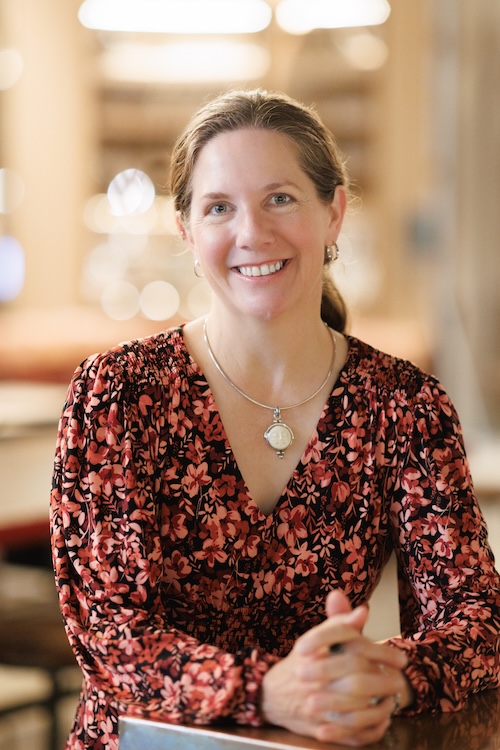
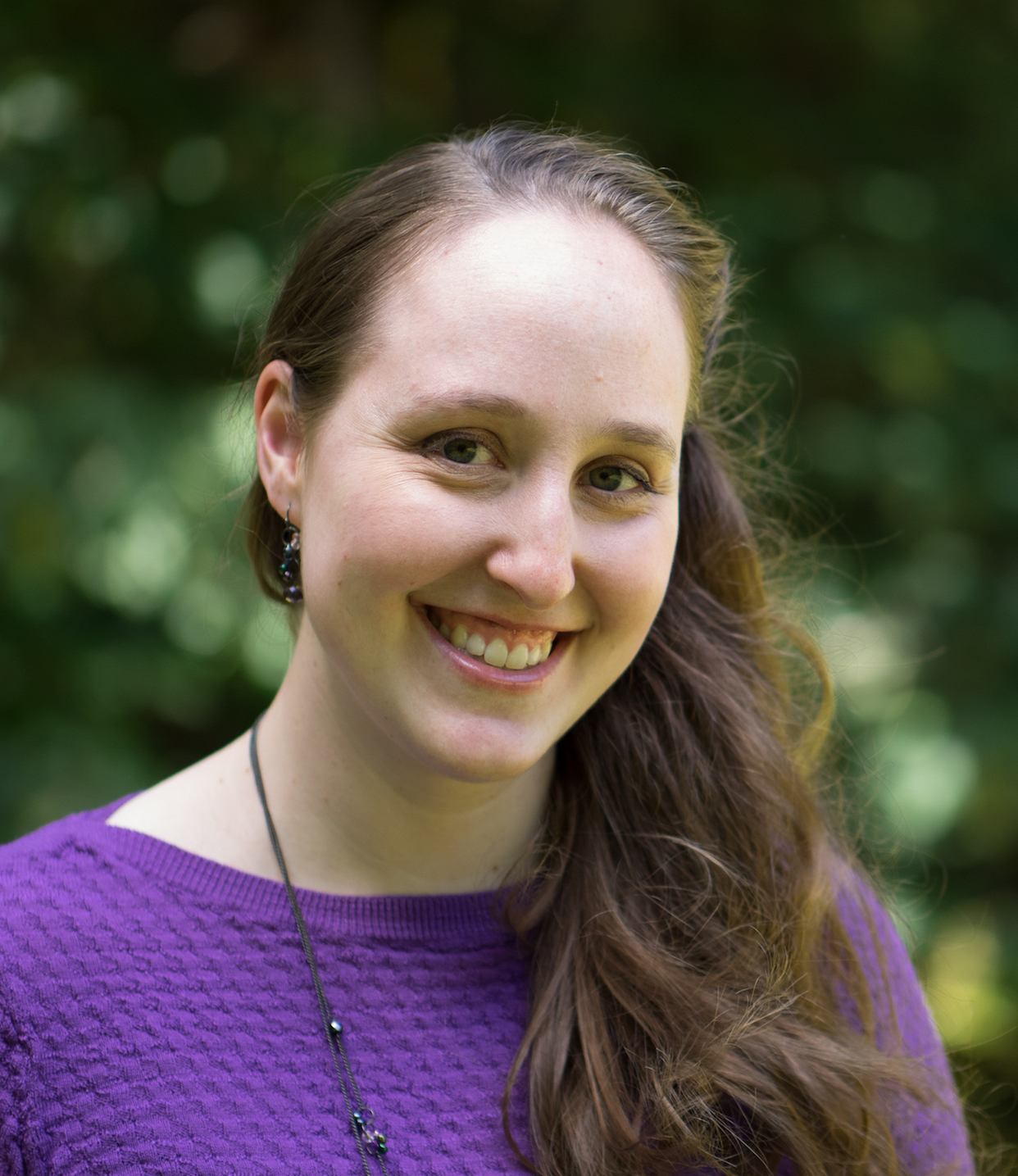
Kathryn Arnold writes fantasy and anything else that sparks her creativity from her home in Kingston, Washington. She currently earns her living as an insurance underwriting assistant, where she also creates marketing and web copy. When not writing, she plays (and teaches) piano and keyboard in a band (or two), and is working on starting a ministry team with her husband. You can find Kathryn at www.skyfirewords.com.