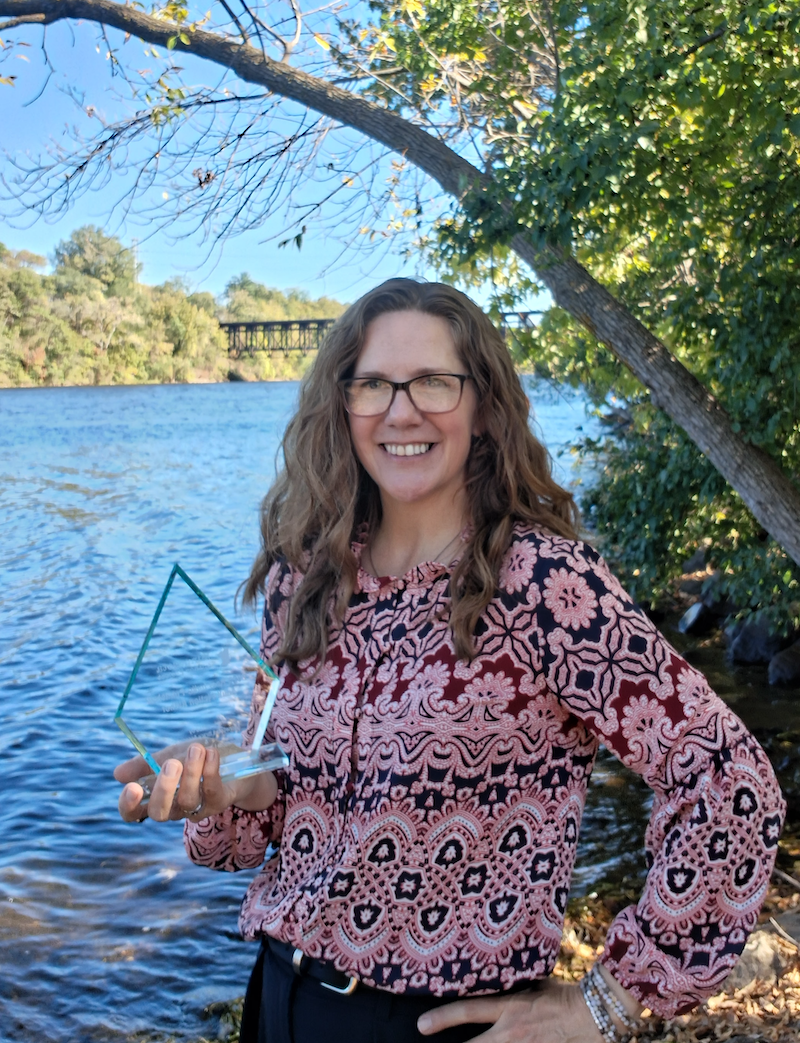
On October 10th, 2025, Alida was presented the Minnesota Author Project 2025 Adult Fiction Award at the Minnesota Library Association Conference in St. Cloud, Minnesota.
Librarians across the state voted for Murder in Skoghall, and Alida could not be more honored by, or proud of, this recognition.
With sincere thanks:
“Librarians serve readers with personal, unbiased recommendations, and this award means so much to me.
Before I was a writer, I was a reader. Libraries are a tremendous asset to every community. I can’t imagine life as a reader – let alone as a writer – without them.”
– Alida Winternheimer
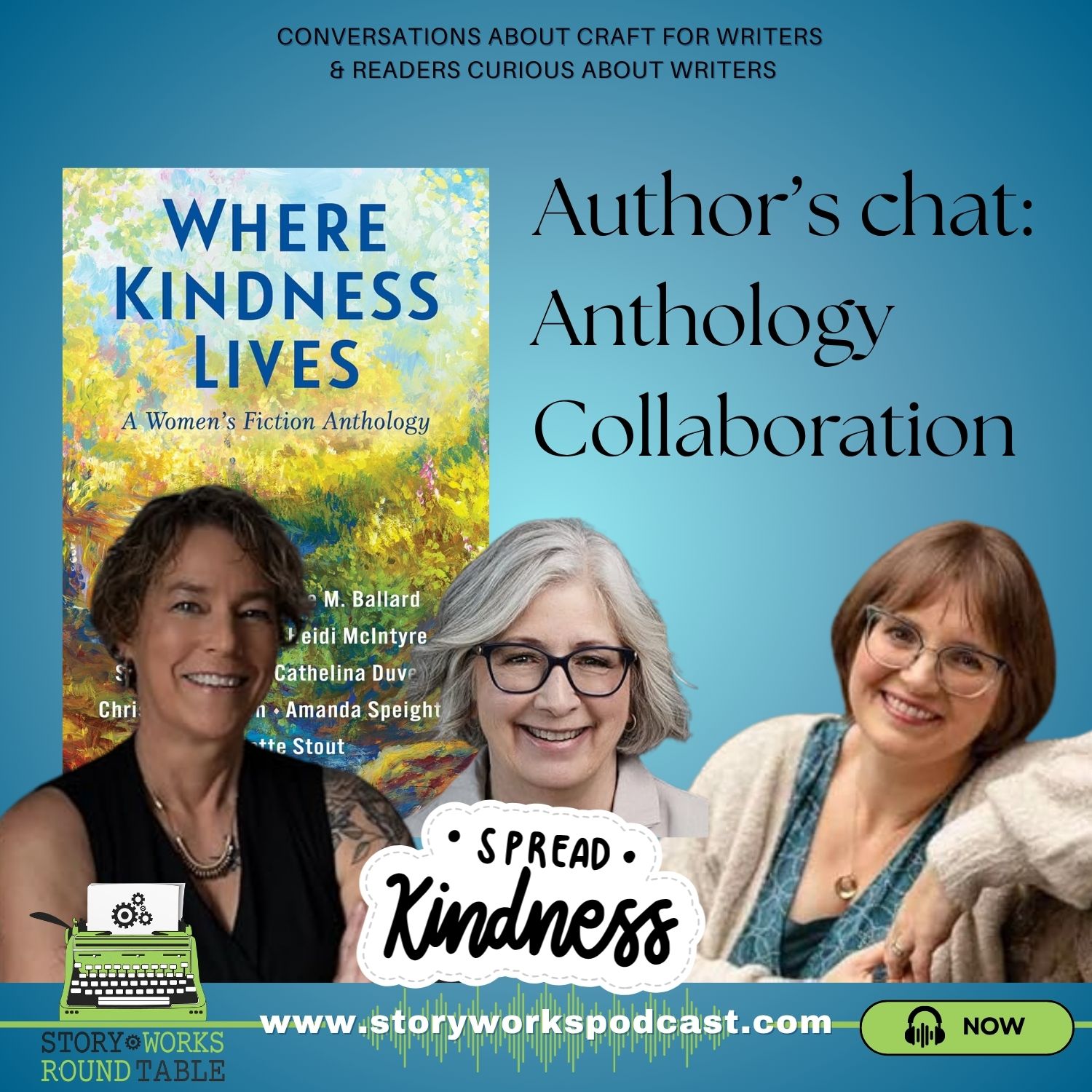
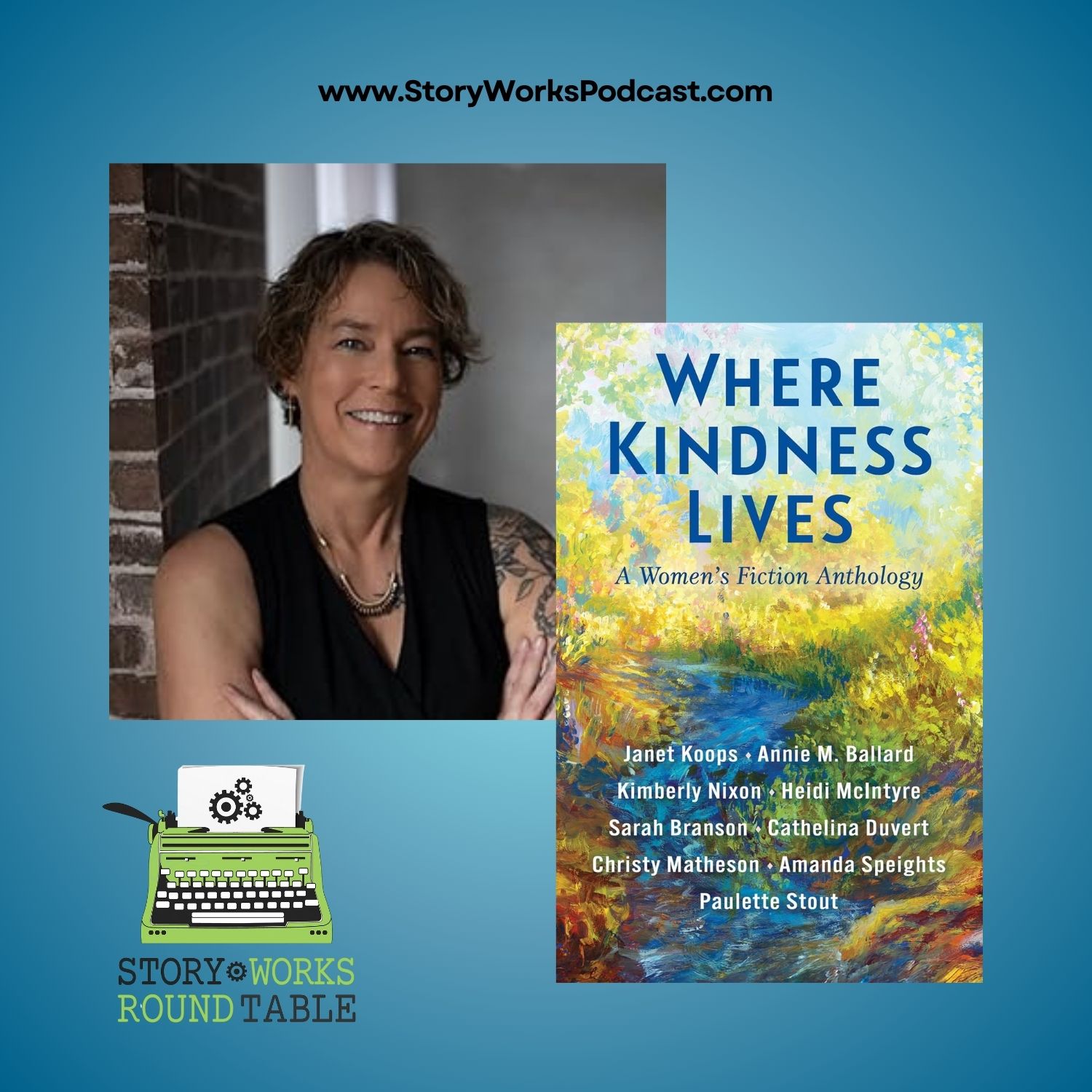
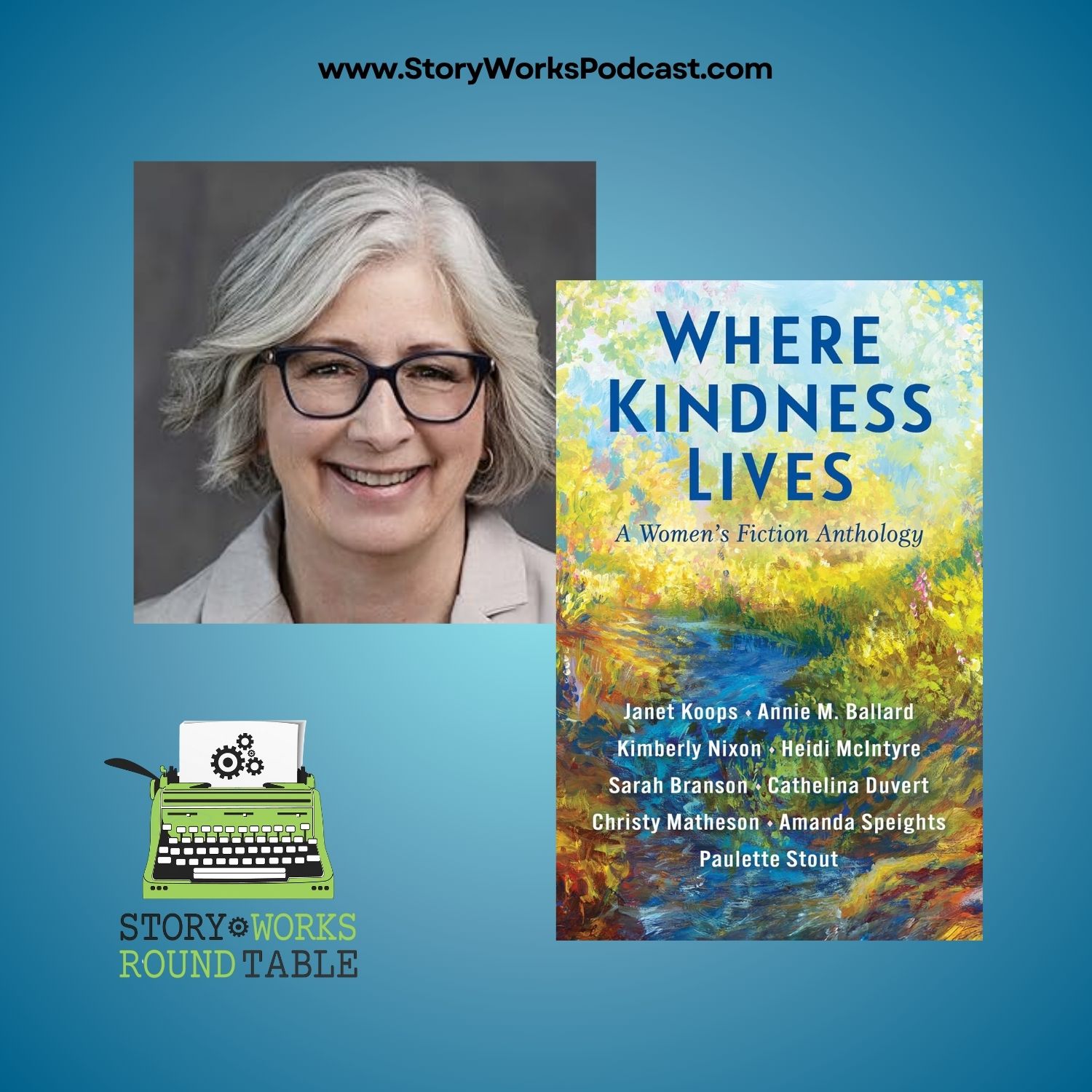
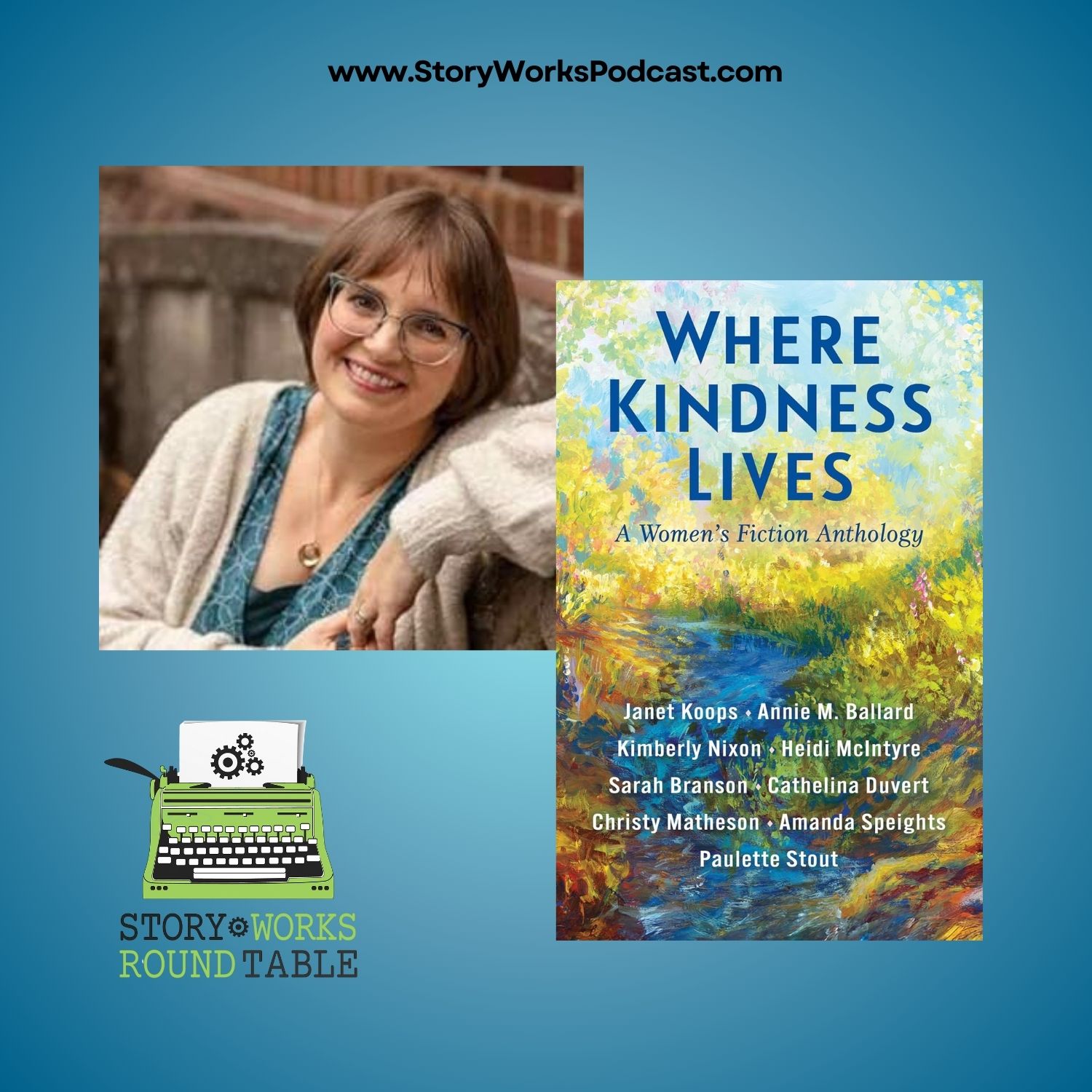
In this episode of the Story Works Round Table, we delve into the art of anthology writing with authors Sarah Branson, Annie M. Ballard, and Christy Matheson. Join Alida and Kathryn as we discuss the experience of writing and producing the anthology Where Kindness Lives: A Women’s Fiction Anthology. We discuss the challenges and joys of collaborative storytelling and the unique dynamics of writing short fiction. Tune in for insights that will inspire both aspiring and seasoned writers!
AUDIO
TRANSCRIPT
This transcript is AI generated. If you notice any inconsistencies or errors, blame the bot.
Alida Winternheimer: Hello and welcome to this week’s Story Works roundtable. Today, Katherine and I are thrilled to be joined by Sarah Branson, Annie Ballard, and Christy Matheson. They are joining us today to talk about anthology writing. So welcome. We’re excited to have you all here.
Christy Matheson: Thank you.
Sarah Branson: Excited to be here.
Annie Ballard: Thank you.
Alida Winternheimer: Thank you. And let’s see. Sarah, why don’t you go ahead and introduce yourself to our listeners.
Sarah Branson: my name is Sarah Branson, and I write feminist speculative fiction with strong women characters, which fits nicely into women’s fiction, themes. And, I was part of the Where Kindness Lives anthology group.
Alida Winternheimer: Thank you, Leslie. Sorry.
Annie Ballard: All right, I can explain. So, my name is Leslie, and I write fiction as Annie Ballard. And so I answer to both names, because I did make it finally decide to make it clear to everybody that I am. I am really only one person doing a bunch of different things. so as Annie Ballard, I write women’s fiction in, sort of a strong emotional family drama kind of vein with, women characters who are, for the most part, they’re not leading extraordinary lives. They’re leading ordinary lives. But their ordinary lives, like everybody’s ordinary life, feels very extraordinary to them. And so I, I follow my characters through things that are part of many people’s lives. families coming together and coming apart and, you know, dogs and children and all of those sorts of things. Which sounds mundane, but when you get right down to the nitty gritty details, it’s not mundane at all. It’s intense. In fact, it’s the rich foundation of everybody’s. Everybody’s personal experience. I write from and about the Canadian Maritimes, which is where I live. but I consider myself a hybrid because I was born and raised in New England, and then I moved to, New Brunswick, Canada, which is pretty far east. It’s so far east, it’s actually in another time zone. when I was, a full on, full on adult. And I’m here today to talk with you guys because my participation in the anthology of stories about kindness. I’m really glad to be here. It’s, it’s going to be lots of fun to talk to these ladies.
Alida Winternheimer: Definitely. Thank you. Christy.
Christy Matheson: Hi, I’m Christy Matheson. I write characters you love to root for and endings that are more than a sugar rush. I has with some spec. With some fantasy elements and sometimes with romantic elements and sometimes neither. My current project that I’ve been working on this year is retellings of Irish fairy tales and mythology, from a, lens of often contemporary women. but some of them are also set in various historical time periods. my, my story in this anthology is connected to that. It’s connected to Irish mythology. I have lived the large parts of my life on the west coast of the United States, but I, my historical specialty is Britain and Ireland, so that is where I mostly write. And this next year I also have a series of Regency romance coming out. So that’s another thing that I did.
Sarah Branson: Very cool.
Alida Winternheimer: So, okay, anthologies. It sounds like you’re all writing in women’s fiction, but different sub genres, different types of stories. So when we think of an anthology, there’s something uniting everything within the covers. So what unites your stories, everyone’s stories in this book, and how did you decide to write to that element?
Sarah Branson: Well, you know, thematically, you know, what we, what we. The directions we were given as writers was, you know, we’re going to write about kindness. And it started out with recipes for kindness. and so I think for. I think several of the story probably have some, you know, recipe aspects to it, that kind of went by the wayside and then, you know, we’re just, it’s just really focused on, on kindness. And we really felt like that was, that was a theme that, well, particularly these days needed to be, brought to the forefront and, and focused on in, in a variety of ways.
Christy Matheson: So I would agree with that and add, that within the women’s fiction umbrella that means that all of these are character driven, character centered stories. and I always think it’s kind of fun in an anthology to pull together these different elements. You have some historical, you have some fantasy, you have some different things. That’s some different flavors. But every story you’re going to get into the heart of the character and it’s going to be uplifting and heartwarming because we really feel focus on the kindness.
Annie Ballard: I think what I’m remembering about the sort of the germ of the idea of the anthology was that I don’t know, like 10, nine or 10 months ago, a lot of people were really struggling with the news. And the news just seemed to be kind of inherently dark and darker and darker. And there’s also a real sense of, there can be a real sense of, I don’t want to say hopelessness, but what I mean is a sense of wanting to do something, wanting to take some action and not really being clear about what kind of action you could take. But writers can write, can definitely write, Writers can write. And in fact, I think that’s what artists do when times are dark, is that they just create more. And even though, it may not look like direct action, the decision to focus on kindness, on interpersonal kindness as a story theme, was very, intentional and not to say political, but I do think it was political. not political in the sense of taking a political position, but in the sense of saying, hey, we can focus on kindness. This is what we want to talk about. This is what we think our readers want to read about. And I found that to be very uplifting as a place to start from. It’s one thing to say, oh, I’m going to write a story. It’s another thing to say, okay, we’re going to write stories because we think our stories can help lift people up. I don’t know, is that how you guys remember that?
Sarah Branson: I think so too. Absolutely. And I think we have World Kindness Day coming up on November 13th. And I think, people are hungry for good news and things that are uplifting and, and they can walk away from, you know, have a story that they read and then step away from it and go, that made me feel good. I’m gonna go back and read the next story. And it could kind of help help them through some of the darker times.
Christy Matheson: And I know, I very much believe as an author that reading stories that put us in other people’s shoes and in other places, perspectives we haven’t considered, makes us a kinder person, makes us richer emotionally. And now there’s new research coming out that is showing that, you know, when I was a little girl, I’m in my 40s, your podcasters can’t see that. So, you know, I remember my mom telling me, well, I don’t, I don’t know, I just think reading makes you better, you know, made it. And she was in emotionally not, you know, to her. She was someone who read all the time, I was someone who read all the time. And that wasn’t about. And her take on it was about that like Socio, emotional connectedness, which now we have the words for. Back then she was just like, you’ve been mean to your sister. Go read a book. And that’s something that I really think about as I’m writing my stories. And nowadays, especially as these boundaries and as these barriers are coming up and again, however you want to see, say it politically. Like the facts are that we’re not going to see as many different, you know, people, not as many people have immigrant visas for college or things like that. I’m going through the college process with children right now. so we have more walls and those fictional stories are becoming more and more important.
Sarah Branson: Great idea.
Alida Winternheimer: Yeah. Yeah. So the germ of this anthology, this idea of kindness, it grew out of an author’s collective as opposed to like you all saw a submission, some publisher or some literary journal put out a call and said, we’re doing an issue on kindness. Send us your stories. So what was the process like? And what was, you know, pros and cons, excitement, challenge? Tell us a little bit about how this came to be.
Sarah Branson: I really enjoy anthologies, and doing writing a short story because moves you into kind of a different place than, than writing a novel because you have to. I, I really feel like the shorter the form, the more deliberate you have to be with your language. so I think the process was some people made a decision that this would be a good idea within the collective of the women’s fiction group that we have and they simply put out a call, do you want to participate? And people who wanted to participate were able to do just that. and I think, you know, the woman who is, you know, spearheading it, is certainly doing far more than I did. because she’s taking care of the COVID and she’s taking care of the draft to digital publication and the KDP publication and all those parts that we all know exist within that publication portion. but she also helped arrange it because we all, we all wrote and then we all beta read a couple of stories, of each other’s and gave feedback and then we’re able to go from there. and that’s always, you know, anytime you get feedback on your story, it’s always helpful. and I think it just, it also being able to read other people’s stories as they’re developing them really kind of helped make it more cohesive.
Annie Ballard: Yeah.
Christy Matheson: And I will add, ah, that this call for submissions, it, it just went out within a group. Everyone has already published, everyone has their own books. This is, So we were all experienced authors, you know, have characters. Probably most of us have written and published short stories, but everyone is published authors in, in this book.
Annie Ballard: And also it’s the first, anthology directing experience for the woman who’s spearheading this. And so she’s been great, actually, about making it a pretty democratic process and, and you know, inviting lots of participation. So it’s really. She’s doing a lot of work and also it’s quite a group effort, which has been super. My only other anthology experience was a similar kind of, kind of call within the women’s fiction community, again with someone who was, putting an anthology together for the first time. I think it’s telling that people don’t necessarily do it for a second time. I think it’s probably quite a lot of work, maybe unanticipated work, but also this process of, having authors, people agree to the terms and then we are assigned each other’s work and we read it anonymously and provide feedback anonymously. But I think that creates community amongst the group. They’re only, what, 12 of us, I think, in this book. And if you’ve read two other stories and you know, two other people have read your story, you’ve got a connection already in some of those ways. And plus, as Christy pointed out, not only are we all authors, we’re people who actually know each other from another, group context. So there’s a, there’s a lovely sense for me, there’s a lovely sense of community around it. And I’m really looking forward to seeing how the book, how the book lands, because it’s, you know, going to appear soon. And I, I hope it has a very happy holiday season. And, and I believe the recipes are going to show up at some point.
Christy Matheson: Sarah.
Sarah Branson: Yeah, I think, I think that’s got.
Christy Matheson: A recipe book coming.
Sarah Branson: Reader. Reader magnet.
Annie Ballard: Yeah, a reader magnet. Recipe book Y. I happen to know that the recipe Sarah is submitting is to die for. I’m putting aside a week to make Sarah’s cassoulet.
Sarah Branson: Gotta get plenty of duck fat.
Alida Winternheimer: Duck fat.
Annie Ballard: Gotta start saving the duck fat.
Sarah Branson: That’s right.
Alida Winternheimer: Yeah. So.
Christy Matheson: One of the things I love about anthologies is that sense of community and that sense that you’re working with someone and that the, the sum is greater than the parts. Because so often, especially for us indie authors, it is very independent. We are, you know, we, most of us have editors and you know, people that we work with, critique groups or whatever, but essentially like you’re putting this thing out there and it’s your thing. Whereas with an anthology you, you have it create something different than what you could ever create on your own. I’m actually on an editor for another anthology group. Through another part of this. We are putting out our second. We’re very dedic. And that ah, that has been, it’s been neat seeing the different process. It has been good not being on the editorial committee. I could not do two of these at once. So it’s, you know, I’m sitting in a different chair for this one. but the, the product is so different and these are longer stories. Like these ones give you a, you know, you sit it. It’s a. Fewer authors, like someone mentioned as 8 or 10 and you float into the stories a little bit more. And we’re united around that. The theme of kindness more than the theme of genre. And so you m. Some different stuff. So it’s just so interesting how it comes together. It’s so much more than what any one person could have envisioned.
Alida Winternheimer: Yeah, I love that. So community sounds like one of the big positives of the anthology experience. Sounds like one of the negatives might be. It’s a lot of work, more than anticipated, at least for those who organize it. So what is the process like? If you could walk listeners through like okay, the call goes out, someone has the idea and shares it with a bunch of writers to. The book is being released and you guys are doing this in nine or ten months, it sounds like. Which is impressive in its own right. Yeah. So what are the steps along the way to creating an anthology?
Christy Matheson: Well, this one in particular because it was a smaller group that the kind of. The group itself was pre vetted that we’re all published authors. It was simply if you want to join in on this project like and you’re willing to help out and you want, you know, you can do that. And so we just signed up. Oftentimes for anthology there is a call and you may or may not get accepted. And there’s kind of more like space there at the beginning, where you’ve got to, you know, it’s more formal and you may or may not go in. So we wrote our stories, kind of shared them around to each other. I mean if you wanted I could go into a lot of steps of how, how to put together the anthology. but we wrote our stories and.
Alida Winternheimer: Then they were shared around.
Christy Matheson: We had them re edited, and then formatted. and meanwhile I know there’s all those pieces in the background of the COVID and editorial reviews and out on NetGalley and all those things. but I think everybody has been involved in all the parts of the process to. One way or another. We’ve agreed on how much we’re going to charge for it. and yes, I think that co editing and kind of this round robin style editing a little bit has been a unique feature of this anthology.
Sarah Branson: And I really appreciated that at the beginning. There was clearly, here’s what the word count is this, you know, and here are some, generally some dates and deadlines because that’s really important for me because otherwise I’ll get it done later. and so having, having an actual date going like, okay, that’s when I have to have this done. By now the dates were, could, were fluid at times as things changed. But I think that’s always an important part for busy people to be able to go, okay, I can see myself doing that. I can see myself writing the 5 to 7,000 words and I can see myself being able to get it done by this date. and beyond that, for me, that’s kind of all that I have done besides be a reader and, and all of that. The, the amount of, as Christy was saying, you know, taking care of the covers and taking care of, you know, getting it on NetGalley and doing, you know, all the promo things, you know, there’s a lot of good work that’s going on behind my scenes, that I can’t. That I don’t see.
Annie Ballard: Sarah alluded to those dates and those dates are in the form of a contract. And I think that’s a really essential part of this. Even though we’re all friends on this project and we’re doing it cooperatively, you still need to have contract. And part of that is because if we’re going to sell this book on Amazon, for example, as an ebook, we need to have it exclusive to Amazon. You can’t be posting your story on your website because that violates Amazon’s terms of service. You know, so there are things like that and then things like the dates, that you agree that you will pay for your own professional editing after you’ve been through the beta process. And then the other thing that I think is probably different from, from other types of anthologies is it really is a cooperative venture because the costs were estimated and shared by the authors. And that includes, you know, the, it doesn’t include anybody’s time. We’re not paying anybody for all that extra time. They’re putting in. But it does include having the proofreader and paying for the COVID and whatever other costs were in, were thought of and incorporated into the original contract. So I’m always interested in how people organize. And I like Sarah, if I do not have a deadline, I will sit and think about stuff forever. And actually writing it down is something that requires a deadline for me.
Sarah Branson: Yeah.
Christy Matheson: So.
Annie Ballard: It’s, it’s really, it’s kind of because my other books have been, you know, solo productions, really solo productions. It’s really exciting to sit back and have had a hand in something where somebody else is doing so much of the effort. And anyway, I have vast appreciation for the effort that’s going in and also appreciation for the fact that somebody else is doing a lot of that.
Alida Winternheimer: Yes, yes, absolutely.
Christy Matheson: Yeah. I think, to clarify, I think they have shared that, that you know, that there’s been different. We happen to not be those people, but there have been multiple people who have been working on some of the behind. It has not been a solo effort there either. We appreciate the various expertise that several people have brought. You know, one person is a formatter, one person came up with a marketing plan. One person is, you know, using their account on this place. So, so it has been a group effort at that level too.
Annie Ballard: and really as you said, as Christy said, the sum being greater than, however it goes, the whole of its parts, the other thing that I really appreciate is some people in the group who are particularly gifted with graphics have made advertising graphics for us. And I’m like, that’s wonderful because that is absolutely not something I do well. So it’s People are doing a lot and they’re, a lot of them are doing things that they have particular expertise in, which is perfect. It’s another way of celebrating that community.
Alida Winternheimer: Yeah, yeah, I love that. I think if any listener is listening with an ear to maybe putting together an anthology of their own someday, there are a lot of takeaways here. Like community. You were in a community where the idea, originated instead of trying to pull it together for the purpose of the anthology. It’s really a collaborative process. You had very clear guidelines and even put them into a contract and you had the foresight to lay out anticipated expenses so that everybody knew what they were signing up for and what their, you know, what their part would be. And then this sharing of talents as well. I’m sure a lot of that happened organically as you got going into the process on top of what was already agreed on at the very beginning.
Christy Matheson: I will add if anyone is interested in learning more details. My group has also done a, ah, webinar for wfwa. And so that is that. That is a resource for anyone who.
Alida Winternheimer: Doesn’T know what is wfwa.
Christy Matheson: The, the Women’s Fiction Writers Association. So, I mean, I’m sure someone out there has the recording and that would be accessible somewhere. but that is something that, our committee has put together. There are a lot more details than.
Annie Ballard: This.
Christy Matheson: So that’s a resource. And people are welcome to contact me if they’re seriously looking at putting together an anthology. It’s really worth researching. And we tried to put some of that out there to help other people doing that.
Alida Winternheimer: Thank you, Christy. And we will have links to everybody in the show notes over@storyworkspodcast.com now I want to talk about the actual writing. Everyone in the room here is a novelist. For this anthology, you were writing five to seven thousand word short stories. Are all of you already skilled short story writers or was this new for you? I see. I see gestures.
Annie Ballard: Actually, my only. My third short story I think, ever I find short story. I think what Sarah said about short story earlier was bang on. The deliberateness, the intentionality, all of those things. And I, tend to be a, outrageous overrider to start with. So, like. And I don’t just mean in short stories. Some of my novels are. They hit the point of ridiculous before I, I get into serious revision. But, I find it a very, very challenging, way to tell a story. And also I love a well done short story. I love looking at the beauty of the arc and the moment where all of a sudden you’ve got that emotional twist that happens and you realize something as a reader. They are the most beautiful things in the world. And I find it extraordinarily challenging to try to write a story that has all the things that I love when I read them. So there. That’s me. That’s. Talk about outing myself. But. But I, I also think that it. And I don’t know if this is true, but I think for me particularly, writing in the short form is probably an excellent discipline. Really, really good for, for getting, better at the whole process.
Sarah Branson: Yeah, yeah, I. Right there with you, Leslie, on my love of short stories. I mean, for, for always. I have lots of little short story anthologies around my house. because, you know, they’re. They’re what? They’re the, the author’s version of Reels. Right. you know, they’re able to do these little bites there. But you’re right, they’re so calm. You know, there’s, there’s so much complexity within that short version, that it is, you know, it is a challenge to make sure that you have a full arc that does all the things that you want it to do, but to keep it to the appropriate word count. And you know, again, that’s selecting, selecting words very judiciously and carefully.
Christy Matheson: So I have, I’ll have a confession and we’ll come at it from a different direction here. so, however many years ago, a few years ago when I started writing, I was also a terrible overwriter. And my first draft of my first novel was twice as long as it needed to be, which was partly because it was way too much plot for one novel, which is something that one learns after doing these things. but after working as an editor and in the other anthology, I do, we, we are actively the editors. Like there’s, there’s not beta reading, we’re not sending it out. Like, we do all the drafts of editing and so to work with authors through that because yes, novelists have a really hard time with short stories. So I’ve been in the position where I’ve worked with like 40 other novelists on fine tuning their short story. And so I really thought very consciously about, because we have about 20, 20 stories in each volume, 25. I’ve thought very consciously about what makes a short story, what creates a short story. And to me there’s, there’s a lot of tools, there’s a lot of tool sets, it’s a lot of different mentality. at this point, I am a novelist. I write full length historical novels that are over 100,000 words. I also have a novella series where I have a word count that is 17 to about 25,000 words. and I also have a series where I write short novels and end up in that 60 to 70,000 range. And I think that is a great skill and a valuable skill and like to come up with that plot arc from all the way from the 3,000, that’s a short story to, something like this, which is more like a medium length story. but to me, I think it’s a lot about coming up with a right length plot and understanding how you’re going to get all the plot beats into the structure. I find it a really fun challenge. I find it really neat to think about things and to think about, okay, how am I going to come, up with something that fits in this This, I kind of think of it as a shape of a plot. Like you’ve got a vase, like here we’ve got an 8,000 word vase. What do have that is going to fill this? That is going to be interesting enough? Because the essential thing for all of it is there has to be motion. We have to move from one place to another. And that is the most difficult thing in short stories. Novelists writing short stories is they don’t go anywhere. they’re beautiful, they’re lovely. We immerse in the moment and then like we’re out of words and nothing happens. Or sometimes like a whole lot happens.
Alida Winternheimer: And we have no idea what it.
Christy Matheson: Is because we didn’t have any connections to shoot. But more often it’s hard to get that motion. And I, I don’t know, it’s like it’s juggling a whole bunch of pieces. And I find it very exciting to be like, aha, ta da. I see this moment, I see how this is going to fit together and fill this space. And by this point I’m really pretty good at coming out with the, with the size of the story that I intended to come out with. So I, I found this one pretty fun and relaxing to write. I came up with ideas related to some of the things in my other books like but, but yes, that skill set of being able to design things at very different lengths and have a sense of like, we need more to make it fit this length. We have too much.
Alida Winternheimer: Where are we going to focus?
Christy Matheson: Where is. And I think it’s also about like finding the right point for the midpoint. You know, if you have an 8,000 word short story, at 4,000, something is going to be happening. Whereas if you have a 3,000 word short story, you got to get to that place at it’s usually a little further. Proportion wise, I think about eight words. so I don’t know, I think it is really fun manipulating all those pieces.
Sarah Branson: It is definitely very, very educational there with the whole concept of like backwards design, you know, and going like, okay, where do I have to end up and where are some of these things? And then constructing that, you know, the story and the art, the shorter.
Christy Matheson: Things are like to me it’s about if I’m gonna end up under like 80 or 100,000 words, like I have to have that really clear in my mind before I begin. Like there’s no room for wandering. I mean even a short novel, a 60,000 word novel like you, it needs to feel like a novel, but like you gotta be getting to that endpoint and you kind of know where like you have no meander room.
Alida Winternheimer: Yeah. So did you have anybody drop out people who are novelists who haven’t written a lot of short stories before, who say, yeah, I’ll do this, that sounds like fun. And then they start writing and go, wait a minute, a short story is a totally different animal. And, I’m not looking for you to tell tales. I’m just curious if anyone was like, oh, no, this is not what I thought. And you know, I’m gonna back away from this project now that I’ve started exploring that form because it is so different.
Annie Ballard: Well, it would have been me if I hadn’t signed the contract.
Christy Matheson: Really.
Annie Ballard: Okay. I do, I find it daunting. The other thing is that I misread the contract and I thought the absolute maximum word length was 5,000. So I was, I was more constrained than I had to be. And when I discovered the discrepancy, it was quite a relief. But also I realized that I had managed to get the story into 5,000. So anyway, I don’t know what happened to other people in the group. I know like most projects, you start out with more people and then they have to drop out for various reasons. But I don’t know if it was because of the constraint of the, of the form or something else.
Sarah Branson: I think also because this is the second time within the group there have, there has been an anthology probably people maybe that had, you know, attempted at the first anthology, maybe went like, oh no, I am not doing that again. I cannot, that is not my, my forte there.
Alida Winternheimer: So yeah. So what did you learn about yourself as a writer when you, you made that switch and created your story for this anthology?
Christy Matheson: I mean, as I said for myself, I think this was fun. I think this is a really easy length. it was, I, I was writing about characters that I’m familiar with. I’ve developed the characters and so it’s always fun thing. I mean, the one character, then she goes a different place. It’s a complete standalone story. But again, since I’m working with mythology, I have, you know, some central ideas I work around. So to me this has just been a really fun project. This has been a dessert thing. Like I don’t have to deal with the formatting. It’s a nice length to work with. I think my story was fun. I think it’s fun to read other people’s story like this. This has really been a dessert project for Me.
Kathryn Arnold: Nice.
Sarah Branson: And I was in that same place because I used the universe that I currently write in, and the characters that I know intimately, but I jumped them forward significantly. And so that was a lot of fun going like, oh, this is what’s going to happen with this.
Christy Matheson: also, the theme itself made it desserty. We’re writing a happy story. Feels so good. Everybody’s happy at the end. Like, it was. It was just fun.
Annie Ballard: Not me. Not me.
Alida Winternheimer: Say more, Leslie.
Annie Ballard: No, I found. Okay, so I loved the idea of kindness, and I love the idea of writers getting together and using this as a theme, partly because of my own struggles with where am I in the world right now? But I also wasn’t going to write a story that was basically a description of a hot fudge sundae. That was just not going to happen. And so for me, the wrestling with it was really interesting. The recognition that if kindness is the thing that turns the story, there’s got to be some pretty ugly stuff before or at least conflict.
Alida Winternheimer: Right?
Annie Ballard: There’s going to be conflict, and if what you want is a feel good ending, there’s going to be a part in there that does not feel good. And I wrestled. I don’t know why it was so difficult for me. I think because the theme, as a theme, has been hanging out in drafts in my folders for a very, very long time. it’s. To me, it’s a really, really important theme. Kindness as a behavior is a reflection, usually of compassion for other people, which is a reflection usually of a person having an adequate sense of self. And a lot of people don’t. And so then I end up getting, like, way heady about the whole thing and very psychological and, like, I don’t want to go there. So, anyway, I ended up following Sarah’s lead, even though I didn’t know she was leading. but I ended up picking a very small character from my other world, from the world that I write about, and describing something in her life that I knew for years was going to happen to her and that she was going to resist it and she was going to need a kick in the pants. And that the kick in the pants, while you might not think it’s kindness, might actually turn out to be that. But I found it so challenging to. I think I was thinking too much about the end. Right. The end point being feel the thing. Oh, this is going to be. We’re going to be happy when we finish this. But, yeah, you have to walk through the valley of the shadow.
Sarah Branson: Right.
Annie Ballard: Anyway, I Found it harder. I didn’t find it a desserty project at all. But I’m going to be delighted to sit and hold that book in my hands and read Christy and Sarah’s desserty project.
Christy Matheson: I agree with you completely. Like, that doesn’t. I don’t feel like it’s writing a hot fudge sundae per se, of something that is always sweet like, and. Exactly. In order for it to be a story, in order for it to have that forward momentum that I talked about, you have to move through something difficult. You have to come from something difficult. I think part of that perspective is the mythological character I have. So without getting into details, I’m sure you all know myths and I’m sure you all know there are like tragic women who like get pregnant and disappear and this is what happens to them, this character. And I really thought, you know, like, if you get pregnant and like, so like 10 years later, her child reemerges. So like, what happens? That’s a really big thing. That’s a big emotional thing. And so the structure I’m working with is she is abandoned by everyone and raises this child and like she actually never comes back into the midst again. But her child emergence. So someone was taking care of who she is essentially a very tragic figure. Her big picture is always going to be sad. She always lost everything that was important to her. So to give her a hot fudge sundae is like not. We’re only hot fudge Sundays. Right. Like you can have this moment of goodness.
Sarah Branson: Yes.
Christy Matheson: We can find a person that connects with us even, even in this point of tragedy, even in writing this character that by definition I can never fully untrag.
Alida Winternheimer: Right.
Sarah Branson: Untraggify. I like that word. Well, and, and, and yeah, absolutely. You know, because I guess, I guess what. So far, what I’m noticing in the two short stories I’ve done for the anthologies, I have to deal with birth and death. you know, there is, you know, there is definitely, there’s definitely sadness and you know, difficulty. But I mean, I think that’s where kindness kind of, kind of shines brightest, is when there are characters that are struggling. When there are people that are struggling now, the small acts of kindness impact those people in those situations significantly.
Alida Winternheimer: Mm
Kathryn Arnold: I imagine there are, like Leslie was talking about the challenges of writing to that theme that you said you had multiple stories that you’ve wrestled with that already. Can we talk about the struggle of actually getting a theme first and then coming up with the story to reflect the theme rather than maybe letting that theme naturally emerge on its own.
Sarah Branson: You’re absolutely right.
Christy Matheson: I. I am a writer that I’ve got, like, 25 things at any given moment that I’m so excited to put down. And so having those external constraints is, you know, like people were talking about a deadline is one thing that can inspire productivity. Like, I. I actually find it’s pretty fun to have some external constraints that I’ve got to work with because it helps corral all these mad, cascading ideas. So I had a couple of things in my mind that I wanted to work with. It’s like, oh, I’d like to have this character in this place, and then with this theme. And so then it kind of came around. It was actually the place was the last thing that came. Like, once I figured out the place, it’s like, okay, this is going to come together.
Annie Ballard: My stories usually are. There are stories that characters tell me, and so the character doesn’t know what the theme is, and neither do I until the character has done a pretty good job of dictating what’s going to happen. So, Catherine, I think that’s what you said is a really good question and probably speaks directly to the problem that I was having with trying to generate a story for the. For the anthology, that I was thinking of it thematically rather than thinking of it character logically. And in fact, I did have to go to the character first and. Or ultimately, I guess I should say, after I tried out and discarded about 14 ideas and then let the character’s experience, describe what happened. So it’s different. I would love to get to where Christy is, where there’s so many good ideas flowing that having an external constraint sort of just focuses it and moves it along.
Alida Winternheimer: M. So how did you get your character to give you the right story for the anthology after struggling with it yourself? Did you say, okay, character, show me some kindness? And then I was like, oh, there’s this time this thing happened. You know, what was that like for you?
Annie Ballard: The character, again, it’s a side character, and she’s stuck. She’s a person who’s been stuck. She has a lot of potential and can’t seem to get out of dodge and do anything. And sometimes it’s because you’re a bit too comfortable, I think. And so I think what happened after I gave up trying to create something that was brand new was I was thinking about her and. And what it would take for her to make a change in her life. And that, she had lots of people Being kind to her, but she needed somebody being a little tough love to her. And so that was sort of the way it ended up devolving, I guess. And part of that, too, is my own pushback against the notion of kindness as being soft and fluffy. Because kindness sometimes is not. Sometimes it’s really firm. It’s really clear boundaries. And, anyway, I think I. I think I struggled a lot more with the theme than I realized. And actually, now I. I can kind of feel a blog post coming on.
Alida Winternheimer: Good.
Annie Ballard: Appreciate this conversation.
Alida Winternheimer: Yes.
Annie Ballard: Yeah.
Alida Winternheimer: Sarah, what about you?
Sarah Branson: Well, you. You know, when I started the process, you know, it. We were. We were still in that Recipes for Kindness. So I. I really kind of went like, oh, I know the recipe I’m using in this, and, you know, how are we using that?
Sarah Branson: And as I went through. As I went through the process, the kindness became apparent that. That my characters were. Were exhibiting to each other and, you know, some of the fears that they had as well. and, you know, I think I. I think you’re right, Catherine, that sometimes it is hard when it’s like. And the theme is this. Now write it. so to some extent, it was let the characters do what they are and then go back and go, is this kind? I think this is kind. Yeah. You know, and. And, that’s where some of the beta reading, you know, really helped. And having other people read it, going like, oh, you know, my. My alpha reader here at home, you know, was able to go, well, you know, you could do. And, you know, that would make it a little more clear. So I think that is. You’re right. That is a challenge because usually, you know, I have to get done with a novel and then look at it and go like, what the hell’s the theme for that? I’m not sure, you know, and then kind of look at it as a, you know, as a whole and be able to pull that out. So I hadn’t really thought of it that specifically, but I really appreciate that question.
Kathryn Arnold: Well, in something, when you say the word kindness, I’m not entirely sure I would have a hard, fast definition of the word kindness. So I know you guys have at least read a couple of the other stories in this anthology. Are you finding that everybody’s definition of kindness and how that plays out is different, or are they all sort of following a very similar vein?
Christy Matheson: I don’t think they’re similar at all. I would. I would change your question slightly. I don’t know what people’s definition of Kindness is, it’s more the example of kindness. Like I can easily say that the kindness that I had in my story isn’t the kind, the only kind of kindness, or the best kind of kindness, or that Leslie’s kick in the pants is not kindness. Even though, you know, my characters in this situation, nobody needed a kick in the pants. but that, so it’s more examples of kindness. But I, I think they’re going to be very different. Yes, I’m looking forward to reading all of them in order and seeing how it fits together. But I think we’ve got very different stories and very different approaches to this. And one thing that I’ve noticed and that I’ve liked is we have different balances of. so far I’ve mostly read women, but women in different places and life. Like there’s middle aged women and there’s older women and sometimes there’s an old woman helping a young woman and sometimes it’s a young woman helping an old woman or a child who changes something or people in the sunset of their life. You know, so that has been an interesting theme that so far I’m seeing emerge and I’m looking forward to, to reading more stories and seeing that.
Sarah Branson: What I really like, you know, what I love about the anthology is I would love to see somebody like a book club do that and then be able to talk about, you know, the different aspects of kindness that appear in the different stories. because the ones I have, you know, I’ve only read two others, but they are definitely different, but yet very clearly kind.
Annie Ballard: So it’s a good question. What are the different aspects of kindness and what, what makes them all kind? And so now, Sarah, I think what we need is book club. Book club questions that we can send out to people.
Sarah Branson: Oh, I like that idea. Yes, ma’.
Annie Ballard: Am. Well, maybe this is something we can volunteer to do.
Sarah Branson: There you go.
Alida Winternheimer: Yes.
Christy Matheson: And I always think, even if someone, I mean, yes, I agree to be read in book clubs. but even if you’re just reading it at home on your own, you know, reading those stories in a row, it helps you, you think about that. It helps it bring it to your, your own mind and your own, you know, back to what we were saying about this empathy and this depth of character and to, to think about how there are so many different manifestations depending on the season of the life and all kinds of different things.
Alida Winternheimer: So do you think with, with this anthology specifically, but also with anthologies in general, is it a, strength or maybe a risk to have stories that are very different because it sounds like you’ve got different types of kindness, different flavors of story, lots of different storytellers, as opposed to saying like, okay, everything in this book is going to be, you know, proses, art, literary fiction or everything in this book is going to be a hallmark. Get out the box of tissues. Fiction or everything. Right, so, so I just wonder what your thoughts are.
Christy Matheson: I think the thing is with any multi author anthology you are going to love some of the stories and some of them are not going to be for you. And which ones those are to which readers is going to vary. And that’s why I love reading anthologies like, that’s why I pick them up. I’m like, what’s going to be the.
Alida Winternheimer: Next neat reader I need to pick.
Christy Matheson: Up a book from? And like that was interesting. Don’t think I need to look her up again. That’s okay. And that’s, it’s a great way to find that out in a positive way. And yes, I mean there’s also very different writing styles and that can, you know, some people feel very strong only about the flow of the writing style. And yeah, like readers are going to pick this up and I’m sure some of them are going to hate my story and some of them are going to hate anybody else’s story. But that’s that’s the great thing. You know, it’s like picking up that box of chocolate and you bite into what it’s like, oh, I hate lemon.
Sarah Branson: You know.
Annie Ballard: The advantage is they’re short. Yeah, yeah, they’re short. Not overinvested. It’s not a 110,000 word novel that you’ve started to read.
Sarah Branson: And I also think that I would, for me, if the stories were very, very similar, I would find that to get, you know, a little bit dull and, and monotonous after a while. I like the, you know, es and flows and shifts of of very different styles of story, together like that.
Kathryn Arnold: Yeah.
Alida Winternheimer: So when this was coming together and it was being organized, did you have any constraints on what you could write other than word count and theme? Was there any like we want this kind of a feel for the book.
Christy Matheson: As a whole or no, no, it was very open.
Annie Ballard: and I don’t even know what kind of organizing principle the people who put them in sequence used. And I presume we’ll figure that out as we read them in sequence. And who knows, right? I have, I’ve tried to construct things, I’ve tried to Create books from like I had the notion one time that all I had to do is put a bunch of articles together and it would be a book. It lacks a unifying theme.
Alida Winternheimer: Right.
Annie Ballard: So anyway, it’ll be, it will be interesting to see and I can see how, people who do only anthologies construct anthologies. I can see how it can become an art and a science of its own. But we’re not there. We’re just doing this one, you know, as a collaborative venture.
Alida Winternheimer: So what advice or words of wisdom do you have for writers who the opportunity to submit to an anthology crosses their path and they’re thinking that might be fun. What would you share based on your experiences? And.
Christy Matheson: Well, I think first of all, if a writer is interested in submitting, participating in an anthology, there are so many options out there. Like, by all means, become involved, look for them. You don’t have to wait for an anthology to like come and knock down your doorstep. there’s all kinds of opportunities and they’ll be very different experiences based on what they are. I do think, and Leslie kind of talked about this in the beginning, I think it is a strength for all authors in honing your craft to learn how to write different lengths. so it is a strength to submit to an anthology where somebody else is coming up with some criteria. And even if you decide that 3,000 words is not your favorite, favorite word count ever to know, like, well, I can write a 3,000 word story if I choose to because I know these things about it. I have practiced it. I think for writers who are interested in honing their craft, working with different anthologies and different, criteria, both word count and how thematic or you know, some of them are place based, some very specific, different specific thing. I think, I think that is a craft honing skill to be able to write for those criteria.
Sarah Branson: Absolutely, definitely. And I think just the, the fact that you said if they have that opportunity, I feel like for an author, if you have an opportunity to stretch and you know, yes, writing something shorter is still stretching. to stretch like that, I think it’s going to do you a world of good. because it’s going to cause you to do just what Christie’s saying. And, and it’s going to cause you to hone your craft that much and you might get done going like, yeah, short stories, they are not for me. But you have made that attempt and you have, you have now, you now have that in your toolbox. here’s something that I know how to do.
Sarah Branson: I mean, I love it.
Christy Matheson: Knowing how to write a short story is going to make your novel writing better because it is going to make other. Knowing how to market, knowing how to talk about your story, like all of that are short story techniques. Knowing how to choose those words. And so it will be something that will make things better. That said like don’t go out and do every anthology that ever was out there or you’re going to, you know, it does take time, it does take emotional commitment and marketing commitment and all those things. But I definitely think it’s worth participating.
Alida Winternheimer: Definitely. Anything you want to add, Leslie?
Annie Ballard: Not sure that I would leap at the opportunity if it hadn’t been this one and the previous one Sarah and I participated in were with a group of, of known people and people that I really I know them, I respect their work and I, I like working with them. And so I think partly for me, maybe because the work of writing the story isn’t seamless and easy and smooth, it’s still very, very challenging for me to write short form. the community part is the real draw. So I do, I have written myself notes though about how I should be practicing this form because I think, I don’t think, I don’t have to be convinced of it. I’m quite sure that it will improve my writing across the board. but the, the gathering of women to write, create something together is so appealing to me and, and that is, that’s the real draw and draws me to do something that I don’t especially lean toward independently. Like I’m not going to be writing stories for the New Yorker. I’m not even going to think about that.
Alida Winternheimer: Right.
Annie Ballard: It’s not me. But if, if a group of friends say let’s, let’s do this project together, then I will make every effort.
Alida Winternheimer: I love that.
Annie Ballard: Obviously we do it for different reasons, right?
Alida Winternheimer: Yes. Yeah. And I would think if anyone is interested in developing and growing their craft as a writer by practicing in short form, maybe go look for some calls for submissions and see what those themes are, see what the word count restrictions are and then go write your stories, maybe even give yourself that deadline. But know that you don’t have to actually submit it. Right. The day will come when you’ve, you’ve cut your teeth on short form fiction when you’re ready to submit. But if you need that kind of push through the door, there are so many literary journals and anthologies doing, you know, themed issues with plenty of restrictions that will force you to Be creative in new ways. I, think that’s a great idea. And then the collaborative process you’ve all, been through with this particular anthology just sounds fantastic. You know, you don’t get that if you submit cold. If you throw a story into the slush pile for somebody else’s collection. So that’s really special.
Sarah Branson: Yeah. because we know each other and, and are connected. You know, it didn’t, it wasn’t like, just like you say, throwing it into the slush pile. You know, it’s like handing it over friends, you know, even though, you know, we are acquaintances and you know, online friends, it is, it was, it was reassuring to know that it was going to be treated with. With love and respect.
Alida Winternheimer: Absolutely. Wow. Well, where can listeners find the anthology?
Sarah Branson: The anthology is going to be, coming out on November 1st. I believe that’s Saturday. Is that I. That’s right. and it will be available, on Amazon and it will be available other places as well. Can you tell marketing section?
Christy Matheson: I’m pretty sure it’s available wide, so check. I think it is Whiteboard, Nook, Apple Books, Google Play, where you.
Alida Winternheimer: Yeah.
Sarah Branson: Barnes and Noble, all that stuff.
Christy Matheson: It’s, it’s both paperback and an ebook form.
Sarah Branson: There you go.
Alida Winternheimer: Fantastic.
Annie Ballard: The paperback is going to make a. Oh, sorry.
Christy Matheson: If you, if you like your ebook form, pre order it now or get it right away because we are, we have a low price that is going to go up after it is released. So jump on it now. It’s spontaneous purchase time right now.
Annie Ballard: Now is a good time. Yes. And we may in fact that low price might, might linger through World Kindness Day.
Sarah Branson: Yes. And on World Kindness Day I’m going to be doing a live ig, Facebook with some of the authors as well. So if you can just check my links and there will be a lovely conversation about kindness and about the anthology come up on November them.
Annie Ballard: And I think the paperback is going to fit right in. Christmas stockings. Just.
Sarah Branson: I was going to say it is the right size for that.
Alida Winternheimer: Excellent. Well, thank you so much for joining us. so this anthology is Where Kindness Lives, a women’s fiction anthology. Available wide on ebook and paperback. And again, just to pair your voices with your names, I’m going to let you all sign off with your name and where people can find you. So we’ll go in the same order. So Sarah, go ahead.
Sarah Branson: My name is Sarah Branson. You can find me@, Sarah Branson.com and I would love to hear from any of you Excellent Leslie My name.
Annie Ballard: Is Leslie, but you can find me at any mvballard m.com and I’m happy to respond to emails and would love it if you’d like to sign up for my newsletter.
Christy Matheson: Excellent Christy I am Christy Matheson and my website is down. It usually is Christy matheson.com but you can find me at Christy Mathison, author, on pretty much all social media channels.
Alida Winternheimer: Excellent. Well, thank you so much everyone and best of luck with your anthology.
Sarah Branson: Thank you, thank you and thank you.
Annie Ballard: For a great conversation and a pleasure.
Sarah Branson: It’s delightful.
About Your Hosts
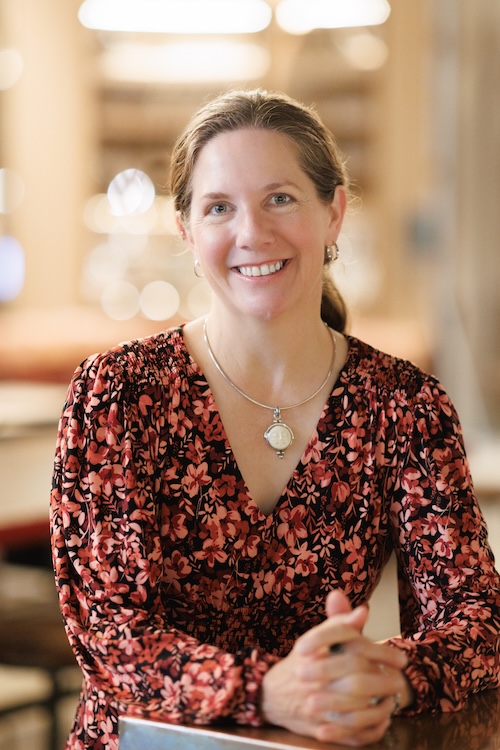
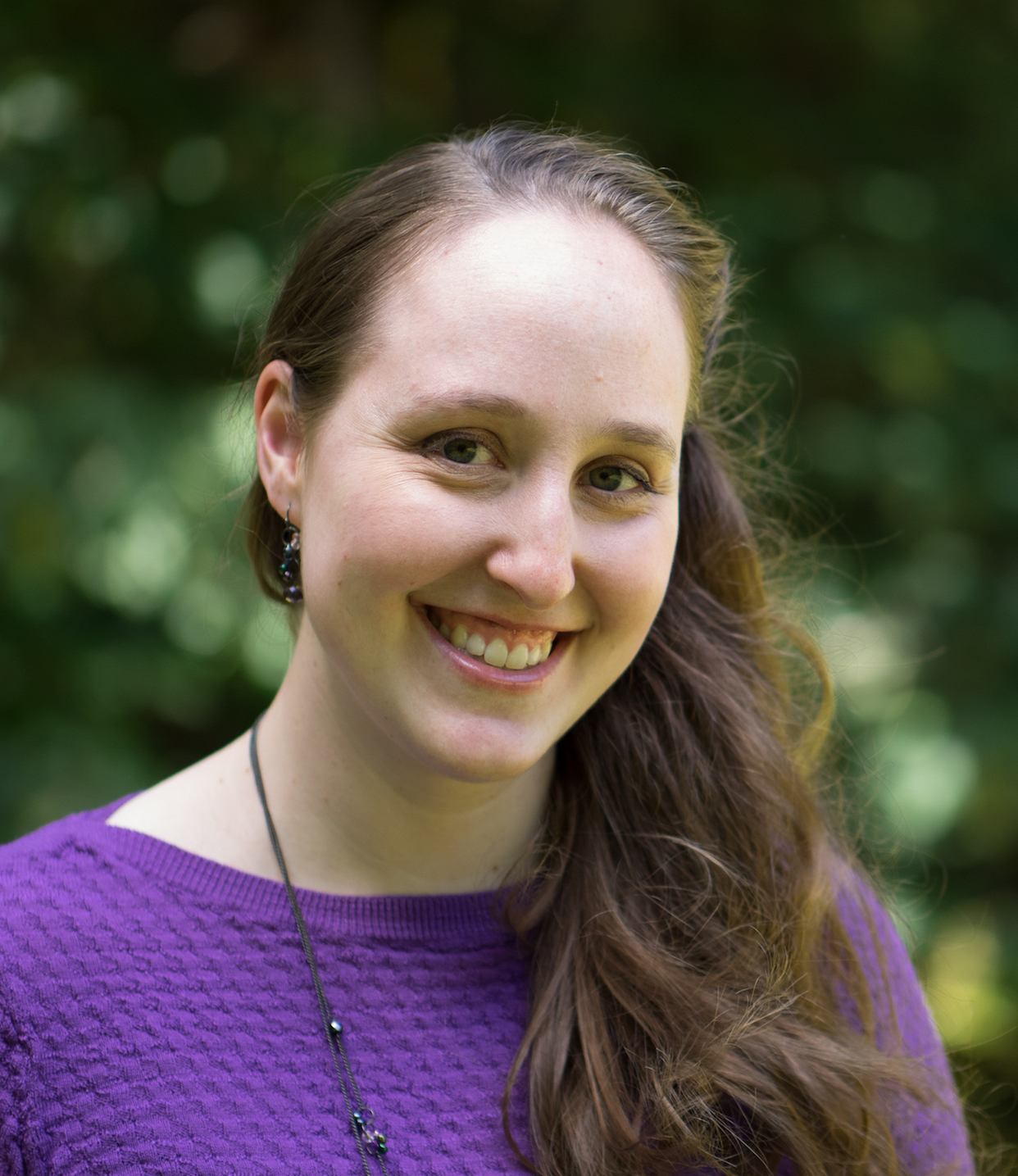
Kathryn Arnold writes fantasy and anything else that sparks her creativity from her home in Kingston, Washington. She currently earns her living as an insurance underwriting assistant, where she also creates marketing and web copy. When not writing, she plays (and teaches) piano and keyboard in a band (or two), and is working on starting a ministry team with her husband. You can find Kathryn at www.skyfirewords.com.