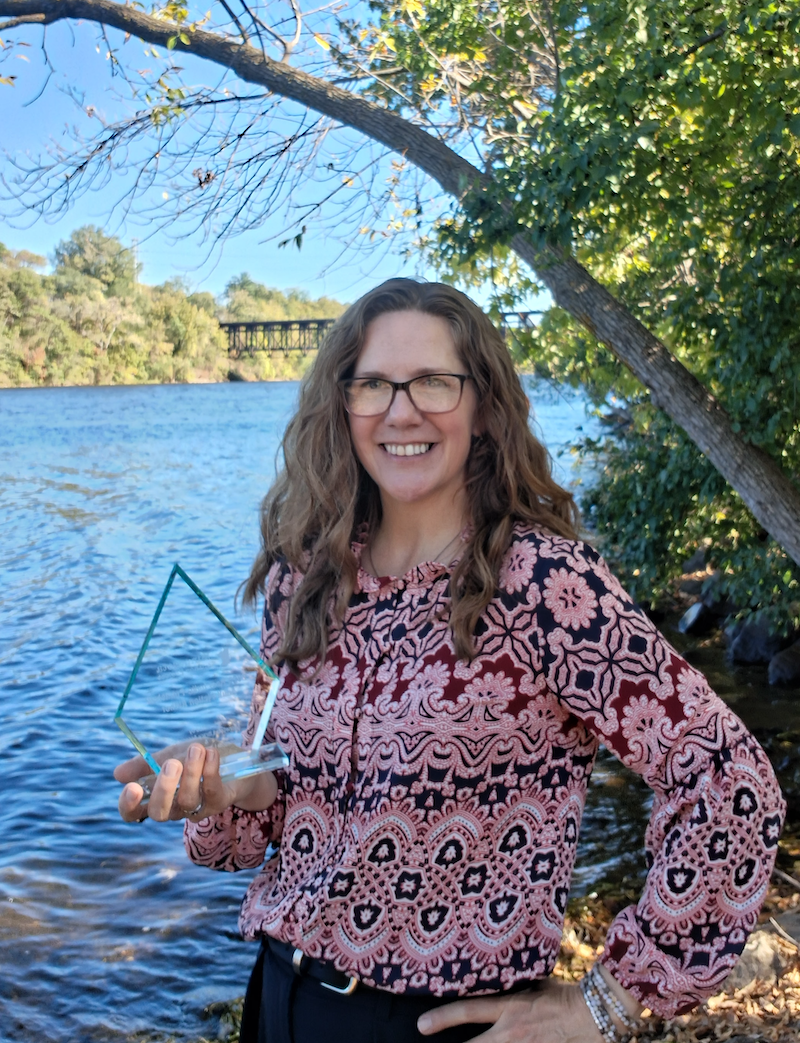
On October 10th, 2025, Alida was presented the Minnesota Author Project 2025 Adult Fiction Award at the Minnesota Library Association Conference in St. Cloud, Minnesota.
Librarians across the state voted for Murder in Skoghall, and Alida could not be more honored by, or proud of, this recognition.
With sincere thanks:
“Librarians serve readers with personal, unbiased recommendations, and this award means so much to me.
Before I was a writer, I was a reader. Libraries are a tremendous asset to every community. I can’t imagine life as a reader – let alone as a writer – without them.”
-Alida Winternheimer
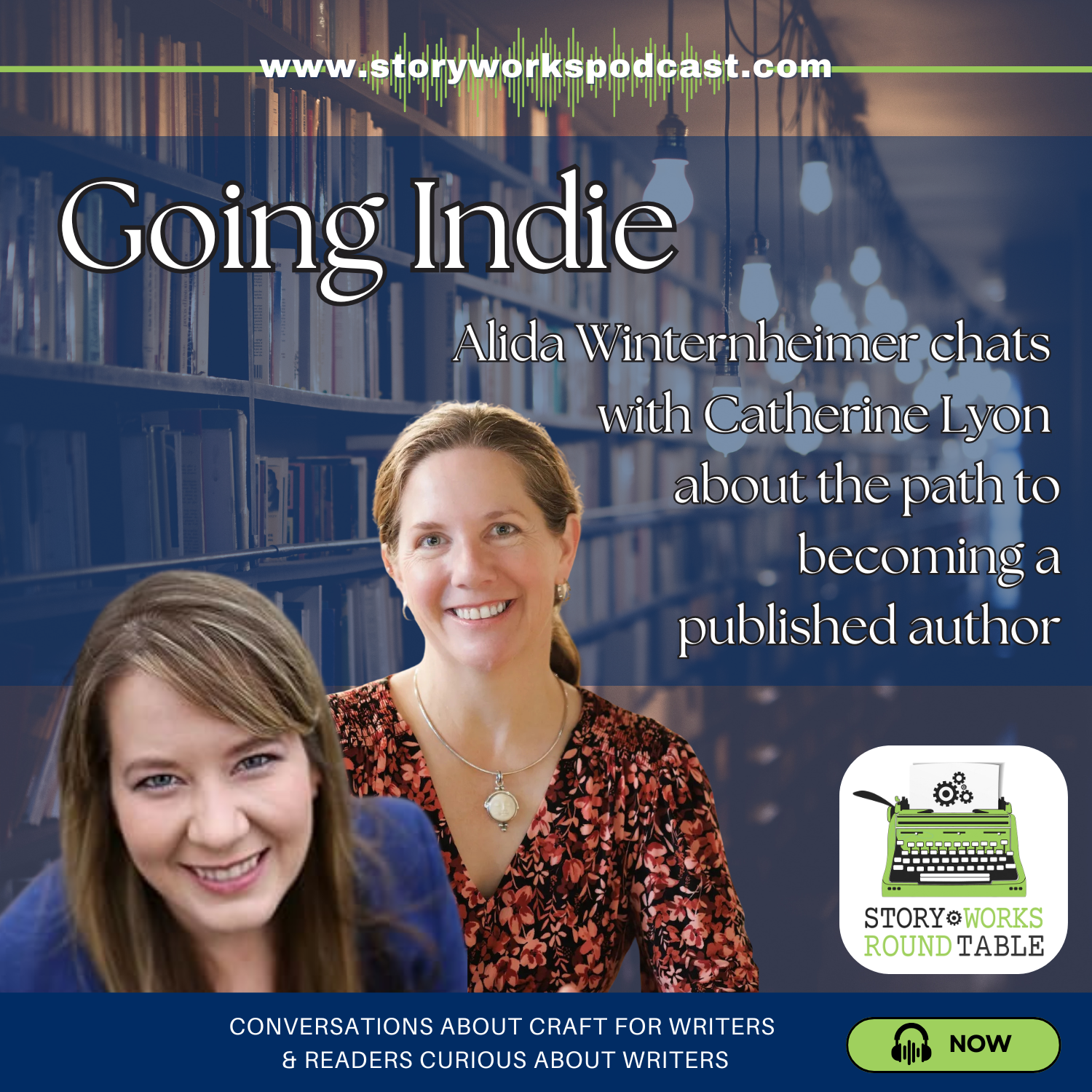
In this episode, Alida Winternheimer sits down with Catherine Lyon to explore the world of independent publishing, or “going indie.” They share their experiences navigating the challenges that come with being self-published while also celebrating the incredible joy of seeing their books in readers’ hands. Both Alida and Catherine are 2025 winners of the Minnesota Author Project Award, voted on and presented by Minnesota’s librarians. Tune in for an insightful conversation about pursuing the traditional publishing path, their decision to go indie, and whether they would choose differently if given the opportunity.
AUDIO
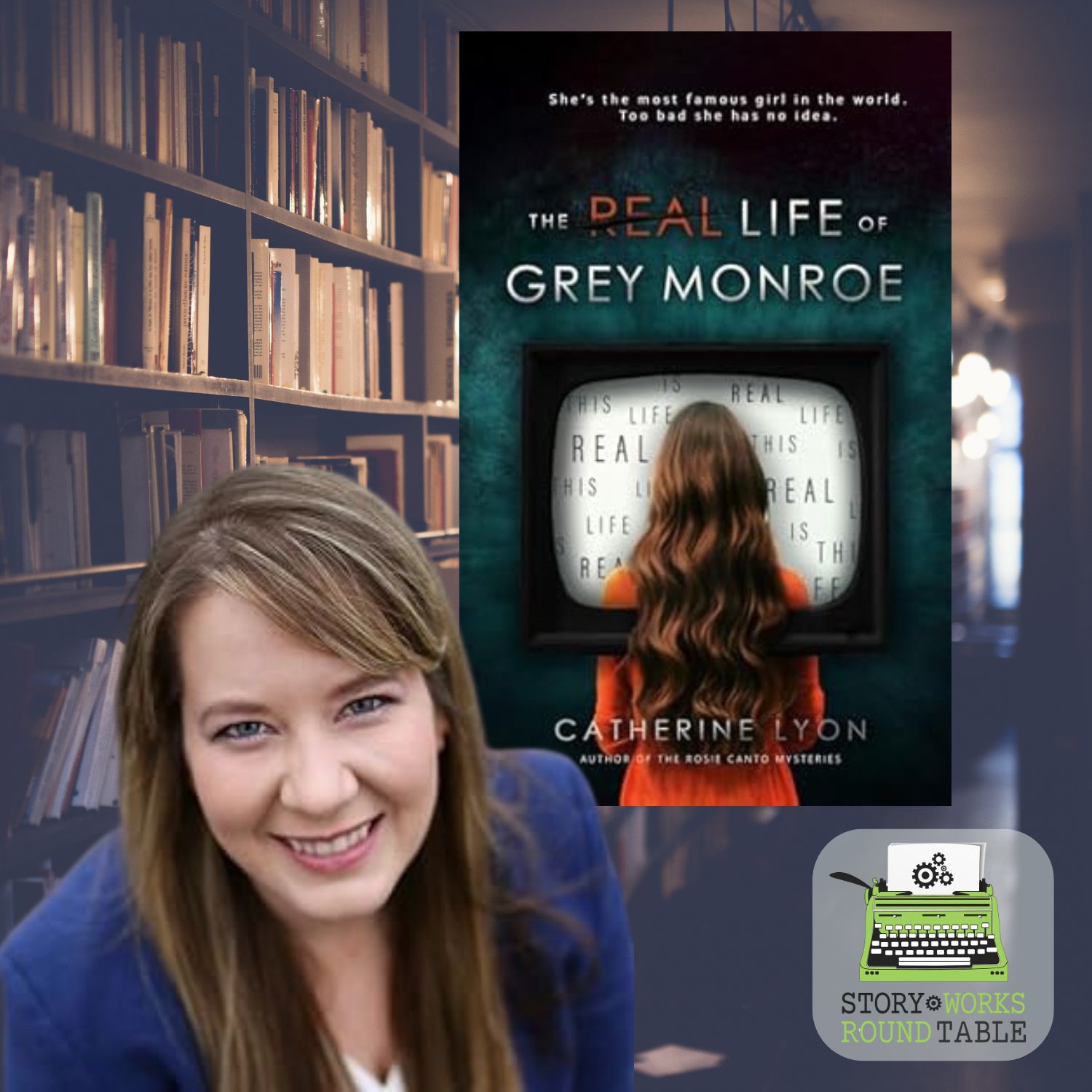
Catherine Lyon is a two-time Whitney Award winner and winner of the 2025 MN Author Project Award for Best YA Fiction. She has released four mysteries for teens, including the beloved Rosie Canto Mysteries trilogy. Whether writing fantasy or mystery, her goal is to create characters you know better than you know yourself and worlds you can slip into more easily than a slip of the tongue. She currently lives in the frozen wonderland of Southern Minnesota and works in educational publishing.
TRANSCRIPT
This transcript is AI generated. If you notice any inconsistencies or errors, blame the bot.
Alida Winternheimer: Hello, and welcome to this week’s StoryWorks roundtable. Today, I’m delighted to be joined by Catherine Lyon. Catherine’s life is made up of a thousand stories. The one she writes and the one she lives currently living in the frozen wonderland of Southern Minnesota, where she works in ed tech. Catherine writes, writes fantasies and mysteries. Her goal is to create characters you know better than you know yourself and words you can slip into more easily than a slip of the tongue. Welcome, Catherine.
Catherine Lyon: Thank you so much. I’m so excited to be here. and congratulations on your recent book release just a few days ago.
Alida Winternheimer: Yeah, thank you so much. I’m happy to have a second Skoghall out, out into the world and start thinking about the third one, you know.
Catherine Lyon: Yes. That’s the sad thing about book releases is then, you just automatically turn towards the next one.
Alida Winternheimer: Yes. I can be terrible about celebrating the release because my. My process is to already be thinking about the next thing and, you know, not really slowing down to enjoy the accomplishment, but, oh, well, something to work on.
Catherine Lyon: And the same way now you’ve got.
Alida Winternheimer: Four books out, correct?
Catherine Lyon: I do, yes. My first series is the Rosie Canto Mysteries. That’s a, trilogy for teens. And then I also have the Real Life of Gray Monroe, which is a mystery with a little hint of sci fi. My other ones have a little hint of fantasy and then some fantasies coming in the next few years.
Alida Winternheimer: Fantastic. And now you have won two Whitney Awards for best YA Speculative fiction and best debut novel of the year. That’s awesome. let’s see your short story, Good Morning, Johnny, a sci fi tale about a twisted TV set, was published in Quantum Muse. And your story, what I reap, One silver honorable mention in the L. Ron Hubbard, Ron L. Hubbard Writers of the Future competition. Some honorable mentions in Writer’s Digest competition. So congratulations to you. That’s quite, quite impressive work.
Catherine Lyon: Thank you. Yeah. So, I feel like, as you are just getting started with a career, finding all of these different opportunities to share your writing is so fun.
Alida Winternheimer: Definitely. Yes. Well, and many writers never place right. They don’t get the finalist badge or the honorable mention or the winner. So I just want to acknowledge that and not, not diminish in any way the accomplishment. That really is wonderful.
Catherine Lyon: Thank you so much.
Alida Winternheimer: Yes. And we are both. We met because we are both Minnesota author project winners. I’m in adult fiction, and you are in the YA category. And so we met in October. October 10th. It feels like it was ages ago, but it was less Than a month ago.
Catherine Lyon: Busy month.
Alida Winternheimer: Yes. At the Minnesota Library association conference to receive the awards. And, we sat on a panel together and it was fantastic. And I said, well, that’s somebody I want to have on the show.
Catherine Lyon: Yes, it was so much fun and I loved chatting with you. I thought you had such great insights. So when you had mentioned that you had a podcast, I was like, absolutely. I would love to jump on and chat some more about books and writing, and the craft of writing.
Alida Winternheimer: Absolutely. So let’s. I know we want to talk about YA fiction and writing prose for teens, but maybe we’ll make that a separate episode. We’ll see how the conversation flows. But one of the things that came up on that panel that I thought would be fun to talk about is why go indie? Right?
Catherine Lyon: It’s a great question.
Alida Winternheimer: Yeah, yeah. The, host or moderator of the panel asked us that question, sort of what, what it means to be an indie author. And I thought, you know, there’s a lot there to, unpack and I’ll just stop there and leave it as a question. So why indie? Let’s talk about that.
Catherine Lyon: Yeah, for me, it’s such an interesting question because for so many years it was absolutely not indie. I was like, I, I think when I first started writing, I was very young. We’re, we’re talking like 2005, 2006. And there just was such a, an, we’ll say, an interesting connotation and, almost a stigma around self publishing and being an indie author. And that was such a formative time of my writing career that I think for a long time it just wasn’t an option for me that I, for many years was writing manuscripts and pitching to agents. And like the goal was always to be traditionally published. And I think one of the things that, we had talked about on that panel was just how important it was for me to have like, that stamp of approval from the gatekeepers of the industry, from literary agents and book editors, and, just to have somebody say, like, yes, your book is good enough to be published. And as the industry has changed so much as there are so many more resources, it’s not a matter of like, buy a thousand books and sell them from your garage anymore. You know, like self publishing, or social media has, has really changed the landscape of self publishing and marketing. I, I finally. It took me a long time to really realize that self publishing and becoming an indie author was not like the backup plan. That it was like a very, like, valid and important route that a Lot of authors take to publishing and that it actually might be better for me and that it might be, like a viable option. and. And so that was, I think, one of the reasons why, like, being on that panel and winning that award and having that validation from librarians was so empowering in so many ways, is because I was like, oh, wow. There still was that part of me that was like, but am I good enough? And so, like, I, I would love to hear your kind of path and when you think about, like, why you chose to go indie, what, what were your motivations there?
Alida Winternheimer: Yeah, well, definitely the stigma thing. You know, when I was, for most of my life, indie author wasn’t a thing. You could be an independent artist. Right. But the only path to publishing was traditional or the vanity press, the buy your crates of books and go hand sell them thing. And that, you know, it’s just obviously a, no go. But, when I got my MFA in 2012, I graduated from the Hamlin with my MFA and I went to the AWP conference thinking, okay, I’m going to attend all these panels on publishing and I’m going to talk to people and I’m going to scope out the difference between big press and small press. And that’s the choice you make. You know, little did I know. I mean, that was very naive. And I sat on these panels and I listened to writers talk about the things they did for themselves as authors and the kind of relationships they did or did not have with agents, with editors, with publishers. And what I took away from those conversations was that whether you have a big press or a small press, the onus is still on you to sell your book. You have to do a lot of work. You really have to hustle to get your book in reader’s hands. And I loved feeling like the bubble had just been popped. You know, it’s like, oh, so maybe there’s another way to go about this. And, I started my career then as a developmental editor, working with writers. And I think it just kind of came together well. If I can be self employed as a developmental editor, entrepreneurial, doing my own thing, why can’t I also be self employed and entrepreneurial as an author? So I, you know, picked one of my books I’d been writing. I had a few different novels at various stages. And, I picked one that was not my master’s thesis, but that I thought was most ready to be published. And I put it out into the world, you know, and so that started that journey. But it Wasn’t smooth sailing. Right. Because I still want the validation and I still want the agent and I still want the book deal and I still want the relationship with the editor who loves fostering my career. And all of those things you grow up with as the ideal for being a literary writer.
Catherine Lyon: Oh, absolutely. I think, you know, like growing up and thinking like, oh, I’m gonna be, I’m gonna publish with one of the big four or big five at the time, Big four now. but I do love how you talk about that you were able to bring this like past experience of like being a business owner, like doing this, contract work, I guess, or freelance work rather being an editor and working for yourself. That, that really gave you that foundation. I think for me that was something that was really frightening because I hadn’t had that experience. So I ended up taking like a little business course and things like that before starting. I think the, the business side of it was really daunting to me. and so that was something that, I think moving into being like having your own business, I have like a little llc and I think that gaining some of those skills was also really important on that path to being an indie author and, and thinking about it. But like you said, it’s, it’s definitely not an easy path. and I think either choice isn’t easy. Right. Traditionally, publishing, as you said, I think particularly in the last 10 years, we’ve seen a really like a shift right. In the industry, especially for like mid list authors, like people who are not New York Times bestselling authors. Like that has become really challenging. So I think, you know, as many challenges as come with indie publishing and for me there are many. Marketing is definitely not a strength or something that I find to be very enjoyable. But it is one of those things that I, I think that the challenges are there. Whatever path you take and marketing, like you said, is, is always going to be part of the life of an author, which I’ve come to accept, I suppose.
Alida Winternheimer: Right, right. Well, and it’s still daunting. I mean, I don’t, I don’t know if it’ll ever not be daunting for me. I would be incredibly happy to hole up in a writer’s studio and write books for the rest of my life. I, if somebody else, if I could offload everything else, I would gladly do it. And I think that is the vision I grew up with. You think, oh, if you become a writer, you write and you know, you go on a book Tour, and you have people line up with copies of your books, asking you to sign. Sign their copy, and it’s lovely. And the life of the writer, you know, the interview here and there, and that’s not the life of the writer at all.
Catherine Lyon: Right. This vision that I had of what writing would be like is so different, I think, than what it has become. But as a reader, I have to say I do really love, you know, when I do read books by authors that are, like, very visible on social media. And, even many of the indie authors that I really like, like, having that connection is. Is really fun from the reader’s perspective, but from the writer’s perspective, if I did not have to have a TikTok account, I think I would be perfectly fine with that. Or an Instagram.
Alida Winternheimer: Yes. Yeah. So, okay, let’s talk about the stigma, huh? Because m. There’s definitely, I don’t know, you know, today where that needle is. I think the needle is shifting a bit. But there has always been a stigma attached to self publishing. And, you know, Really, I think 2012 was kind of the vanguard of the indie author movement. like, when I first started connecting with that scene, there were a few key players, but not a lot. And you look at where it is today and it’s just blown up. It’s incredible how much it has changed. so certainly things are changing. But, you know, one of the really meaningful things about the Minnesota Author Project Award we both just received is that it was voted on by librarians. And so when I got the notification, I was like, you can’t buy librarians. They are not handing this out like candy. Right. This is. This is like, go gold seal of approval here.
Catherine Lyon: I absolutely agree. So validating to. To have, like, people who are like, the champions of literacy. Right. In our communities, that they’re working daily with readers and thinking and talking about books with those people who are actually consuming them. and. And it was something especially. So my book, similar to yours actually is genre fiction. And so I was like, oh, book awards are just for literary fiction. Like, they just.
Alida Winternheimer: You.
Catherine Lyon: You’re not going to win a book award with a book for teenagers. Like a mystery and a romance for teenagers. and. And so that was really, I. I think gratifying as well. But it is interesting. You had mentioned earlier, like, independent artists, and it really made me think about how inverse when you think about, like, film, for example, indie films are seen as being sometimes because it’s the director’s own vision. like art films and things like that are Sometimes seen as being more prestigious I guess in some ways, than like these mass market films that are published for everyone. But I think with self publishing one of the great, the beautiful things and I think one of the challenges with self publishing and being an indie author is that there is very little there’s little blocking you from being able to participate. And so like that’s so wonderful because I think you know obviously the publishing industry, we’ve seen so many people being able to break out who have no connections. Right. And who have no like, like there are so many great authors who are able to traditionally publish because they were found in the slush pile. But there is something to be said, right for having the, you know, financial ability and, and connections to be able to put yourself in those, in those rooms right in that, that spot, to be able to take that path of traditionally publishing. And I think with indie publishing you get to decide like how much you’re going to invest financially into being an indie publisher. And so there are a lot fewer I think barriers which of course does like create that problem of like there are a lot of self published books of lower quality, right. That people, and maybe not even people who are trying to be the next big seller, but they just are publishing their memoir or things like that. And so it is a very crowded market I think, which, because, which makes it challenging for, for sure when it comes to fighting that stigma of like no, there are some really good books that are, that are indie published. So many that I’ve read that I’ve just been like, this is so well done. but finding those books I think can be a little bit more of a challenge for sure.
Alida Winternheimer: Right? Yeah, yeah. The crowded marketplace is definitely an issue and I think that’s probably one of the reasons, maybe even a primary reason why there might still be some stigma attached to being an independent author. Because if someone goes and looks at books that they can peg as self published, they might not be very well done. And you know, a lot of independent authors today, most of them, if they’re putting out a quality work, you aren’t really going to know that it’s self published. They’re going to give their imprint a name, they’re going to be treating it as a business, they’re going to be hiring editors and you know, formatting and hiring a cover designer and such. And there are so many imprints under the umbrella of those big four as well as so many independent publishers that there are plenty of presses out there. Whose name I don’t recognize. You know, sometimes you have to kind of scratch your head and go, okay, is this just the author calling themselves that press or is this one of those sub, sub, sub imprints way down the family tree of a bigger press? yeah. I like what you said about filmmaking, you know, and I think when something breaks out and does well as an indie, as an underdog, everybody gets behind it and celebrates it because it’s that David and Goliath story. And then the indie artist is the one who’s not bought and sold. Right. They aren’t being told what to do by some kind of higher up. and we love those stories. And I don’t think that indie authors get celebrated that same way, you know.
Catherine Lyon: Yeah. And I think for me a lot of the time it’s struggling to celebrate myself. I do. And I don’t know if you struggle with the same thing, but I often find myself saying when people are like, oh, this is my friend, she’s an author. I’m like, yeah, but I’m just self published. and sometimes I think that we as indie authors do that to ourselves, right? Because it’s that, you know, like, we grew up with that same mindset that and you know, in movies you always see like, oh, they sent in the manuscript to the editor and they read it and were, they fell in love with it. And that is, I think, this version of being an author that we often think about as like, oh, that’s the valid, that’s the route that you have to take. And so I think sometimes we as indie authors also don’t see ourselves in that same way, right? That like, oh, we wrote and published books and we put out books that we are proud of, and that readers love. But that, you know, that idea of who we, we should be in the route that we should take, I, I’m for sure guilty of it. And I think until we as authors, you know, are willing to, to embrace that, I think sometimes it’s hard for me to expect other people to as well, you know, to, to really see that as like, oh, this is a valid, a valid writer here. Somebody who publishes great books.
Alida Winternheimer: Yeah. You know, I think the, the or a hurdle that’s a significant one for us, is the brick and mortar store. Because when you say I’ve got a book out, someone says, oh, where can I buy your book? And if you say Amazon, that might trigger them because it’s, it’s the big bad corporation, right? Lots of people don’t like Amazon, and everyone’s supposed to shop indie. And, you know, that’s wonderful. But what people who aren’t authors don’t realize is that Amazon and a few other places have made the publishing process accessible for independent artists. You know, and I would love for my books to be in every brick and mortar bookstore, but I don’t have a sales rep from a Big four imprint putting my books in the hands of book buyers in those bookstores. So, you know, I can go to a, small, bookstore and say, hey, I’ve got these books. They’ve won awards. I’m local. I would love to meet your readers. I would love to do an event. I would love to work with you. You know, independent artist. It still just doesn’t fly. I think there are business reasons. I think some of it is that stigma piece we were talking about, but I think there are also. They have a certain business model and it is part of that pipeline coming out of the Big Four. And we are outside of that pipeline. Yeah.
Catherine Lyon: And I think that’s one of the, the ways that the power of libraries for independent authors become so wonderful as, like, this, this place that people can go to access books, by local authors, you know, whether or not we, wherever we published through. And that has been something that I’ve, been so grateful for. My local library here in Rosemount, they have, like, Meet the Author nights and they have a writers festival and a country fair where we have lots of booksellers and things like that. And that has been really wonderful. there’s something really special about, like making local sales. I don’t know, like, that is, like, people who are in my community and like, want to support me as an author. I had, I just got an email this week through my website that somebody was like, hey, I’m, you know, I live here in your city and I would love to get an autographed book for my granddaughter for Christmas. And those kinds of sales, like, mean so much, you know, that people in the community, they saw I had like, a little newspaper article about the award and she was like, oh, great. I want to support that local author. Like, I want to, to be there. And I think that the library for me has played a big role in that and like, the different things that they have. Because, yeah, I. My books are not in brick and mortar stores. They’re on Amazon and barnesandnoble.com but not, not in the, the local Barnes and Noble, you know, and not in the local bookstores. And so that that ability to like, be there in person has, has been really fun.
Alida Winternheimer: Yeah, yeah, I agree. I think being, I think meeting readers in person is critical to not even success necessarily, but just to connecting, you know.
Catherine Lyon: Yes, absolutely. I just this week went to a book event with a bunch of authors that came to a, Barnes and Noble, my book club. We all went and were able to meet the authors and it’s, it’s just so fun to connect either as a reader or a writer. Like those authors, I’m like, I’m, I’m on their side now, you know, Like I, I’m excited about their books. I loved hearing them talk about it. And growing up, having the opportunity to meet authors was so fun. Like no matter how big they were or whether they were a New York Times bestseller or just a local author, like it was that, that connection. And, and now as a writer I can feel that, you know, like when somebody tells me that they have read or loved my book, that is like a bond that will last forever. You know, I’m like, thank you. and, and like, because that’s what I wanted, you know, when I wrote these books, I, I love writing and I love that process. So I was like, even if I never publish these books, it will, it will still be worth it. You know, I love writing but, but like having people read the books and love them, I’m like, that is the goal, right? Like, that’s what I want to be able to, to have people connect with those, those books that I’ve created. And so having that in person connection, with somebody who has made that connection with my book or who wants to, even if they haven’t read it yet, but they’re just excited to meet a local author, like that is so much fun. and yeah, and again is a place that I think the library has that role for me and like some of those local things. But like you said, that award that we won and having the chance to do that panel and all of those different opportunities, just so much fun. And I think that’s what some authors get from social media. I haven’t quite gotten there yet. Social media is like harder for me to make those connections, and really feel like I’m connecting with readers in that way. So that’s something that I want to work on. But I love that you said that like brick and mortar feel is so important.
Alida Winternheimer: Yeah. So what has, if anything, what has surprised you now that you’re established as an independent author? With four books out in the world is were there any, like, oh, that, you know, I learned this and had no idea that was coming?
Catherine Lyon: Oh, good question. I, I mean, there are so many different ways to take this question though, because there are some things that, that really surprised me at first. I felt like I, Because I watched every YouTube video known to man about both the craft of writing, of course, throughout, the years, but also just like self publishing and what that process would be like. The one thing that really surprised me was, like, how much people that I knew and that I associated with even, like, mildly new, like, even acquaintances, like, they are excited for me. And that was really fun, to have, you know, like, I would post something on Facebook and like, how many people were like, oh, yeah, I. I’m excited. I’m, you know, like they would write a comment or something. and, and, and just like, if you, if I tell someone, like, oh, yeah, I’ve published a few books, that they’re like, really excited for me. That has been fun. to see something that really surprised me, was to see like, old high school friends or something, be like, great job. That’s so exciting. And just take that moment to celebrate with me. as far as the actual, like, process of, like the. Of actually publishing, I think it was a little bit of a surprise, like, just how hard marketing would be, and like, just how much effort it takes, like the business side of, of publishing books, I think, and, and taking care of all of the extra stuff besides writing that. I knew that it was going to be a lot, but it definitely was still a little bit surprising. I’m grateful to say that it hasn’t ruined it for me, you know, because that’s not necessarily where I would say my skills lie. and I was worried at first that I was like, oh, is this going to make me hate writing? Now that it’s a job versus something that I just love and that’s a passion. But that has not happened, so I’m grateful. What about you? Has there been anything that’s really surprised you as you’ve jumped into publishing your books?
Alida Winternheimer: I think I’m always surprised by how quickly things are changing. You know, you can’t just. It’s not like you learn how to write a book, you learn how to format a book, you learn how to print and distribute a book. And you know, because of digital technology, changing so much, there’s always. I feel like I am always dealing with the learning curve. I’m always trying to get on Top of the next skill. You know, not even like, oh, social media changed its algorithms because I don’t deal with that stuff. I post, you know, what I’d like to post the way I like to post it. And I don’t worry about the algorithms because that would drive me absolutely insane.
Catherine Lyon: Right.
Alida Winternheimer: You know, but just from the way to format or what, you know, thinking about things like, like the first book I put out, I had my own cover. I did my own cover and it wasn’t bad, but it wasn’t great. Right. And then I pretty quickly hired somebody to do a cover and that was very good. But then, you know, it’s like, oh my gosh, I’m always thinking about things in new ways because the technology has changed or the marketplace has changed or because I’ve changed. You know, it feels like nothing is set and done. there’s just continual evolution that I’m assuming it’s not like that when you know, pre, pre the digital era, you create a book and it’s this physical thing you hold in your hands and there’s a spine and there’s glue and there’s paper and you know, cover boards and that’s kind of the thing.
Catherine Lyon: Absolutely. Yeah. It, it has been really interesting just to see, like in the years since I started writing, like that was one of the reasons, one of the great reasons why I felt like self publishing was a great option is because of the way that technology has advanced and allowed it to be a smoother process. But that comes with so many challenges because it keeps changing. Right. Like there are still so many changes that are happening in the industry. And it’s been interesting to see of course like the big new technology is artificial intelligence. And now I’m just like always paranoid about like, do I have too many EM dashes? Because people are going to think that this is AI. But which I think is such an interesting new challenge when it comes to this industry, is like that introduction of AI in so many different ways. Again we keep on going back to this idea of stigma, but I think that that is something that readers now think about, like is this something that was AI produced or, or enhanced maybe? And so those kinds of questions, you know, are there in the back of people’s minds as they read. So m. Definitely surprising. Although my, I now work at ed tech, but I started off in teaching and that is another industry that has just like changed so wildly with the introduction of different technologies. And so I’m like, I’m Used to it at this point, but wow.
Alida Winternheimer: Yeah, yeah. AI Ah.
Catherine Lyon: That’s a whole other episode that you can do with someone who knows more about it than me.
Alida Winternheimer: But, and me. M. They would, they would definitely know more about it than I do. Okay, what else do we want to say about being independent authors? I like that, you know, you’ve spoken about it as a choice. I think that going back to that idea of stigma, it’s changing, right? I don’t know if it’s completely turned over yet, but the idea for a long time was that if you’re self published, I. E. Independent, it’s because you couldn’t get into a traditional press. And there’s so many writers today who are putting out quality books who never even considered querying a traditional press. You know, they chose to not go that path. And then there’s so many quality writers who maybe, did send out queries and do that whole thing. But there are dozens of reasons a writer never gets picked up that have nothing to do with the quality of the story. You know, that is a marketplace and it is run by massive international conglomerates like the four. The big four aren’t even American owned companies today.
Catherine Lyon: It is interesting though because I was one of those authors that like queried for many years and many different manuscripts and got really great feedback, but always that like, ah, like it’s like I love this book but not right now. Or like. And so I think, but I do not. It’s hard because I would never tell a new author like query for 10 years because that’s, it’s. There’s a lot of rejection involved and lots of, of struggle in that path. But if I had just like taken my very first book that I wrote when I was absolutely convinced that it was ready to query, you know, it had been through all of the different rounds. It just wasn’t, I never will publish my first three books and they just weren’t at that quality. And I just wasn’t at that place in my writing career that I could see that. and I’m so grateful for all of the feedback that I did get in doing, you know, composition petitions like pitch wars or querying to agents and getting these great letters back when they read the manuscript about like, ways that they didn’t feel like it fit into the market or things like that. it, it made me a better writer and I think, in some ways too, because after each book that I shelved, I was like, okay, that didn’t work. Like, let Me try something new or different and kind of helped me to reach different places as an author and into different genres that I potentially. I never would have presumed that my first book that I would publish would be a mystery because I’ve always seen myself as a fantasy writer. so. So I, I’m really grateful for the path that I did take. I. I am absolutely convinced that indie publishing was the right path for me, but I, I’m m grateful that I didn’t know that at first. So, you know, that, that, that struggle was important, I think, in my writing journey. And, and one of the things, I think you probably experienced a lot of that same struggle in your mfa, right. Like getting that feedback and being told like, oh, this is not good enough. Actually, I. I think that is helpful for some writers at first. It definitely was for me, to. To have people, you know, and to see that feedback change. Even though I never was traditionally published, I saw a lot of difference in the feedback that I was getting in the number of manuscript requests that I was getting towards the end versus right there at the beginning. and so to understand, like, what is. What does make a good book, what does make something that agents would be interested in looking at. and also how to sell your.
Alida Winternheimer: Right.
Catherine Lyon: Like a query letter is, Is a great practice in saying, like, how do I get somebody to love this book in a paragraph? is a really important skill for writers and one that I still very much struggle with. But, but that I think that querying process really helped me to develop. So I’m grateful for the struggle, even though it was very much a struggle.
Alida Winternheimer: M. Yeah. Yeah. That’s such a great attitude.
Catherine Lyon: I don’t know if that was my attitude at the time.
Alida Winternheimer: Right. No, I. I share this. I, Yeah, I’ve had a similar path. You know, I have won awards and had an agent and, you know, have short pieces in literary journals and such. And even with that amount of success, it’s, you know, for every success, there are probably dozens of, rejections. And that’s the name of the game. And I think one of the benefits of pursuing the traditional path, even if you don’t ultimately choose it, is that you have to keep coming back to your decision to be a writer and to publish. Right. And put your work into the world if you’re going to get some rejection and give up writing. Okay. Right. So it is kind of a, testing, truing process. Right? You, you have to develop your thick skin, you have to be resilient. You have to Be dedicated to your craft and to your path. You have to know you really want this. And there are probably plenty of books that people put out there because they could and they haven’t gone through that kind of, you know, all of those challenges, jumped those hurdles we’ve had to crawl over.
Catherine Lyon: That is so powerful because I did have to ask myself that question over and over again, you know, like, throughout that path of like, would I still want to do this if I were never, if it never worked out for me, like, do I still love writing and do I still want to write books if I never publish these books? and, and that maybe is showing that, my lack of optimism at that point that I was like, maybe I’ll just never get published. But to me I was like, yeah, this is worth it. And I think that that is, it taught me something about what writing means to me and the way that I look at this and that I think is a self published writer. You know, like when Gray Monroe first came out, it’s still, I will say Gray Monroe has eight reviews on Amazon. This was not exactly like, a wildfire hit. but. And that can be so discouraging, right, as an author just to, to be like, like, people love it, but there are like 12 people who love it, you know, like the people who read it. and of course that’s one of the reasons I think, like keeping at it, you know, like receiving the book award for this from librarians and seeing people say like, oh no, this really is a quality book, like, and validates me as a writer. But it also, I think even if that had never happened, like that experience of continuously receiving rejections, like, I think sets you up well for like viewing this as a long term project, that it’s not like, oh, each book needs to be a smash hit, but it’s like I’m building a catalog, I’m building a career. And as challenges come with that, I think having that thick skin that you develop as a querying author, is really, really important. But also recognizing the why behind why you write and, and why you want to publish books, you know, is, is really important and, and I’m grateful for that opportunity to learn that through the, the long road. and it, yeah, like, it, it definitely helped me to take that perspective of like looking at this as a business in a way and being able to say, like, oh, I don’t just have one book in me, you know, like, I, I’ve written, you know, 10 to 12 manuscripts that will eventually not all of them will see the light of day, but you know, in various stages of revision that that I can make those choices and think about it more as you know, a long term plan versus you know, I think people who, who jump into self publishing their very first book and, and don’t have that, that process of refinement, like, or who spend a lot of time on one book. I’ve seen that too with, with writers that they’re like oh, this is my passion project, I spent 10 years on it. like that, that path of rejection for me allowed me to escape that trap I think and, and see each book is like o building block. and even though I love them and I’m proud of them, it’s okay if they don’t perform. Miraculous book sales, you know.
Alida Winternheimer: Yeah. Yeah. It is definitely a long game and I think it’s interesting the drive to put our stories out into the world, you know, because we could keep writing our books and nobody else has to read them. We could improve them to the state where we feel they’re complete and we feel satisfied and that they’re the best we can make them and we could just keep living our lives. We don’t have to go become business people and marketers and you know, all of these other things we do. But there must be something in human nature such that those of us who want to create these stories, you know, books on this scale, novels and such, then feel compelled to share them, to find people and connect with them through our stories. Whether it’s a handful of people or millions of people. It’s like, like the story once written, wants to be in the world. It belongs in readers hands.
Catherine Lyon: I love that. I don’t know that I’ve really thought through that question of like why do I want people to read my books? Like what is it that’s driving me? And I love the way that you said that, like that idea of connection, and almost like anthropomizing the book, right, like that it wants to be reading. because I think that I wanted to, you know, submit to agents for validation. But when it comes to why I self publish and what I get back from readers, that’s something completely different. that is that like feeling of connection and I think that like act of creation is so satisfying and gratifying. But you’re right, there is this other element to like, oh, I’m, I’m proud of this and I love it and I want to share that with people. like I want people to be able to read this book and to love it. I think reading and books have brought such a joy into my life for the entirety of it. You know, like, there have been so many times that books of all kinds, whether genre fiction or like really well wrought literary fiction, have had like, played different roles in my life. And to be able to, to create that and to be that is. Is really really, like a whole different level than just writing those books. so what a great, a great question to consider. I love that you brought that up.
Alida Winternheimer: Wow. Well, this has been such a fun conversation.
Catherine Lyon: Yes, it has been. It’s fun to, to chat with. and I knew that it would be because I had so much fun on that panel with you at the Minnesota Library association, just talking about, about books. And I think that indie authors have such a different route that we take that, that finding other people who who love it and have been really enjoying that process, but also, who have found success like, and who put out like really quality work is, is really fun. So thank you so much for inviting me and having this conversation today.
Alida Winternheimer: Oh, my pleasure. So where can our listeners find you and your novels?
Catherine Lyon: Absolutely. It’s funny because we talked about like, don’t just tell them that you can find it on Amazon. But I, My books are on Amazon. I think that’s the place where most readers find me. and, it. Well, Gray Monroe. Not anymore. Because that is now. Because of the Minnesota Author Project. It’s now available through that. So people can find the book and read it that way.
Alida Winternheimer: you mean in Minnesota libraries, right?
Catherine Lyon: Yes, in Minnesota libraries. And I think that there’s a. I need to learn more about this. I think that it is available through ebooks as well. My books are like, the hard copies are available through Dakota County Library, if there are any local listeners today. But, but the ebook you can also find through the library system, through that Minnesota Author Project. But because of that it’s not on Kindle Unlimited. but my other books, the Rosie Canto Mysteries, are on Kindle Unlimited. So if somebody has that, then they can read them for free, or just through that subscription. But you can also purchase them there. they’re on Barnesandnoble.com as well. with the exception of my new book that is still. We’re working on getting that on on that website. But Yeah.
Alida Winternheimer: Sorry, I just sneezed.
Catherine Lyon: Oh, no, you’re good. I was like, oh, what did I say? That was funny.
Alida Winternheimer: Oh, no, no, I muted myself so I could sneeze and.
Catherine Lyon: Oh, yes.
Alida Winternheimer: Thank you. Yes. So, and where’s your website? You have a website, right? Yes.
Catherine Lyon: Catherinelionbooks.com. you can check it out. If you sign up for my newsletter on there, then there’s also access to, like, newsletter exclusives. There are, like, songs written that relate to my stories, and you can get sneak peeks for future books and watch book trailers for things that are coming up. So, my book trailer for my next. My new fantasy book is on is just barely, has been posted. So, check out my website. Absolutely. and I will absolutely include a link to this podcast on that site.
Alida Winternheimer: Excellent. Well, thank you so much for joining me, and congratulations on the Minnesota Author Project Award.
Catherine Lyon: Thank you. You as well. Congratulations.
Alida Winternheimer: Thank you.
About Your Hosts
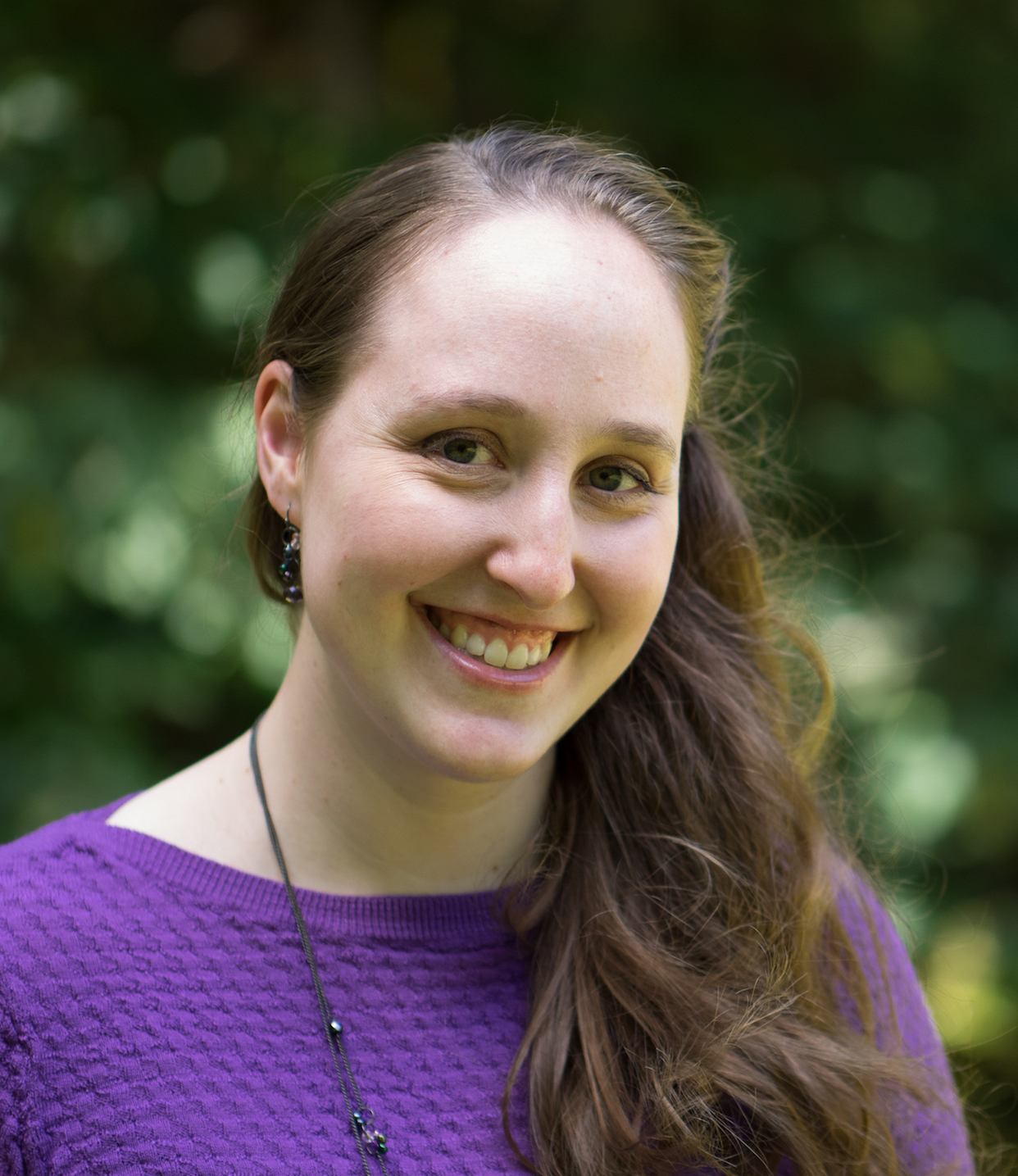
Kathryn Arnold writes fantasy and anything else that sparks her creativity from her home in Kingston, Washington. She currently earns her living as an insurance underwriting assistant, where she also creates marketing and web copy. When not writing, she plays (and teaches) piano and keyboard in a band (or two), and is working on starting a ministry team with her husband. You can find Kathryn at www.skyfirewords.com.