
Memory • Emotion • Body
Writing begins with ourselves,
our unique memories, emotions, and embodied experiences.
In this immersive weekend workshop and retreat, we will work with our memory, emotion, and body to explore what it means to bring the power of our unique experience to life in our writing. Held in a private, virtual room, this retreat is a safe space to explore the story you need to tell.
- Find Alida at the Indie Author Training Webinars on January 28th here.
- Get Alida’s Word Essential Writing Workshops here.
- Be the first to know when The Novel Journey coaching group opens for enrollment here!
- Get Alida’s thoughts about writing, life, and the writing life while staying up to date with author and editor news here.
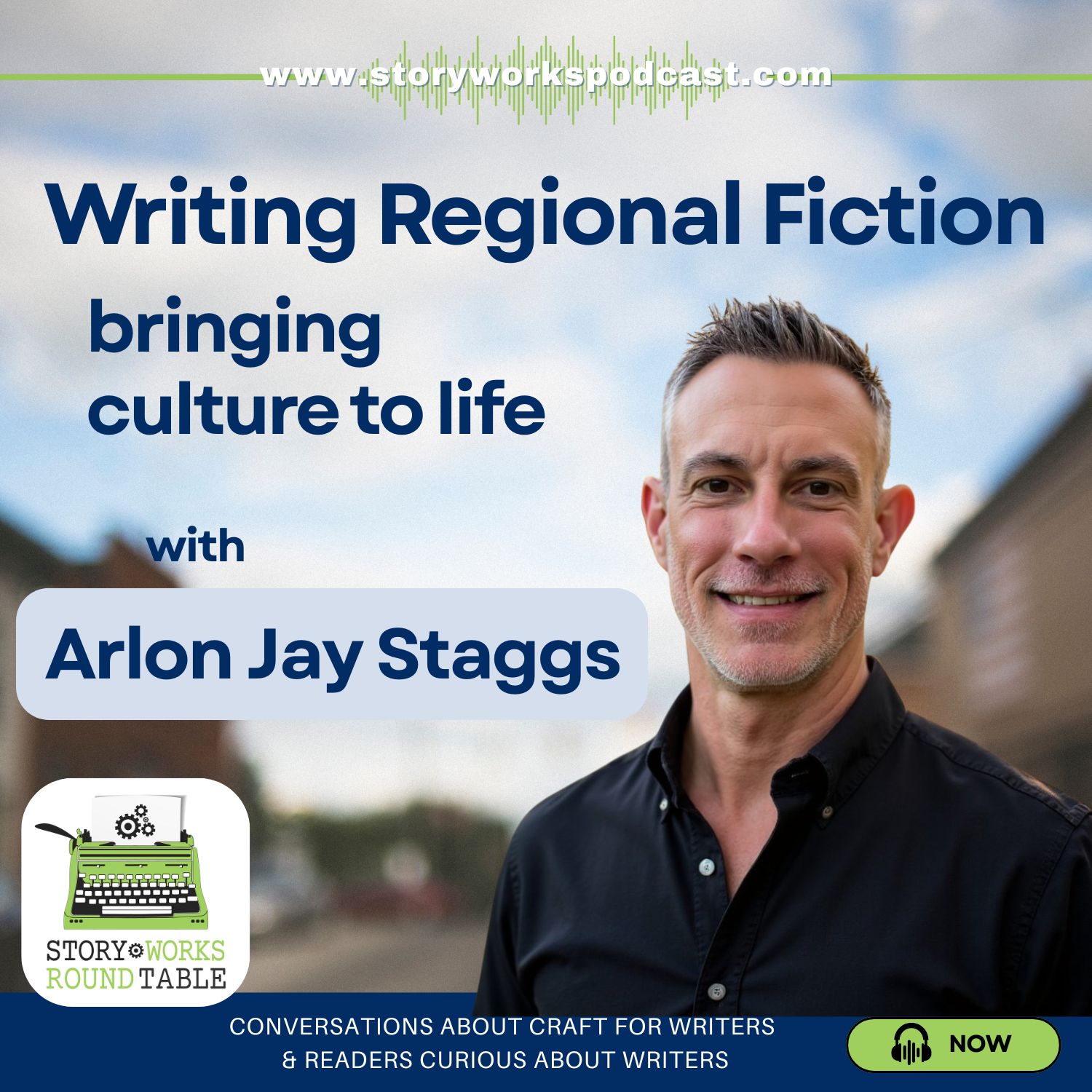
In this episode of Story Works Round Table, Alida Winternheimer and Kathryn Arnold engage in a lively discussion with debut novelist Arlon Jay Staggs, who brings an insightful conversation about Southern Fiction. With humor and affection, Arlon shares insights about the quirks of the Deep South, the significance of dialogue in Southern storytelling, and the cultural contradictions that shape the genre. Tune in as we explore Arlon’s journey as a writer, the inspirations behind his debut novel, and the delightful complexities of Southern characters.
AUDIO
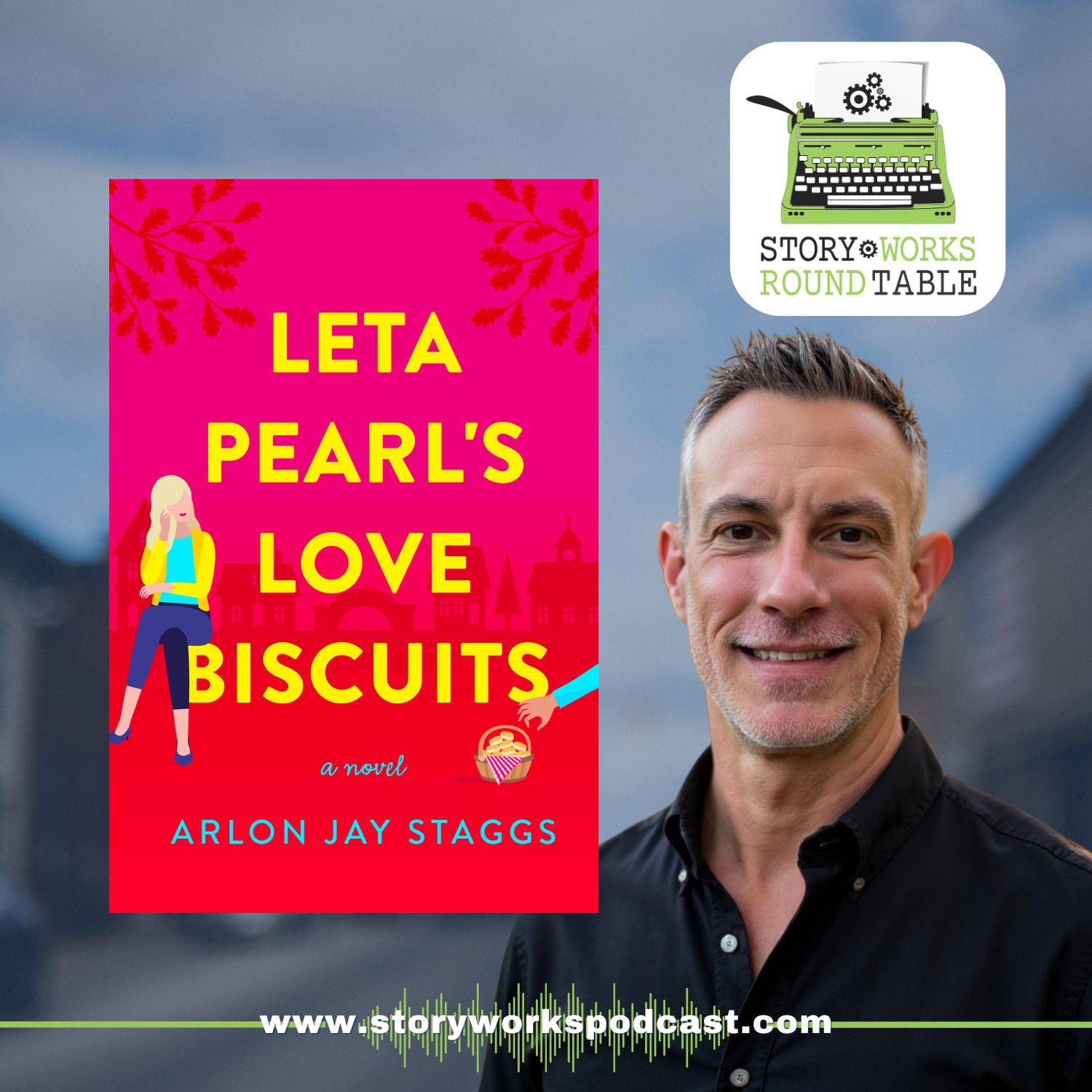
Arlon Jay Staggs is a native of Florence, Alabama, and a Southern storyteller with deep roots, a sharp sense of humor, and a heart for connection. His essays and stories have appeared in The New York Times and December Magazine, and his novel “Leta Pearl’s Love Biscuits” is his debut work of fiction. He holds an MFA in fiction from the University of California, Riverside, a JD from the Mississippi College School of Law, and is an adjunct professor at Northwest Florida State College. Arlon and his husband divide their time between Santa Rosa Beach, Florida, and San Diego, California.
TRANSCRIPT
This transcript is AI generated. If you notice any inconsistencies or errors, blame the bot.
Alida Winternheimer: Hello, and welcome to this week’s Story Works Round Table. Today, Kathryn and I are delighted to be joined by Arlon Jay Staggs. Arlon is a native of, Florence, Alabama. Writes with humor and affection about the quirks of the Deep South. He earned his MFA in creative writing from the University of California, Riverside. He and his JD from the Mississippi College School of Law. His writing has appeared in the New York Times and December Magazine. This is his debut novel. Ireland and his husband divide their time between Santa Rosa Beach, Florida, and San Diego, California. So welcome, Arlon. We’re glad to have you here.
Arlon Jay Staggs: I am so glad to be here. Thanks for having me.
Alida Winternheimer: Yes. And it says right in your bio that you write with humor and affection about the quirks of the Deeps South. And we thought we would talk about Southern fiction with you today.
Arlon Jay Staggs: Yeah, it’s a great topic, I think. you know, the south is such a fertile ground for storytelling. I believe. So. I. I do love it.
Alida Winternheimer: Yes. Yeah. So, all right, let’s start with the definition. What is Southern fiction? How would you define it?
Arlon Jay Staggs: Well, I think it’s anything with, you know, that’s set in the south, for sure. anything below the Mason Dixon line, I guess. but also, I think Southern fiction could be characters who are Southern and confronting, you know, life outside of what we consider the regional South. but, you know, I think the definitely. I think definitely Southern fiction. the place, the setting plays a character. and I was thinking about this when I was kind of getting ready to speak with y’. All. I don’t know that we have regionalized fiction anywhere else. I mean, I guess we have Southwest fiction, maybe, or, Western. and I have a really good friend who writes a lot of. She’s from Vermont, and she sets most of her stories in New England. So maybe there’s a New England fiction. But. Although I don’t know if anybody has ever, given that a name. I don’t know.
Alida Winternheimer: Yeah, I don’t know. I’m gonna make a plug for Midwestern fiction.
Arlon Jay Staggs: Midwestern? Yes. Okay.
Alida Winternheimer: Yeah. You know, it’s kind of hard to think of, like, okay, who are the iconic authors of it, other than, maybe, like, Sinclair Lewis, of course. But, yeah, we had a guest, and now I’m terrible. I’m blanking on his name. I don’t know if you remember, Catherine, but we were talking about midw Western fiction, and he said one of the things that characterizes it is this reference to the weather because it’s so changeable in the Midwest you always have four seasons and people are always noting it. So what characterizes that Southern setting and Southern category of fiction?
Arlon Jay Staggs: To me it’s the dialogue. And I think that’s my answer. I don’t know that that would be everybody’s answer. But when I write, especially you know, when I was writing this novel, I heard voices in my head. I mean as crazy as that sounds. And I would write whole scenes. Sometimes I would write entire chapters of just dialogue because I would hear these characters having these, hilarious conversations. And a lot of times they were saying things that I either heard the adult say when I was a child or you know, things that I hear even now when I’m, when I’m in the south, stories that people tell or whatever. But to me it’s the dialogue. And I don’t just mean a Southern accent. I mean there are, phrases and references, and metaphors, that I think are the epitome of Southern fiction. And speaking of metaphors, I think Southern writers and Southern storytellers, it seems to me like we get a little more room with our metaphors, if that makes sense. Like the reader will grant us a little more freedom to speak metaphorically. And I wish I could think of a good example right now, but I feel like we have a little bit more license to The one that’s there is like a dog on a bone. But I don’t think that is necessarily Southern. But you know, things like that, like we can get away with those sort of cliched phrases, that other writers maybe can’t.
Kathryn Arnold: Yeah, it’s like those cultural flavors. And I do think that each region kind of has specific things. I mean, I’m in the Pacific Northwest and I can tell you there is a, a whole cultural set of stereotypes. Right. That are, are to some extent because they’re true. And so you get to have that flavor in your fiction, whether or not you really recognize that you’re doing it.
Alida Winternheimer: Yeah. And yeah, I think it can be hard to recognize it when you are of that place. You know, it’s the water the fish swims in. And so you write it and it just feels like your natural voice and the way everything is. So it can be hard to pinpoint. But with the Southern fiction, I think you’re right in that it, it stands out and you capture it so well. I mean it stood out to me as I was reading this. The similes, the metaphors, the idioms, the colloquialisms. It was just kind of nonstop. But it has a charming quality to it and an amusing quality to it. Whereas I think if I were trying to layer that many, you know, that quantity of dialect quirks into my writing, it would be unnatural.
Arlon Jay Staggs: Yeah. M. I think that’s true for sure.
Arlon Jay Staggs: And there’s a vividness to it as well, I think. I don’t know. In those conversations. To me, Southern conversations feel there’s an element of stress in those conversations. That’s sort of a humorous stress, I would say. I don’t know. I think, the south just comes with its. With just a natural tension, I think, that allows for this sort of, survivalist sort of mentality. Or, you know, proud in the face of calamity, I think is another way you could put it.
Alida Winternheimer: M. Yeah. I would like you to say more about that. I think that’s really interesting. You know, it comes through in the dialogue between these characters how much they are trying to manipulate their circumstances and each other, especially the generation of mothers kind of one generation above your protagonist, Trudy. And so what. What is it about that. That culture or that place that brings that out and makes that prevalent and socially acceptable?
Arlon Jay Staggs: Yeah, you know, there’s this. There’s. Well, the south is just a contradiction. I mean, I think, There’s just so many different contradictions. It’s a very beautiful place to live, but it’s also very brutal with like, the heat and the humidity and, You know, it’s. It’s a place where, you know, we have this history that we’re fiercely proud of, but also deeply ashamed of. And I think so. I think, you know, you can go as deep as you want, but I think when you talk about Southern culture, there’s just this kind of, baked in contradiction. And so what I think when it comes to what you’re saying about this. This dialogue, one of the contradictions I see is the women. Although it may not appear on the surface that the women are running things. They’re running things. And I love that about Southern women because, you know, it’s. It’s the. It’s the ladies, the church, who run the church, Whether. Whether it looks like that or not, even though they’ve got their hands folded in their lap and they’re. They’re being silent when they’re supposed to be silent. But behind the scenes in the church parking lot is where everything happens. And so that’s another really fun contradiction. but I also think it’s just Southerners to Me, complain a lot, but in a very funny way. And I think, you know, just engaging in conversations. I’ve started to notice just how much people sort of use complaining as like this social management tool. Like this is how we’re going to connect with somebody is we’re going to complain about the weather, we’re going to complain about the rain, or we’re going to complain about my flat tire. But it’s always in this really light, funny way that doesn’t leave you with, oh gosh, they’re having a really bad day. It leaves you walking away laughing. And so I think there’s this sort of self deprecating, mentality that Southerners, embody that I think is, you know, another one of those contradictions.
Alida Winternheimer: Yeah, that’s funny. That just made me think, okay, in the Midwest people complain all the time, but it’s like this burden thing. It’s not the, it’s not the funny thing. You definitely walk away going, okay, yeah. Wow. Yeah. yeah, this book definitely captured the women running the show. And I’m curious if you if you read romance and if you read much Southern fiction, what is your, your inspiration or your favorite flavor of literature?
Arlon Jay Staggs: Yeah, I, my reading list is all over the place. So I, and I, I don’t even have a preference. I, I didn’t read a lot of romance or rom com until this book sort of started developing in that, into that genre. I didn’t go out to write a rom com and I don’t even know if we can call this a rom com. I mean it’s definitely got rom com vibes but it’s, you know, it’s not a rom com, but I can’t boldly say that it is either. but that to say I did start reading a lot more women’s fiction and stuff like Mary Kay Andrews, Grace Helena Walls, a lot of those sort of, Well, Emily Henry who doesn’t write Southern fiction but she, you know, she’s kind of the big name in rom com right now. And so I was trying to see what those plot points were that could inform my writing. but I’ve grown to really love it. And so it’s a, I don’t know, as emasculating it is to, as emasculating as it is to walk onto a plane with like an Emily Henry book as a male, like what are people thinking about me reading this? I have been toting those around a little bit.
Alida Winternheimer: Yeah.
Kathryn Arnold: Can we talk about that kind of categorization of this book because I had a few people. I mean, this is a striking cover. It’s very bright. And, I’d pull it out to read it and I’d have a few people, oh, what’s that book about? And without the Southern fiction and the ability to kind of explain that I kind of had to dive into. Well, it’s kind of a romance, but it’s also kind of not. Because there’s a lot of kind of. I felt like there was a lot of thematic commentary about the community and about the. The world that Trudy is in. So can you talk about kind of what. Because it’s not like he says, not really a rom com.
Arlon Jay Staggs: Yeah, well, you know, and it’s been,
Kathryn Arnold: But it’s hilarious and it’s a romance.
Arlon Jay Staggs: Yeah, it’s funny and it’s. And it’s a romance. It’s got a romantic, plot line. yeah, it’s been a little bit of a challenge. Just, you know, once the book became a commodity and we had to start selling it, it’s been one of the biggest challenges is like, well, what is this genre? and I didn’t really set out to blend genres. when we started, it just kind of happened once the voices started speaking to me. And of course Trudy’s chapters are in. Third persons are in third person. Lita pearls are in first. and then there’s this Barbara’s Bulletins, which is sort of that Greek chorus of local gossip. but each perspective really sort of pulled that tone in a different direction. And I think, what I didn’t want to do is I didn’t want to write like an old fashioned Southern novel with the y’ alls and the y’ all comes and the, you know, those, sort of barefooted on the porch sayings that you imagine wearing, overalls, whatever. That’s not what I wanted to write. But I did sort of want to like, nod to that a little bit. Like, I wanted Southerners to be entertained by it and sort of see themselves and maybe their distant relatives in the story. So I tried to blend Trudy’s more contemporary voice with maybe Lita Pearl’s a little bit more what you would expect from just a Southern lady or woman who’s had maybe a couple too many shots of bourbon. yeah, so I, I imagined, I tried to imagine sort of my relatives, the aunts and the uncles who, you know, maybe at the holidays they, they’re always the ones that say hey, did you ever hear about that time that Uncle Prentice did this? And you never really know if what they’re about to say is true or if it really happened, but it’s certainly the story they’ve always told and you’ve heard it a thousand times at every Thanksgiving. and so I sort of wanted to bring that element into, Lita Pearl’s voice. but then I, you know that one. One interesting thing that happened along the way is when I started querying agents, I, had more than one agent say, I love the book, but it feels like it was written 40 years ago. And I was like, well, it is set in the 80s. And their. But their feedback, was, that. That it felt a little old. And so I kind of struggled and I did another revision once I got some of that feedback to sort of bring in a little bit more of the 80s. But, some of those memories that we have from the 80s. But what was interesting is I don’t know that the 80s in the south were necessarily what the 80s in New York were. I mean, we were. I think there wasn’t a lot of difference between the 60s and the 80s in, in Alabama that, you know, that it didn’t. We didn’t move that much. So anyway, I don’t know if that answers your question or not, but.
Kathryn Arnold: No, I mean, I just found the community of women to be just as strong of a storyline that I was following this, you know, the relationship between mothers and daughters, the relationship between the community of women and the, you know, the way that they run the town to be, you know, just as fascinating, if not even at times more fascinating than watching Trudy, you know, fall in love.
Alida Winternheimer: Yeah.
Kathryn Arnold: It was very. It was a good. It was an interesting blending of the two, which makes it, like I said, a little bit interesting to try to talk about with people. It’s like, we’ll just read it.
Alida Winternheimer: Yes. So why did you choose to have a third person point of view and a first person point of view?
Arlon Jay Staggs: That’s a great question. And I don’t know, the true answer. I should have a really educated answer for this. But the real answer is it just happened that way. Pearl’s voice was so strong, I felt like there was no way I could get it out of first person. I wanted her to be almost breaking that third wall and speaking directly to the reader. And in fact, I think the first three draft, maybe the first three or four draf, had leda Pearl kind of speaking directly to the reader and it felt a little weird. So I kind of. I brought it back and kind of contained her in the story a little bit more, put her back inside those walls. But, there were a few moments where, there were some parenthetical statements that she made to the reader that I eventually edited out. But I wanted her, I wanted her to sort of walk the. The, reader through what was really happening. And of course, she’s the one that knows what’s going on behind the scenes, and Trudy has no idea. so I had to have the. I had to have the multiple POVs. unless, you know, because I couldn’t tell the story of the biscuits without, you know, with Trudy not knowing about them. So we’re mostly in Trudy’s head, but Leda Pearl sort of lets us know what’s really going on behind the scenes.
Alida Winternheimer: Yeah. Which. Okay, leads me to a burning question, and you might want to set it up a little bit for listeners who haven’t read the book, but where did you come up with this idea of the love biscuits? Is there, like, family lore behind these, or.
Arlon Jay Staggs: Again, I wish I had a great answer, and I will tell you exactly where they came from. So, I had already started writing the novel, and, so my parents, taught across the hall from one another in 1968, and that’s how they met. So my dad was a football coach, and my mom was a science teacher. Pretty much that’s the only biographical element in the book. I’ve just always thought that was a very, cute. Meet cute. and the scene where, Trudy walks into his classroom and he’s, like, leading that pep rally. That is a story that my parents have told. That actually. That’s a biographical moment as well. and so the story actually started there. I was like, wow, wouldn’t it be cool if I had this single mom who, you know, falls in love with this football coach? So it started there, kind of inspired by my parents. And then I was like, wait, what if she’s engaged to, like, a guy running for mayor, and so she shouldn’t be with this football coach? And, and then separately, while I’m. I’m already drafting that novel, I, was in a short story class. and one of our writing prompts was to list 10 things that we love and then pick one of the things. And I. One of the things that I love is biscuits. and so, and then we had to. We had to write, 10. We had to pick one of those 10 things that we love and So I picked biscuits. And we had to write 10 what if questions about the item that we picked. So that was the prompt. And I. I came up with, what if your grandmother’s biscuits made men fall in love? So I was going to write a short story about these biscuits that made men fall in love. And I just. I was in a yoga class.
Alida Winternheimer: And.
Arlon Jay Staggs: I thought, wait, what if Trudy’s mother made these biscuits that had men fall in love? And I wit. Honestly, I’m at the end of the day, I’m glad I had the thought. I love this element of the story, but I made my life a lot harder in that moment because I added this magical element. And of course, my writing groups and people who were advising me were like, don’t do it. Just keep it as a short story. Why are you going to add a magical element? Because now there’s all these rules of the magic. And we went through so many drafts where it’s like, well, you can’t say that about the biscuits, because if that’s true, then we need to know this. And what happens if Pete eats one? And so there were all these. So then I started reading books like Practical Magic and like, how do we write Magical Realism? And then eventually I was like, okay, this is not a magical realism book. It’s got sort of this magical realism element, but we don’t want it to dominate the story. And, so it really, you know, a book that took me seven years to write probably could have taken like, three years to write if I had not had these biscuits and that I invented in a short story class. But that’s where they came from. And, you know, I’m happy. I’m very happy with the way it turned out. But it did. It was a significant challenge, for sure, that most people told me not to do.
Alida Winternheimer: Well, I’m glad you ignored them and put the biscuits in the story. They are the title element, after all. Yeah. And I did actually think about the magical component while I was reading. I was thinking, would I consider this magical realism or not? Or just this element that kind of pushes the boundaries where you have to decide for yourself whether or not they really are a kind of love potion. And. And it could go either way. And I landed on, the second that it’s not true magical realism. So it’s interesting.
Arlon Jay Staggs: Yeah. I don’t think it qualifies literarily for magical realism, but I did draw a lot of help from Kevin Wilson, not personal help, just by reading his book. What is it? It’s right behind me on the shelf, where the kids catch on fire. Nothing to see here. so if you’ve not read that and how I drew inspiration from him is he’s got this absurd element. These kids, when they get upset, they catch on fire. And, I read that book probably three or four times just because he handles that so well. Because I wouldn’t consider that magical realism either. It’s definitely this sort of absurd, fantastical element. but, he doesn’t let it dominate the story, even though the plot would not exist without it. And, he doesn’t go into explaining it. They just. They catch on fire. He sort of describes what happens, but he doesn’t go into any detail explaining it. And so once I sort of drew inspiration from that, the biscuits came a lot easier to handle because I stopped over explaining them or, you know, I just. I let them be. And very literal readers are going to hate it, and they’re just going to hate it. And readers who are willing to be like, oh, okay, I can get magical biscuits. I can go with it. They’re gonna love it.
Kathryn Arnold: So, I don’t know, it felt like some, you know, old superstition, you know, like this. Like, it felt it fit the cultural tone that you were taking to, you know. So I think it works great.
Arlon Jay Staggs: Yeah.
Alida Winternheimer: Yeah. So why 1982? Is this a love letter to the 80s? Is that your favorite decade?
Arlon Jay Staggs: Well, So I wanted. Well, so first of all, the first. At least the first two drafts, were in 1968. This is before I had the biscuits and when I was writing, you know, being inspired by my parents relationship. They met in 1968, and my mom was actually a single mom with my older brother. but, I don’t know, I just wasn’t feeling the 60s. And I actually had, an agent that. So I was writing it in my MFA program and I sat down with, Oh, who’s the author? I’m so sorry, I can’t remember her name. But, it was. It was an author who, was. It was a black author. And she was like, you know, if you’re going to write in 1968, you really have to have. In Alabama, you’ve got to have, like, racial tension. You’ve got to include. You have to include that. And so she asked me, why are you writing it in 1968? And I told her, well, that’s when this biographical moment happened. And she said, oh, all the more reason to move the decades. And. And I was having to do A lot of research, into 1968, which by the way, you probably are already aware 1968 was like one of the worst years in American history. And so just that was when, lots of assassins. I think that was when, Robert F. Kennedy was shot. I, I don’t want to misspeak, but there are a lot of really terrible things were happening in 68. and so that was the first kind of thing was like, let’s move it to the 80s, because that’s way more fun. and I lived a little bit of my life, at least in the 80s. So, it was a decade that I could remember instead of having to research. and then I wanted Bear Bryant to be in the story and it had to be 82 because he died in 83. So the latest I could go in the 80s was 82. And I do share with people, you know, other writers, if you are ever writing a book in the 80s, make sure it’s 84 or later. Because pretty much everything that I wanted to include that I remember from the 80s. And when we think about the 80s, all the things that we think about, the songs, the clothes, the TV shows, they’re all 84 or later, so.
Alida Winternheimer: And yet you have so many references.
Kathryn Arnold: Just.
Arlon Jay Staggs: Yeah, I wish, I wish I had a list of all the things I had to delete because my editor was like, that song didn’t come out till 84. That TV show didn’t release till 83. And I’m like, ah, I gotta, yeah, there was a lot of things that I, that I had to take out. but I really, I was, maybe I was really attached to having that Bear Bryant element. That’s one of those little nods to the people of Alabama and the state of Alabama. And I just sort of wanted to, to you know, honor him or you know, keep that in there as sort of that love letter to my people.
Alida Winternheimer: Yeah. Yeah, I love that. So from a marketing perspective, is the 80s a good thing now? Have we hit that, that point on the timeline where people are feeling nostalgic about the 80s? You know, if you had stuck it in the 60s, would it have. You know, I’m just curious, kind of what.
Arlon Jay Staggs: It seems like it was a smart move. You know, when I do, when I do book signing, I’ve done a couple of book signings here at the local bookstore and, and when people walk into the store and they’re like, is this your book? And we engage in the conversation. One of the things that I’ve noted. And this is, of course, just my own personal anecdote. So this is very small research sample here, but a lot of people when I say, you know, do you like an 80s throwback rom com? And they’re like, yes. So they, they love the, the idea of an 80s throwback. but I, I feel like the 80s are kind of having a moment. They. I feel like people are sort of the. The fashion seems to be going back in that direction. And I think. I think we’re a little bit on the precipice of the 90s. I think sort of see the kid. I teach. I teach English comp at the local college here. And, I’ve noticed the clothes that the kids are wearing are what we Wore in the 90s. So I’m like, I don’t know. I don’t know if I’m ready for the cargo shorts yet.
Alida Winternheimer: But, yeah, I think grunge is coming back, isn’t it? But yeah, we had, Well, Lexi Haddock wrote a rom com set in 1999 and she said Gen X people are nostalgic. So it’s like, okay, we’re. Wow. The generations are ticking by too fast for me, man. Like, wait a minute. Nostalgia for my youth can’t be. so the, bulletins. What is it? Barbara’s bulletins, Right? Yeah, yeah. They reminded me of Fried Green Tomatoes at the Whistle Stop Cafe and how you’ve got the Weems Weekly, and I wonder if there was any inspiration from Fried Green Tomatoes.
Arlon Jay Staggs: You have busted me red handed here. That’s exactly. That is exactly where it came from. I love Fannie Flagg. And, she is a huge. Which you can probably tell by reading the book that she definitely inspired this book. It’s going to come as no surprise when I tell people that. That she was a big inspiration for me. but the Weems Weekly, that is my, My, my version of the Weems Weekly is Barbara’s, bulletin. So. Yes, you are.
Alida Winternheimer: Yeah, I like it. You know, it worked in here really well too. I like what you said about the idea of the Greek chorus because it shows us the gossip that’s happening behind the scenes and really how malicious it gets.
Arlon Jay Staggs: Ah.
Alida Winternheimer: And then you see its effects play out in Trudy’s life when she goes to school the next day. So you don’t need to hear it through dialogue. You don’t need to have the whispers, you don’t need to have the hearsay. It’s just kind of right there encapsulated. Originally,
Arlon Jay Staggs: I had Pamela, who I think is still. She’s a very small part in the story. Pamela wrote the column in the first few drafts. And I did almost exactly like the Weems Weekly, where you don’t really meet the Weems character except through, the publication, I guess. but I wanted to. On one of the revisions, I wanted to give Barbara that power because I wanted to have her be a little bit more of a threat, to Trudy. I wanted to make, her way more harder to beat and harder to overcome. So I’m like, oh, what if we had her, her write the column? And like, let’s just have her husband own the newspaper. Let’s give her like a lot of power. So it’s interesting how, at least to me. And of course, this is the first novel I’ve written, so I don’t know if every author feels this way or this is just kind of like one of the things you learn your first go. but I had so many characters in the first few drafts and I had to sort of, The book got a lot better once I started combining characters, so taking roles away from people and kicking them out of the story. but that was one of the big changes I made is, which maybe is a little bit different from Fanny, Flagg’s Weekly. you know, I gave that character. Well, she’s a character in the story, but then also the antagonist. And you know, then she also has the power of the pen, which I thought was fun.
Alida Winternheimer: Yeah. So, one of the things I wanted to ask you, you’ve got the story that is basically a romance. I mean, we’ve already touched on how it’s much more than that, but the main storyline is this romance. And so we all know how it’s going to turn out. Right. And girl is engaged to boy. He’s good, but he’s the wrong boy. girl meets new boy. They fall in love. Right. We know how this is going to end because of the dictates of the genre. So given that, I wonder if you could talk about making the story more than that, keeping it compelling for readers so that you’ve got a lot more happening that’s engaging the reader on multiple levels.
Arlon Jay Staggs: Yeah, well, I think, the biggest key to that was having Haskell be a valid choice. I, think a lot of writers, when they’re writing this particular. And we’re reluctant to call it a genre, but for lack of a better word, they’re writing this particular genre, I feel like they make the Mistake of having the one she’s already engaged to do something fatally bad. And so I tried to keep Haskell a viable choice for as long as possible. I know that the reader’s expectation is they want her to end up with Shug, and, they’re predicting that that’s where it’s going to go. but I just, I wanted to keep Haskell a good guy. I wanted, I wanted the reader to feel a little bit sad when. When, you know, that part didn’t work out. Sorry for the spoiler. But, you know, so I, I was real committed to that. I think that’s the main thing. and then I also wanted to keep, maybe toward the end, I wanted to keep ending up with neither one at all as an option. So I wanted the reader to think maybe that’s the way it was going to go. so I think that’s another way to do it as well is, you know, maybe. Maybe Trudy decides on neither one.
Kathryn Arnold: Yeah, well, and I think you use those biscuits in there too, as kind of this. Does he even love her question mark?
Alida Winternheimer: Right.
Kathryn Arnold: Because you don’t you get that? That maybe he does. Maybe it’s all just because of the biscuits.
Arlon Jay Staggs: Yeah.
Kathryn Arnold: and so then you don’t know if you should be rooting for them.
Arlon Jay Staggs: Yeah. Well, and, and Trudy ultimately has to. To confront that question herself, you know, when, when ultimately she does realize maybe nobody. Nobody’s love is real. it’s all been a manipulation. so. And I, and I think that is a metaphor for just love in general. Like you, you never. Do you. Do we ever. Are we ever truly loved? Like, is. Is anybody’s.
Alida Winternheimer: Is.
Arlon Jay Staggs: Is the people who love who say they love us? Or is it real? Or is something else going on? I think that’s kind of a, A question we all have to either let ourselves fall for, and trust, or, you know, be resigned and cynical the rest of your life. I don’t know.
Alida Winternheimer: Yeah. So one of the things that really impressed me with your novel is the way the story continues to unfold and become more complex the deeper we get into it. You know, we’ve got that love story, but then we’ve got this backstory. Trudy is not only a young mother, but also a young widow. And as the story unfolds, we find out that that relationship, wasn’t going so well for her. Right. And then, there’s all of the political ongoings. With Haskell running in an election, his family’s politics Trudy’s mother wanting to be in the Women’s Auxiliary, to be that president. And so there’s a lot of that in the background. And then things with the cheerleaders and the quarterback. Right. And then you bring in a gay character and, the onset of AIDS before it was even called. Aids.
Arlon Jay Staggs: Yeah.
Alida Winternheimer: Right. So the story keeps adding layers to it as we go through it. And did you know you were going to do this from the beginning, or was this a process of getting deeper into your drafts? And. Yeah, I’d like to hear how that came to be.
Arlon Jay Staggs: This is. We’re gonna have to rely on my memory here, which is not always the best. But, Yeah, so there wasn’t anything that I added, all of these things, from the very first outline. Except for the biscuits. The biscuits did not exist in the first outline. but I wanted that past relationship. I wanted sort of that ghost story. in fact, the first draft, just the really terrible rough draft. Jimmy was actually still alive and in the story. And, that was just way too complicated. So I, you know, I. I had Jimmy be. You know, passed away, in the future drafts. but I knew I wanted her to have that ghost. I knew I wanted it to be a secret. I knew I wanted her to kind of carry the weight of not really knowing if his demise was her fault. I sort of wanted that. You know, one of the things that just. And I don’t think this is a Southern thing, although it is a Southern thing, but I think it is everywhere. You know, just sort of that mentality of an abused woman, who has survived physical abuse in the home. I. I just. I’ve always been real inspired by women who are able to carry on after that, and especially in an environment in the 80s in the south, where you can’t really, you know, therapy and counseling and that was not a thing then. And so they’re carrying it all on their own. And to watch a woman go through that and then still succeed and come out on the other end, you know, living powerfully, I guess. I wanted that to be a part of the story. and it, you know, obviously adds depth to Trudy’s character. and then I sort of. I just remember. I remember there was this. My. When at the school that my dad taught, was the coach at. There was a boy cheerleader in night in the 80s. I don’t know if it was 82 or not, but I just remember being. So maybe it was because I knew I was Gay at that time, I don’t know. but I just remember being so fascinated by this boy who dared to go out for cheerleader and then became cheerleader. And this was back when like the school elected cheerleaders. I think today it’s more of a sport you like, have to try out and a coach will say whether or not you have the skill set or whatever. But back then it was like a. More of a popularity kind of thing. And I just remember as I was maybe in first grade or kindergarten and I was just mystified by this boy who was a cheerleader. It was just such a. So I think that’s where that came from. And I. And I don’t remember the town, reacting the way that I had the town react to it here. I don’t remember anybody, I don’t actually. I don’t remember anybody saying anything about it. And that was part of what was so fascinating to me is there’s this. I was almost wanting them to say something like is anybody going to say anything about the boy cheerleader? And of course we look back today and laugh because that’s not a weird thing today at all. But in the 80s in my hometown in Alabama, that was a very strange thing that happened. And so that’s where Carter came from. is. I just, you know, when I think about Barbara’s character, I was like, wow, the thing that would really drive her crazy is that boy cheerleader. So I had him in there. but I think, you know, I think honestly the real answer to what you just asked is that is Southern humor. The way Southerners handle life is through humor. And you know, we, we laugh when we grieve and, and we laugh when we are sad. And I think that’s, I think that goes back, you know, the more literary answer is just sort of this gothic m. The morbidity of the Southern mindset where we laugh at death. And and so I wanted to have those very dark subjects. You know, suicide, aids, the, the. The physical domestic abuse, but in a humorous story. And I think, I hope, I don’t know, I mean, I hope what people see is like they’re able to, It gives honor to those issues but through a humorous lens. And you know, obviously. Well, maybe not obviously, but of course I don’t want to make light of those subjects at all, but I want to shine a light on them through a very palatable, lens, I guess.
Alida Winternheimer: Yeah. Did you think at all about your readership and how they would perceive any of these things in this story because Trudy is only 25 years old in it. So on the one hand, that’s relatable to people in their 20s.
Arlon Jay Staggs: Yeah.
Alida Winternheimer: You know, kind of teens to 30. But on the other hand, it said in 1982. And our culture has changed so much with technology and politics and all the rest of it. So I’m wondering if your fan readers tend to be in that age group where they can be kind of nostalgic for the 80s, or if you’ve got kind of fans across the board because of the relatability of this younger protagonist there. So even people who have no experience of. Of, you know, life before smartphones. Yeah. Can connect with.
Arlon Jay Staggs: Well, you know, one of my chin to the floor moments was when I was pitching an agent and they said, well, you know, this. We were talking. We were having the genre conversation, like, what genre is this? And of course, I’ve never had a good answer to that. I still don’t. but she was like, well, I think it’s historical fiction. I was like, wait, what? She said, yeah, because it’s set in 1982. That’s like 40 years ago, or I guess it’s almost 50 years ago now. And. And she’s like, that qualifies as historical fiction. And she’s not wrong about that. I mean, I. I don’t know that I’m going to go out, sell it as historical fiction, but, it’s not necessarily a wrong answer. so what I hope is that it does occur as a little bit silly.
Arlon Jay Staggs: I hope it makes the present day occur even sillier, if that makes sense. Like. Like, you know, I hope we can sort of see just, this sort of small town writ large, arguing over silly things, and have it serve as a mirror to today. So 40 years from now, you know, we’re going to look back and see the discussions we’re having right now and think that that was so silly. so that’s what I hope is happening in the mind of the reader, is that they relate in a way that they sort of see themselves by looking back at how ridiculous was.
Alida Winternheimer: Yeah, I love that. I think the best fiction does reflect who we are to ourselves.
Arlon Jay Staggs: Yeah.
Alida Winternheimer: You know, it offers that lens. Yeah. So would you like to read an excerpt from your novel?
Arlon Jay Staggs: yes. I would. Let me. is there a part that you. That you recommend or. I have my sort of favorites, I guess.
Alida Winternheimer: Well, if you’ve got a favorite, then go for It.
Arlon Jay Staggs: Okay, let me. Let’s start with chapter three. All right. Okay, so, this chapter, chapter three is a. It’s one of Leda Pearl’s chapters. It’s in first person. and it’s the chapter right after we see Haskell, who is Trudy’s fiance, eating a love biscuit. So the reader has just sort of seen the. For the first time, they’ve seen him eat the biscuit and seen the reaction. And, of course, Trudy has no idea. But then we get introduced to Lita Pearl. I’d been smiling like Miss Louisiana in the swimsuit competition ever since Haskell Moody started eating my biscuits. That’s because it was the first step in my plan to restore our membership at the Falcon Head Country Club and get me back in the Celestial Ladies Auxiliary. Come hell or high water, the Abernathy name would finally be redeemed. Emily, my eldest daughter, would be horrified, because, yes, I had sworn to her that I would never use the Aberdeen Mountain Oil ever again unless it was an absolute emergency. Well, this was an emergency, and anyone in my situation would have done the same thing. How this whole thing started went like this. Things were going just fine. When Haskell and Trudy first started dating, the very eligible Moody boy, who had recently been widowed himself, asked my daughter on a date. Even though it took everything in my power, I did not get involved. I just kept to myself and let things unfold. But then, just when things were starting to get serious, Caroline Beaumont Reichard, Jerry, dawn and Barbara’s daughter came to the jewelry store with some girl named Trina, one of her former sorority sisters from Tuscaloosa. Well, they were headed to Falcon Head that very evening for prime rib night. And when I was back, when I was in the back fixing the velvet box for Trina’s new earrings, I overheard Caroline tell her all about Haska Moody and how she couldn’t wait to introduce them. Naturally, this lit an angry hellfire inside me, the likes of which I had not experienced since 1968, when Barbara Beaumont had endorsed George Wallace for president on behalf of all the Celestial Ladies Auxiliary in her column. Even worse, this Trina girl’s breasts were much perkier than Trudy’s, not to mention Trudy’s postpartum stomach and all the cellulite that was probably on her butt. I panicked, and I just couldn’t help myself. I was not, for the life of me, going to let Caroline Beaumont ruin Trudy’s chances at the man of my dreams. Caroline had already done that once at their 1975 Celestial Starlets Gala when she accidentally knocked Trudy into the swimming pool. Feeding Haskell a few little itsy bitsy, teeny, tiny love biscuits was the only way I could ensure he didn’t get distracted. So that’s what I did. Now, I had every intention of quitting once they got engaged, and I did quit. Until Barbara Beaumont started stirring up trouble again with this whole Grady Grigsby chemistry teacher thing. Thankfully, Haskell has only ever shown mild reactions to the Aberdeen Mountain Oil. Nothing like my list. Nothing like my sister Lily. Pauline’s husband, Prentice, after his first Biscuit back in 1948. Lord, we all thought he would plummet to his death after he climbed to the roof of Uncle Cricket’s barn to proclaim his love for Lily Pauline Prentice was so wrapped on those biscuits, he thought he could fly. Thank baby Jesus he only broke his ankle and those doctors in Huntsville were able to fix his dislocated shoulder. Haskell was nowhere near as stirred up as Uncle Prentice was. To anyone who didn’t know me, it probably seemed like I was just trying to get back in the auxiliary. Well, of course I was. That’s where I belonged. However, was I not also doing my duty as a mother in the name of love? A blind man on a galloping horse could see it. Trudy with a dead husband, Haskell with the dead wife. And both so young and vital as a sack full of kittens. It was meant to be, if you ask me. Mrs. Trudy Moody. I had to admit, it had a special ring.
Alida Winternheimer: That is hilarious. It sets up the whole story, and it, showcases all of the things we’ve been talking about, like the. The dialect and, you know, Leda Pearl is so well characterized through her own voice. I love it. Yeah.
Arlon Jay Staggs: Yeah. I just. I. For whatever reason, I just had to keep her in first person. She need. She needed to talk to the reader, I think. let me see here. And then, let’s see. To get Trudy’s voice. What do y’ all think? And please feel free to say, no, that’s not the right one. what do y’ all think about chapter 25 where, So this is after Trudy is at the political campaign event. They’ve started the rumor about the, the riot, in the. The cafeteria. So Barbara has started. Has turned the. You know, they threw. They put spaghetti on Carter’s head. They dumped spaghetti on Carter’s head. Barbara’s daughter did this. And then, they started a rumor in the paper that Carter was the one starting a riot. And now Trudy has her photo on the front page of the paper.
Kathryn Arnold: Just that first scene there. Yeah, I love that one. Where he glues the picture of her.
Alida Winternheimer: Oh, yeah.
Arlon Jay Staggs: So cute.
Alida Winternheimer: Shook is so charming.
Kathryn Arnold: Oh, my gosh. Right?
Alida Winternheimer: And so certain of their fate. He is.
Arlon Jay Staggs: He’s very confident. And I, I love this scene too, where he just, you know, And I’ll say this too, like, one of the. I think one of the surprising moments in this book is when he comes over, after the first football game, and he just pretty much asks her out. And that was another one of those moments that I sort of had to fight for or just keep in anyway, because people were like, he would never just ask her out. He would never just go over there and do that. and I don’t know. I felt like. I just. I wanted him to be very sure that he is the winner. And, so anyway, as. As absurd as it is, this is another absurd thing he does that. That really is very forward.
Alida Winternheimer: It is. And, you know, hearing you say that, it’s interesting because when he first does that, first asks her out, and her refrain is, but I’m engaged. It’s. It seems like kind of a jerk thing to do because, of course, he must already know that she’s engaged. He’s so charming. And as we get to know him and get deeper into the story, it just becomes sweet. It’s endearing. It’s just that certainty he has, like, he knew at first sight she was the one. And he’s not pushing, but he’s not shying away from it either. So it’s this really solid part of his characterization just coming through. It’s who he is, you know.
Arlon Jay Staggs: And here I wanted, you know, even though Trudy is joking and we’ll read it, but even though Trudy is joking about the serial killer, I wanted to reflect back to the reader sort of this, if you have any conversation about Shug being a creep, I wanted to reflect kind of the silliness of, that interpretation of Shug through Trudy. So that was kind of why I had this. Anyway, we’ll read the scene and then the reader can, or I guess the listener in this case can decide for themselves. But here we go. So the Beacon is the, The newspaper where Trudy’s picture has been on has made it to the front page. The Beacon sat on the table in the teacher’s lounge Friday morning. The alleged gay rights protest had beaten out news of Princess Grace’s funeral and had made the front page next to the headline, Moody Evades Questions About School Riot. She had seen the photo that morning when Lita Pearl expressed concern about Trudy’s need to maintain her petite figure for the wedding. Meacham walked in, got his coffee, and was most certainly about to mock the surprised look on her face when the reporter had asked about the protest. Go on, she said, referring to preferring to attack the subject head on before he did. I know what you’re going to say. He grimaced, confused. You’re going to tease me about this picture or say something about my hair or ask why I’m holding an empty punch glass. Go ahead. I can take it. Meacham cleared his throat, looked at the paper, perused the image. You don’t like this picture? No, it’s terrible. I mean, look at me. I’m telling you, these political things are just not where I belong. She let out a heavy sigh. Coach Meacham stood, walked over to the cabinets next to the fridge, and returned with scissors and an Elmer’s glue stick. He wedged his quarterback sized fingers and thumb into the scissors, started chewing his bottom lip. He focused rather intently on clipping Trudy’s photo from the Beacon. Don’t most serial killers do that in private? Trudy asked. Sort of defeats the purpose when I can see you. Shug kept scissoring. And I hope you don’t hide the bodies in the park. It’s only. It’s not only cliche, but the cops always find Them there. Beachum kept his eyes down his bottom lip, between his teeth. He smeared some of the polyvinyl acetate on the back side of her photo. He pulled out the sports section, where in his photo, he flashed a rare sideline smile. Probably snapped just moments after a, Bruins touchdown. The discarded front page of the Beacon revealed a hole next to Haskell where Trudy used to be. Oh, God. I’m your next victim, aren’t I? Nope. Meacham stuck Trudy’s cutout glue side down next to his picture on the sports page, giving it a rub to ensure it stayed there. He grinned. Where you belong. He spun the paper around for her to admire his work, then stood up, replaced the glue and the scissors, and refilled his coffee. Trudy shook her head. Do you mean where I belong as in next to you at football games or as in not at a political campaign rally? He sipped his coffee, then cleared his throat. Yes, he said and smiled, then stepped toward the door. She opened her mouth to respond, but he was gone before she could find the words.
Alida Winternheimer: Oh, thank you. Such a great scene. Yeah. You know, I never thought he was creepy, but at first I thought maybe he was cocky because of that jock thing. Right. But then as you get to know him and you see him, he’s. He’s not, Yeah.
Kathryn Arnold: He wasn’t willing to let her not know she knew from the beginning.
Alida Winternheimer: Yes. Wow. So what haven’t we said that we want listeners to know about this book?
Arlon Jay Staggs: Oh, my gosh. Well, I don’t know. You know, it’s that. It’s that phenomenon where, you’ve written. You’ve written 120,000 words of a book. You’ve narrow. You’ve edited it down to 80,000 words for publication, and then someone says, what’s the book about? And you’re like, well, which of the 80,000 words would you like for me to share with you? so it’s, But I think we’ve covered a lot. I mean, you know, one thing that is, I guess, sort of the secret subplot and the. The twisty subplot with, The gay relationship that Trudy discovers between two of her students, I think is something that’s worth mentioning, just because it’s sort of, I loved having the two gay boys sort of teach her what it looks like to go for what you want, even though everyone around you believes you should not go in that direction or expects you to go in a different direction. And so I think, that’s One of, that’s one of the things I really love about the book. And it, it’s hard to talk about because it is a twist and it’s a surprise and it’s a spoiler and so you don’t want to reveal anything. But, But I do love that moment.
Alida Winternheimer: Yeah. Yeah. Thank you. Sometimes, you know, on the one hand we don’t really believe in spoiler alerts because we’re talking about craft. But on the other hand, when we have authors on and they’ve got, you know, we want to also be responsible, respectful of what people may or may not want to bring up. yeah. Any final questions? Catherine? Final thoughts on Southern fiction? That was our topic. Right?
Arlon Jay Staggs: Yeah. I mean, I, you know, it’s, it’s. I love, I love Southern fiction. I guess. So, I think all its own.
Alida Winternheimer: Yeah, yeah, it does. And it’s really fun. Or at least this example of it is really a fun read. Well, thank you, Arlon, so much for joining us at, the StoryWorks Roundtable.
Arlon Jay Staggs: Thank you. It has been my absolute pleasure.
Alida Winternheimer: And where can listeners find you and your book?
Arlon Jay Staggs: Yeah, so I’m on my, my party tricks are best seen on Instagram, I guess. So. Instagram @Arlon J. That’s a R L, O N J A Y. you can email me at Arlon at Arlonjstags. Com. And then my website is Arlonj. Com, so feel free to reach out. I’m an open book, as it were.
Alida Winternheimer: Excellent.
Arlon Jay Staggs: Awesome.
About Your Hosts
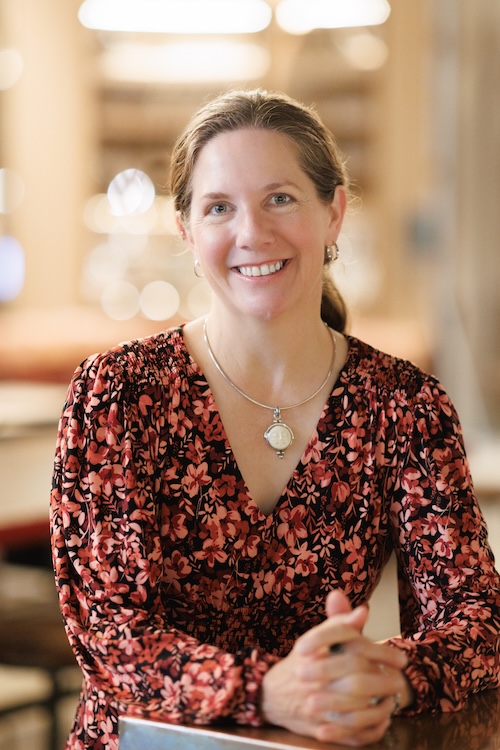
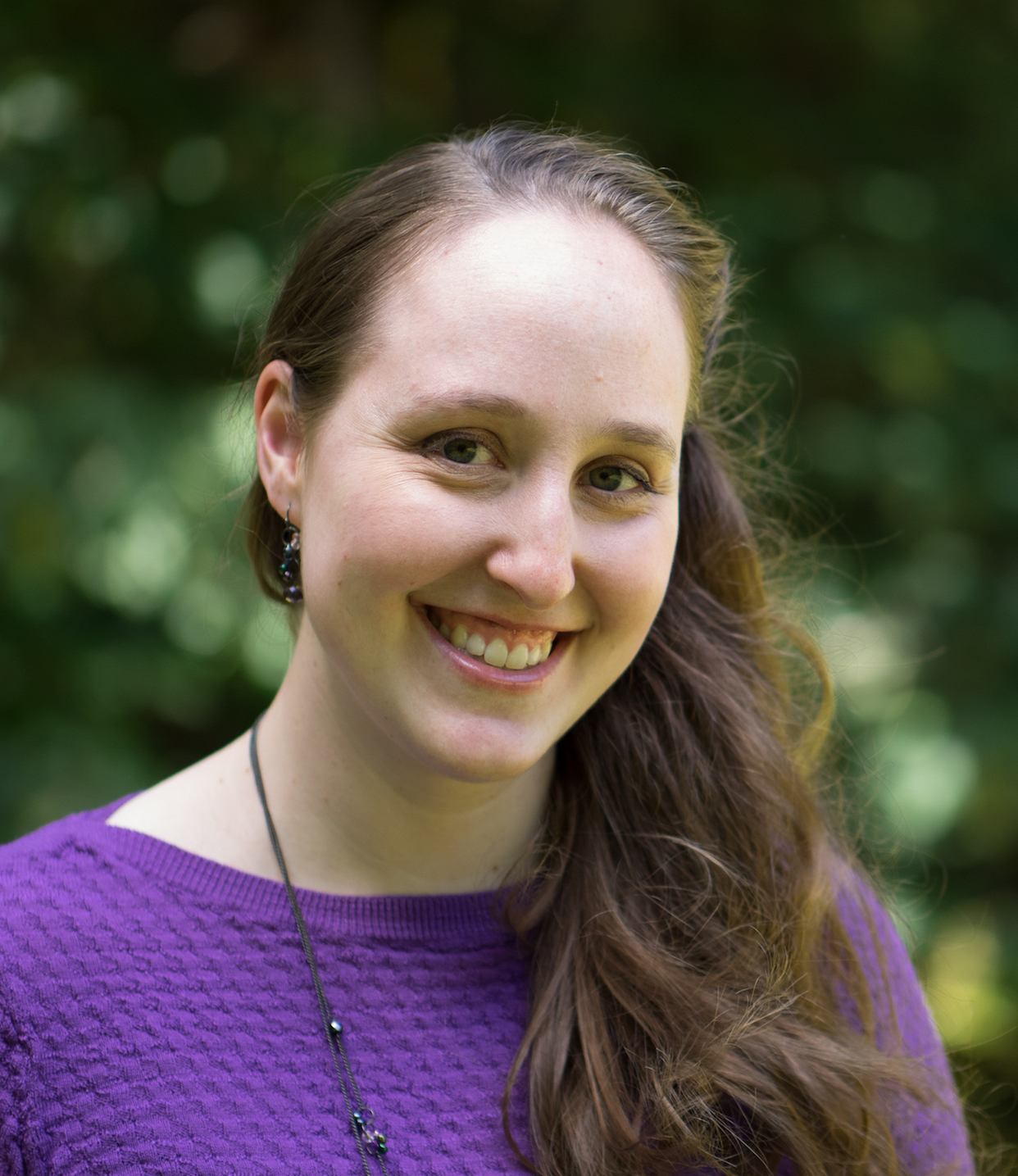
Kathryn Arnold writes fantasy and anything else that sparks her creativity from her home in Kingston, Washington. She currently earns her living as an insurance underwriting assistant, where she also creates marketing and web copy. When not writing, she plays (and teaches) piano and keyboard in a band (or two), and is working on starting a ministry team with her husband. You can find Kathryn at www.skyfirewords.com.