
Memory • Emotion • Body
Writing begins with ourselves,
our unique memories, emotions, and embodied experiences.
In this immersive weekend workshop and retreat, we will work with our memory, emotion, and body to explore what it means to bring the power of our unique experience to life in our writing. Held in a private, virtual room, this retreat is a safe space to explore the story you need to tell.
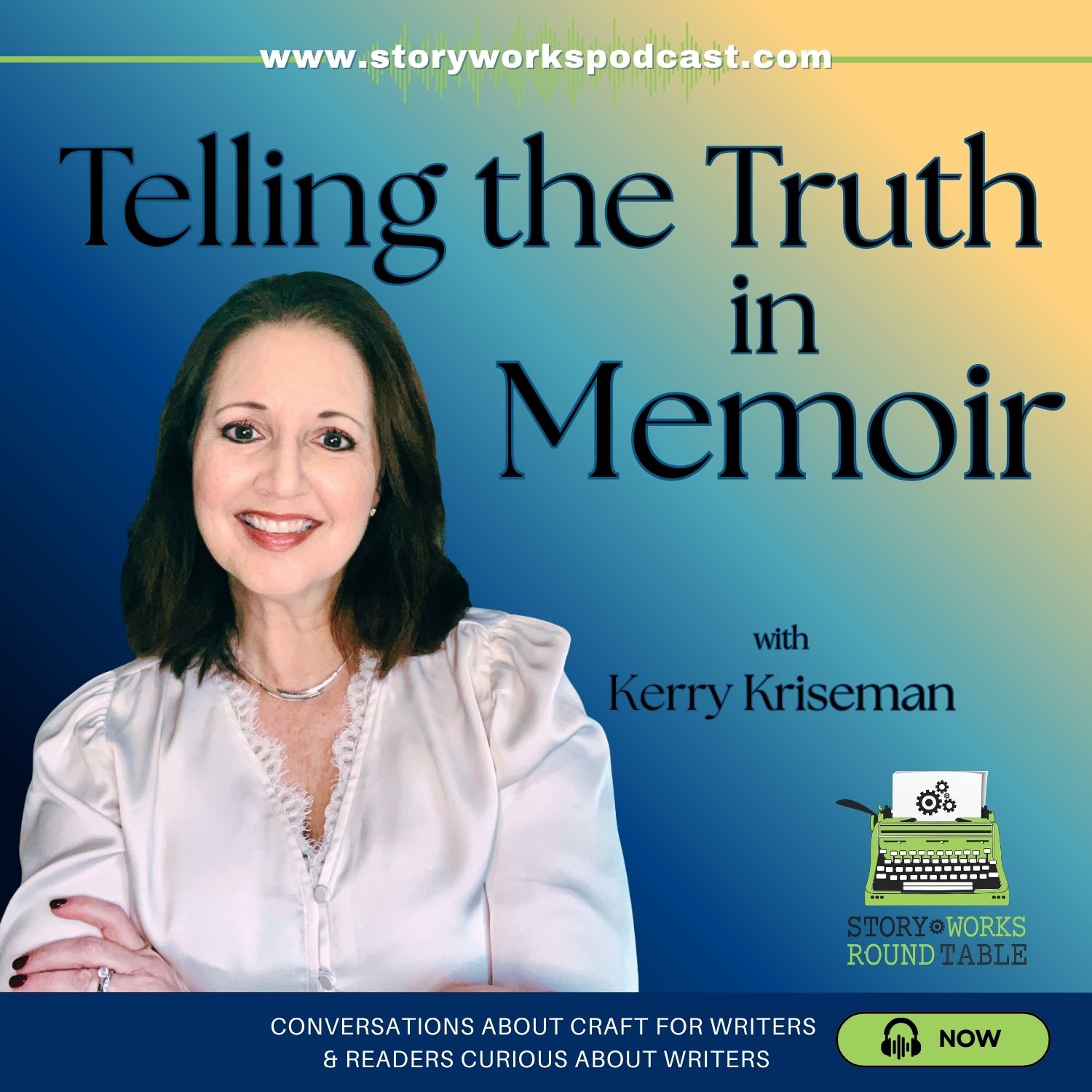
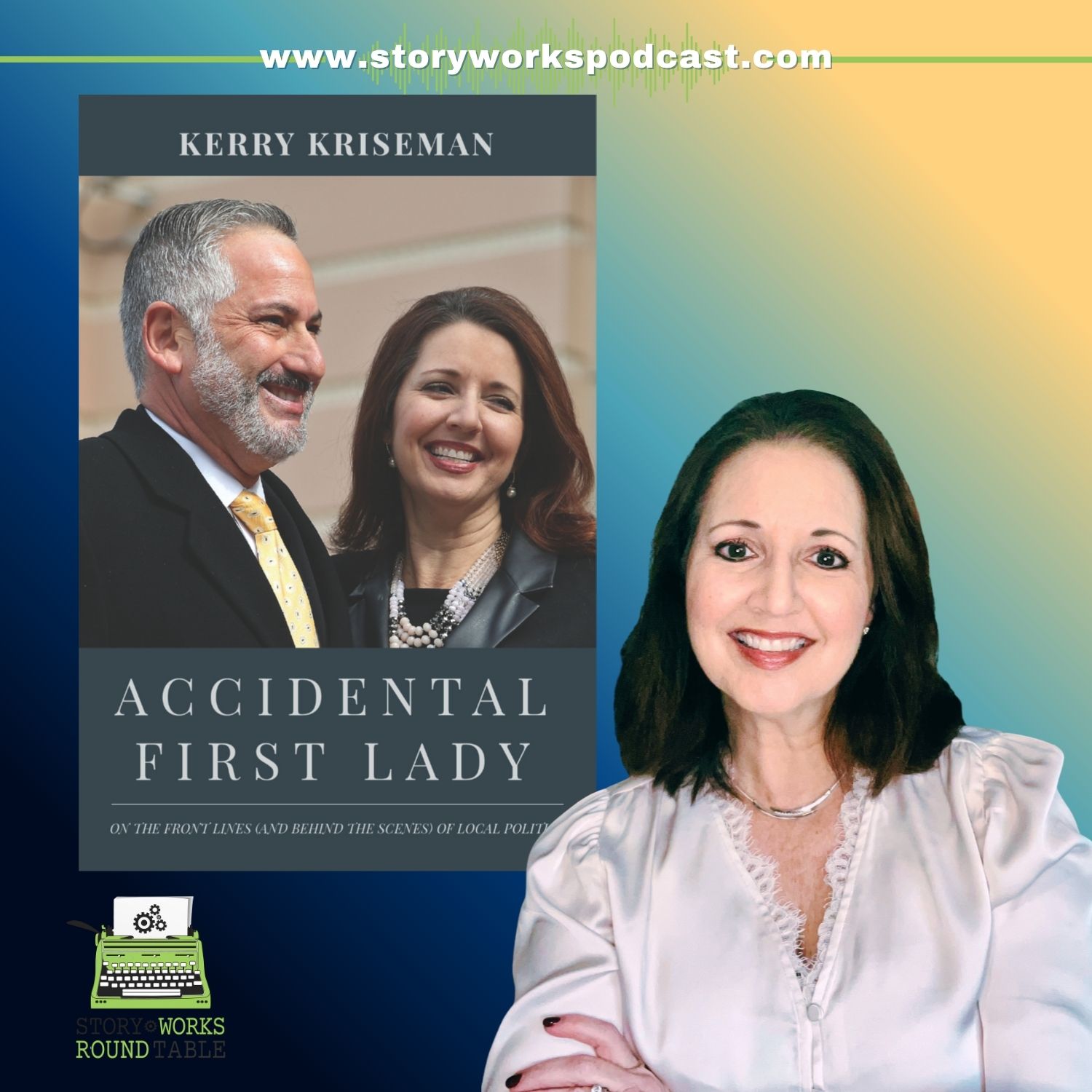
In this week’s episode of the Story Works Round Table, Alida and Kathryn are joined by Kerry Kriseman to discuss Kerry’s memoir, Accidental First Lady, which provides an unfiltered look at life as a political spouse. Kerry shares her journey from writing news stories in college to crafting her memoir, highlighting the challenges of overcoming imposter syndrome and the fear of telling the truth. Tune in for insights on memoir writing, the importance of mission statements, and the emotional hurdles of sharing personal stories.
AUDIO
Kerry Kriseman is the author of Accidental First Lady: On the Front Lines (and Behind the Scenes) of Local Politics, a candid memoir about her twenty-two years as a political spouse and first lady of St. Petersburg, Florida. With honesty, resilience, and humor, she shares her journey of finding her own voice while navigating family life, community expectations, and surviving cancer.
She helps others tell their stories through her online course, Make Memoir Magic, and teaches at the Osher Lifelong Learning Institutes at Eckerd College and the University of South Florida. A travel writer as well, Kerry brings destinations to life through stories that connect people, culture, and place. Whether guiding aspiring authors, teaching in the classroom, or exploring the world, she champions the power of story to educate, inspire, and entertain.
TRANSCRIPT
This transcript is AI generated. If you notice any inconsistencies or errors, blame the bot.
Alida Winternheimer: Hello and welcome to this week’s Story Works Round Table. Today, Kathryn and I are delighted to be joined by Kerry Kriseman. Kerry is the author of Accidental first lady on the Front Lines and Behind the Scenes of Local Politics, her memoir that provides a rare unfiltered look into life of a 22 year political spouse. A, St. Petersburg, Florida native, Kerry teaches memoir writing for local writing organizations, the Osher Lifelong Learning Institute and online where she teaches aspiring authors how to find the courage to bravely write, publish and promote their life stories through memoir. Welcome Kerry.
Kerry Kriseman: Thank you for having me. Happy to be here.
Alida Winternheimer: Thank you. Our pleasure. So tell us a little bit how you got started writing or about your writing life and your book, Accidental First Lady.
Kerry Kriseman: Okay. Well, I started writing in college. I mean, you know, I was a broadcast news major and you know, we had to write news stories. So I learned to write in 90 second increments and so it had to be fast and punchy and you know, what you would hear on the news back in the early 90s. So, and I enjoyed that. But while I was in college, I was also working at our local newspaper, which was then the St. Petersburg Times, now Tampa Bay Times. I worked in the newsroom, so really got a feel for what that was like. And right after graduation, I was offered a position in the marketing department. And so we were basically the in house advertising agency for the newspaper. They used to have a lot of campaigns that, you know, we worked with advertisers. So as a copywriter, you know, and, and again, short, quippy, you know, writing and, and managing the campaigns with the artists and, and so forth. So after, well, you know, I took time off from work for 10 years while my kids were little and, but I volunteered a lot. I considered that like a job. I treated it like a job. And I was on committees that required writing like communications and, or not communications, but community service. And I tried to hone those skills so that I was somehow always writing in some form or fashion. And then, in 2008 I went back to work for a local nonprofit that serves adults with developmental disabilities. And I was public relations manager. But in a nonprofit we wear many hats. Any, anyone who works in a nonprofit does. So that meant that I wrote all their social media posts, which was LinkedIn, Facebook and Instagram and industry type articles for arts publications and local art publications as well, and grant narratives. you know, non profits are always looking for grants and you know, depending on the grant they asked for certain things. And sometimes the narratives were multifaceted, you know, a few parts and needed more. They needed to be beefier than others. So that was that kind of writing. So that’s what I did before I wrote my book.
Alida Winternheimer: Okay. It’s very different writing sound bites or news or social media or even grants, even though it is narrative. And there is an element of storytelling that’s so different from tackling a book. Do you feel like it sets you up well for entering the space of memoir writing?
Kerry Kriseman: Yeah, to be honest, I think the practice of writing and, you know, in terms of grammatical and structure, you know, being pretty competent at it. And I’m not trying to say that I’m not the best writer, because I am not. But I was used to it. I didn’t just wake up one day and having never written and decide I want to write a book. And so I had that habit, at my job, where I was for 15 years at the non profit, I was the grammar person. They would bring things in. So I kind of had that sense anyway, just a natural sense. That’s what I excelled in. So it did, it did help. I. You know how you say you don’t know what you don’t know, and sometimes going in blind kind of can be an asset because it doesn’t hold you back, at least from my perspective, like starting to write this memoir, which was the first and so far only book I’ve written. you know, I didn’t, not. I don’t want to say I didn’t know what I was doing because that sounds like I didn’t plan, but I did. But yet I didn’t know as much as I know now about, you know, the craft of writing. And that’s the beauty of it. I think no matter how much you write, you’re always improving and there’s always ways to improve and people to, you know, look up to and be. they’re your unofficial mentors. Even if you don’t know them, you might just know them in the online space. So I just, I wrote and I was organized. I didn’t have an outline, but I had lists and I had my own form. I didn’t. I don’t care for outlines. So I organized things in a different way. So, you know, I just, I kind of went in blind, but it got me writing. You know, I wasn’t so worried about, am I doing it right?
Alida Winternheimer: Yes. Yeah, I love that. I think for anyone starting out, just doing the writing and being disciplined, being organized, being just, you know, committed to it and understanding it’s a process that’s going to unfold and grow the more you do it is huge.
Kerry Kriseman: Yeah, definitely.
Alida Winternheimer: Yeah. So give us just the kind of. The quick synopsis of your book before we dig more into the topic of memoir writing and transforming personal experience and, you know, dealing with so much, so much we’re going to talk about. But let’s set the stage by hearing a little bit about your book first.
Kerry Kriseman: Sure. it’s, as you mentioned, the title is Accidental first lady on the Front Lines and Behind the Scenes of Local Politics. And the book was Born in a coffee shop, basically. I mean, all this writing I’d done for work, I never, ever thought to. To write a book about the experience. And I think when you’re involved in something in life for any period of time, sometimes you’re so in it and in the moment, constantly looking forward. At least for me, you don’t really have that time to reflect. And you wake up one day and you realize, I’ve been doing this for a really long time. I mean, this started with a question, to my husband. A mutual friend asked him about running for city council in our city. And we’re the fifth largest city in the state of Florida, so it’s a decent sized city. And, that set off the 22 years that he was in politics. And, you know, it for our kids, our daughter was a year and a half and our son was born into it. That was their life. Their father was always elected to something. And for me, that meant embracing a life that I supported, but yet wasn’t in my plan. You know, I mean, I think if we’re in a partnership, whether it’s dating, marital, whatever, you support the person you love, especially if it’s something they fall in love in and want to do and, And. But for me, my journey was, you know, it evolved over those 22 years. It was not easy. I was not confident. I was naive. And politics changed a lot, which, as we know, you know, this, I know this is not a political podcast, but 2000 or 1999, when he first ran, there was no social media. And so there was really a lot to say. And. But I’d never considered that anyone wanted to know because I was happy to have him out there in the front and, you know, he was on the ballot, he’s the one on the news, he’s in the paper. That was okay. I didn’t seek that. And. But by 2017, people started asking, what is this like for you? It’s got to be hard, you know, because of the way politics in general was becoming. Everybody knew about something and had an opinion about it. And, you know, and so when I told a friend the true answer, you know, not an answer I’d give someone that, I don’t know, it’s not lying, but you kind of have a ready response when people ask you the same questions over and. And, But this friend that I was sitting across from coffee with, and I told her, when she asked, how do you do this? And she said, you should write a book. And now I know that a lot of people come to the idea of writing a book from their own thoughts and desires, but sometimes people see things within you or find an interest based on you that they bring it out. And nobody. I had never thought that anybody might be interested in wanting to know what that side of politics was like. So, you know, I bounced it around my head and, you know, asked a few. Not that you need permission, but I did ask a couple of trusted people. And when I say a couple, I mean two. And, they’re like, oh, yes, go for it. Definitely. So, you know, I think we all enjoy having that, enthusiasm around a project. And. And that’s what really gave me the impetus to write it. You know, I. I wanted the challenge. I liked the idea of a project. And, and the more I got into it, you know, I. The stories just. Just came. And obviously I had to. You can’t tell every story, nor should you, from a decade plus, two decades plus. So. So that’s how. That’s how I started writing Accidental first lady. And.
Alida Winternheimer: Yeah, so, yeah, that’s great.
Kerry Kriseman: Yeah.
Alida Winternheimer: I’m sure 22 years in politics gave you a ton of material to pick from. Now, one of, we always ask guests to give us topic ideas for conversation because we want to know what you’re thinking about and what you’re excited to talk about. And you mentioned, both overcoming imposter syndrome, but also the fear of telling the truth, especially when others are part of your story. And I think anyone writing narrative nonfiction, personal essay or memoir has to consider other people’s roles exactly in their stories. But then for you, you’ve got the added layer of being in the public eye. So, what was that like? What was it like when you were first starting out and you were thinking, am I going to do this? Can I do it? What kind of permission do I need? And such? Let’s go to the very beginning. And what was that like?
Kerry Kriseman: Well, you know, I had Written a couple of chapters and before I got too far into it I wanted to bounce them off. some trusted authors that I know. one, they’re, they’re both local and they’re both award winning and so I respected their work and you know, I got the endorsements and I know that they gave me feedback. So I know they weren’t just being nice and because these aren’t the kind of friends that I socialize with, but they are their friends in a different respect. So I knew that that relationship, that they would give me honest feedback. And the, the one of them suggested that I write this as a fiction and she’s a fiction author, but she suggested I write it as fiction. And to me fiction sounds daunting. I know that if someone asked me to write something fiction I could do it, but dialogue and that’s, I mean, but to others writing a memoir is daunting. So it just depends what your preference is. But when she suggested fiction because she’ how do you write this and tell the truth? That’s what she was getting at. And, and I just thought well, personally I can’t do that. But but it was great, you know, great feedback among other things that she gave me some suggestions about. so what I did was you know, I made that my, my so called outline which was chapter ideas, poignant moments and you know, like I said before, you can’t tell every story, nor should you. A lot of the stories where you had to be that, you know, you’d spend too much time setting up the context and does it really belong in there? So coming from the non profit background and having sat on boards, you know, when I would volunteer, I was always cognizant of the idea of a mission statement. And I know it’s not a unique concept but I think to a lot of people who want to write books, I don’t know that they, at least people I’ve talked to don’t know that about a mission statement. And while it’s not a requirement for your book, I decided that I needed a mission statement for my book because I knew where I was going and I, in terms of wanting to share too much, you know, it needed some, the flow, the proper flow without going all over the place and telling things that weren’t relevant but that were meaningful to me. And so I wrote my mission statement and that really helped. And having the mission statement was like a guiding light. So when you talk about writing about other people, especially when it’s a, you know, About a life in politics. You know, there is an added layer of sensitivity. You know, I think there always is, because a memoir, I always say it is about you, but you’re not the only person in there. You know, you don’t go through life in a vacuum. There are characters in your book and, you know, sometimes writers will ask about, well, family, especially if it’s a traumatic or particularly dramatic story. How do you write about family in a sensitive way? And there is, there are ways to interview your family members or at least, you know, talk to them about, here’s what I want to write and here’s why I want to write it. I mean, and that’s provided you have a good relationship. I mean, if somebody’s writing about trauma, which I was not, but I did consult one of my aunts because, I needed some. It was suggested by my editor to add some family background, you know, just about me. Like, who is this person? What was she like before politics kind of thing? And being a native of the city where I’ve lived my whole life, he and I, he was right. He thought that would be interesting to readers. But I needed to get some facts straight about our family and, you know, certain things that, you know, my grandfather did when he came to the city. But, going back, it’s like using interview techniques that, you know, to try to talk to the people and let them know where you’re coming from. But in terms of writing your story about people that aren’t your family but are going to be mentioned in your book, I think you have to lead with sensitivity and respect first and foremost. And asking is this snippet whether it’s the chapter, a paragraph, even a sentence?
Kerry Kriseman: Is it pertinent to the overall theme of the book? Does it need to be in here? Like, I’m gonna be honest and give you an example, because writing is a journey and every author goes through it. You know, in terms of editors saying, you take this out, you know, you need to expand on this, you know, the feedback, the constructive, sometimes the criticism and the feedback. And there was one chapter, I remember it was 5,000 words, which is a lot.
Alida Winternheimer: And.
Kerry Kriseman: And I mean, depending on the book. But it was, it was a lot. And it was about really one moment with one person. And it was something that, you know, was said to me shortly after my husband was elected to mayor. And that was the highest level that he achieved, you know, in his political career. And what she said floored me. And I thought this person was a friend and she was a Former first lady of the city as well. So to. For her to say it, what she said, face to face in the presence of my young son who was home sick. So I had to bring him with me to the coffee that day. But anyway, it just, stuck with me and I wanted to write about it, to share what I had gone through, not to throw her under the bus, but my editor and I talked about it. There was really no way to share all of that without doing that. And even if I didn’t mention her name, those who read it would know what it was about and who it was or not what it was about, because I didn’t tell people about the incident, but who it was about. And then he asked me, to think about it. He didn’t come right out and say, take this out, but he knew that it wasn’t reading well with the flow. And it ended up being not even a paragraph. The mention of this incident ended up being one sentence or two of, a bigger part of, of the story in a chapter. And so, you know, that’s, for me, that’s where the mission statement came into focus and was an asset because I could question myself and really, you know, put this story or whatever I’d written about this incident up on the, you know, stand, so to speak. You’re. You’re gone, or you’re, you know, you stay or you don’t go, or you stay or go. so that was, that was hard and that was a challenge. But, I’m glad that sometimes you have to. And you guys probably know this, I’m sure you do. You have to write so much to extract and whittle down what you really want to say. And, I’ll tell you about one more incident that I really grappled with in the book. was unfortunately, in that last election was 2017. You know, it was shortly after, I think, the incident in, Charlottesville. And, every. And it was everyone’s emotions were heightened over this particular election that my husband was in. And the kids at my son’s school, he was a freshman, were being particularly unkind, at the locker, I mean, that’s where, you know, this vitriolic banter, if you will, trickles down through, you know, from adults to children and out in the world. But, anyway, there was an anti Semitic attack, not physical, but image wise, against my son. And it wasn’t so much that I wanted to tell it about the kid because it was taken care of and, you know, he was reprimanded and you know, my, my goal was does he learn from this so he can move on and never do it again? You know, he doesn’t need to be arrested. So but do I put it in the book? Because at the time I struggled with as a mother, how do I serve my son, but how do I hold this kid accountable? And you know, keeping it quiet felt disingenuous to my son, but I didn’t. Having it in the paper would not have served anyone. So there was a lot that I as. And if this was anyone else, I don’t know. And it was shortly, but it was like a week before the election, the primary. So everything was, you know, my husband was in the paper every day and then this would wind up in the paper. So I, I ultimately wrote about it, but I wrote about it from a place of respect.
Alida Winternheimer: See.
Kerry Kriseman: And it has to be like less on what this kid did to my son. That’s not what it was about, is what did it mean to me and how did I, navigate that as a quasi public figure? You know, I’m not going to elevate myself to, you know, the elected official public figure, but in this community and a mother. So m. You know, I think going back to. And that’s when you lead with sensitivity and respect and then a reminder to yourself is what am I really trying to say in the overall context of the book? And if it fits, keep it. And if it’s relevant, but if it’s not, it doesn’t need to be in there.
Alida Winternheimer: Right? Yeah. Yeah. I love that mission statement idea as a sort of measuring stick, you know, holding up the, the section of text to that mission statement and asking yourself if it belongs in the book or not based on that. And what a great way to get clarity around your writing and the direction you’re taking your story in. yeah. That’s great. So were you afraid to tell the truth at any point? I just in that suggestion you wrote for us about topic. You’ve got the fear of telling the truth.
Alida Winternheimer: Such a great phrase. I think so many of us do have. We hold that fear. We think about the stories we want to tell and then what will happen if we do.
Kerry Kriseman: Right.
Alida Winternheimer: Happening if we don’t, you know, is the time who’s going to react to this, who might be hurt or come back at us? So yeah, I wonder if any.
Kerry Kriseman: I mean, especially having never written. I mean, you know, I just was even thinking that old imposter syndrome. Does anybody care? What are people going to say? Do I deserve to write this book. I mean, all of those questions would float through my head at period, at various times. I mean, they come, and then you get over it and you write. And then all of a sudden, let’s say you get closer or you hand it over to an editor, and then you’re like, oh, my God, what did I just do? You know, somebody’s going to read this, you know, kind of thing. But the fear, it. Yeah. And you. You have to work through that. I think it’s natural. And I think if you didn’t have the fear, or some level of fear, I mean, I don’t think you need to be so fearful that you don’t write. But I think some level of fear is healthy because it causes you to examine what you’re sharing. Like I said before, like, is it relevant? Does it need to be in the story? And am I telling this in a way that shares what I went through from a memoir perspective? What I went through and how I navigated it, how it changed me? am I sharing it in a respectful way? I. I tell people sometimes that you always have to tell the truth. I mean, that’s a given in memoir, but how much you want to tell is up to you. And that doesn’t mean you’re. You’re lying. But if you feel you need to share something, a certain part of an interaction, a relationship or whatever, an event, you know, to. To get through the story and, you know, the narrative, then share it. But, you know, make sure it’s circling back to you and. And you’re writing in a sense that your reader knows this is why she shared this, because it meant this and it did this to her or it, you know, taught her about this. You know what I mean? So.
Alida Winternheimer: Right.
Kerry Kriseman: you know, just, I guess it goes back to that, leading with respect. It doesn’t mean holding back your story, but it just means, you know, I think that fear is natural. I mean, I always say writing is an act of bravery. No matter. And I mean, not the average social media post like, I went on vacation or here’s my dog, you know, But I’m talking about anytime we put our words out there, even if it’s a substack post or if you’re on substack or any blog, if you, you know, you’re putting your words out there, and chances are someone might not like them, someone may not care, and that’s okay. I may love them. So, you know, I just think, you know, writers, you know, to. It’s one Thing to keep it all in here. And that’s okay if that’s what you want to do. But for those who want to share and feel like have a reason to share is. Is, is brave.
Alida Winternheimer: Definitely. Yes. And I think when we do decide to share our stories, the act of sharing them, of committing them, forming the words, putting them on page, crafting the prose, all of that, then we face a new set of challenges. Right. Instead of just having that stew of memories or experiences in our heads now, you know, there’s. Some of it is reliving, some of it is. So we’re facing a whole new set of challenges, putting those experiences onto the page, shaping them into art. I wonder if you have any thoughts about navigating the emotional challenges of tackling this act of telling our story.
Kerry Kriseman: yeah, I mean, it can be very emotional because I think a lot of people operate in that forward motion. We’re always projecting what’s next, what do I have to do tomorrow, what do I have to do the next minute, What. And I. You know, I think we spend time in reflection, but not in terms of that deep reflection that it takes to write a memoir or especially if you’re going back a certain number of years, and it can dredge up emotions. And I think. I think you probably have to. If they’re difficult emotions, I think you have to feel them, obviously, let yourself feel them, let yourself remember. And if they’re not good or if they trigger something within you, it’s. It’s like you. You just have to move through it and, you know, even if you have to write your way through it only to come back and, you know, pare it down and.
Alida Winternheimer: And.
Kerry Kriseman: Or throw it away or something, because then you might get stuck. If you get upset about a certain memory, which is totally understandable. You might think, I can’t do this. And. But you can. You know, it’s just getting through it and, you know, and reminding yourself why you’re doing it and maybe reading that mission statement again and reminding yourself, and maybe even using. And I’m not an expert on this, but using some imagery, picturing your book on a shelf, picturing your readers, like, thinking, who’s going to read this book? You know, who would like this book? Because it’s about you, and it has to be for you to. To start writing in the first place. But ultimately it’s for other people. You know, I like to say for people, your memoir will inspire, educate, and entertain. It’ll do more than that, but it’ll Definitely, I believe, do all three. And, you know, because we all come to books for various reasons. So, I just think it’s. It’s. It’s. It’s not simple, but it is kind of as simple as letting yourself move through it and maybe taking a walk if you need to, if it’s, you know, because some people do write painful memoirs, you know, about maybe just difficult subjects, let’s say, you know, illness or abuse or abandonment. And, you know, there’s all, you know, so compared to that, mine was not difficult. But it’s still, you know, I think if you’re gonna go back to certain memories and really feel what you felt at that time, it can make you feel a certain way and, you know, maybe walk it off or, you know, change your environment and. And it helps you get through it. I think when you can step away from the page and let, you know, your brain rest from the writing and, you know, kind of reset, I think it helps.
Alida Winternheimer: Yeah. Yeah, definitely.
Kathryn Arnold: I really, like. I’m kind of getting this picture of you as a writer, like, writing all of these things and then curating it into almost like a. A journey. Differently than maybe creating an outline of a journey and then writing to it, but like, creating this, you know, collection of things and then curating it down. And I really like that concept of just write it anyway and then decide how much of it goes in. Would you say? How much did you keep versus throwing away in terms of the amount of words that you put on the page?
Kerry Kriseman: I don’t think it was half and half. I mean, I think I. You know, I. I think the certain chapters took a different shape. You know, what. What may have been a certain theme or title changed. And then, of course, I added, you know, I had not written a foreword yet or preface or, you know, the introduction. I wrote that and then reshaped that beginning part that my editor suggested, you know, to start off the story and. And, you know, then where I could kind of, you know, and when he had me do that, it actually reminded me that without realizing it as a child, in school with projects, I was interested in politics. I was interested in history. I was a good writer in grade school, you know, in terms of the kind of grades I got. So that was a great reflection for me, because I hadn’t done that. So, you know, it wasn’t like I wrote a whole lot and threw away most of it. I. You know, I talk about that one chapter that I pared down and, you know, and really. And that was really the only one. I’m not saying the book was completely complete when. When I gave it to the editor, but it wasn’t. It was in pretty good shape, which surprised me because I was. I was ready for whatever was going to come back to me. You know, I wanted. I obviously wanted to publish, but I wanted it to be what most people, I would hope, considered good, too. I wasn’t going to publish just to publish. And, you know, I wanted it to, you know, hopefully be something that I would hope people wanted to read and would be coherent and they could sense a theme, or different themes. There’s not just one theme. And that’s the beauty of any book, is people get different. your readers are going to get different things from it. So maybe 75. 25. 75. I kept 25, you know.
Kathryn Arnold: So at what point in that process did you hone your mission statement? So, like, did you start writing and. And then have this bulk of things and then create the mission statement, or was the mission statement fairly quick?
Kerry Kriseman: it was probably a few chapters in, and they were early chapters because if I look back, they don’t really reflect completely what the book it turned out to be. So, But, yeah, I kind of realized where, like I. Like I said before, where I would go down. I thought, I’m going to go down this road and I’m going to spend a lot of time, you know, just writing things because I think they’re fun, you know, or I think they’re a good moment or something like that. But are they pertinent to the book? so it was pretty early in, you know, maybe after two or three chapters were written. And, you know, and plus, with nonfiction, you guys know this. I’m sure you can query agents, without having the whole book written. You know, a lot of times they just want. It depends. They all want different things. Some might want a chapter, two, just even a chapter list. And so I was querying also while I was writing. Whether that’s good or not, I don’t know, but that’s what I was doing. And so based on kind of what the query process was and some of the things that certain agents were asking for educated me. So I think in my case, it was kind of good because it taught me a little more about what should be and how it should be organized. And that’s kind of, I think, also helped prompt me to. To take a step back and think, okay, I need to, you know, figure out what this is really going to be about, because I actually had Started writing the book about. I laugh and I’m not gonna. I shouldn’t laugh because it’s a process. it was. It was going to be a How to for Political Spouses.
Alida Winternheimer: That’s probably a great book, though. You know, I bet a lot of people. Yeah, well.
Kerry Kriseman: And, you know, that’s what. Because one of the people I bounced the idea off of was, our media guy. He’s the guy that did our commercials. And, you know, and, and, and by. After five campaigns of working together, we’d become friends. So is my husband. And then I bounced it off of him as well. And he’s like, I. Of course he loved that idea. He goes, I’d love to have something to give to spouses. I’m like, okay. So then I start writing and. And I realize a lot of my, suggestions or advice was similar. You know what I mean? It would be. And then I thought in terms of. I didn’t want it to be wholly sexist in terms of how do you dress and how do you. I’m like, no, you know, what do they want to know? I mean, obviously I had some lessons on how to navigate social media and what I would do, but then I thought, just because of what I would do doesn’t m. Make it right, you know, or wrong for someone else. There’s spouses, I’m sure, men or women who don’t care what anyone thinks and how it might affect their spouse’s administration, campaign, what have you. So I. I abandoned that idea. So again, it’s. It’s just like anything that you write. It’s a process. It starts out as one thing and becomes something else. But I think to get to that process point, you have to start writing to figure it out. So.
Alida Winternheimer: Yeah, yeah, no, I agree. You definitely need to start writing to help figure it out. and what an advantage to have your mission statement set so early. It doesn’t sound like you had to change it or pivot much once you get going.
Kerry Kriseman: I looked at it, but I didn’t really. I kind of stuck to that. So, you know, yeah, it worked for me. And I think at least it can be a guiding light and it. Understanding that it could be fluid because for some people, it. It could change the more you. They write, depending on their particular story.
Alida Winternheimer: Right. Would you share your mission statement?
Kerry Kriseman: Sure. I’m trying to think. I haven’t looked at it in a while. I want to tell a story of an average political spouse who never envisioned a life in the public eye. I want to tell the story from a place of honesty, transformation, naivete, and what I learned about crafting my own brand apart from my public figure husband.
Alida Winternheimer: That’s great.
Kerry Kriseman: Yeah.
Alida Winternheimer: Thank you for sharing that. Sure. Yeah. So, yeah. Wow. I feel like we could dissect it and people would get so much out of it, you know, because you start with telling the story, the naivete, the vulner. Right. The authenticity. so you’ve got kind of what the reader will get out of it, your stance within it, your goal for the book. Nice. Do you use that as a teaching model when you do workshops?
Kerry Kriseman: Yes, I do. And, and you know, a lot of times I’ll, I’ll share that. It’s, it’s in my course Make Memoir Magic, which is my online course. But I do share it. when I teach in person, I usually, I teach first and you know, depending on the audience, you know what I’m going to teach. You know, I have this, three part process called the Memoir blueprint, which I did teach once, which is how to find your core story. Because a lot of people don’t know what they want to write about. They know they want to write a memoir, but they don’t know what part of their life. And you know, in teaching in the Osher Lifelong Learning institute, it’s over 50 learners now. I’m over 50, but most people my age are still working. So when I, it’s mostly 65 and older. So they’ve got vast life experiences. And so I, I, and then I follow up afterward. I share, you know, because I connect with them after, thank them for attending and then I share the mission statement template that I have if they want to use that in their writing. So I do, I do use it. And that feedback saying that it’s helpful. Now, it may not be for everyone, everyone may not need it, but if you’re really swimming around your ideas and writing in circles or however you want to describe it, it can be helpful.
Alida Winternheimer: Yeah. Yes. Yeah. And you mentioned people don’t always know what they want to write about or what part of their life they want to mine for their memoir. And you know, I’m sure with your particular story you have a lot of documentation because of your husband being a politician, but at the same time, you’re looking at a span of 22 years. So was it hard to write your own story? You know, you might have documentation of events and facts and places and dates, but then if you’re going back in time, m, were you keeping journals at that time, do you. What were you using to, to bring everything to life?
Kerry Kriseman: I hate to say it, but no, I wasn’t. I remember when my sister in law, when he got elected to mayor, in 2013, she said, oh, are you going to keep journals? Are you going to start a blog? And I was so programmed and this was me. Nobody did this. This was just me and my personal tendencies to serve and support and, you know, not to sound like. And nobody did that. That’s me. That’s just my tendencies to want to do that and lift others up. And in doing so, I thought early on I’m like, well, why would, why would I do that? Why would I? Who cares? It’s him, he’s the one. You know, and he didn’t do that to me. Like I said, my husband never thought I’m more important than you. He’s like, we are a team. I can’t do this without you. And so it was a beautiful experience in that way. So this was all my perspective and how I envisioned myself. And I didn’t stay locked away behind, you know, closed doors or anything like that. But I, I also didn’t, you know, put myself out there as much. So, you know, I did not keep journals. And, and to. When I did first start writing and like I mentioned, I queried early on and maybe I should have written more. I, I may, you know, if someone asked my advice on that, I would say maybe don’t quote query so early. But it gave me, the agents that did write back, gave me some wonderful feedback. And, and it was that at first, and this was a change for me. I was writing about my husband more than myself because that was just my tendency to, you know, it’s him, he’s the one in the spotlight. He’s the one, you know, and I had a job. It wasn’t like I, I didn’t do anything of my own merit. but it was. So that’s again the transformation. That’s how I, and I didn’t even realize I was doing that. And so, you know, I did. I had to start thinking of everything I wanted to say. Was it through my lens. Of course I had to talk about him, you know, because I was writing because of what he decided he loved doing and the position that I was put in. So, so yeah, that was a real, you know, eye opener for me that I was not, you know, at first writing, story and nobody, if, if somebody wants to write a biography for him, they can do it if he Wants to write. He can do it, but I don’t need to. It was supposed to be my story, so that I, you know, had to go back. And then from then on, and you become more comfortable, you know, I, you know, talking about yourself. Because that’s the other thing. When you people start to write a memoir, we’re like, oh, my God, I have to talk about myself. And again, does anybody care? And who am I doing this? You know? So.
Alida Winternheimer: Yes. Yeah.
Kerry Kriseman: Period. It’s a growth process, for sure.
Alida Winternheimer: It is, definitely. And don’t feel bad for not journaling. You know, I know when I had my baby, I was like, and I’m gonna write down everything, and I’m gonna keep the journal and the baby book and the. And no, no, that lasted like a day. Forget it.
Kerry Kriseman: Yes.
Alida Winternheimer: And that was before social media, so I didn’t have a phone camera to capture every moment. It just. They. They went off into the. Either.
Kerry Kriseman: Right, Right. I know. And we’re all. We all survived, right?
Alida Winternheimer: Yes.
Kerry Kriseman: Yeah.
Alida Winternheimer: Yeah. Here we are. Yep.
Kerry Kriseman: Okay.
Alida Winternheimer: Oh, goodness. What else? Catherine, do you have any questions percolating away?
Kathryn Arnold: No, I’m just really enjoying this. You have a very good job. You do a good job of presenting it very clearly as something, even as a fiction writer, I feel like there’s really good ideas of being able to, you know, organize yourself and think about telling the truth, because there is truth and theme and what you want to talk about. And so, yeah.
Kerry Kriseman: Thank you. Thank you for that. I appreciate that. Thank you.
Alida Winternheimer: So, yeah. Do you have any final thoughts for us, Kerry, on memoir writing or anything we didn’t touch on that you would love to bring to the conversation?
Kerry Kriseman: you know, I think you. You covered a lot, and I loved some of the questions that you asked because it made me reflect. You know, I started writing this in 2018 and published in 2021, so it’s a little removed, so to speak. And I’m. I’m proud that people are still buying the book. I mean, that really makes me happy. And that never gets old. I did record an audio version, so the files are ready. I just need to upload them myself. But I went to a studio locally, and that was a fun process. And I trend toward audiobooks myself because I don’t really read at night, and that’s mostly just when I relax, so I listen in the daytime when I’m driving or walking. But anyway, I’m excited about the audiobook that’ll be coming out soon. And, I’m working on book Number two with my husband. And it’s not about politics. I feel like that’s like the tagline and it’s not about politics. But, we’re, we are an interfaith couple. he’s Jewish, I’m Catholic, and we, decided to raise our kids Jewish. And I, you know, back when we were, we’ve been married 33 years and you know, there wasn’t a lot of, you know, information out there. And now there’s just a lot of information about everything, which is bad. But we have had people, and we are by no means experts. We are just people who’ve been married for 33 years that have navigated, you know, two faiths, but raising our kids in one faith. When people told us it wasn’t possible if one of us didn’t convert to the other’s religion. And, and some do choose to convert, but you know, because we’ve, you know, are being asked about it sometimes by younger couples that are in interfaith relationships. And a lot of it is Jewish, Catholic. It’s not always that way, but it seems that if a Jew is going to marry outside their faith, it’s going to be to a Catholic. And anyway, we decided we’ll see how this goes. We started writing a dual narrative. So in terms of how it plays out, you know, we have a chapter guide and it’s again that fluid because my husband just came to me, he’s a little bit ahead of me, but he says, I don’t know what to write about this. I’m like, well, you know, you don’t have to necessarily, if that doesn’t seem like a fitting chapter, we don’t have to include it. You know, kind of gave ourselves something to go with, to start with. But you know, his perspective, my perspective, but also that of, there’s a concept of memoir plus, I don’t know if you’ve heard of that. it’s kind of like where it’s your memoir but you inject expert opinions, you know, research maybe, you know, and interviews with other people. So I’d like to include some of that in our story as well, from rabbis, priests, other interfaith couples, you know, where it’s mostly our story, but it’s, it’s not just a story of a 33 year marriage. you know, but so that’s what I’m working on now with him. But separately we haven’t read each other’s work yet. You know, we’re just writing and trying to get that, get some of that done, and then we’ll go from there and see, you know, what we do with it. Maybe agented representation. I don’t know.
Alida Winternheimer: We’ll.
Kerry Kriseman: We’ll try to pursue that, but we’ll see. And, So, yeah, you know, I’m just, hoping to reach as many people as I can who want to write their memoir, because I. I know there’s a lot of books out there. Every Tuesday and other days of the week is pub day, you know, for authors. And it’s. It’s a beautiful thing. And I think, you know, the publishing landscape has made it really nice, you know, with self publishing, for those who go that route to make it more accessible, you know, because there are stories that deserve to be out there and let the public decide what is good and what is not and what sells and what doesn’t. but with that said, for people who want to write their memoir, I believe that if you want to tell your story or a story part of your life, you know, it’s not your entire life that you absolutely should. you know, and then there’s, of course, ways to do it, and I help aspiring authors with that and because I believe our stories are valuable and they connect us. And I think we all need more connection these days. And I think when someone can see themselves in our story, it can create empathy, it can satisfy a curiosity. You know, it’s. I’ve had people read this. Men and women have read my books. So even though I’m a woman, I made sure, without not telling, without being inauthentic, that my story would appeal to men as well. And, you know, I’ve one note of feedback I got from a man, probably in his early 60s. He’s like, I loved reading your journey from a relationship perspective because I have daughters who are in their early 30s who are not yet married, and I loved seeing that part of your story. So you never know why people are going to read your book. But, I believe that our stories are valuable and they deserve to be told. And I always tell people, your readers are waiting, so what are you waiting for? and I’m an average person who did. So that’s the thing. It’s one thing. And celebrity memoirs are great. I’ve read them and enjoyed them. But I. I believe that the average person has something to share as well.
Alida Winternheimer: Absolutely. Wow. Thank you so much. Where can our listeners find you?
Kerry Kriseman: you know, I’m. I’m on lots of social media. I have a, I have a Facebook group for aspiring authors. It’s called Memoir Magic for Aspiring Authors. I’m on Instagram at Kerry Christman and my website is kerrykriseman.com and there’s a information about my course, Make Memoir Magic. But there’s also, a tab, tools for Writers. So, you know, some free resources for, writers and aspiring authors. But yeah, and you know, I’m on LinkedIn and you know, but those are the other, the main ones if people want to find me. And you know, through my website, if anyone wants to reach out to ask a question about my course or, you know, I do one on one consulting as well. I’m, I do workshops, you know, that, for groups, you know, that might want a presentation, they can contact me through my website. So.
Alida Winternheimer: Wonderful. Yes. Well, thank you so much for joining us today, Kerry. We have really enjoyed this conversation.
Kerry Kriseman: Thank you. I have too. And it was lovely to meet both of you and I appreciate you having me on and you know, just the opportunity to do this, something I’m passionate about, so.
About Your Hosts
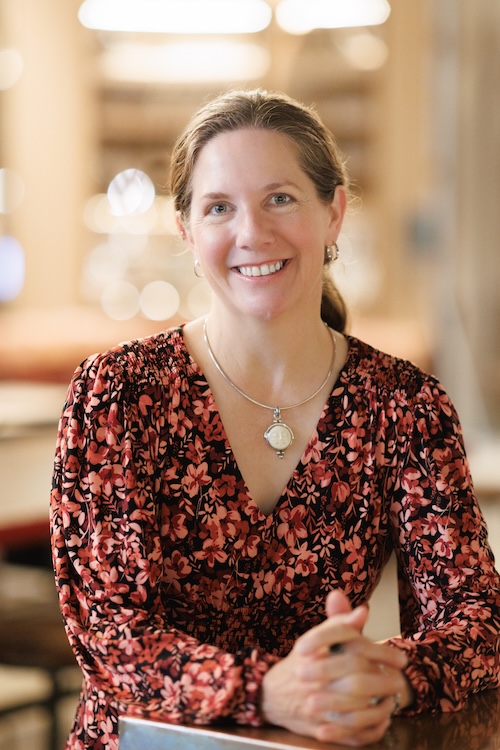
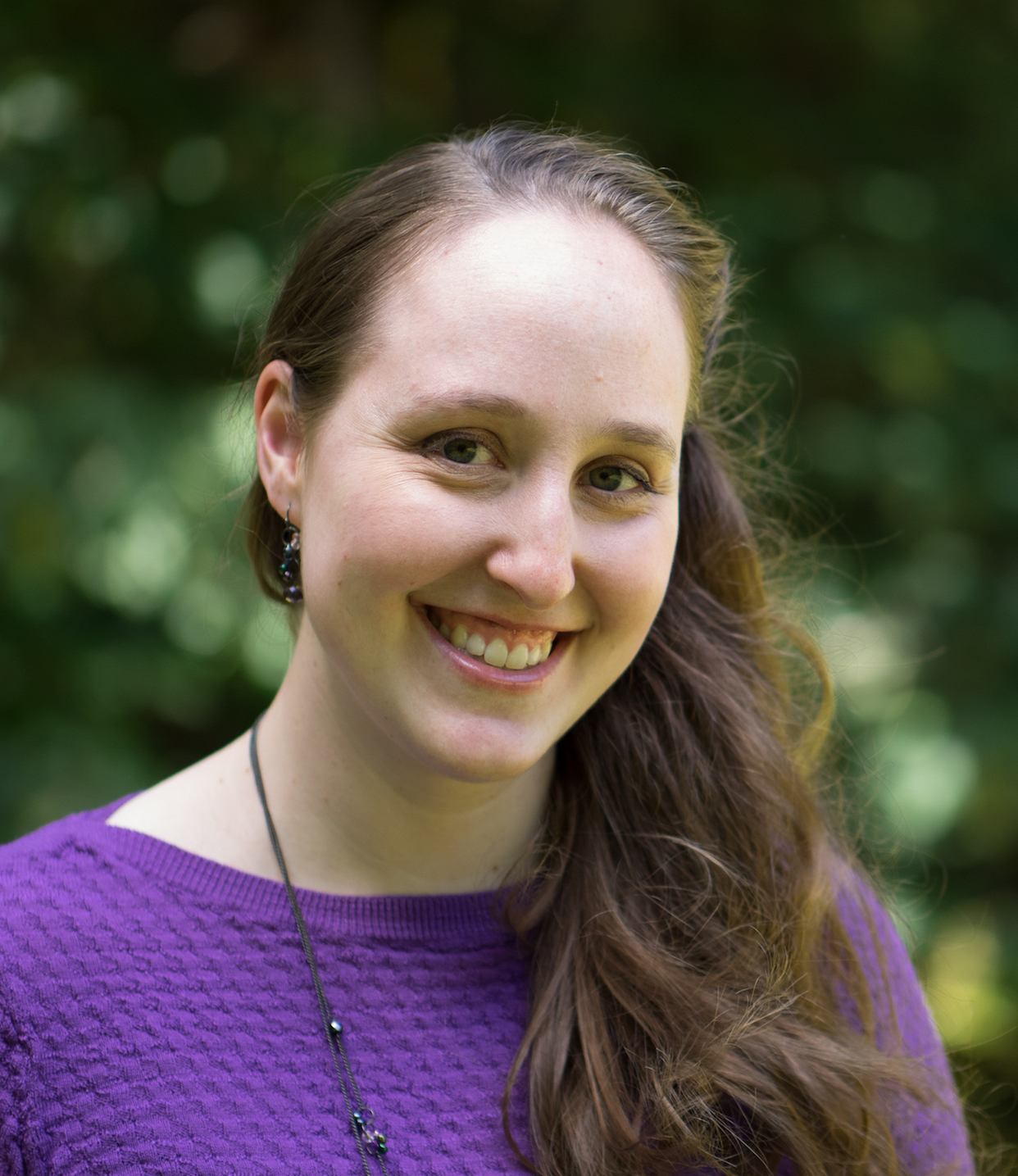
Kathryn Arnold writes fantasy and anything else that sparks her creativity from her home in Kingston, Washington. She currently earns her living as an insurance underwriting assistant, where she also creates marketing and web copy. When not writing, she plays (and teaches) piano and keyboard in a band (or two), and is working on starting a ministry team with her husband. You can find Kathryn at www.skyfirewords.com.