
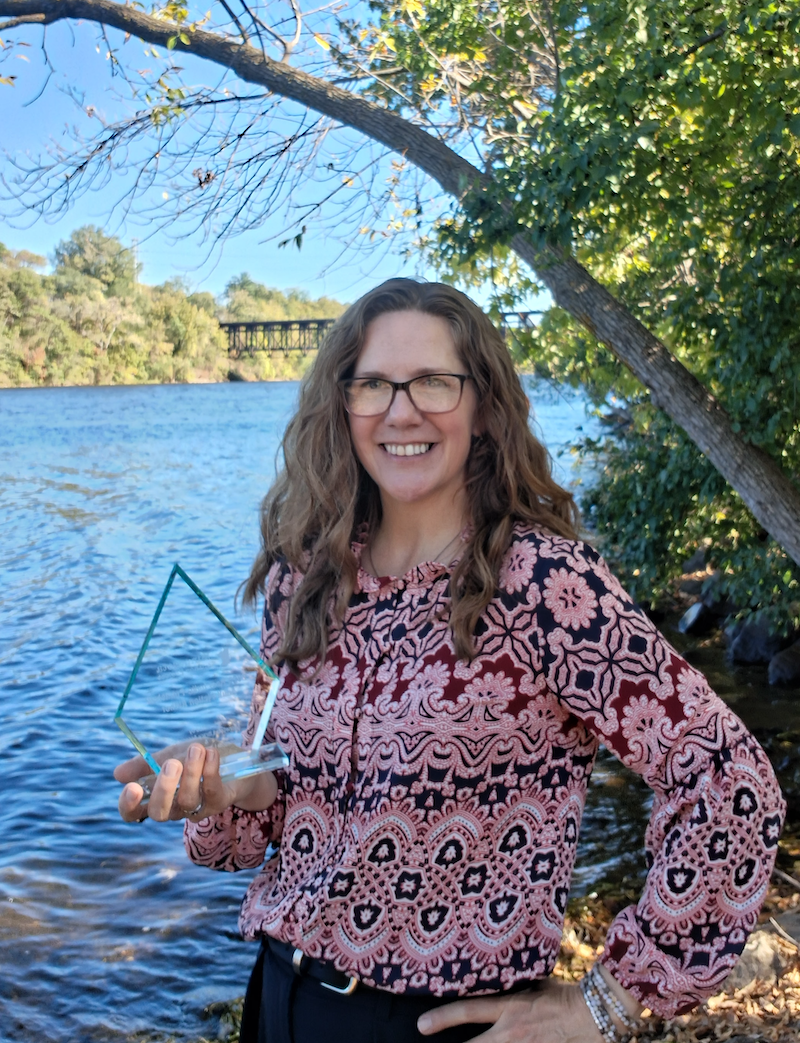
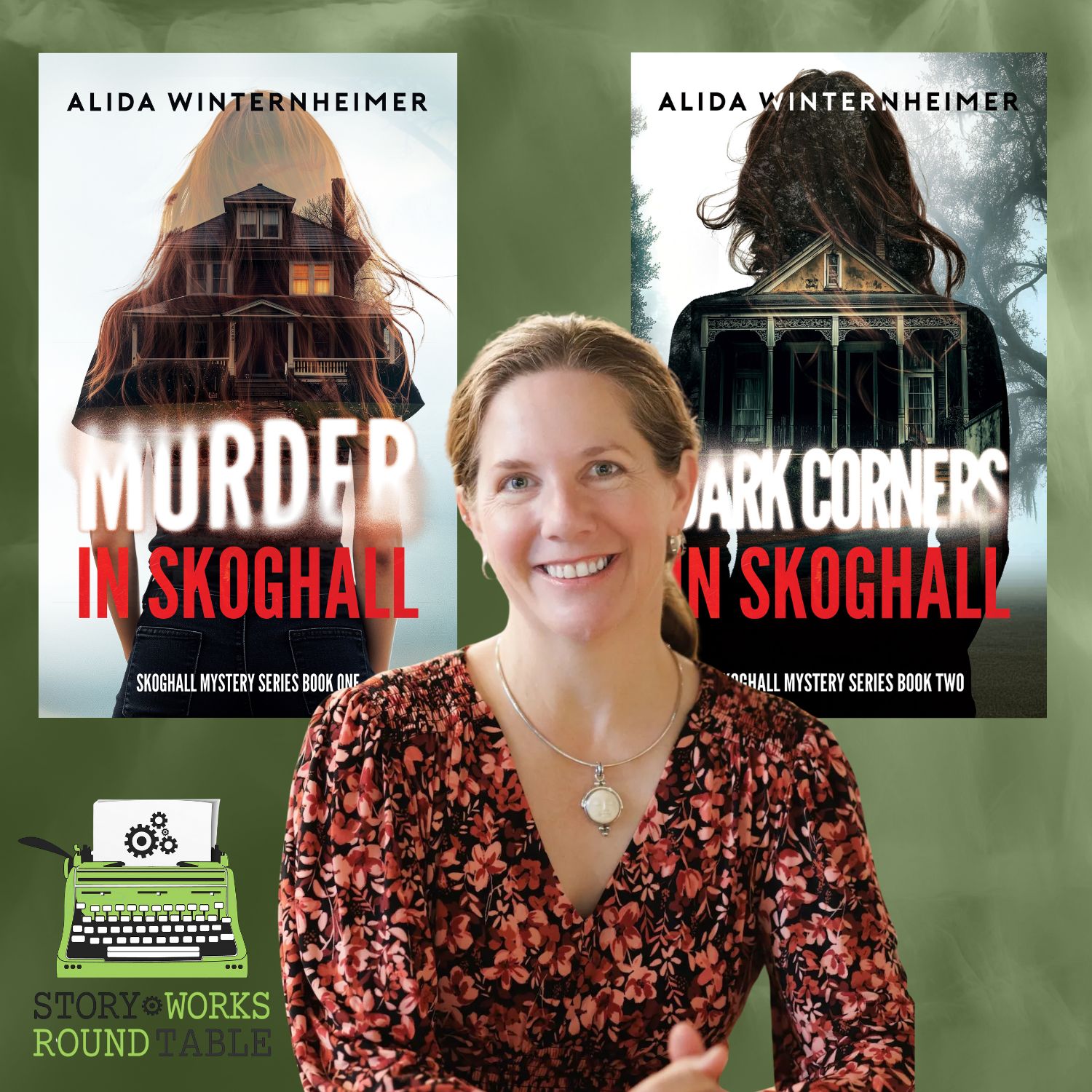
On October 10th, 2025, Alida was presented the Minnesota Author Project 2025 Adult Fiction Award at the Minnesota Library Association Conference in St. Cloud, Minnesota.
Librarians across the state voted for Murder in Skoghall, and Alida could not be more honored by, or proud of, this recognition.
With sincere thanks:
“Librarians serve readers with personal, unbiased recommendations, and this award means so much to me.
Before I was a writer, I was a reader. Libraries are a tremendous asset to every community. I can’t imagine life as a reader – let alone as a writer – without them.”
– Alida Winternheimer
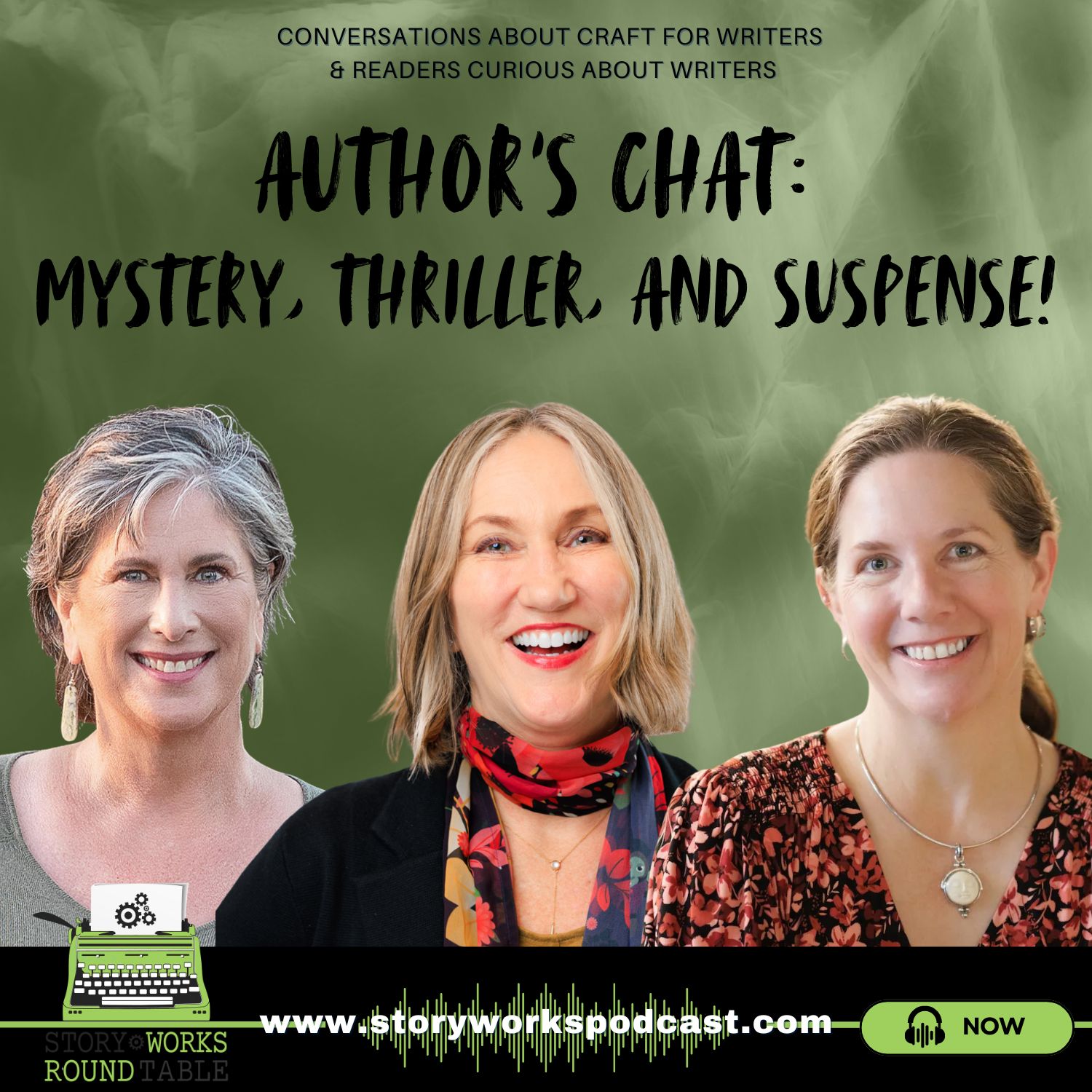
In this episode of the Story Works Round Table, Kathryn takes the host position and Alida joins our Author Panel as we talk all things mystery, thriller, and suspense. Join us for an amazing conversation with authors Kathryn Dodson, L.L. Kirchner, and our own Alida Winternheimer. We talk about why each author chose to write in these genres, why they write female protagonists, the use of plot and pacing to drive suspense, and the intricacies of writing a villain. Packed with craft, and exploring the intricacies of writing these books, this is a must-listen for any writer!
AUDIO
TRANSCRIPT
This transcript is AI generated. If you notice any inconsistencies or errors, blame the bot.
Alida Winternheimer: Hello and welcome to this week’s Story Works roundtable. Today I get to take one of the guest spots and Kathryn is going to be our host. So Kathryn, over to you.
Kathryn Arnold: Oh my gosh, I’m so excited. Today we have, an author panel, where we’re going to be talking all things mystery, thriller, suspense, crime thrillers, crime, suspense, all the good things. It’s the month of October. We’re feeling it a little bit dark, a little bit creepy. We’re going for it. So in true panel form, we’re gonna have everybody introduce themselves. So give us a little bit about yourself and about your books. And I’m kicking it to Alita to start us off.
Alida Winternheimer: All right, thank you, Kathryn. I am so excited to be here today. Ha ha. Yeah. So I’m Alida Winternheimer, award winning author of, amongst other things, the Skoghall mystery series. And this is a gothic suspense series, paranormal mysteries. It starts with a haunted house and a 40 year old cold case that, Jess, my amateur detective, reluctantly has to solve. And then it progresses into the second book with the psychopath turned loose in a small Mississippi river artstown. And Jess is once again caught between a ghost and a killer. And just a quick share, Murder in Skoghall just won the Minnesota Author Project Adult Fiction Award, which was voted on the by librarians across the state. So I am very proud of my little ghost story there. Thank you.
Kathryn Arnold: All right, Kathryn, why don’t we move to you?
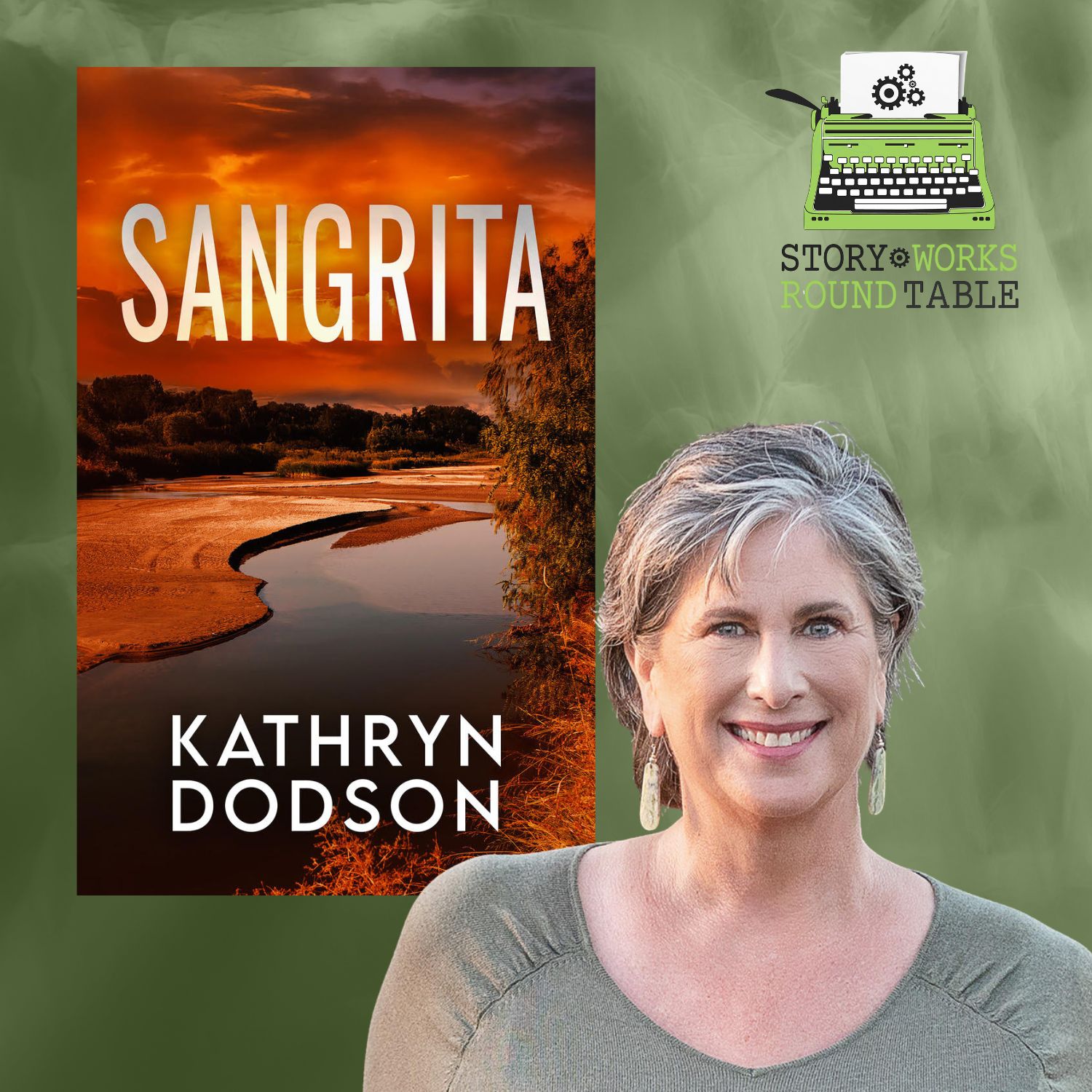
Kathryn Dodson: All right. I’m Kathryn Dodson and I write in two genres. book club fiction with older protagonists. But we’re here today to talk about the mystery suspense novels. And I have a series of, it’s the Jessica Watts, Southwest suspense series. It starts with a book called Tequila Midnight. The next novel, the fourth in the series, comes out in November and the title of that one is Sangrita. All of the titles are plays on tequila drinks because, my protagonist does like her tequila, and they’re very pretty in the Texas Mexico border, solving mysteries and crimes. And in this next one, she actually gets kidnapped and has to figure out how to get out of that. So that’s basically what I write. Very contemporary, detective type fiction, private investigator fiction.
Kathryn Arnold: Very cool.
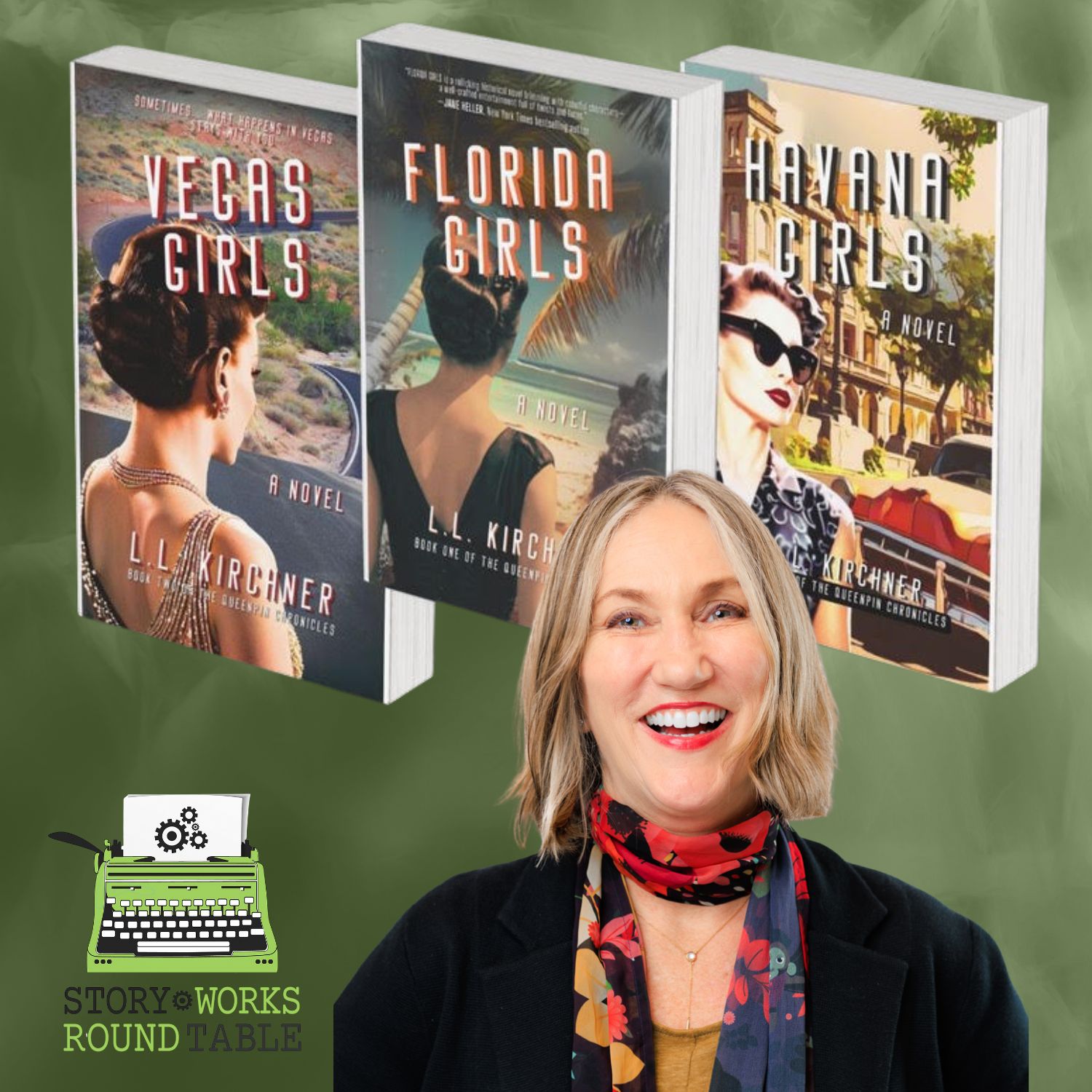
L.L. Kirschner: LL Hi everybody. I’m also really glad to be here. Thanks for inviting me. I’m L.L. kirchner. I’m a, an award winning screenwriter and author. I have also written outside of fiction. I wrote a couple of movies, I wrote a couple of memoirs about living in Asia. But I’m here today to talk about the historical suspense trilogy that I wrote, the Queenpin Chronicles, featuring a troupe of swimsuit models who take on the Tampa mafia. Now, you can get actually the prequel to that at my website, llkirshner.um.
Alida Winternheimer: Com.
L.L. Kirschner: Queen pins. Oh, that’s wrong. It’s forward slash. The deb. Sorry, the. No, it’s just forward slash. Deb. Ugh. Anyway, I, am currently working on a. Another. You could call it historical because it takes place in 1995. suspense. You know, amateur sleuth type thing. called Steel City Critic. And it’s about, an amateur sleuth in Pittsburgh. And hopefully it’ll be part of a larger project called the Three Rivers Mysteries that sort of blend, crime and literary fiction. Upmarket fiction. I like to take on topics that are relevant and people want to talk about.
Kathryn Arnold: Very nice. Very nice. Okay, so. So the first question I have to open with is, what is so appealing about crimes, mysteries, suspense, that has invited you to spend a lot of time writing books in it. And anybody can jump in at any time.
L.L. Kirschner: Well, I can go. I’ll just start with, You know, I’ve tried to write other things. I tried to write a romance, actually. the Steel City Crimes, book that. That I’m writing now, was supposed to be a romance. I started it during NaNoWriMo. Say what you will about the event itself, but as a sort of pin. You know, pin placeholder in the year. I find it useful to go through that exercise. And I was waiting for something else to be edited. And it was supposed to be a romance. I was trying to do some brainstorming with a friend of mine who writes cozy mysteries. Everything turned dark and criminal. I was like, wait a minute. What about. It’s just sort of what my mind gets engaged with. And it’s not a reflection even of, everything I love or what I like to read. I’m kind of what you call a whale reader. I love reading, but, I guess I like a plot. I find, screenwriting is, very interesting to me because you have to be so economical with your words and your action on the page, in order to convey a lot. And I love how, you can absolutely do that in a novel and also express deeper ideas.
Kathryn Dodson: Yeah, I think that’s true. I think another interesting thing about crime in particular is you get to play with people’s deepest fears, but in a safe way, because it’s on the page, right? So you can Hit those topics of, you know, whether it’s a serial killer, all of those kidnapping, all of those different things that you’re curious about but never want to experience for yourself. So people can do it vicariously through your books.
Alida Winternheimer: Yeah. And I also love the process, the mental work of putting together the mystery itself. You know, there is so much, it’s, it’s really intricate form of plot because you’ve got to conceal and reveal and everything has to be timed just so. And you’re creating suspense in a way, I think that is different than in other types of, of writing because the goal is to make the reader work for it a bit. Right. Like you, you can’t just say, here’s what happened and here’s how it unfolded. You want them to get engaged with it and to almost compete with the detective to figure out the puzzle as they work their way through the book. And that’s such a fun kind of game, you know?
Kathryn Arnold: Yeah, you got that kind of the art of the reveal.
Kathryn Arnold: Right. And, and that suspense that really pulls people through to wanting to know the reveal. So can we talk about how you create that? The way that you withhold information or craft your mystery in order to draw that suspense out for the reader?
L.L. Kirschner: All right, okay, so I’ll jump in at once.
Kathryn Dodson: It’s something I had to learn to do because I had already written books that weren’t mystery and suspense. And I wrote my first one and I’m like this, somehow there’s something wrong. And I, I went to work with this really great editor who taught me that I just hadn’t dragged that mystery through to the very end. Right. They resolved everything a little too quickly and then had other stuff going on. It was like they switched horses midstream. And so, yeah, learning that that the end point or the almost endpoint really has to be solving the mystery. And then you just kind of wrap up a few things at the end. And so being careful about how you do that, leaving clues, but clues that aren’t obvious. Like a lot of times there’s something that’s, you know, an object they’ll see or something on a business card or a note hidden somewhere that just seems to be something you won’t get back to. Right. That you’ll ignore. But mystery readers know to really look for those clues and they always come back later. So it’s fun planting those. And I always love getting feedback from my early readers to make sure that, you know, they didn’t figure things out too early. And even if they had a hint of where it might go, you know, did it make it there? I mean, sometimes you have competing antagonists that could have been. Know more than one person. So that’s, that’s a particularly fun thing to try and write.
Alida Winternheimer: Yeah. You know, I, I think I was watching a documentary about Agatha Christie. I think that’s where this came from. But, I heard that in her early novels people always knew who did it, and they knew right away at the beginning of the book. And I believe the story goes, and forgive me if this is incorrect, like I said, I think I heard it in a document, you know, a year or two ago that she wrote a letter to Arthur Conan Doyle complaining that everybody knew. And what she, what he told her or what she figured out was that her killer was always the one least likely to do it. And her readers had figured that out. So whenever they picked up her book, they just said, who’s least likely? It’s this person. And they were right. So then she had to rethink how she crafted her mysteries and make them more complex so that it was neither the most likely nor the least likely candidate to be the killer. and in the Skunk hall series, I reveal the killer right away because my killer has a point of view. And I show you some moment from the killing in the prologue. So then the mystery isn’t really who done it, it’s how and why. And what turns is this are, the what turns will the story take? And how is Jess going to navigate the dangers that come? And I think I managed to put a few surprises in there despite having that, that killer at the top of the book. And I know, Catherine, you’ve read both the Scott Cole mysteries, so did I ever surprise you? I’m gonna put you on the spot.
Kathryn Arnold: Yes, well, and that’s the reveal. Doesn’t have to be the reveal of the mystery. Like the reveal in your books is, is different. It’s the reveal, like you said, of the how and the why, the motivation and also how it’s going to play out for Jess and what it means to her and her life. And so I feel like still there’s that art of misdirection of, of, you know, that toolbox of things that takes the reader down a different path so that when you twist it, they’re like, oh, whoa, no, no. Or I never expected that and never saw it coming.
L.L. Kirschner: So which is my favorite kind? I mean, I don’t like the sort of, it’s sort of like shock, shock jock literature where you get these bombastic twists or things happening. I like it to be a little bit more of a tease. And I do a lot of my. And it’s not efficient. I recognize this. but I do have a lot, a lot of it through editing because I’ll realize, oh, wait a minute. I usually write a very, sort of a first fast draft. And then I spend a lot of time embroidering, and putting the things in. And what I find so interesting through that process is that I often see things without realizing that’s what I’m doing. So I realized for this is the book that I’m working on. I don’t want to give anything away. So I’m not going to say it. Although I’ll go with, the old book actually. So, I had a character who she basically sold her family jewels, to, to kind of run off with her lover in the early, in her early days. And I found a way to seed that necklace through the whole series. Which was not something that I planned when I first wrote it, but it just worked. And it was kind of one of those delicious discoveries because I, I, I don’t, I mean, I love the plot, but I don’t really. I, I’m not a plotter. Like, I, I follow a plot structure and I know what’s wrong in a plot. Like, oh, this has a, this has a middle build problem, or I gotta get the stakes here in the first 10 pages. I, I sort of understand those things. But when I write, I found. Cause I tried to plot out a whole novel before I wrote it. I thought maybe this will be faster. I’ll just plot it all out. I could barely get to the page because I was so like bored. I was like, you know, I like discovering. I learned a lot when the characters jump on the page and start, interacting. and that’s when it gets interesting. Because I think Kathy, to your earlier point, that’s when you’re exploring these other sides of the psyche. And my characters are, when I’m writing them, they’re super real to me. I can see them. I’m like, he would never say that. She would never do that. You know, they’re so specific in my, in my brain. perhaps I have some sort of personality disorder. But.
Kathryn Dodson: That’S my favorite part of writing a series, is that each book has its own mystery and its own character arc. But then the entire series also has a mystery that needs to be solved and the character arc for the main character. And Being able to accomplish that over multiple books. I mean, it’s definitely technique and experience, but it, it makes it more challenging and more fun, in my opinion.
Kathryn Arnold: All right, I’m gonna drop back down into that plotting thing that ll was talking about. So how do any of you have the mystery fully plotted out before you start writing? Or is it more of a revision process of, okay, I, now I know how this is going down. Now I have to bury this or change this or fix this in order to give that, reveal, you know, that, that satisfaction at the ending.
Alida Winternheimer: For me, it’s both. I mean, I do all of my discovery writing and then I do my storyboarding process. And depending on the book, the storyboard might feel more sketchy or more fleshed out. Right. I wouldn’t say complete, but I definitely start my drafting without a storyboard. That’s, you know, and then as I go, I continue to make discoveries and then I have to revise according to those discoveries or, you know, draft in a new direction according to those discoveries and then revise the storyboarding part. Because the storyboard is a tool for me to like, like, if I’m, if the novel is a chessboard, when I’m writing it, I’m on the chessboard and the pieces are life size or taller than me, you know, but when I’m storyboarding, it’s like I’m sitting at the table and I can look down at the whole chessboard and see what all of the pieces are doing. So there’s a lot of interplay between, those two processes until I get a completed draft. That draft that I am content with to the extent that, you know, I don’t.
Kathryn Arnold: Yeah, yeah. And Catherine, you’re writing a whole series that’s got a whole arc, so I imagine that’s a different outlining process altogether.
Kathryn Dodson: It’s really different. So I very much, do my version of plotting every novel, which is just, it’s a scene by scene. What is the plot, you know, the action that happens. And then how does that, affect the main character? And then that you use, you know, because of that, something happens in the next scene. So they have a really tight trajectory all the way through. And then of course, the larger story arc isn’t anything like that because. But what I try and do is just move it along a little bit in each novel. And so. And I can tell you today how many books it’s going to take to write this series if it’s going to be about to come out with the Fourth, I’m thinking it’s going to be around six, but I’m not sure right now because that part of it is kind of still unfolding.
Kathryn Arnold: Very nice. All right. I want to move from. Well, I guess plot and pacing are kind of together. But I want to talk about the pacing of a suspense novel and how that differs maybe from other books in terms of how you move the reader through the book. So you’ve all written multiple genres. How is the pacing of this suspense and thriller and mystery different than the other genres that you write in?
Alida Winternheimer: Yeah, I think with suspense you need to keep it ratcheting up at a steady pace. So whatever else is going on in your character’s life, whatever kind of subplots or themes you have occurring that need to have a steady incline, I feel that more when I’m writing the Scott Call books than other books. You know, I wouldn’t, I wouldn’t necessarily luxuriate in theme or character in the mysteries the way I might in other books because the story is necessarily plot driven. You know, I need the danger, I need the, the intrigue and the reveal. I need the mounting tension to keep that, that crime piece moving. I don’t know. Do you guys feel the same? LL and Kathy?
L.L. Kirschner: Well, I don’t feel that it’s honestly, it is different in terms of the stakes, like the ingredients that go into it. But I think that every reader wants to be in the middle of a page turner. Whether you’re writing memoir, whether you’re writing, even if you’re writing beautiful, lyrical literary fiction, people want to keep turning the pages. They want to stay immersed in the world. And that is kind of a question. I mean, that’s where the editing to me comes in so significantly because.
L.L. Kirschner: All of us have entire universes of things happening outside what we put on the page in order to get those characters where they are moving through time and space with the people that they are at point, this given time. Right. Like there’s a whole constellation of other events and people in, in their lives and you just have to be judicious about the details that you share. And in, in suspense, you’re probably going to share things that are maybe the more menacing things. But you know, at no point when you’re writing a memoir do you think, well, you know what, I can be boring for a couple chapters. People are just going to follow along for the ride. You have to, you have to keep the reader engaged. And I do, I do think that with suspense or crime, I mean I don’t really feel like I write crime. I don’t know enough about police procedure to do that, but I, enjoy it. But the Gosh, now I’ve sort of lost the train of thought there. The stakes need to be in place, but they’re different, they’re just deployed differently across m. Different genres.
Kathryn Dodson: yeah, with my novels, I would say the momentum. They have a similar momentum and trajectory, but in the suspense. I want the reader on the edge of their seat. They have to turn the page because they have to know what’s going to happen next from. Because someone’s in trouble. Right. Whereas with the other books it’s more, internal. There’s a lot of external things, but it’s not like she’s going to die if you don’t change. If you don’t turn the page and see what happens.
L.L. Kirschner: So, I get that. You know what’s funny though? I get that feedback a lot on my memoirs. Like I just had. I stayed up, I couldn’t stop reading. and, and I don’t. Death is not, you know, the main character in Physical Peril is not the main motion for my, for my books either. So maybe that’s. Maybe that’s it.
Alida Winternheimer: I think it’s a really interesting question you posed, Catherine. And just thinking about what the three of us have said so far and I’m like, well, how is it so different? And I think it is the different ingredients, like ll said and keeping the read on the edge of your seat, like Kathy said. And maybe it’s a different type of dramatic tension. Right. Because yeah, obviously you’re never going to be boring or you never want to lose your reader. You want your reader always immersed. But I do think there is a difference and I have to go think about it and be like, okay, what is the difference in the Scott Call books versus the other books I write and how would I discuss that in terms of pacing?
L.L. Kirschner: So yeah, I’ll have to think about that too.
Alida Winternheimer: Yeah. Yeah.
Kathryn Arnold: For me, when I’m reading a suspense novel, I feel like it drags you through the story. Like you were talking about different dramatic tension. Like in a different. Your emotions are wrapped up in a different part of the book maybe than you are in a different. In a different genre. So if you’re reading something that’s a bit more of. I mean, even like a romance, the tension there is in the. In the relationship versus in a crime thriller where the tension is. The stakes are different. so I feel like the pacing is more of. For me, it’s. It’s just where the tension ratchets higher in the suspense novel than it feels like it maybe would in some of the.
L.L. Kirschner: Well, there’s your. That’s the perfect answer. Where does the tension live in your body.
Alida Winternheimer: Right.
Kathryn Arnold: Well, that’s true. Right. Is your heart beating really fast or are you feeling it in your guts because you’re like, oh, no, don’t say that. Don’t walk away from her. Different. Different things for sure. Okay, so I was writing down protagonists as you guys were talking, about your books in the beginning. So it looks like you guys all write from female protagonists in this genre. What’s different about writing a female protagonist versus, you know, I mean, why, what would. Okay, I’m going to start that question over because that was jumbled. Let me read it from my book. What makes for a good female protagonist in this genre? And why did you choose a female protagonist over choosing a male counterpart?
Kathryn Dodson: I love this question in part because I grew up reading like my dad’s Lily Lamour novels and then all the Jack Reacher novels.
Kathryn Arnold: Hm.
Kathryn Dodson: The one thing about those characters is that they are the exact same person whether 19 years old or 50 years old. Right. M. And the one thing I love about a female protagonist, and you could do this with male protagonists, it’s just rare, is that they do change, they do evaluate things in a different way. every single book my protagonist is a little different at the end of it. She’s learned something, she’s incorporated something. and you don’t necessarily think, see that with the male protagonist fiction, you. Again, you could, but I don’t see it there. I rarely see it there. And that’s one of the things I love is just that ability to make the story even deeper than you typically see. It’s not just about a bunch of stuff happening. It’s about these characters and how they change through this process.
Kathryn Arnold: Yeah, well, and you mentioned her thought process too. So is that the. Another appeal of a female protagonist is the way that they think and process through things.
L.L. Kirschner: So I would agree that with that and I’ll say, I think my. Also, I think men are just not, as interesting, frankly. I do write, I do do multi POVs, and I do write from men’s perspectives. But, I find, you know, so many things that just don’t impact men in the same way. And it really boils down to me to that. is this from Joyce Carol Oates or Margaret Atwood? Why am I blanking? You know, men are, women. Men are afraid that women will laugh at them. Women are afraid that men will kill them. that’s kind of what it boils down to. And you know, which Atwood. Yeah. and so it just, it feels more interesting. It’s just to me it’s a lot, juicier. Women can have children. Women seem to stay attached to those children more than men. so that presents a whole other aspect of their personality and things that will drive them to, unpredictable acts, as well as love even. I feel that male characters are a little predictable in love. but women, you don’t know what they’re gonna.
Alida Winternheimer: Yeah, yeah, I agree with.
L.L. Kirschner: And I love men. I don’t. I’m not a man hater, just FYI. I have a husband and he’s great. But you know, come on, come on. Who am I going to call if I need to really talk about something?
Alida Winternheimer: Right, yeah, no, I agree with what both of you have said and I think in addition to that, with a female protagonist in a, suspense crime novel, there’s an added layer of vulnerability that you don’t necessarily have with male characters. You know, the physique is smaller. There’s, there’s just, I think so much more a female protagonist is going to have to contend with over the arc of a story as we introduce her to these other characters, whoever the bad guys are, whatever kind of challenges she has to face. And it’s a pretty good bet we aren’t going to turn to Bronn. Right? She’s not going to muscle her way through some kind of conflict. So then it’s got to be a different kind of strength and resilience and different drivers and different, you know, means of tackling challenges. And, and that makes us more creative in shaping our stories and figuring out that the puzzle of the mystery or you know, whatever that crime is.
Alida Winternheimer: Exactly.
L.L. Kirschner: Showgirls running the mafia is not about being the strongest person in the room.
Kathryn Dodson: Brains over brawn.
Kathryn Arnold: Okay, follow up. So you mentioned ll that that women attach differently to people too, like children. And, and you know, and they have different response to that. I tend to think of women as being slightly less or slightly more risk averse. Right. They’re less likely to put themselves into really dangerous situations. So what kind of characteristics and things did you build into your character to make them want to be in this story where there is dangerous things happening, around them or even including them?
L.L. Kirschner: Well, she was brought up in that kind of environment, for one thing. And so it’s what she knows. And she, the main character, Thelma Miles, she did not have a lot of choice about, about that. But she also wants to break free from it at the start of the series because she has to find a way or she thinks she’s got to escape it. But then what she kind of realizes is you can’t really escape your past. You can’t not be who you are, essentially, is what the kind of deeper message is. and. But she doesn’t have to do it the same way, right? She doesn’t have to run things the same way. And by the end, well, everything flips on its head. you know, but I, I just love seeing women win at this point. I’ll take it wherever I can get it. I want my women. They’re taking care of themselves, taking care of their friends, you know, getting it done, despite the oafs around them.
Kathryn Arnold: Anyone else? How’d you build your female character to keep them in the story?
Alida Winternheimer: M. Well, I think for Jess, it’s a matter of necessity and what is at stake for her, you know, so in the first book, she’s starting over after a divorce. She’s reclaiming her life and building something new by moving away to this little arts community to try and launch her dream life. Right. And because of the divorce, she’s just been displaced from her home. So she’s got to grieve the loss of everything she built in that marriage, in that first stage of adulthood. And turns out that house that was such a bargain has a pretty angry specter in it. And so is she going to give up her house, give up on her dream, lose all of the financial assets she sank into that house? Or is she going to stay and fight by trying to solve this mystery, putting that ghost to rest, and then finally being able to establish a new life for herself. And I think that connects to what we were saying earlier about female protagonists in these stories and that idea of strength and resilience and it being different and differently motivated than what we would see with the male protagonist.
Kathryn Dodson: Yeah. And I like that. I think you do have to. You have to have the right woman that’s going to go in and solve these issues. Right. So, you know, mine grew up on the Texas Mexico border. She has a very traumatic past. It’s made her, you know, kind of a badass. And she works both sides of the border already, you know, before the first novel starts, doing kind of sketchy things. And so that’s where she starts. And so from there she just kind of grows into this woman who is willing to take things on. And it’s funny the way you ask that question, because not the next novel, but the one I’m plotting now really talks about that kind of, gender role switching. She’s the one who’s willing and wants to go out into the desert and hunt down the bad guys. And her love interest teaches children how to play music. I just love that dichotomy. And that’s part of how I’ve developed those characters.
Kathryn Arnold: All right. I’m moving to a different side of the coin here. We’re going into the antagonist in the world of the villain.
Alida Winternheimer: Right.
Kathryn Arnold: Mysteries, crimes, suspense, thriller. I mean, all of these usually have a very strong active villain. And maybe your stories don’t. And if you don’t, why, that would be a part of that question. But how do you craft a villain who is on the page maybe differently than in some other genres and, and really get the reader to either hate them or, you know, have strong feelings about them, regardless, even if it’s not hate.
Alida Winternheimer: I’ll, So I think with Skoghall, my stories come from a place of my own curiosity about these people. Why and how could they do the things that they do and what is the psychology behind what they do. So as I’m writing them, that’s what I’m exploring, and I hope the reader enjoys exploring that too, as part of the puzzle of the mystery. And then, you know, how much they’re on or off the page, they get to kind of. Sometimes they’re very engaged with Jess and the plot, but sometimes it’s not them. It’s the ghost of the victim or it’s, you know, Jess is doing some kind of detective like work type of stuff. and I think because it’s mystery and there is that kind of shroud, that question mark of if not who done it, then why and how done it. I don’t need the conflict between the protagonist and antagonist to be so constant as I might in a different type of crime story or suspense story.
L.L. Kirschner: I think mine is kind of similar in that way. because I don’t feel, I mean, the mafia, they’re the bad guys. And they do get, honestly, by the end they, they do get a little bit more sinister. But some of that was based on the research that I did and I was just like these guys. But, but in, in a lot of ways they were kind of absent and almost in the first book, except for the sort of old dawn guy because it was the war and some of them got out of the war service, but not all of them. And so things were different. But I think it’s more interesting how the characters kind of grapple with how their own their own personalities clash. And I like to sort of inhabit the villain as it were, not to try to make them sympathetic, but so that I am sympathetic to them so that they’re not cartoony. I don’t want to have characters that just come across like a one note trick, despite the way that I’m talking about it, which is very simplified hopefully to make it easier to understand what I’m talking about. Because you know, this is the beauty of a book. You have the ability to fully express yourself. but not so much on a podcast.
Kathryn Arnold: Right.
L.L. Kirschner: But I, I think that, that it’s more interesting when they’re, they’re not necessarily just bad guys because everybody has multitudes. Right?
Kathryn Dodson: Yeah, I would totally agree with that. I mean the interesting thing about writing a series is that you know, you know who your main character is and you have to discover who the different antagonist is every time. But he never think or she never thinks they’re the antagonist. So you’ve got to go into all those layers and know them, you know, as well as you know your main character to understand what’s motivating them and exactly how they would act at every particular point of the novel. And so that’s a lot of fun. I mean it’s a lot of discovery work for me anyway.
Kathryn Dodson: To build out a realistic, you know, non cliched main character or main protagonist.
L.L. Kirschner: Can I say something just funny? It’s not that hard to not build out a non cliched mafia guy, any personality at all.
Kathryn Arnold: Well I know in like I’ve read Alita’s novels so I’m just gonna kind of riff off of this a little bit. But her villains, you. There is a definite like emotional response to what’s happening there. That where you really desperately want just to succeed because the villain is so, so far out of like your comfort zone at the very least.
L.L. Kirschner: Right.
Kathryn Arnold: Like Elita’s murderers are murderers. So you don’t want them winning. Right. But do you guys, how do you craft a villain that does elicit that emotional response? Because I imagine in a suspense thriller you really are. They’re driving a lot of that emotional tension for the reader. The stakes for the main character. Correct. Sorry. So what goes into crafting a villain that gets that sort of tension for the reader where they really are like, this guy’s awful. And I really don’t want to see them in any way victorious. Tough question. Sorry.
L.L. Kirschner: Well, I, to me, in many ways that’s just their actions. so again, everybody is capable of despicable actions. and if you don’t think you are, I don’t think I trust you. But, you know, who, who follows through on the despicable acts? For me, that’s the antagonist. Everybody in my books has despicable thoughts or they wouldn’t be very interesting to me.
Kathryn Dodson: Hm.
L.L. Kirschner: so that’s kind of in a broad brushstroke, the difference.
Kathryn Arnold: No, I like that. Yeah, they’re the ones that follow through.
L.L. Kirschner: Yeah.
Alida Winternheimer: Yeah. And I think too, you know, in both of my Scott hall books, I’ve got one, I’ve got the killer, and that killer is, you know, out there. Right. but then the killer doesn’t act alone, you know, so in the first book in Murder in Sky Call, there’s only one killer. But then part of the conflict is, is this legacy of deceit that follows the murder of this young wife and mother. You know, her husband is wrongly incarcerated for her death. Her son grows up without parents and surrounded by lies about who he is and what really happened to his family. And so then we’ve got good people who are either doing the wrong thing for the right reason or who then become victims in a different sense of this crime. And so I’m trying to shape layers of right and wrong and complexity into the story. In addition to having the killer.
Kathryn Dodson: Yeah. I do something very similar. And you kind of look at, there’s the, the big kind of plot, things that are really bad. And you know, on the border I try and bring in, some of what you see there. drug trafficking, human trafficking, you know, just different things like that. But then you get to those motivations, like, you know, what caused them to go into that to be the person, you know, is it, is it love, is it greed, is it betrayal? Or, you know, these emotions down there and then there’s that. And how does that manifest its, what little way. What little clues do you see in this character, that make you realize he is not a good guy? And so you kind of layer all these things together and it’s a lot of fun to create those characters.
L.L. Kirschner: Right. Because I do have, you know, my heroes, I guess, do some pretty terrible things themselves, but it is their motivations for the reasons for doing it. Like if you’re gonna, if you’re gonna murder someone because you don’t like them, it’s one thing. But if it’s to save young women from human. Human trafficking ring, that’s another thing.
Kathryn Arnold: M interesting motivations and ripple effects. I like it. All right, final thoughts from all of you. Final crafty bits of advice. Things that you would say to a newbie ish writer who wants to write this kind of fiction. What sort of advice would you leave for a writer?
Alida Winternheimer: I would advise young or new writers who want to get into the genre to go read a lot of books in this genre and don’t just get the like, here’s how to write a mystery book that tells you all of the tropes and plot points to hit. Go see how different authors are doing it in interesting ways. And look for books like ours that might cross multiple genres that aren’t aiming to hit all the tropes and find out what you like and what gets you excited and, and then write to that instead of trying to write to a genre or a type. And I think you will find that you’re creating more interesting, innovative, exciting, original stories as a result.
Kathryn Dodson: I completely agree with that. It’s all about reading. And read a lot of different books in the genre, popular ones, ones that have won awards because there’s so many. You’ll learn, you know, what are the things that you really love to do and that you want to emulate. It’s not about copying other people. It’s about actually knowing enough about the subject to be able to do it justice.
L.L. Kirschner: Obviously I think that’s. That, that’s very true. And I’m shocked often when I ask people when I’ve been teaching writing classes what they’re reading and I get like some blank stares. I just think, okay, are we that character from Dark Place who opens up the series saying, I think I’m the only author who’s written more books than they’ve read. Don’t be that character. That’s a joke. It’s like a mock series, a mockumentary if you will. But the, the the important thing I think too is to just write. Like don’t, don’t worry about have I read all the craft books? Do I know exactly what I’m doing? Just, you know, start the practice of putting words on the page, to find the time to start writing. Because you know, I’ve been published since 2014, but I’ve been writing since way before that. I mean, I should say published books. I wrote a lot. I worked in journalism. And so I had a lot of bylines and I had a lot of articles published, since a long time ago. The 90s, the early 90s. But, before then even really. But anyway, the. You don’t get better at a thing by thinking about it.
Alida Winternheimer: So true.
Kathryn Arnold: All right, so we’re gonna go around one more time. I just love for you guys to each give us your name again, the series that you were talking about today and then where people listening to the podcast can find you. Alita.
Alida Winternheimer: Okay, well, thank you, Kathryn. I am, Alita Winternheimer, and I’ve been talking about the Skoghall mystery series. you can find me@alida winternheimer.com. it’s a long, hard German last name. So just go to storyworkspodcast.com and click the link in the show notes.
Kathryn Arnold: Exactly.
Alida Winternheimer: Yeah.
Kathryn Dodson: I’m Kathryn Dodson, and we’ve been talking about my mystery series that starts with the book Tequila Midnight. So it’s a hard one to forget. And you can find me@katherindodson.com It’s K A T H R Y N D O D S O N dot com.
Kathryn Arnold: Awesome.
L.L. Kirschner: LL and I’m LL Kirschner. I’ve been talking about my historical suspense trilogy, the Queenpin Chronicles, which starts with the book Florida Girls. And, you can find me on socials everywhere@ll kirshner author or llkersner.com and if you want that prequel, it’s forward slash deb.
Kathryn Arnold: Awesome. Thank you all so much for joining us.
Kathryn Dodson: Thank you.
Alida Winternheimer: Thank you. Great.
Kathryn Arnold: All.
Alida Winternheimer: right.
About Your Hosts
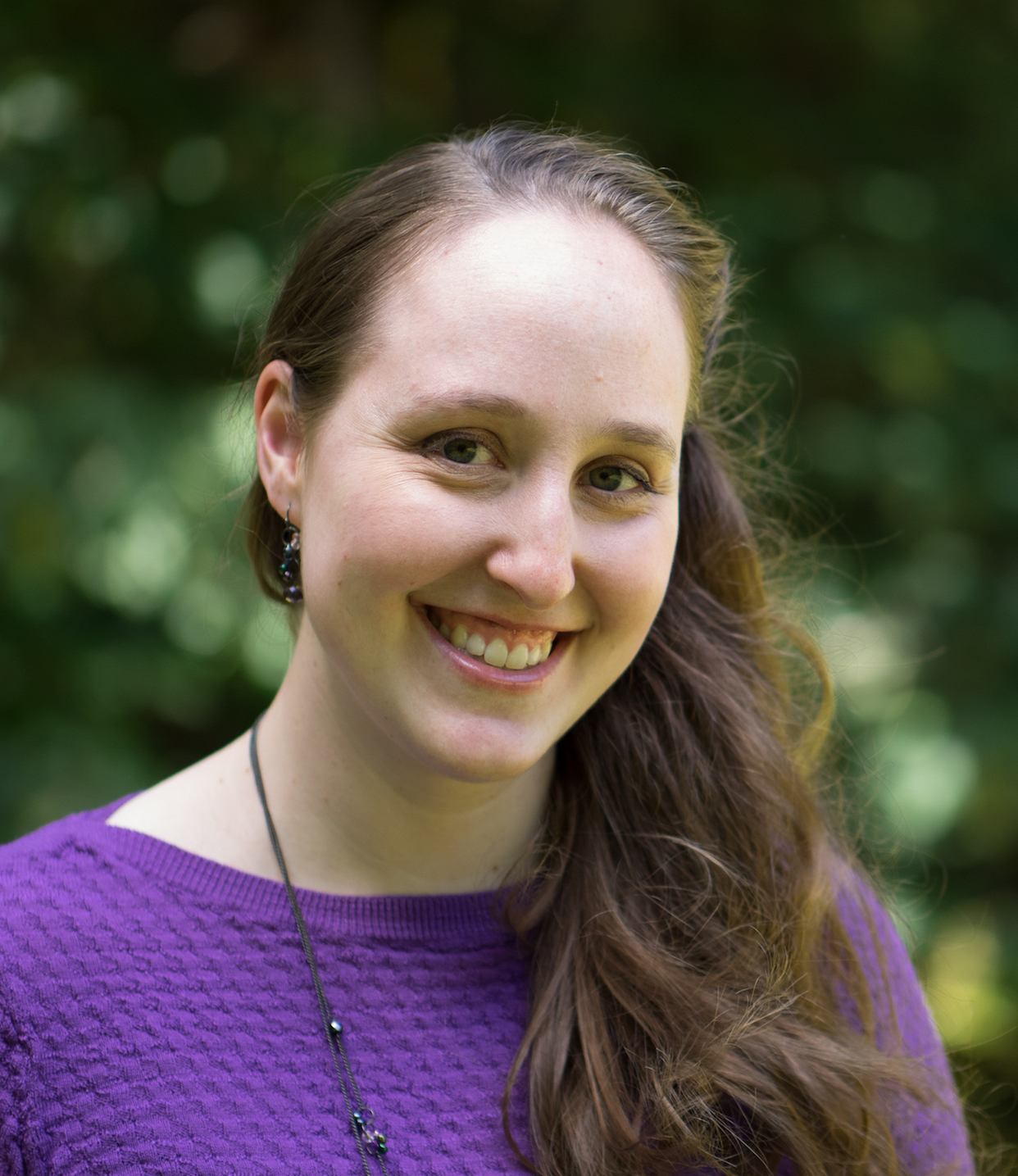
Kathryn Arnold writes fantasy and anything else that sparks her creativity from her home in Kingston, Washington. She currently earns her living as an insurance underwriting assistant, where she also creates marketing and web copy. When not writing, she plays (and teaches) piano and keyboard in a band (or two), and is working on starting a ministry team with her husband. You can find Kathryn at www.skyfirewords.com.