Strengthen Your Storytelling, Grow Your Craft
If you want to be the first to know about my writing workshops, coaching offers, and the occasional craft tip-sheet, join my Notices and Tips list.
No newsletter. No noise. Just your next writing workshop.
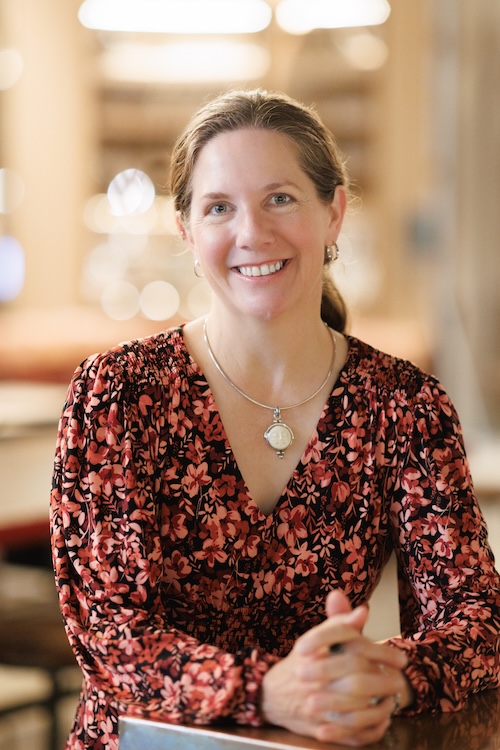
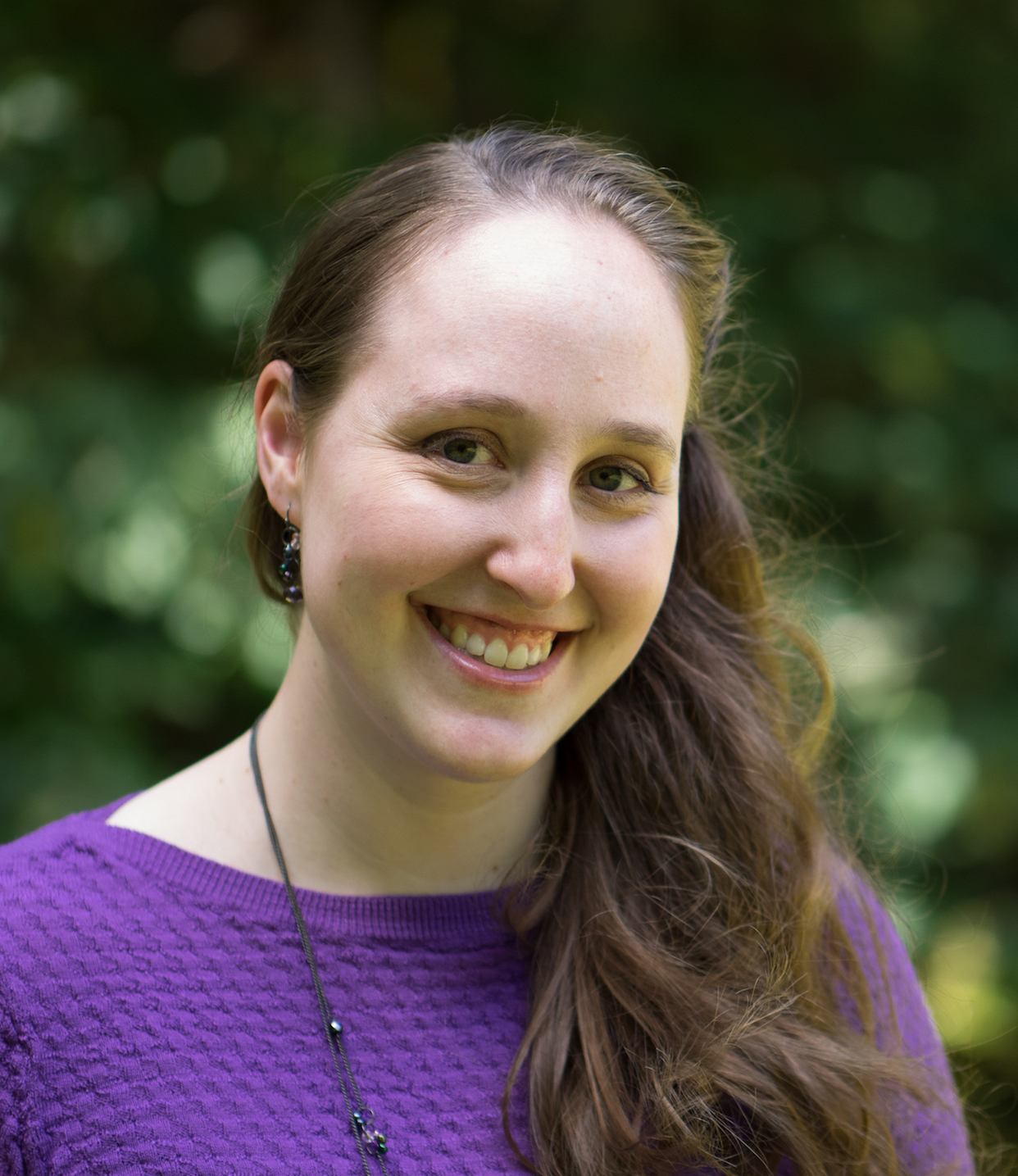
In this week’s episode of the Story Works Round Table, Alida and Kathryn are joined by author and editor Jennia D’Lima. We discuss the nuanced craft of writing children’s literature. It’s much more complicated than just writing a poem and adding some pictures! We talk about theme, the words on the page, the way the illustrations complement the story, and how to ensure your book is written for the age and audience you want! Touching on much more than just the craft of writing children’s literature, writers of all genres will benefit from this far-reaching discussion!
AUDIO
TRANSCRIPT
This transcript is AI generated. If you notice any inconsistencies or errors, blame the bot.
Alida Winternheimer: Welcome to this week’s Story Works Round Table. Today, Catherine and I are excited to be joined by Jennia D’Lima. Jenya started collecting words as a kid and never stopped. Some were big and brainy. Thanks. Psychology degree. Some were ancient and magical. Ask her about pre colonial Mesoamerica. We might just do that. And some. Some were just plain fun. These days, she helps other people’s stories shine while dreaming up new ones of her own. When Jenya’s not playing with punctuation, she’s off adventuring, camera in hand and snacks in her bag. Welcome, Genya.
Jennia D’Lima: Thank you for having me.
Alida Winternheimer: Yeah. I’m so excited you are here to talk with us, about children’s books. And you’re not only an author of children’s books, you’re also an editor of children’s books. So I know we’re going to have a super deep, rich, crafty conversation today.
Kathryn Arnold: Yeah, in the bar right there.
Jennia D’Lima: Yeah.
Alida Winternheimer: No, no, none at all. No. And, yeah, so tell us how you got started with children’s books. Because I know it’s a niche. It’s a real specialty, and lots of people think I’ll just write a children’s book. And there’s more to it than that. So. Yes.
Jennia D’Lima: So my master’s degree is in applied developmental psychology, and my focus was on early childhood education. So we would talk, for instance, about things that we would see in pre K or kindergarten that were developmentally appropriate and maybe that weren’t developmentally appropriate, and how we could work with the Board of Education to reform some of those plans or the curriculum or even how kids were being tested. So I’ve always had a really strong interest in all of that and how kids learn and how they progress from one age to another, not just cognitively, but across all the different areas of development. And that’s something that we see even with picture books, because I think we always think about, okay, right. They’re not going to know certain vocab words or something along those lines. But even when we look at the difference between a board book and a picture book, we’re looking now at motor development. They don’t yet have the ability to hold a page without ripping it, which is why we have those thicker, chunky pages, the same way we have the big, thick, chunky crowns and little people and that sort of thing. But I don’t think it’s something that really filters down into, who am I writing this for? Why would they need this type of book versus this type of book? And then the word count associated with each type of book.
Jennia D’Lima: That’s a long answer.
Alida Winternheimer: That’s a great answer. And I love how it’s already highlighting some of the technical aspects of writing for children. I think even if you’re someone who loves kids, a parent or, you know, big sister, whatever, and you’re familiar with the idea of board books, you can, if you don’t understand the things you just said and so much more, it can look like, oh sure, I can write a cute little nursery rhyme poem thing and slap some cartoons on the page and I’ve got a. I’ve got a board book or I’ve. Right. Why the misconception? Why do we, I feel like we don’t necessarily appreciate the art and craft that goes into writing for children, probably no matter how much exposure we have to these texts. And I say that as somebody who started babysitting at 12 and you know, worked in a daycare and, and loves children and is a mother. Right. So I say that self included,
Jennia D’Lima: part of it is first, I think the word count. We see less and we assume that that must mean simple. But for anyone who’s tried to write a really striking and sharply written short story, they probably know that’s not the case. But also, if we think about the connotations that are used with children and, and words to describe children, they are seen as silly, less serious, not going to be taken seriously. And it’s not that they’re negative so much, but again, we don’t think of it as having that same level of intellectual pursuit. And maybe that’s just because we see them not quite on the same level yet as us versus, let’s say we talk about Victorian children’s books where they were seen as miniature adults. That’s another reason why we see the changing in how, how books are written for children from one generation to the next. So when we talk also about, well, I’m going to write this in the style of the classics, you also have to look at the whole cultural and societal context that each one of these books was written in. So then too, it may have been seen as a more important endeavor than it is now, where we see children as intellectually inferior to us versus this
Alida Winternheimer: is just a smaller adult m. Oh, that’s really interesting. I want to hear more about that. So I know that, with fashion, children were dressed like little adults. You know, there was up to a certain age, maybe two or maybe toilet training, where boys and girls were dressed the same and you’re just a baby. And then after that Children’s fashions were very much aligned with adult fashions and just cut down to little bodies and shaped for small bodies. but say more about this idea of children’s intellect and them being small adults and give us a little more of this kind of history of children’s literature, if you would.
Jennia D’Lima: So if we look at what children were expected to do around the household, for instance, compared to, to now, there wasn’t what they might have thought of as coddling or even what foods they ate versus what foods we eat. It was all the same. There was no real separation of this isn’t appropriate for a child or this isn’t appropriate for someone your age. You were going to often be exposed to the same things. So I mean now, for instance, we are very careful about our children around death or talking about death, whereas it was just a way of life there and there was nothing about how can I shield them from this or the harsh realities of what life is like. They were expected to also just take it in stride. And so that’s one way that that was accounted for within that society. And that goes back further than the Victorian era. But it was more of just that you were weaker as a child and it was, let’s wait until you’re strong enough to do X, Y or Z. And so before you’re able to handle that because you don’t have the muscle tone yet or the strength, you’re going to have this simpler task. But you could be three years old and be sitting at the counter helping prepare dinner. And I thought, what tasks did I give my children at 3? Maybe put your toys in a bin and we sang a song while we did it. So there’s just this real stark contrast in how we see children not just within the familial unit, but, but as a society as a whole. And so of course that’s going to influence anything that we write for them.
Alida Winternheimer: Yeah. So thinking of how we perceive children today, age appropriateness and intellectual development, what is appropriate so that we aren’t dumbing down our children’s literature and you know, intellectually coddling them, but, but we are also meeting them where they’re at and helping them develop and grow and have appropriate exposure to ideas and to the world we live in and such.
Jennia D’Lima: I think one of the best ways to really approach that and find an answer is to look at the 10 or 25 top selling books for that age range and then look at them and see what patterns you’re noticing, what similarities there are, maybe what words come up the most often. But I also like to go online and look up one of those grade by grade vocab websites. So if a word maybe seems like it’s too advanced for say a five year old, you can easily plug it in and it will tell you what grade level that word is typically taught at or seen on a spelling list or something of that sort. So that’s helpful too because you can have some words in there they may not know as long as you have context clues or the illustration to help support it and provide a definition. But if they’re just in there, wherever you feel like they fit, or because you couldn’t think of a simpler word, then you run the risk of your work, your book becoming work. And they’re not going to be likely to continue reading it because we don’t usually pick up a picture book because we want to be challenged. They want to be entertained or be able to even try and read it on their own. And so then you also take away greatly from that possibility.
Alida Winternheimer: Yeah. So thinking about, popular books, you know, as parents, we buy things for children that we like and I think we can buy what we like and just assume or trust that it’s going to be good or beneficial for our child because it happens to be popular, because it’s shiny, because we like it. Right. So thinking about, the publishing landscape today and how anybody can publish a book if they can stick it on Amazon, what’s popular versus what’s age appropriate and beneficial, do you find that we should be a little more discerning as consumers today when we’re trying to find books to give our children or the children we love. Right. They don’t have to be our baby.
Jennia D’Lima: But no, definitely. And it’s exactly like you said then. Also, we’re seeing so many AI written picture books come out. Usually you can tell just from looking at the COVID right away. But that’s why as long as something has that view inside, I would always recommend using that. because you can usually tell, especially with a picture book in the first page or two. Is this really going to be a quality product or no? Did this really go through rigorous rounds of editing or even self editing? Did they have professionals who help them with this? Do they have an understanding of their audience? But I mean, library and recommendations are great too. Bookstore recommendations, because these are people who, you know, are in the know and not just for the books that are currently on their shelves, but the books that are coming out soon and that they believe are a quality enough product that they’re investing in them. And that probably tells you more than any sales number does.
Alida Winternheimer: Mm, yeah. So what is the role of rhyme in children’s books? And, when do we want to start shifting from, from something very simplistic with that sort of bouncy rhyming language to something with more of a story arc with the beginning, middle and end and a character who goes through some kind of experience, even if it’s just tying issue. Right.
Jennia D’Lima: So we look at the picture book audience. There’s what’s called the younger end and the older end, which always feels a little silly, even when I’m writing it in an editorial summary, because older end is ages 6 to 8, which is still very, very small, young ages, but that’s just the reality of how it’s broken down. And so the younger ages, or even if you go down to preschool level, rhyming is great for them because they’re learning patterns and it helps them feel engaged because they’re learning to anticipate. So they’re anticipating that it’s going to have that same da, da, da, da, da da, or whatever it is you’re working. Whereas as soon as you start hitting six and they have a more complex understanding of, what a story is, not just from what they’ve been exposed to at school and reading, but even just from watching cartoons. So if you even look again at, ah, cartoons on tv, what your preschooler watches versus your first first grader, they are so vastly different. One might be a very simplified version of teaching a concept like shapes, and there’s no real story to it, or if there is a story, it’s just very loosely thrown on top and it’s not really integral to understanding what’s going on. But then by the time you’re getting to that slightly older age, or let’s say like even 5 and 6 and they’re watching something like Paw Patrol, there’s always a narrative, there’s a story there. So by five or six, you do see them starting to edge back over into, okay, I want to actually read a story. They understand what a story is. They understand that there’s. Even if they can’t verbalize that there is an inherent understanding of beginning, middle, end there. And they generally want a happy ending. So I understand this will be. Something’s gonna. I’m gonna find out what this inciting incident is. Do they know what inciting incident is? No, but they can recognize it. You know, they might just tell you, nothing’s happening. This is boring. This is just telling me about this person. And they know that there should be rising conflict or there should be a conflict, rather. They don’t want it to just smoothly go along and then nothing happens. So they want that obstacle, they want the conflict, and then they want the resolution.
Alida Winternheimer: it’s fascinating that that awareness comes in at such an early age that it’s so innate in us, in our DNA, right. In our psyches as a collective. Yeah. Catherine, does this all like. You’re like, oh, yep. Because your girls are young. Are you like. Yep, that’s the pattern. I watched all of this progression.
Kathryn Arnold: It is. And, you know, it was interesting listening to that. I, I struggled to find stories that were written with a narrative story for a very long time. There was a, like, a couple of years there where every time I went in a bookstore or every time I went in a library, it was all, like, affirmation literature. Like, you are brave and you are bold, and you are courageous, and you are beautiful, and you are, you know, and there’s a time and a place for that. But I definitely have children that crave that, that storytelling, even at a younger age. And I think, personally, I think the best children’s authors integrate that idea of story, even in the simplest books that only have a few words on the page, or maybe they access the illustration to continue telling the story.
Jennia D’Lima: Yes.
Kathryn Arnold: I’m even just thinking, like, Sandra Boynton books, which are like your atypical board book. Right. Like, you can’t go into a bookstore with board books and not see them. But, like, there was a little, you know, a little arc, like the hippo goes for a run and she ends up with friends and, you know, and it was just simple and rhyming. But still the kids got that journey. And I feel like that’s something that is under developed sometimes in children’s books. And I wish it was more. And to remember that they take everything so literally because there’s a lot of, like, subtext or things that people will throw in there. And it’s like my kids, they. They miss the mark because they don’t understand that or they don’t have access to that language or they don’t have access to those experiences.
Alida Winternheimer: Right?
Jennia D’Lima: Yes. That actually comes up, a lot as I’m editing. And it’s talking about the. That they do think concretely. They don’t yet have the ability to use abstract thought because we don’t see that even begin to develop until around age 7. And so metaphors, similes, all that figurative language. It’s like Amelia Bedelia. Right. They’re going. If someone says someone’s a party pooper. Yeah. You can imagine how they’re going to interpret that. And it’s not the way you want them to. And so. And I say that from personal experience when a child heard that for the first time. So. But it’s the same thing. If you have abstract concepts, for instance, and you’re trying to introduce those, they’re likely not going to get it and the story just is not going to land with them at all. Sometimes you can revise the concept or revise the story in the way it’s being told so they will understand it, but sometimes it’s just too difficult and you have to either age up or rework the entire story.
Alida Winternheimer: Yes. Sorry. That just like flashback. speaking of language, when my daughter was a preschooler, you know, maybe four years old or five, somewhere in there, I was playing Lucinda Williams and she’s got a song where the refrain is, I’m gonna steal your love away. And my daughter spent like a day telling me that it’s not nice to steal and why was she going to steal the love? And you can’t steal the love. And I was like, well, she doesn’t mean it literally, honey. And you just. It doesn’t, it doesn’t help. You can’t explain it. M. Oh my goodness. gosh. So, regrouping. Let’s talk about illustrations and their role in children’s literature.
Jennia D’Lima: Yeah. So you should think of the illustrations as supporting the text, not just rehashing exactly what you’ve written in your text. And that’s something that I do see some people starting out when they hire their own illustrator and then they give them their notes or they decide to illustrate on their own. It’s just showing you exactly what we already heard in the wording. But you want the illustrations to be adding something else because it’s also going to help that child feel better, engaged, because they can hear whatever is happening in the story. And then they can start to just sort of tune out and not really pay attention anymore. When the illustrations are matching exactly that. Or maybe they’re going to start just looking at the page and waiting for the page to flip because that tells them everything they need to know. So when you add something else to the story with the illustrations that, helps pull them in and say, wait, but look over here. And so I think it’s Tommy Depaulo. He has one book where there’s another character who’s. And this is Pretty common too. Never even mentioned my name. And yet they’re present on every single page. And so it wasn’t until after my first book came out I realized I have my other dog, Walter, pictured in it and he’s a frequent part of the story visually. But I never say there’s another dog. I don’t think I never mention his name at all. But you can also use the illustrations to cut down on your text. So things like he had a big smile on his face, we can just show that visually. We don’t need to hear that. So and so had red hair and freckles because again, we can show that. So it can be sort of humbling when you’re starting out writing a picture book to go through and think, okay, so what can I cut? Because I can show it in the illustration. Do I need to show that they’re sitting on their front porch or in a tree or that they live on a houseboat? Probably not. I can just leave all of that to the illustrations.
Alida Winternheimer: That’s great.
Jennia D’Lima: Yeah.
Alida Winternheimer: That we’re so used as writers to thinking show, don’t tell in terms of words and using words to paint a picture. But then here we need to actually show and not tell. And it reminds me of playwriting. Right. Like you wouldn’t use your words to describe the character. You give that note at the top of the script, which is not for the audience or in this case, the reader. So here your note would be for the illustrator.
Jennia D’Lima: Yes, exactly.
Alida Winternheimer: What to show.
Jennia D’Lima: Yeah, And I do that a lot, especially when I’m coaching and I might say, or, you know, I’ll explain it a lot more in depth than I am right now and I’ll pull out a couple of examples and say this, for instance. We can let the illustrator know we want them to be doing this, this or this or that. This is how they look, or this is the expression you want on their face. We want them to look happy, confused, angry, whatever. We don’t need to put any feelings in here at all for the most part. It’s really, really rare that that ever benefits the text, especially when you can show it so well visually, which is going to really have more. It’s going to elicit more emotion from a reader anyway to see it and have it reflected than to just hear he was sad. So why not use that?
Alida Winternheimer: Right, yeah. So how do children process information? As far as we know, you know, because they’re hearing a story, probably they aren’t reading it yet themselves. Maybe a few are, but they’re hearing it being read to them or they’re taking it in through the pictures. So do you know, can you kind of address that question from your experience and education?
Jennia D’Lima: It depends a little bit on their age too. So with younger, younger readers, we want them to feel like they’re a participant in the story. So that’s why you might have rhyme or repeated words or sound words or something where I’ve seen words that are drawn out really, really long across the page. So interesting typography where it makes you feel like you’re reading it even though you’re not really reading it. And I think one popular example is Dr. Seuss where kids start to memorize it and they might not really memorize it, but they know like this rhyme is coming up and so they’re ready for that rhyme or to say that last word in the couplet. And so it makes them feel again like they’re part of the reading process. They’re not just being read to. But that’s going to be different once they start reading independently because then it’s going to be about what they are able to take in on their own. They don’t really need that interactive part because the reading is the interactive part.
Kathryn Arnold: Is there kind of that expectation at that higher level that those kids are reading the picture books for themselves?
Jennia D’Lima: I think we figure it’s usually about half and half because they’re going to want to be able to read it on their own, but they still like being read too. So that’s why you’re able to also put some more challenging words in, because you figure an adult will be present to help them or maybe they’ll hear it at story time or at school or at bedtime and then they’ll remember maybe that there’s a word in there they weren’t familiar with and they can fill it in because again, novelty is what captures our interest. So if you hear this word for the first time, you’re probably going to be more likely to remember it than not. Just because it stuck out to you.
Kathryn Arnold: Yeah. Because I feel like there’s a divide in literature between the books that are kind of written for kids to read.
Jennia D’Lima: Yes.
Kathryn Arnold: Versus for kids to be read to.
Jennia D’Lima: Right. That’s why we have overlaps. You might have those early reader books and they’re reading those on their own. At the same time they’re in the older child picture book audience where there is more of that challenge or lyrical language and yet they’re the same audience. So there’s the one where it’s assumed they’ll be able to read this easily on their own, but there’s also going to be kids because obviously we know there’s so much variability within one age group where they are ready to move to those picture books and read them on their own as well. They don’t really need the easy readers anymore, but they still want something fun and entertaining and they’re still in that age where they want the pictures to accompany the text. They’re not ready for middle grade or early chapter books.
Kathryn Arnold: Yeah, that makes sense. And I do, I do notice that like there’s the early readers do tend to skew overly simplified. So like my daughter loves story and will listen to 8 hour long audiobooks but she’s not quite reading yet. Right. She’s, she’s in that kind of in between stage where she needs some assistance. but she struggles to want to pick up an early reader simply because the story is so overly simplified, in order to account for the language. So I mean is, I guess there’s that. Where is that balance point between the language being simple enough for the kids to enjoy and read versus the story being overly easy or overly. Maybe simple is the only word I can come up
Jennia D’Lima: that might be more of a difference in the purpose of the material. So that higher end picture book or older age picture book, it’s meant to be entertaining a lot of the early readers, especially when you buy them like in those phonics boxes and things. Yes, there’s an entertaining element to it, but usually the primary goal is education. Right. And so it’s really there to just drill those skills in and get them down to using sight words, not so much. Are we right? Exactly. It’s a slightly more fun version of flashcards. Right. It’s supposed to be making education fun, not so much. We’re here just to entertain you. Or maybe there’s a message woven into the narrative. Right. The goal really is how can we help you advance your literacy skills.
Kathryn Arnold: M Interesting.
Alida Winternheimer: So I’m interested in writers using picture books to deliver a message to children. when it’s good, when it’s bad. How much of this you see in the work you do. Because you know, Catherine mentioned this trend for a while of everything being very affirmative. And then you mentioned Dr. Seuss and he is a master at it with the Lorax and star belly sneetches and so many wonderful brilliant stories that also teach really beautiful lessons. So where are we at today with writers and you know, kids Books and messaging. And what are the, what are the positives you see? What are the maybe negatives that are
Jennia D’Lima: out there as long as it’s woven in and it feels like an undeniable part of the story? That’s really the key. Children do not like to be preached to. I mean, think about anytime you tell your child do this and the almost immediate reaction is, well, now I’m not going to. And, and it’s the same thing with books. And you might see some really strong reactions if you read a book to a child and then the last pages. So make sure to listen to your mom and dad. They don’t like that at all. And it feels more like instead of them being part of this story or like the story was written for them, it now almost brings them out of the story. They’re no longer immersed in it. It’s like, oh, nope, this is another adult just telling you what to do. So yes, you can have a message in your story, but you have to be very sensitive about how you are including it. And again, like with the Lorax, you can use the character to feel strongly about something and utilize them in that way because they’re going to attribute it to, okay, well, so and so feels this way, but they’re also seeing it through that character’s eyes and they see why it matters to them. They see why maybe this would be, you know, I don’t use the word bad, but that’s all that’s coming up. Yeah, so this is, you know, bad or good because again, they’re probably not going to understand gray areas really that much yet, or that there are gray areas. We do see very black and white thinking in younger children. It’s just again, that’s just where they’re at. So yes, as long as you can do it in that way or you can attribute those things to that, those traits or those beliefs to a character and then they’re sort of able to figure out on their own, well, do I believe this also? Do I not believe this? You’re not really preaching to them then, but the message is still there.
Kathryn Arnold: Are there like standard kind of typical themes that you see repeated in terms of like, as childhood development, you know, like what sort of themes are beneficial to kids at certain ages and things.
Jennia D’Lima: There’s a lot of social emotional development coming out more recently in books, which I think is fantastic because before then we would see. And these are great too. But you see a lot of books like how to not be scared of your first day of school. Or learning that it’s okay, or the arrival of a new sibling. And then as you get older, you might see things about friends and bullying now that they’re more situated in that school environment on a daily basis. Why? Because those things are very, very pertinent to them. But now we also are seeing that and maybe stuff to do with things in the home environment that we might not have been so freely open with, like divorce or, you know, someone moving away. Things that are hard to talk about but that still affect them, but again, done in a developmentally appropriate way so that we can talk about them without overwhelming them.
Alida Winternheimer: Mm. So when should people start their stories? Let’s talk a little bit about the narrative arc. You know, especially if you’ve got somebody who’s a writer in another vein and they’re coming to children’s books and they’ve got ideas about story and so storycraft and how to tell a story. And now they want to write something for a picture book or an early reader. What, what considerations are there?
Jennia D’Lima: So you’ve probably heard the advice, especially with action, to put the reader right in the middle of the action starting. And that is especially true for picture books. We want that inciting incident almost from the very first sentence. And that’s partially to do with. You have such a limited word count. But also children have much shorter attention spans than we do, so one or two sentences might be all they give a book before they decide they’re bored and they’re not reading it. So we’re not going to introduce the character. We’re not going to say, hi, my name is, I go to school here, I am in the second grade. Nope. If they’ve moved, we don’t need to hear the lead up to them moving. Why they’re moving. No, we want moving day right now. And they’ve arrived at their new house, they’ve already arrived at their new school, whatever it is. And these are just the first examples I can think of. But I mean, you can take any story and think immediately, well, where does the action start? So a lot of that introductory language or backstory that you might feel like is necessary in even a middle grade novel or slightly older, you’re really going to be cutting all of that and just getting right to that pivotal moment where everything changes.
Alida Winternheimer: I love that. And then what about the progression of the stories arc? How much story do you tell? What length should it be? We know we want a happy ending. You know, let’s go past that starting point.
Jennia D’Lima: So picture books are very, very Short and they are just getting shorter. So it used to be that you could have a picture book that was 5 or 10,000 words that long ago. And I say that in relation to my own life. So maybe it is that long ago to some people, but now it’s 1,000 words or less and the industry golden standard is sitting closer to 570 words. So when you think I have 570 words and I need a middle and a beginning and an end, and you figure a third, a third, a third, which it won’t necessarily be like that because pacing is going to differ with any story. You’re very, very limited. And that’s another reason why you need to rely on the illustrations to help you as much as possible. But also that’s why you don’t want all that beginning fluff that isn’t necessary for telling the story. Because if you include all of that, how much room do you have left?
Alida Winternheimer: Yeah, that’s micro fiction. I mean that’s not even flash at that point.
Jennia D’Lima: Right. And I think that’s one reason why people think it’s so easy because you have so few words. But that’s why it’s so hard, because especially when you get to a story and someone has, let’s say a 2000 word picture book and they know that if they want to land an agent or get a traditional publishing deal, they’re probably going to have to whittle it down by half. And then how do I do that without compromising my story? Without. Or do I need to rethink this entire thing and do, let’s say an early chapter book where I might have closer to 10,000 words, which still is not a lot when you think this is a chapter book.
Alida Winternheimer: Yeah, 10,000 words is a short story. I mean that’s like a single chapter. And 7 to 10,000 words is easily a chapter for me, the way I write my novel.
Kathryn Arnold: Interesting is that because of the amount of time it takes to, to read like people want it to be like a 3 to 5 minute read rather than like a 10 to 20 minute read. Like is that based on timing of reading out loud?
Jennia D’Lima: A lot of it is going to again deal with their developing attention span. And so if you think about how long will a child sit quietly on your lap and listen to a story, even if they’re interacting with it, you might get 10 minutes in and then they start to get fidgety. Well, that’s another reason why story times with books where they’re allowed to interact and get up and jump. So you might hear like, you know, it’ll show characters clapping, that sort of thing. And they can get up and clap. You’re probably going to be able to pull a few more minutes out of them because they’re getting some energy out in some way rather than just sitting still. And then it’s also going to deal with how much information are they able to hold at one time and follow along with in a story. So you’re probably not going to see, for instance, an early chapter book. There’s not really going to be a subplot. You’re going to have one major plot and that’s what you’re following along with. You’re not going to have a ton of side characters. You’re not going to have tons and tons of world building because they just can’t hold all that information yet. And that’s also why, when we look at sentence lengths and sentence structure, you’re not going to be writing like Charles Dickens and using semicolons as often as you can, because you have to follow a sentence from the beginning to the end and make sense of it and what it has told you within that unit. And they know how to do that. But that’s something that they’re still learning. That’s a skill that is still developing and in process. And we see that so easily even just looking at the books that are selected for our children to read at school. So if you look at maybe what they come home with in third grade versus ninth grade, just flip to any random page. You can see the difference in sentence styling and the sentence length. And that’s generally the reason why it’s more complicated, even for adults. It’s harder for some adults even to still look at those sentences and think, okay, well, what did I just read? And I know we’ve probably all been there and come away with, I know I read it, but I’m not really sure what it was telling me. Wow.
Alida Winternheimer: So what are some appropriate sentences for, you know, say, a preschooler, somebody who’s maybe hasn’t started school or kindergarten, but not yet starting to read for themselves?
Jennia D’Lima: That’s going to vary so widely because there are some, picture books for that age range that are almost just one long run on sentence, but it’s also where you’re breaking up that sentence. So it feels like pause, read, reread, pause. So I’m thinking about the Very Hungry Caterpillar, for instance, where we get to the very end and he’s eating this and this and this and this. But it’s broken up so it doesn’t feel like one giant sentence. And so you’re going to be looking at it that way too. But usually simpler is better. But again, there’s not one golden rule, because there are ways to work around it. And you can use the imagery also to help break it up. So you might have part of a sentence up here accompanied by an illustration, and then another part of the sentence over here accompanied by the illustration. Because you’re helping them, visually process what they’re taking in. Also not just auditory or by reading it.
Alida Winternheimer: M. Yeah, as a writer, you’d really have to think differently. You know, you’ve got to think technically about the age you’re writing for, what their vocabulary is, their comprehension level, their attention span. But then you also have to start crafting your story in terms of the illustration. And how much work can that illustration do in telling the story and being a part of the whole thing with the words. Right. Combined with the words, instead of thinking, I’ll write these words and then somebody else will draw some nice pictures for me. It’s so interesting. Yeah, no, it makes me want to take this as a writing prompt and go write a children’s story just to, you know, turn my wheels differently as, as a writer. I think that would be a really interesting challenge.
Jennia D’Lima: Oh, yeah, I can see that being fun, because we do see that a lot with short stories, when people are told and they’re given a really strict word count. And you see that so often in writers workshops. You know, write about this. But you only have 2,500 words.
Alida Winternheimer: Right. Yes. Or, you know, you get into that thousand word count or less and you start going through, what can I cut? How can I reshape this sentence? What? Okay, this is the meaning I need. But it’s too many words. How can I pare this down?
Jennia D’Lima: I was on a newspaper all through high school and then in college, and so that was very familiar to me already with. All right, so you have this amount of space or so and so’s went over and we need that. So you need to cut yours by half bun. It has to be done in an hour.
Alida Winternheimer: Ouch.
Kathryn Arnold: Yeah. When you’re editing these children’s books, are you getting them with the illustrations? Are you getting them with like sketches from the writer or just with like, descriptions of what they want? Like, where are you at in the
Jennia D’Lima: editing process that comes with every possibility imaginable. So very often it is just a manuscript. It’s only the words, and there’s no illustrations at all. It’s better if it comes without any illustrations at first, because your illustrations might change through as the editing is completed. So, for instance, there might be something where the storyline has to be drastically changed or something has to be cut, or it doesn’t make sense for something to be here because it’s meandering in a different direction. But now someone’s already paid an illustrator to have that depicted. M. And so now you have to keep it there. But, yeah, usually it is going to be just the manuscript. And then I might give them some illustration suggestions, or I might tell them, you can leave this to the illustrations, that sort of thing. But, yes, I’ve seen every possibility there is and then worked with it, because
Kathryn Arnold: I feel like if I was writing a children’s book, I would. I’m a terrible artist. I wouldn’t be able to draw anything, but I feel like I would feel the need to, like, at least sort of sketch in almost like a storyboard, you know, like what the illustration might be in order to assist me with writing that manuscript.
Jennia D’Lima: Yeah. And some people do have very definite, specific ideas of what they want to see included or how they want to see it included. And that is wonderful, too. And I think that’s helpful for everyone because you already have a unified vision holding the story together that you can pass from one person in the process to the next, and they immediately get it. And you also know then the author’s process probably not going to be disappointed in the results, because, again, everyone’s on the same page, to use a book pun. But, yeah. So when I’ve turned in my picture book manuscripts, I already know what illustrations I want, which is also why I chose my own illustrator and did it all that way myself, because I was very, very particular about what I wanted on each page and how I wanted it to be shown. And so I didn’t want to leave it up to someone else to decipher and interpret for their own. So I understand it now better from that side as well.
Alida Winternheimer: M. So tell us about your picture book. Let’s switch you from the editor hat to the author hat. I’d love to hear about that book and your writing process with it, what it’s about and whatever you want to share.
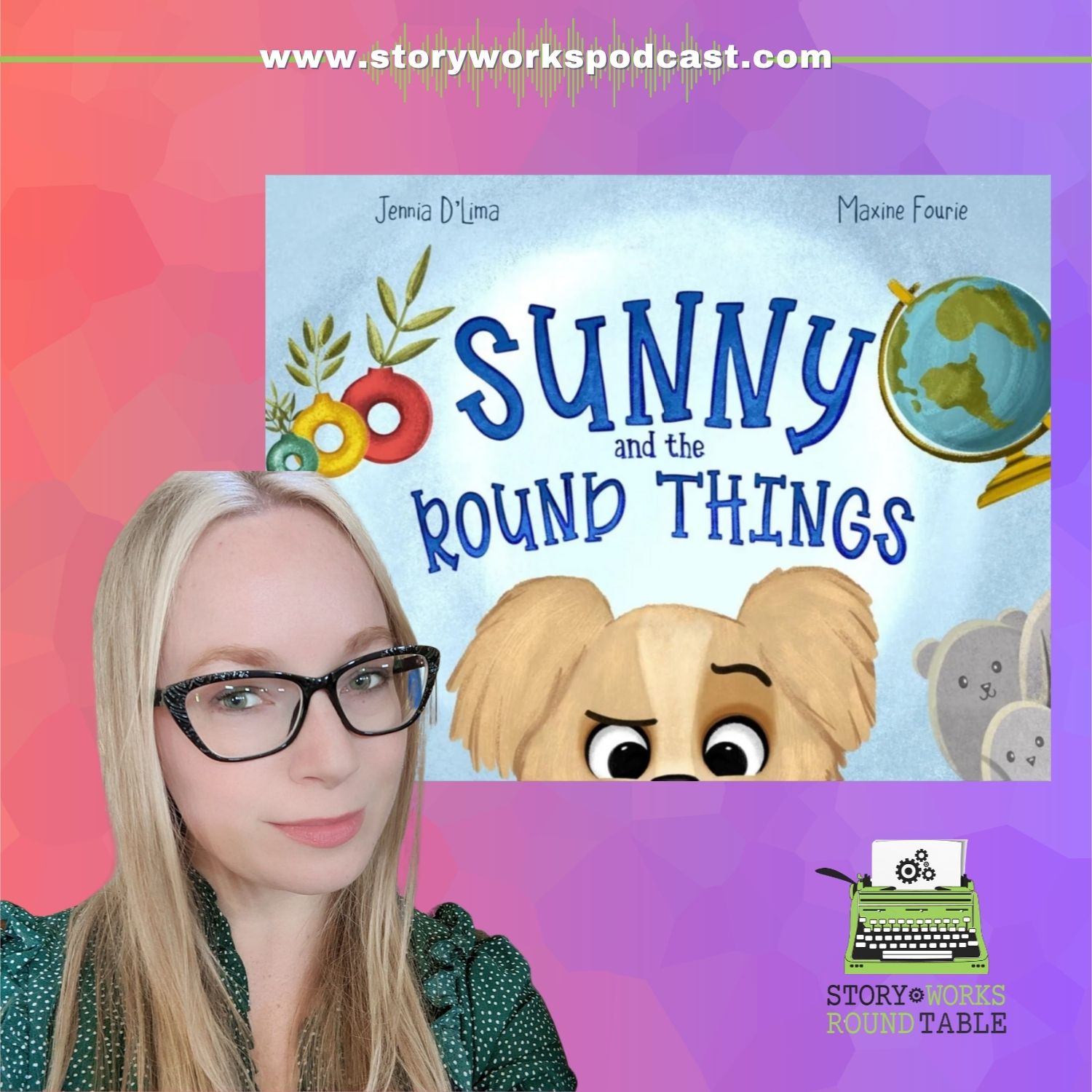
Jennia D’Lima: So this is the first of three that are currently in process. And then a fourth manuscript is going to be turned in in March. And I’ve ghostwritten picture books for a few people now. So it was just sort of. Well, I have ideas. Why have I never done one for myself? And I thought, well, I should just do it. But the reason that this book came about, the actual inspiration. I have a rescue dog who is maybe a little overweight. And every time I would send a picture of him to my best friend, she just wrote round all in caps. And I. We were just joking around, and I say, what if I wrote a book about Sonny and he’s just jealous of all these other round things and he’s worried that one of them is going to replace him? And so then that was the genesis for this story. His mom starts redecorating and bringing round things in, and you see all these square and rectangular items leaving, and he’s worried exactly that. That he’s going to be replaced and he’ll no longer be her favorite round thing.
Alida Winternheimer: And what’s the title of your picture book?
Jennia D’Lima: It is Sunny and the Round Things.
Alida Winternheimer: Sunny and the Round Things. What age is it? For what kind of reader?
Jennia D’Lima: For about four to six, generally. But it could go four to eight also.
Alida Winternheimer: Wow. so sorry, were you about to say something, Catherine?
Jennia D’Lima: Oh, very fun.
Alida Winternheimer: Yeah. So I just want to hear more. I’m not sure I know what question I want to ask. Like, do you have. Do you have four to six year olds at home? Do you have a test market you could read the story to? how did you, you know, know that this was an idea that would land with your readers and shape it for them? Just want to hear more. Yeah.
Jennia D’Lima: Now I do know people with younger children, and so I offered out, free copies through a bunch of people to say, would your child like to be a beta reader? Would you like to provide feedback on this? You get a free book in return. And it’s amazing how many people said yes.
Alida Winternheimer: I bet. What kind of response did you get?
Jennia D’Lima: So I really mostly just put it out in my community first. I tried doing it online, and that was a semi bust. You know, I still had a few people come in and say, yeah, I’d love one for my niece or my daughter, my son or whatever, my grandchild. But then I thought I should just ask within our community because we have this large neighborhood and it’s filled with kids. And so that’s where most of my beta readers came from. And now I have a few who are already automatic beta readers for the next books that are coming out.
Alida Winternheimer: Are the next books also dog and shape centered?
Jennia D’Lima: No. So the next one is the House Without a Ghost, which again, was joking around my best friend. It was a meme and it said something like, I’m not Normally a jealous person, but I’d be jealous if everyone else had a, haunted house. And I thought, oh, what if that was what it was like? And so this kid moves to a new neighborhood, and he quickly realizes that his house is the only one without a ghost. And then he’s concerned that no one will want to be his friend if they find out that his house is the only ghostless house.
Alida Winternheimer: That’s great. Love that. Now. Okay, I looked on Amazon at your book a while ago and it looked like you had reviews from people talking about, like, kids with autism or something. Like your book is especially good for those readers. Is that right? Am I remembering correctly?
Jennia D’Lima: Yeah. So that’s probably from one of my beta readers. And I’m going to show this just because my daughter’s okay with it. So my younger daughter, autistic. And I don’t know if I subconsciously thought about that as I was writing or even maybe thinking about books and how they grabbed her attention or what she was interested in when she was a child that age. But yeah, it went over really, really well with him and he loved it. And so, yes, that’s also one of the children who’s my forever beta reader.
Alida Winternheimer: That’s great. So you weren’t thinking. Okay, here’s a niche within children’s literature that I can capture. I can write for children with autism. It just kind of turned out that way.
Jennia D’Lima: Yeah, yeah, exactly. Which is nice to hear, you know, and because it’s nice also knowing that it’s accessible to a wider audience and that they’re able to enjoy it and they don’t feel maybe left out or like they’re not really included in the story or the story’s not written for them. Because I’ve seen so often when a child feels that way. And so again, you know, I didn’t do this consciously, but it’s incredibly heartwarming to know that that’s how it turned out.
Alida Winternheimer: Yeah.
Kathryn Arnold: Influenced your later writing as you write the next couple. Is it like something that’s in the back of your mind now?
Jennia D’Lima: No, it really hasn’t been. But I also wonder if maybe there’s just this like, running loop in the back that I’m not aware of and then it’s coming out anyway.
Alida Winternheimer: I think our subconscious minds do so much work for us when we’re writing, you know, in any creative endeavor. I think it’s a gift. Yeah.
Jennia D’Lima: Especially when you get into that mode where you’re just tuned out. You know, you’re writing, but you’re Almost not really aware that you’re writing. It’s just sort of happening and then you can sort of pull back and go back into like, you know, you were normal person mode where you’re more aware of your surroundings and that everything else is still happening around you versus just staring at your screen and typing.
Alida Winternheimer: right. Yeah. And I love the idea of sunny and the round things. Right. Like what a great concept and you know, to think what interests children. I think if I were trying to come up with ideas, a dog in shapes is something I would censor. Of course I don’t have your education, your training in early childhood development and you know, psychology, but I think as an adult looking at it through my own personal lens, I’d be like, oh, you know, I don’t know, there are enough books about shapes or shapes and would a dog care about shapes? I don’t care know, you know, yeah, I love that. Do you have any tips, like a list of okay do’s and don’ts? Two or three things for people out there thinking, yeah, I want to write a children’s book or I’ve been trying to write one. Or
Jennia D’Lima: first maybe think about the theme or the topic of your story and try not to do something that has done been done a million times. So Back to school ABCs, goodnight book. You still can do these themes, but they have to be really, really unique. And the same with fairy tale retellings. It has to stand out. It cannot feel like the same thing that people have seen over and over again already. the second would probably be make sure you understand your audience. You don’t necessarily have to go sit at the library and listen to kids run around and play at the park. But just picking up a few books and skimming through them and getting an idea of what they like or what they enjoy, that is going to be so helpful. Although I do find it really enjoyable. Just overhear how kids are talking, like when you’re waiting in line at the coffee store, whatever, whatever it is, because they are fun, they are just hilarious to listen to and it is inspirational. But it also helps you see the way they think and the way that they feel about the world and different things. So that’s helpful if you are able to do so in a way that is, you know, not creepy.
Jennia D’Lima: and then the third really is again just thinking about illustrations. Make sure that you’re not padding your word count with things that can be shown visually and that you don’t have to display in the text.
Alida Winternheimer: Fantastic. I love this. Thank you much so, so much, Jenya, for joining us and sharing so much great wisdom and insight about writing children’s books.
Kathryn Arnold: Yes.
Jennia D’Lima: Thank you again.
Alida Winternheimer: And where can people find you?
Jennia D’Lima: So my regular website is jenyaedits.com I’m also on Facebook and Instagram as, Jenyaharoldilema. And I update those a lot more than I update my website.
Alida Winternheimer: Excellent. We will have links in the show notes as well. So if anyone missed that or isn’t sure how to spell stuff, just head over to storyworkspodcast.com go to Jenya’s show and click on over to her site. All right, great.
About Your Hosts