The Novel Journey
Discover How to Write a Novel You’re Really Proud of in One Year
The Novel Journey is a year-long novel-writing and author-development experience that takes writers from page one to “the end.”
Write your novel while growing as a writer without impossible word count goals, bending your story into someone else’s plot formula, or sacrificing your voice or vision for genre expectations.
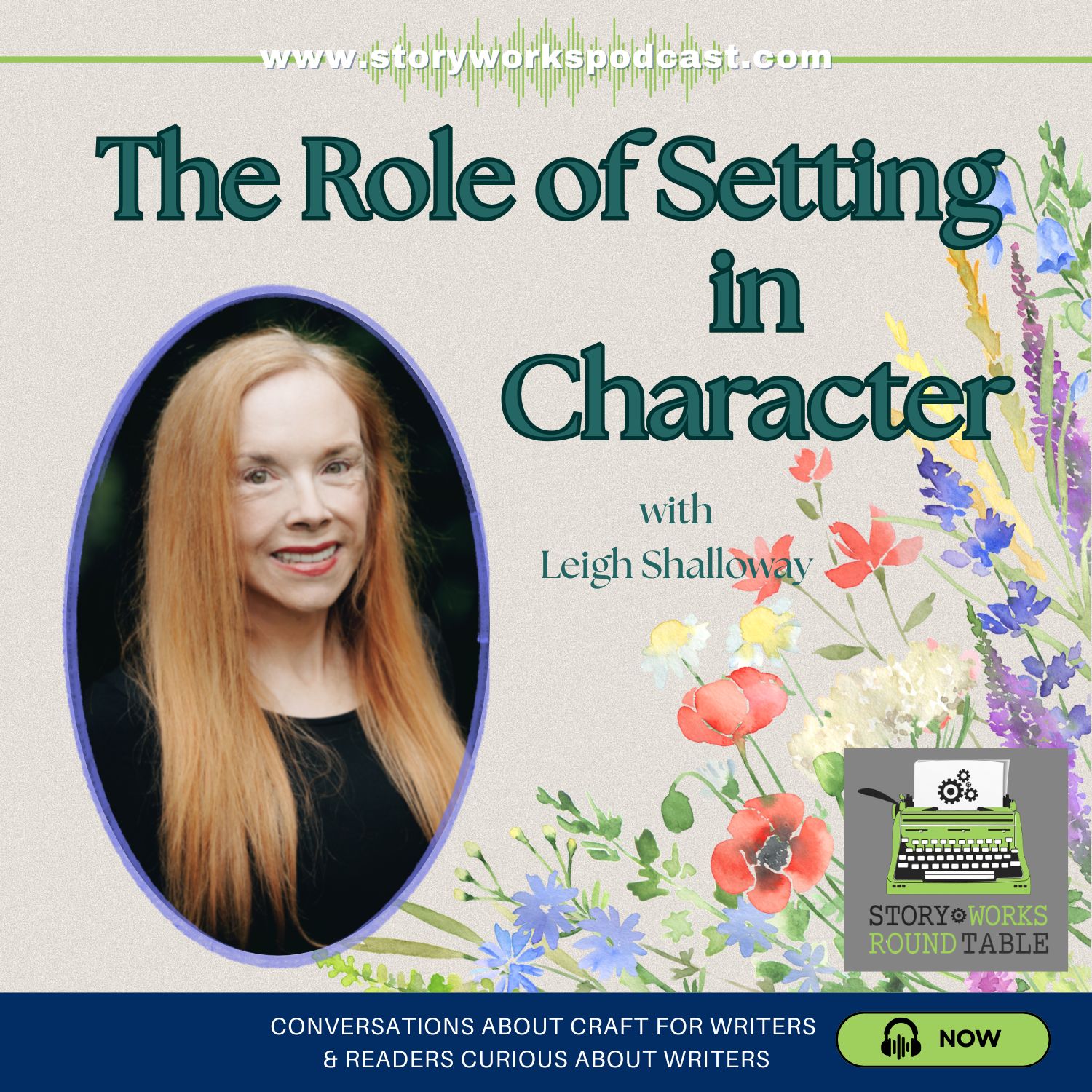
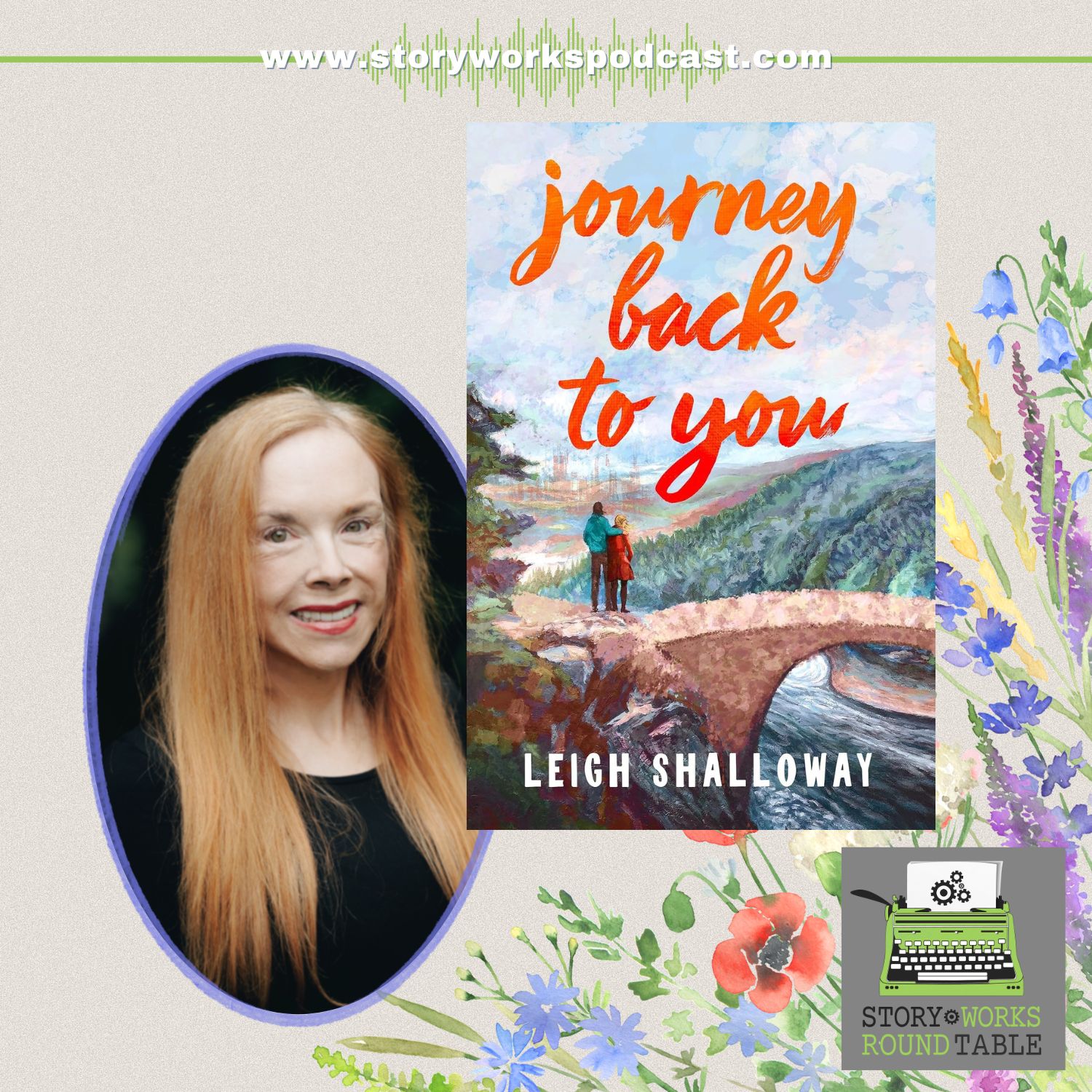
In this week’s episode of the Story Works Round Table, we delve into the intricate relationship between setting and character development in our two-part episode. Join Alida, Kathryn, and our special guest, novelist Leigh Shalloway, as they explore how the environment shapes character arcs in storytelling. We’ll discuss Leigh’s Hilltown series and how she brings the setting to life, influencing her characters’ journeys. If you’re passionate about writing and eager to enhance your craft, don’t miss this enlightening conversation!
AUDIO
TRANSCRIPT
This transcript is AI generated. If you notice any inconsistencies or errors, blame the bot.
Alida Winternheimer: This week we’ve got a two part episode for you focusing on the idea of setting as character. In part one, Catherine and I sit down and have a craft focused conversation. And in part two we’re joined by this week’s guest, the novelist Lee Shalloway, to talk about her Hilltown series and the way she used setting to define her characters arcs. I hope you enjoy this week’s episode with me, Catherine and our guest Lee Shalloway. So today Catherine and I talked with Leigh Shalloway about her novel and the role of setting in her characters lives. But we wanted to hop back on and round out the conversation a bit. Make sure we get some good crafty takeaway nuggets in this week’s episode. So the role of setting to shape our characters lives. right. What do you think Katherine?
Kathryn Arnold: Oh I think it’s so cool. I mean he is so setting is so powerful in creating mood and creating tension and creating this place where your characters live that influences their decisions and influences their arc and influences the plot that you can bring to them. And I think when you’re creating that setting, you want to emphasize, you know, I’m thinking Ethan Fromm in the winter. You, want to emphasize that mood, that attitude that changes the way he interacts with the world. That coldness has seeped into his life. Or I’m thinking like urban fantasy genre, which I’m writing in right now, where the city almost takes on a life of its own and it creates this place where only this could happen here. And you learn the streets and you learn the people and you learn the attitude of the city and it shapes the way the characters interact or work together or don’t work together simply because of geography or, you know, how you craft it. So I think it’s such a cool opportunity and a cool tool to, you know, shape the way the readers interact with the characters in the plot line.
Alida Winternheimer: Yeah, yeah. So Ethan Frome is a tragic love story. If Edith Wharton had said it in summer and the trees were in full leaf and there were flowers in people’s gardens and birds were singing and people were harvesting their kitchen gardens, bringing in tomatoes and squash and, you know, cucumbers, whatever. how different would the story be?
Leigh Shalloway: What?
Alida Winternheimer: You know, how would it function?
Kathryn Arnold: yeah, exactly. It wouldn’t, that’s the thing. Right. Because the story is about to some extent, you know, a death, the death of, of joy, the death of hope. And so without that, that starkness with the, with the idea of spring or life or production of, you know, new things, it would have missed the mark thematically and also with the character arc. Right. Like, you would have lost part of that. the impact would not have been as great.
Leigh Shalloway: Right.
Alida Winternheimer: I mean, Morton would have been working with juxtaposition in that case, instead of alignment or symmetry. And we would have been looking at the coldness of Ethan Fromm’s marriage versus the warmth of what’s potential for him and Maddie. But then of course, can never be. And if you put those characters and their relationships in an environment where we’ve got an idea of bounty and warmth.
Alida Winternheimer: And happiness and, you know, life, it wouldn’t work. And sometimes contrast does work. Sometimes contrast is the way to go. And I think one of our jobs is to discern which is best for the story.
Kathryn Arnold: Absolutely.
Alida Winternheimer: Yeah. Yeah. Do you think that writers who are not writing in genres that demand world building like fantasy and sci fi can have a tendency to overlook or neglect their setting?
Kathryn Arnold: that’s an interesting question. I feel like if you had a contemporary setting where you knew it very, very well, you could fall into that trap. I feel like the books that I have read that have touched, you know, where I felt like, oh man, this is a very powerful book, have all been very immersive in this setting. So I feel like I would feel there’s something missing if I didn’t have that same level of immersion. And even if I knew the area or the, the setting that was being described, I don’t know that it would function as well for me as a reader, to forget that. But I do think there’s a level of world building that happens, you know, across historical fiction and, and the. All of the speculative fiction that maybe isn’t quite the same. Same. but I, I feel like the. Without the immersion of the setting, you’re missing something for me. And I would, I would feel that.
Alida Winternheimer: Yeah, I think I would too. I’m not. I’m trying to think of examples where it either works very well or doesn’t work so well. And nothing is, nothing is at the top of mind right now, unfortunately.
Kathryn Arnold: So I think there’s some shortcuts that can be taken in like a contemporary fiction where it’s set in the, in a contemporary world where you can say things that will trigger things for people that you don’t necessarily require the same amount of descriptive depth, just because we have a shared experience. but I think that neglecting the effect of your setting on your story, I think is, is where that trap would be. And I don’t know that that’s something that I’ve seen a whole ton of as much as maybe just just less description and less using of the setting to balance that theme and that character arc and more of a, of just a kind of. I don’t want to say, like, like almost like trigger words. Right? Things that bring things up in your mind or that you experience. And so then you’re there already without having to have quite the same level of immersion as maybe you would in a place where you are completely unfamiliar, with the setting and the details that would be there.
Alida Winternheimer: Yeah, yeah. You know, I was talking to my partner recently and Westerns, Western movies came up for whatever. I forget what we were talking about, but. But he made this comment that he thought he had seen the same exact stage set from old Western. Told Western. Told Western. Right. Like the dusty main street with six rickety buildings and the Hitching Post is used just over and over and over again. And I think if writers aren’t conscious of building the setting to make it specific to their characters, in particular, to their story’s world. You can leave the reader open to this kind of like cookie cutter, fill in the blanks with their own imagination, where a New York apartment is a New York apartment is a New York apartment, and a farm is a farm is a farm, and they’re all just kind of that same stage set just over and over and over. And if you do that while you can get away with it, right. Readers can go along with you and enjoy the ride, and it is all fine. But you’re missing an opportunity to layer in more richness to your story, more meaning and more engagement, more of that immersion.
Kathryn Arnold: Yes, definitely. It’s where we kind of get that popcorn fiction where you can read it so fast you kind of miss the details, and it doesn’t sit with you, and it doesn’t really have that effect because you’re missing a whole layer to. To that story. And I was kind of laughing at myself. I’m, drafting right now with a specific kind of music in my head because I want that atmosphere and that attitude to translate to the feeling on the pa And I think it’s this that is helping me craft the setting in a very specific way, because I want that level of whatever it is. And in my case, it’s kind of like a darkness and like an atmospheric tone down. Right. But I think that using that as a tool has allowed me to realize that that’s what I’m doing is aiming for a specific feeling that the setting is evoking. And if you allow, like you said, too much of that cookie cutter, then you’re allowing that setting evoke, you know, to be on the part of the reader rather than on the part of the writer.
Alida Winternheimer: Right? Yes. And don’t do that.
Kathryn Arnold: No.
Alida Winternheimer: Right. Well, shall we turn this episode over to, to our conversation with Lee?
Kathryn Arnold: Absolutely.
Alida Winternheimer: All right. Hello, and welcome to this week’s StoryWorks roundtable. Today, Catherine and I are delighted to be joined by Lee Shalloway. Lee has A psychology degree and a master’s degree in counseling and school psychology, and worked as a lead psychologist for samamish schools. She is also a holistic care practitioner who has taught hospice volunteers various methodologies for helping their patients. Journey Back to youo is the first novel in the Hilltown trilogy. Lee brings both the novelist’s eye and a psychologist background to her work, making her novel settings feel alive on the page. Welcome, Lee. We’re so glad to have you with us.
Leigh Shalloway: I’m so glad to be here with you. Yeah.
Alida Winternheimer: Ah, so we thought it would be fun to talk about the work of setting. And before we dig into that, could you tell us about the novel and give our listeners some context for the conversation?
Leigh Shalloway: It takes place in a company town, a steelwork town. And so everything, of course, is dictated by that particular thing. Story is, of course, the story of the three protagonists. Jace, hero, Kathleen, heroine, and, the town, Hilltown. And when. So when we see her, Kathleen is, like I said, not at all exposed to the town. And, a lot of things happen. She, of course, gets in relationship with Jace and they separate for actually, class reasons. Not unusual. and then, she leaves for college, and she leaves really her home, because now Hilltown’s her home and goes to Northwestern. And she and Grace break up before that. Overly class distinctions, him wanting to join her, her wanting to keep him on kind of the side. I’ll see you on my vacations, kind of feel. And a lot happens. that is, you know, I won’t, take much more because as I answer questions, probably a lot more will come out. Is there any questions you have about what I just told you?
Alida Winternheimer: No, I think that’s, enough to give us some context. You know, certainly a steel town. I think a lot of people that gives you something to instantly have a handle on. Right. That’s so American. and then themes of class and class divides in relationships. So you mentioned Hilltown as one of the. Right up there with the protagonist, with Jace and Kathleen. Did you know when you were planning the novel that the town was going to be a character? Is that something that emerged as you worked on?
Leigh Shalloway: emerged while I worked on it. and I’ll say copy A and copy B, because everybody knows you rewrite your first copy. So on the first one, it felt like it was always there, But I didn’t really put it in there. I was writing in the third person, and I really was finding I wasn’t resonating with my characters. And so what I just decided to do Was to write it in Kathleen’s. That she’s the person that’s writing that whose eyes we see the story emerge from. And the reason it is is because I just told you. Kathleen knows nothing about hilltown, the place that she lives. But you know her. She lives, you know, 15 minutes from the center of town. But I say, but it’s a world away. And all her friends live in park city, this very affluent area outside of hilltown. So her knowledge is one is actually not very. And so she has this understanding of hilltown Based on what her father and her mother have told her. Oh, you know, these are not people you want to associate with. They work at the mill. it’s really kind of lack of education. Blue collar. you know, stay out there and, you know, stay with your friends that you’re used to. And she had a break. She has a breakthrough, like many of us have, Something that fractures what we think. And so she has to have a civics class where she has to do volunteering at one of the approved places that her school says. So she. She picks not because of deep love, but because it was close. The, hillside hilltown retirement community. And this is where she has her opening. And I wrote it from her eyes, because what happens is that hilltown is seen by her. And in many ways, they have parallel tracks. Kathleen decides. She does this volunteer work, and she is blown away because what she’s been told is not true. The people that are there are bright, you know, are actually very loving and caring, and she feels for the first time that she belongs somewhere. And from there, it gets even more, involved, because she meets Jace Thompson. But jace personifies the town. He’s caring. He cares about the people in it. He works hard. He even takes on additional people that may have been left out. so who he is is amazing. And then Kathleen learns a lot more about the town by being with him. They’re like, in a parallel tract. What happens then is that Kathleen decides she wants to learn more, and she decides to intern at the mill. So this way, you walk in there, and you see the business she is proposed, you know, supposed to be taking over. And this is where there’s the blood and the sweat. And you see people working hard. She goes in there, and she’s, again, kind of blown away from what they do and their commitment to their job. So it’s not at all, again, the way her father calls them. Kathleen gets ripped, in a sense, not just away from jace. She gets ripped away from the town and the People that she’s gotten to love and care about and flees to Northwestern, which is where she was planning to go to school. So this is where the town and. And Kathleen go like this. And the town just stays here sort of in a background, but it is always there. And we know the town, as I said, is full of amazing people. And when you see it, you see beautiful houses kind of lining the hills with front porches. So there’s a sense of community. And that is also part of what is ripped apart. She does have, you know, a friend that became like a grandma to her, Sadie. And she never had the experience of healthy parental unit. Her mom is abusing alcohol and drugs because she’s unhappy. And, her father is pretty much emotionally dead. So she ripped from the place where she was truly Kathleen and where Hilltown was part of her.
Alida Winternheimer: I would love to talk about setting specifically. You know, I understand that you gave the town desires and wounds even and you know, turning points and instead of just using it as scenery as a backdrop for all of the human action. And yeah, I’d like to hear how you thought about Hill Town specifically as a character and brought it to life within this drama that’s unfolding between Kathleen and Jace.
Leigh Shalloway: The town influences everything and as I said, it has its own personality. The people who live there and work there, that is a different part than who she has been. So a lot of that kind of experience, from her eyes, is about the town itself. I’d say the big part is the steel mill. There’s a giant smokestack in the middle and it shoots gray plumes of smoke up in the air. And Kathleen has always seen it as this horrible, yucky thing where she learns actually this, that steel mill and all around it is a, is actually a good thing. It’s the one that, you know, gives jobs to people and you know, so I saw Hilltown, as the specific of this is the area that in a sense holds all that Hilltown is. Without the steel mill going, you don’t have the town. And so when that’s missing, it’s a gigantic situation. And it does change over time. Hilltown is what holds everything together. And as the story continues, it’s also the place that falls apart.
Alida Winternheimer: Did you develop Hilltown itself? The buildings, the smokestack, the street layout and such, based on a place you’ve lived or experienced or what kind of inspired Hilltown and led to you developing it as such a big, big factor in this story?
Leigh Shalloway: Well, I think part of it Was I did have some experience. the place takes place in western Pennsylvania. And I looked up a lot of information. Like, I chose. Why do you want this place? I was like, well, because it’s very interesting. And I also. It’s a factory town, and my father grew up in a factory town, and he also. What happened to the town? I just learned three years ago if the company closed. And so his home, is right now going through. What Hilltown did when Kathleen leaves is now, you know, starting to shed jobs, starting to ship small businesses. So in the sense it’s personal in that particular story. But I also wanted to open it because it’s just my mo. If you read my biography, you know, you see that I’m really invested in looking at things that. That are more than just the protagonists. We’re studying things that are happening right now all over the United States. And we’re also looking at the same thing that happens to Hilltown. It dies once the company shuts down. There is no hill town. And I use actually, instead of, like, well, there is architecture, but I’m not sure it’s exciting. You know, there’s the haves and have nots and all the haves, actually. They have these cute little fabulous houses, and everybody visits each other on their front porch. And Kathleen lives in this, like, mansion from Gone with the Wind. Totally inappropriate. In the middle of, you know, of being in western Pennsylvania. I wanted to look into more of what was going on in that area, because what’s happening, as you know, is that industries are. Are dying. When you have a factory town, we have poverty, you have, like, increased issues in front of people leaving, the new things coming in. So what we see on this and is even stated is that it’s dark. There’s a darkness that has descended upon the town. And most importantly, that smokestack is no longer going. So it’s no longer, Hilltown has been destroyed.
Kathryn Arnold: Yeah. What’s the time frame between when she leaves for college and when she comes back? Like, how long did you give that?
Alida Winternheimer: Three years.
Kathryn Arnold: Three years. So what was the decision there on that choice to go from? Because you basically are introducing Hilltown as this kind of. I don’t know if you want to say thriving factory town, but it’s a working factory town. Right. And then three years later, instead of experiencing the decline that you have her just show back up. Like, was. Was that designed for impact? Or what was. What was the choice there?
Leigh Shalloway: Well, it was, for impact. Because the story, when you see it going dark, it’s it’s. You see everything kind of changing. There was this sense of she became Hilltown and now that’s dead. So it’s died while she’s gone. And many people, when I’ve talked to them, they’re like, oh, three years, that’s not enough time. But it is enough time for a town to fall apart.
Leigh Shalloway: How many people can live three years not making a paycheck? Not very many. And it was sold to a meat packing plant so there aren’t any skilled laborers or high pay paying people. And you also see the kind of drug addicts and sort of moms also holding clothes to their children. So it’s no longer this thriving community. And, and important person in a sense.
Kathryn Arnold: Right. So is her journey toward the end there is. She’s reviving the town. Is that part of her journey or is the town just dead at the end of the book?
Leigh Shalloway: No, it’s not dead at the end of the book. But what does happen? I didn’t tie a wrapping paper around this book that everything is perfect at the end. What’s perfect at the end is, you know, that Jason, Kathleen have gotten back together and they’re at, you know, they, they’re living now in the campus town. So you know, there’s a, ah, closing to that area, but there’s still a lot that’s not done. So Kathleen, actually begins to do things for the town to make it better. But at the end, you know, I leave it like, well, there’s more, you know, there’s. This is just the beginning of the beginning.
Alida Winternheimer: What sort of narrative choices did you make while you were writing in order to depict these issues of class, of poverty, of social decline through the setting details? Specifically, like, you know, you mentioned the smokestack that was always belching black smoke and then it’s gone quiet at the end. And of course as writers we want our description to have an impact on the reader to resonate emotionally with them. so I wonder what you were really honing in on and what you used or focused on as you were writing. Setting.
Leigh Shalloway: Well, as I said, the setting, came as I was also, reading and writing Kathleen. So I looked at a distinction of Hilltown versus other places. It. Even when Kathleen likes Eyes are, are open by Jace, she’s still a have and so there’s a have and have nots. And the have nots are considered by her father to people who worked in the company. And have nots now are those people clinging to life, in this tragic situation. So I try to juxtapose where she was, but also where it opens. You know, as I said, you have haves and have nots. So in terms of setting, you also have, you know, these people with McMatchins, who live in Park City and they are the haves. And then you have the people in the company being the have nots. So the setting is the junction. You know, the, the places that they live are the, you know, the many mat mansions. Everything’s separated, everything’s wealthy. and when I’m writing you feel that much differently. And Hilltown is, I feel like the lifeblood of this particular situation that we’re talking about.
Kathryn Arnold: You said that you used like a town in Pennsylvania, in western Pennsylvania to kind of. Did you have like a, you know, did you Google Earth it or map it or you know, like to research the town to kind of get that feeling of what that factory town would feel like?
Leigh Shalloway: Yeah, well, I did. actually I’ve been in a lot of factory towns. I’m, I’m generation where we did, you know, car vacations. Hm. And so I actually remembered we did go through Pennsylvania and we did go through Rolling Hills. Small company town also. Ah. As I said before, my father grew up in a company town, so I could look at that. And the other thing I wanted to bring out were the challenges that we’re having now in those places.
Leigh Shalloway: there’s. So I have to admit I chose western Pennsylvania when I did some research and what I found out is that that’s one of the largest, populations of addicted people are in Rust Belt and in places like West Virginia. So they’re. So, I started reading more and more about this part of the country and it’s really been devastating. And the reason I chose being really close to Philadelphia is actually the largest open air drug market is in Pennsylvania. It’s on a place called the Kensington Street M. And it’s, you know, pretty much everybody’s homeless. it’s huge. You know, people from all over come and get their drugs at that place. So I wanted to make sure that when I was talking about substance abuse, which is a part of the novel, we have Brooke, Jason’s brother, and you have Caroline, Kathleen’s mom in that throws so company town in an area that’s already working in that domain. That’s a little bit of why I chose it when a company town. And I wanted to put eyes on, what happens and what’s going on right now. In that area. So it actually was a lot of research and to actually see both towns that was happening and tons of interviews with people living in that kind of squalor.
Alida Winternheimer: So why did you decide to make the drug use? The problem of supporting characters, the mother and the brother being the ones who use the drugs, instead of, say, maybe Jace using the drug so that it’s even more immediate for Kathleen?
Leigh Shalloway: Well, I did that partially because, I consider my job to be romance plus.
Alida Winternheimer: Okay.
Leigh Shalloway: You know what I’m saying? I might even, like, maybe I should copyright that because it’s story, not just of love, although those are central. So I felt like it was too central not to be, in a sense, a romance. But it didn’t quite fill in the, gap of women’s fiction either. So I decided that, Kathleen and Jace are working with their own issues. As I said, Jace is superman helping everybody and also, like, being the main person that supported his family and his brother. So he’s kind of like this. He’s like the. The wall of, you know, the town, and he’ll do anything that would make it different. So I felt like he was sort of a strong character, but he is incomplete. He’s been, you know, he is. This is God. This guy that has, you know, is amazing. But he also is closed down emotionally because he has to be. Has to take care of his family. And Kathleen is on a different trip, project. You know, she’s going a different way in many places, but for her, she’s emotionally closed down and feels very, like she doesn’t know who she is until she starts working with Jace again. And I chose them because of how they would interact with the characters. Like, Jace needs to fall away from this control freak person that he’s become, and Kathleen needs to start opening, up her life again and being who she is. And also, I chose those two because I felt like they were, in a sense, when you’re talking about family dynamics, they were, you know, kind of a clear sense of. Of people that weren’t addicts themselves, because to me, it felt like that would then become the major issue. And it’s huge because Hilltown is. But these two, are, in a sense, a sort of points of light for them. and so. But they have to grow. Like, you know, we learned that Jace’s dad was an alcoholic, and we already know Kathleen’s mom is. But he is not open yet to, his. His brother’s struggles because he had to take care of his father. I mean, go pick him up when he was on vendors and stuff like that. So he’s stuffed down him. His brother and his father are just, they’re just, lazy. They’re just, you know, not complete characters. And and. But Kathleen is a little bit softer because she’s been dealing with. She protects her mom. So she’s the wall between mom and dad. Mom and realism. So yeah.
Alida Winternheimer: But when you got the idea for this story, were you thinking first and foremost that you wanted to write about the social issues, the factory town that’s dying, the addiction that along with that and the family problems and then you created a romance to be the story within that world? Or did you say I want to write a romance and then as you started developing it, came up with all of this other material to build around it and carry that storyline?
Leigh Shalloway: I think, probably I would say that I came to the principals first and the place first. And there is going to be two other books and the next one is going to be on Caroline, Kathleen’s mom. So you’ll see a lot more both of the home and of the family dynamics there.
Alida Winternheimer: Wonderful.
Leigh Shalloway: Yeah. And the final one is going to be about Brooke and his. Yeah, so that is. That’s good. Yeah.
Alida Winternheimer: Books to look forward to. Yeah. So where can our listeners find you and your books?
Leigh Shalloway: easiest way is www.hilltownseries.com and there are links to Amazon, Barnes and Noble, more personal stories of me and the book. more stories about just the book. So, and there’s also audio and media, so it’s pretty definitive site.
Alida Winternheimer: Thank you so much for joining us today. This has been a fun conversation.
Leigh Shalloway: Oh, thanks.
About Your Hosts